
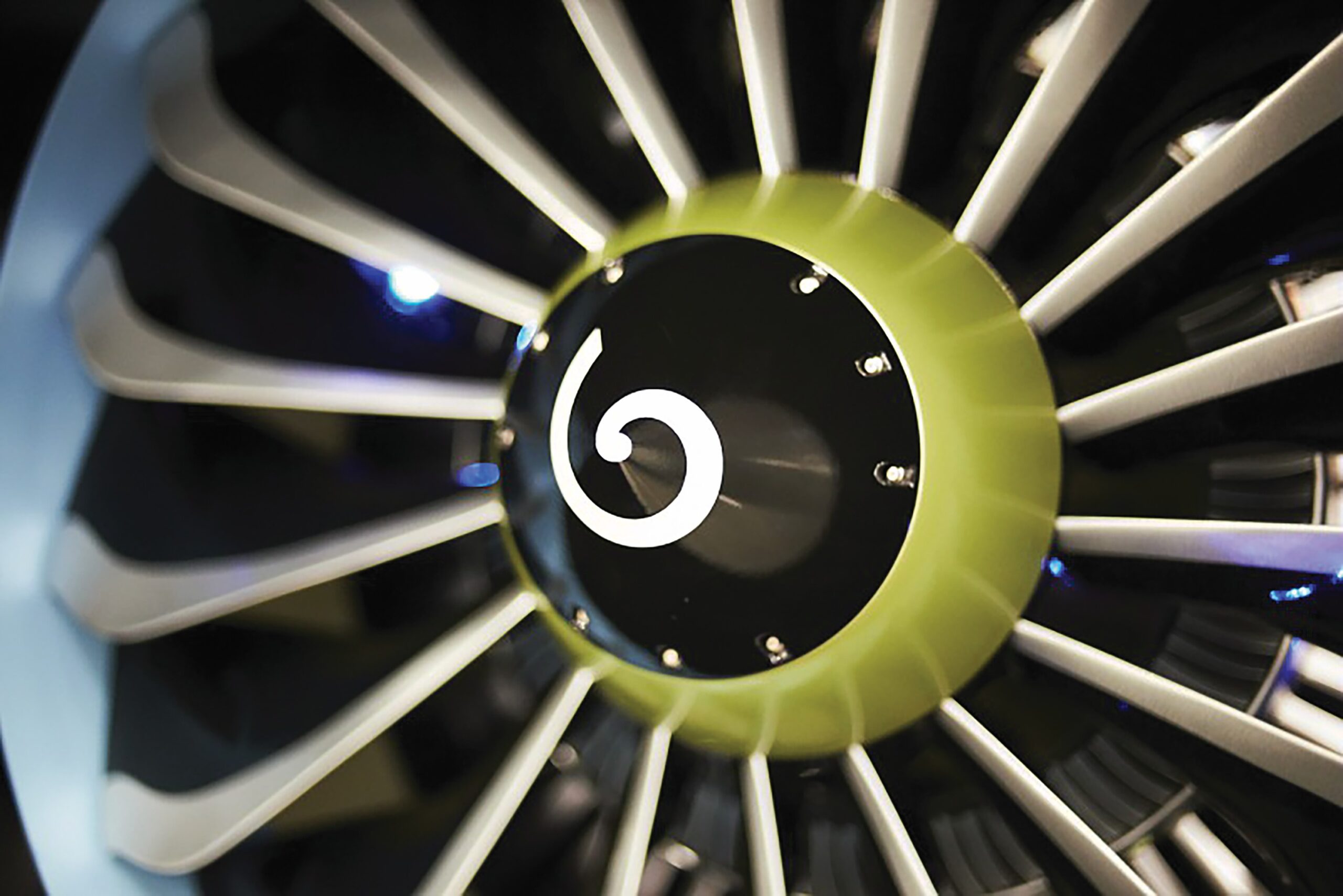
3-D printing of polymer-derived CMCs for next-generation turbine blade manufacture
The extremely high melting point of ceramics adds significant opportunities for manufacturing as compared with traditional metals and polymers. However, because we cannot easily cast or machine ceramics, 3-D printing enables a significant step forward in geometrical flexible manufacturing. Researchers at 3Dynamic Systems (Bridgend, United Kingdom) developed a process for producing preceramic monomers that are cured with ultraviolet light in a specially made stereolithography 3-D printer. This formed structures that have complex internal architectures for advanced air cooling. They then pyrolyzed these polymer structures to a form a ceramic-matrix composite (CMC).
CMCs are a group of composite structural ceramics that have uniquely favorable properties for manufacturing high-temperature structures. They consist of ceramic fibers embedded in a special polymer matrix, which is subsequently heat-treated. Additive manufacturing of these advanced composite materials is of interest for producing the next generation of turbine blade components. However, flaws, such as porosity and inhomogeneity introduced during processing, influence component strength, because they initiate cracks in service. In contrast to metals, brittle ceramics have limited ability to resist fracture.