
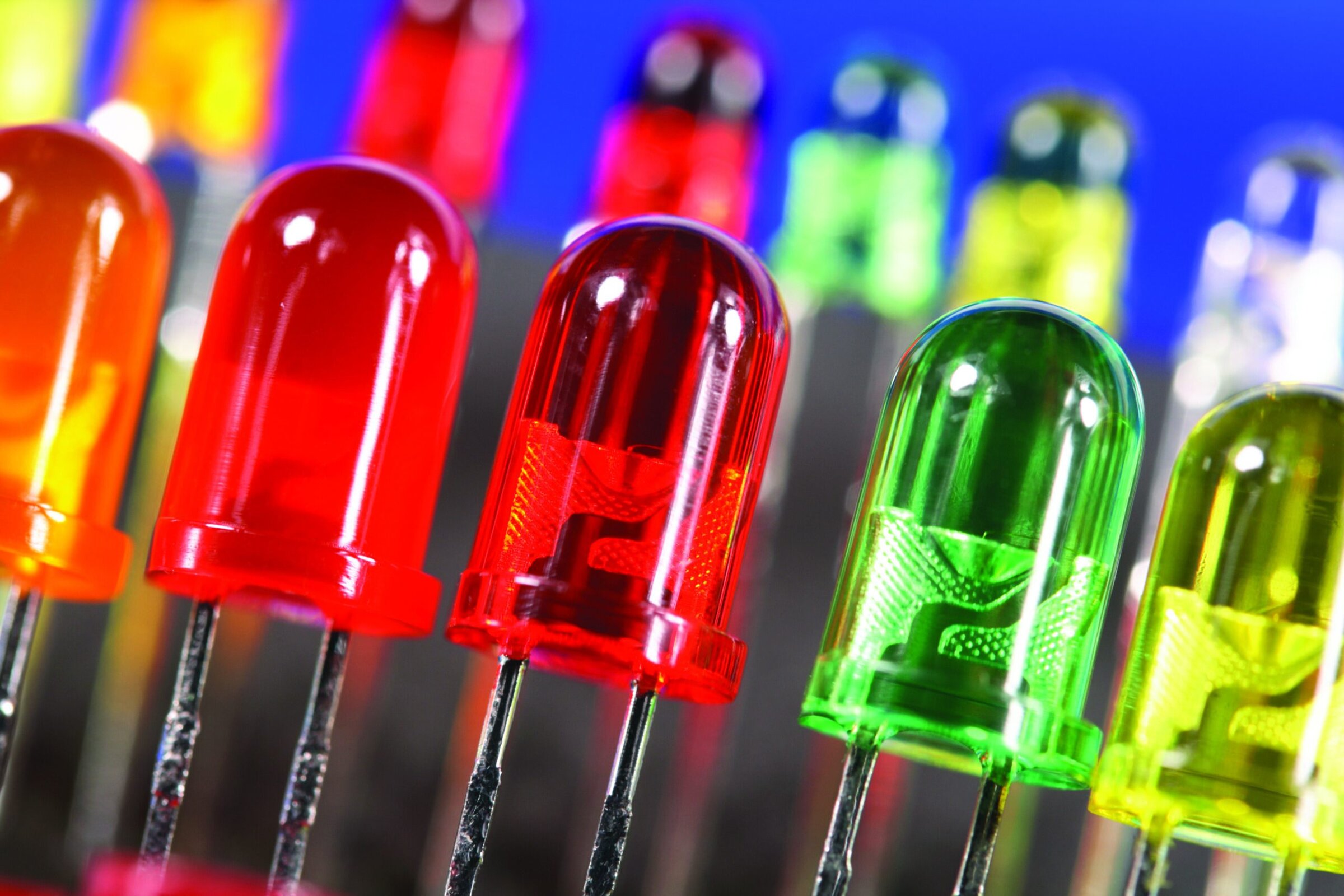
Aluminum nitride coatings optimize thermal performance of light-emitting diode arrays
A new technological revolution in heat management technology uses ceramic-coated substrates to achieve better heat dissipation and improve reliability of light-emitting diodes (LEDs).1–3 About 80% of the heat generated in LEDs must be rapidly removed to extend device lifetime.
For thermal performance, thermal management materials are most critical in the LED’s die material, heat sink slug, and solder, because these are closest to the heat source and have the greatest impact on heat dissipation from the p-n junction in the LED array.4–7 Junction temperature (Tj) is affected by many factors, including the cooling system, environment, and interface material. Therefore, cost-effective thermal management solutions are necessary.
To achieve such heat dissipation, various solutions have been proposed.8–11 Because of its high thermal conductance, effective insulation, high optical transparency, and thermal and chemical stability,12,13 aluminum nitride is one of the most widely used thermal interface materials in LED packages. Previous studies have reported improved LED performance using aluminum nitride- and boron nitride-coated substrates.4–7,14,15