
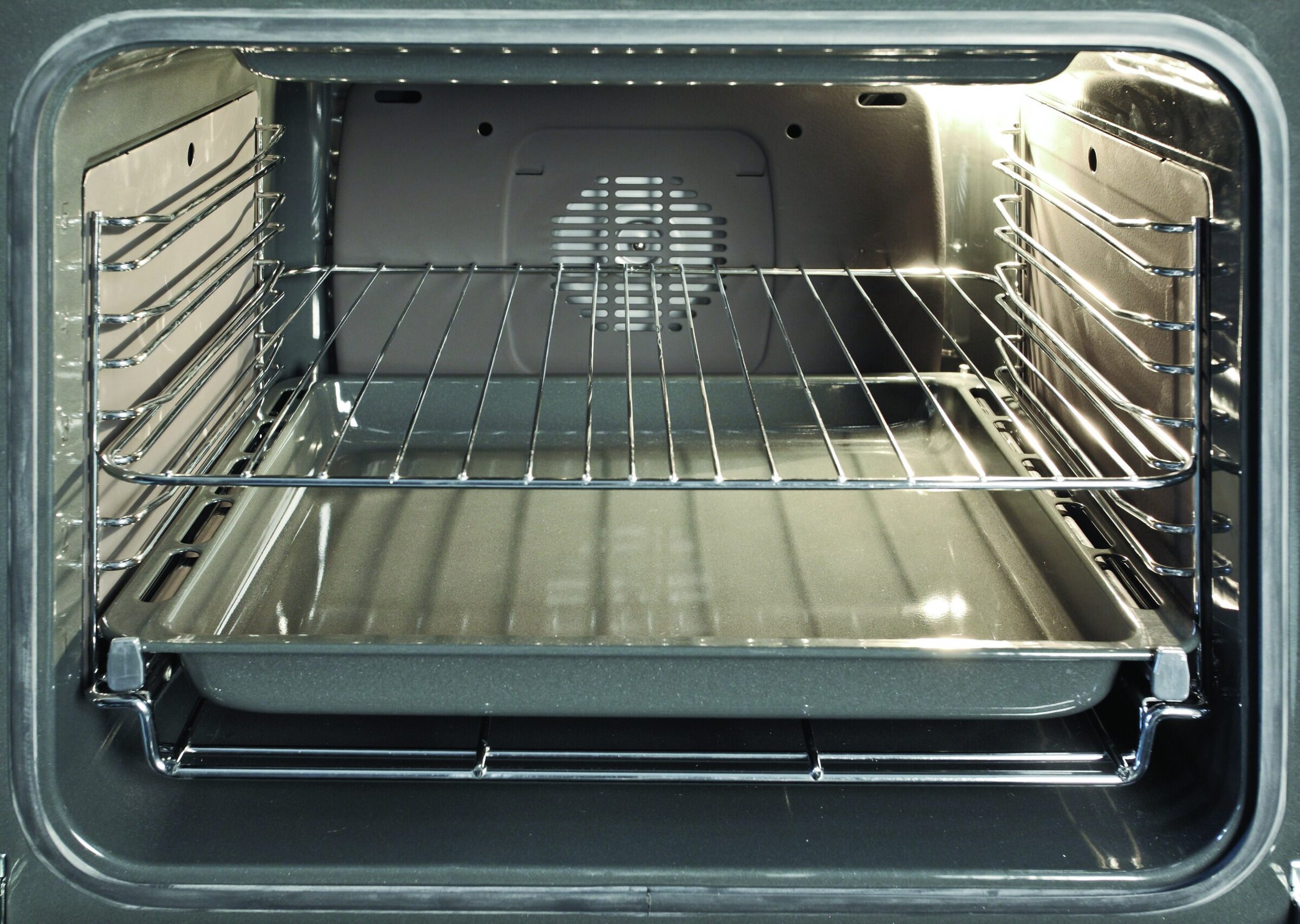
Appliance science: Low-fire enamels for new preprimed steel
Energy reduction continues to be a key megatrend in the enamel industry as well as in the broader ceramics and consumer communities.1 The current state-of-the-art for industrial enameling is dry electrostatic powder application in a highly automated process over cleaned-only low-carbon steel. This process uses a single coat for ground coating or a two-coat/one-fire application for cover coating. Typical firing temperatures are 810°C–850°C for 90 s at peak metal temperature to fuse the glass coating to the substrate to fully develop required properties, such as adhesion, corrosion resistance, thermomechanical resistance, and color.
The goal is to decrease firing temperature to reduce energy requirements and to allow use of thinner-gage steel. Even if a decrease of 20°C–40°C is already possible using specific preprimed steel,2,3 a decrease of 100°C is required for the gage reduction to maintain acceptable strength after fire, an important measure of integrity for household appliances. This technology is becoming a reality in the near future, because steel suppliers—such as ArcelorMittal (Luxembourg City, Luxembourg) and its R&D organization OCAS (Zelzate, Belgium)—are developing new steels to enable low-temperature enameling4 via application over a primer applied during steelmaking instead of over ground coat. Because ground coat requires the addition of ~0.5%–3% transition-metal oxide, particularly cobalt or nickel oxide, to adhere to cleaned-only steel, eliminating the need for ground coat removes this requirement and allows decreased firing temperatures.