

Introduction
Computation and modeling are increasingly augmenting—and sometimes even replacing—experimentation for understanding and predicting properties and behavior of materials. A one-day workshop held in conjunction with the 2015 annual meeting of the Interagency Coordinating Committee for Ceramic Research and Development (ICCCRD) focused on the topic of computation and modeling as applied to ceramic materials.
ICCCRD comprises representatives from government agencies that have programs with an interest in, or focused on, ceramics.1 Individuals attending the workshop represented the National Science Foundation (NSF), Defense Advanced Research Projects Agency (DARPA), Department of Energy (DOE), Office of the Assistant Secretary of Defense for Research and Engineering (ASDR&E), National Aeronautics and Space Administration (NASA), Office of Naval Research (ONR), Air Force Research Laboratory (AFRL), National Institute of Standards and Technology (NIST), Naval Research Laboratory (NRL), and Naval Surface Warfare Center (NSWC). Speakers from academia, industry, and government national laboratories also participated. Workshop topics vary from year-to-year; summaries of some of the previous workshops were published on the topics of materials databases,2 scarce materials,3 and ceramic education.4
Ceramics, defined herein as any inorganic nonmetal (i.e., oxides, nitrides, carbides, and borides as well as glasses, single crystals, and carbon), are unique with respect to computation and modeling in terms of the sensitivity of their properties to starting materials—e.g., chemical composition, particle size, impurities, and processing conditions—under which they are made.
Important characteristics, such as fracture behavior as well as electrical and optical properties, vary with small changes in composition and microstructure. Consequently, the same compound, e.g., silicon carbide (SiC) or aluminum oxide (Al2O<), manufactured by two organizations almost certainly will have different properties. In addition, knowledge of time and temperature dependences of such properties mostly is lacking. Modeling and simulation of these materials need to account for low-ductility failure modes, variability in fabrication processing and manufacturing, and effects of interfaces, e.g., grain boundaries.
The 2015 workshop included a broad array of computation and modeling topics, including ceramic-matrix composites, thermal protection systems, first-principles calculations of material properties, and methodology for predicting mechanical reliability of materials. The diversity of these topics makes it difficult to give more than a brief flavor of the salient points. This article touches on issues mentioned in presentations and in recent publications and attempts to summarize key needs for future progress in computation and modeling.
Workshop summary
Lewis Sloter (ASDR&E) opened the workshop with a historical perspective conveyed in reports on the use of computation tools for more rapid insertion of new materials into manufactured products (Figure 1). He pointed out various activities that led up to the Materials Genome Initiative (MGI), in which computation and modeling play a major role.
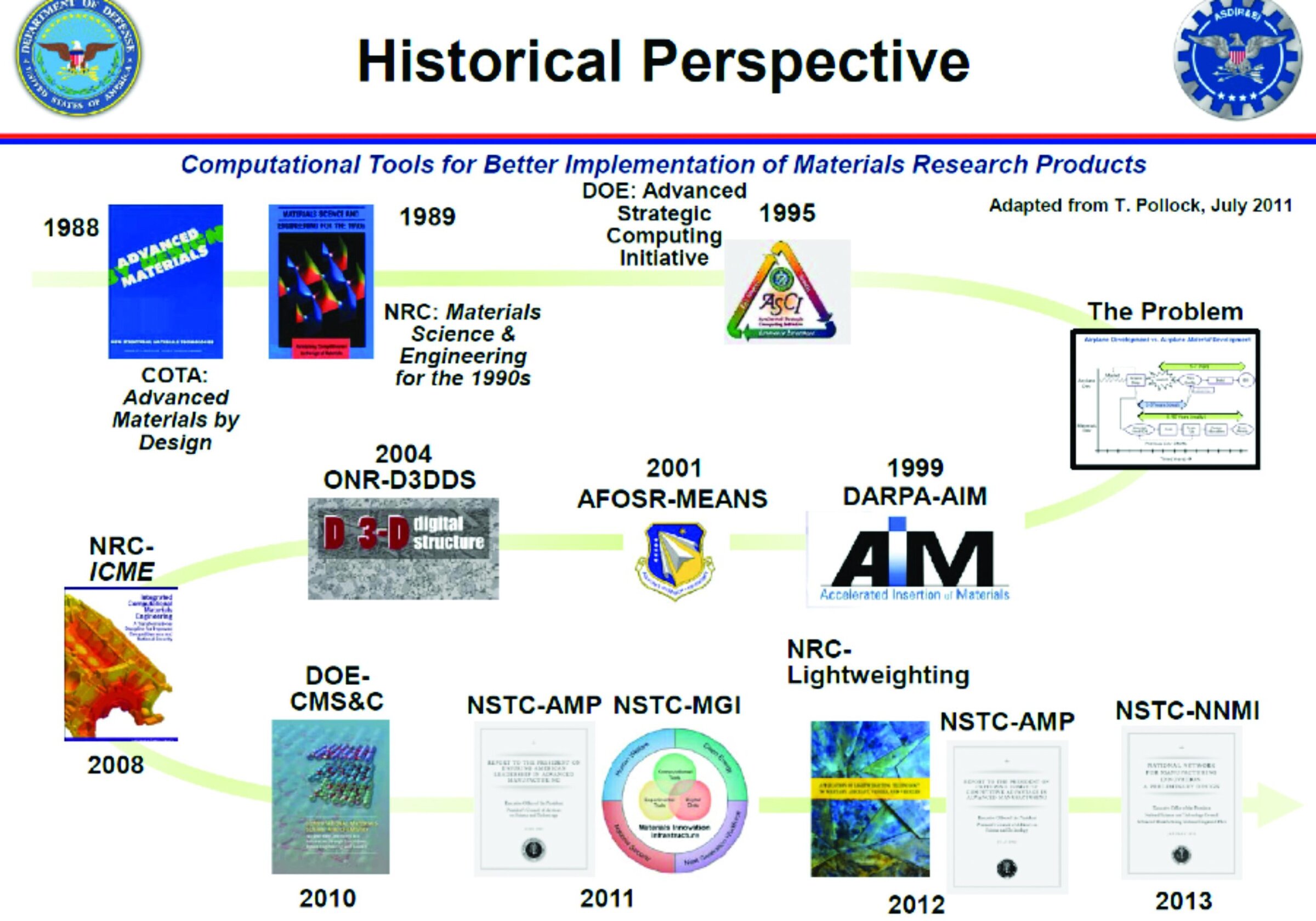
Figure 1. Evolution of computation and modeling efforts. Credit: ASDR&E
Ceramic-matrix composites
Because of broad interest in fiber-reinforced ceramic composites as materials for a myriad of high-performance applications—e.g., thermal protection coatings, rocket nozzles, and gas turbine engines—researchers have focused significant attention on modeling properties and behavior of these complex materials.
Jesse Margiotta (speaking on behalf of DARPA) discussed ways of incorporating computation and modeling of C/C and C/SiC composites for hypersonic vehicle structure applications. DARPA’s Materials Development for Platforms (MDP) program focuses on such an application. Margiotta noted that extreme environments challenge materials and design, and current performance is limited by availability of fully characterized, robust materials.
MDP’s goal is to better align material and platform (application) development cycles to expand design options for both, using toolsets to guide materials development and predict fabrication needs in an accelerated time scale. Use of “design intent” principles considers the functional role of materials systems at the conceptual design stage, including how they carry thermal and aerodynamic loads in a hypersonic application.
Craig Przybyla (AFRL) discussed development and use of automated techniques to quantify microstructure–property relationships in continuous-fiber-reinforced composites. In particular, understanding response variability in composites requires quantifying the underlying variability of microstructure. Codes are required that can import, interpret, and represent stochastic microstructure data.
However, imaging, segmentation, and material structure quantification traditionally are labor- and time-intensive processes, particularly with 3-D tomography or serial-sectioned materials microstructure data. Software tools were demonstrated that automate image registration, segmentation, and feature extraction for large, high-resolution 3-D material datasets obtained via robotic serial sectioning and optical microscopy for SiC–SiC composites.
Moreover, researchers used these tools to implement DREAM.3D software that consolidates custom data analysis tools for construction of customized data analysis workflows. The DREAM.3D package is freely available to the research community (dream3d.bluequartz.net). Researchers can use this software to statistically quantify and visualize in a virtual environment 3-D microstructure data. Researchers then can use these data to generate microstructure models for simulation or to link back to experimental response characterization to quantify stochastic microstructure–property relationships.
The automated tools and approaches described herein support the broader goals of MGI that seek to optimize materials development through application of Integrated Computational Materials Engineering (ICME). ICME is “the integration of materials information, represented in computational tools, with engineering product performance analysis and manufacturing process simulation.”5
To this end, Przybyla discussed how physics-based microstructure-sensitive models are being developed to predict response variability based on inherent microstructure variability in the material, quantified using the automated approaches described. Specifically, he discussed a physics-based approach to model oxidation behavior of SiC/SiC composites. When these physics-based modeling tools are coupled with automated microstructure quantification tools, the vision of ICME is closer to reality for continuous-fiber-reinforced composites, such as ceramic-matrix composites in development for current extreme environment aerospace applications.
Thermal protection materials
Modeling of the behavior of thermal protection systems (TPS) was discussed by Sylvia Johnson (NASA). Considerable work on this topic is underway at the NASA-Ames Research Center (Moffett Field, Calif.). Researchers have developed codes to predict aerothermal environments that allow vehicle designers to establish TPS material and system requirements for hypersonic flight and re-entry vehicles. Johnson noted that the type of analysis required depends on the system and the information needed. She outlined a minimum set of inputs required, including
- Complete set of accurate thermal and mechanical properties for all materials in the model;
- Thermal and mechanical environmental and boundary conditions appropriate for the model; and
- Use of physics- and chemistry-based models (rather than correlations) with parameters that can be obtained from experiments.
Johnson says multiscale models can account for physics and chemistry across a spectrum of length and time scales. NASA research on TPS materials focuses on the need to account for processes, such as pyrolysis, ablation, and location (e.g., leading edges versus windward aeroshell), as well as associated changes in the material, shape, and aerodynamic response. She noted that NASA considers the models to be in a relatively advanced stage.
Brian Sullivan (Materials Research & Design Inc.) discussed TPS panels in hypersonic vehicles. In the past, these panels were intended solely to protect the internal structure from the heat of hypersonic flight. He pointed out that these TPS were considered “parasitic mass,” because their function was entirely thermal and not load bearing. Recently, however, load-bearing TPS have become more prevalent, incorporating features that provide a more integrated function for the vehicle. Sullivan discussed examples for using ICME to design C/SiC and SiC/SiC composites for this and other applications and how features, such as foreign object damage resistance, can be modeled via failure analysis to guide materials fabrication methods.
Failure modeling
One of the important aspects of using ceramic materials in structural applications is dealing with the statistical nature of brittle failure. Ensuring reliability under operating stresses is particularly critical. Steve Freiman discussed work at NIST6 to develop a new statistical approach to predict safe operating lifetimes for ceramics. Researchers need to calculate such a lifetime and to determine uncertainty in the lower limit of the calculation. A statistical approach is needed, because nondestructive techniques cannot distinguish critical flaws in a ceramic part. Although proof testing is used to eliminate lower strength parts, such procedures are costly and difficult to apply accurately.
Freiman explained that most uncertainty determinations of brittle failure currently are conducted using a two-parameter Weibull expression,7 but this approach is unduly conservative and may not best fit data. In most cases, a three-parameter Weibull equation provides a better fit to experimental data, but other mathematical expressions also can be used to fit data. Possible growth of flaws due to environmentally enhanced crack growth also can be accounted for in the calculations given the proper series of test procedures. Freiman proposed a three-step approach to determining mechanical reliability.
Step 1: Fit an expression to test data, e.g., using three-parameter Weibull, and establish minimum initial strength and standard deviation.
Step 2: Determine uncertainty in the lower limit to initial strength of the universe of components, using appropriate statistical software.
Step 3: Combine measurement uncertainties associated with determining values for various measurement parameters in calculating probability-of-failure, if the existence of environmentally enhanced crack growth has been determined.
Atomistic modeling
Chandler Becker (NIST) presented a snapshot of some materials modeling efforts at NIST, particularly focused on atomic-scale simulations of ceramic materials. These efforts include combined computational and experimental efforts to study defect structures in graphene (Cockayne) and elucidate structures in gas sorption materials (Wong-Ng). NIST researchers also use high-throughput-density functional methods to screen appropriate substrates for growth and functionalization of 2-D materials. Density functional theory (DFT) and cluster expansion methods examine the effect of vibrational entropy in DFT-based phase diagram calculations. These effects can be particularly large for NaCl–KCl composites.
Additional NIST efforts focus on documenting limits of various methods. Specifically, these efforts assess and document uncertainties in DFT calculations that result from various approximations, including the effect of basis set expansion and exchange correlation functional in silicon, aluminum, carbon, and zirconium. A demonstration was conducted of how choices related to surface location (and thus cross-sectional area) of nano-wires in molecular simulations affected the calculated axial Young’s modulus and, specifically, how the determination of cross-sectional area can alter calculated diameter dependence of this property. This analysis might be useful in understanding the origins of various calculated and observed size effects in these systems.
Tim Mueller (Johns Hopkins University) addressed the availability of data needed to conduct computational studies. He noted several available web sites to acquire such data, including the Electronic Structure Project,8 The Materials Project,9 and AFLOWLIB.10 He demonstrated how analysis of material data sets can effectively facilitate discovery of promising new materials.
Noam Bernstein (NRL) discussed use of DFT to calculate properties of a material. He used the example of lithium-ion batteries to demonstrate effectiveness of DFT in searching for new materials. However, he also stated that DFT is computationally expensive to use.
Government sponsored computation and modeling R&D
Ken Lipkowitz (ONR) discussed computer-aided materials design activities focused on power and energy applications. ONR’s program objectives encompass discovery of new materials and improvement of materials. Thrusts include new mathematical procedures, high-throughput screening, informatics, and multiscale simulation. The “materials fingerprint” concept (similar to that used in the pharmaceutical industry) to identify new materials with similar characteristics and functions to established materials is another path for materials design. Lipkowitz also cited the AFLOWLIB as a resource.
Lynnette Madsen (NSF) reported that computation and modeling is spread across the foundation. Ceramic proposals that are solely experimental or that have a computational component and an experimental component often are reviewed in the Ceramics Program within the Division of Materials Research (DMR). Within the Ceramics Program, about 150 projects are active at any given time. About one-third have two or more investigators, and many of these (35%–40%) have a computational/theory expert as part of the project. On the other hand, purely computational/theory scientific projects are considered within the Condensed Matter and Materials Theory Program (in DMR).
The Division of Mathematical Sciences (DMS), which is within the Directorate for Mathematical and Physical Science (MPS), supports research that develops and explores properties and applications of mathematical structures. DMS researchers are encouraged to develop collaborations in a range of areas (manufacturing, clean energy, etc.) through its innovation incubator program.11 Proposals dealing with application of fundamental science to design and development of new devices and engineering systems are reviewed in the Engineering Directorate.
The Computer and Information Science and Engineering (CISE) Directorate’s goals include advanced infrastructure and computing. Small team projects (in the $0.5M to $1.5M range) are reviewed in the competition titled Designing Materials to Revolutionize and Engineer our Future, which is NSF’s response to MGI and cuts across three directorates (MPS, ENG, and CISE).
Discussion of tools and computational methods
So far, this article has presented the views and programs of attendees at the ICCCRD meeting. Some other related ongoing efforts to model properties and behavior of ceramic materials are summarized hereafer.
A report of a NIST-supported study conducted by The Minerals, Metals, and Materials Society (TMS), “Modeling across scales,”12 discusses many procedures that apply to modeling materials across length and time scales. Figure 2 illustrates some of the connections among modeling methods.
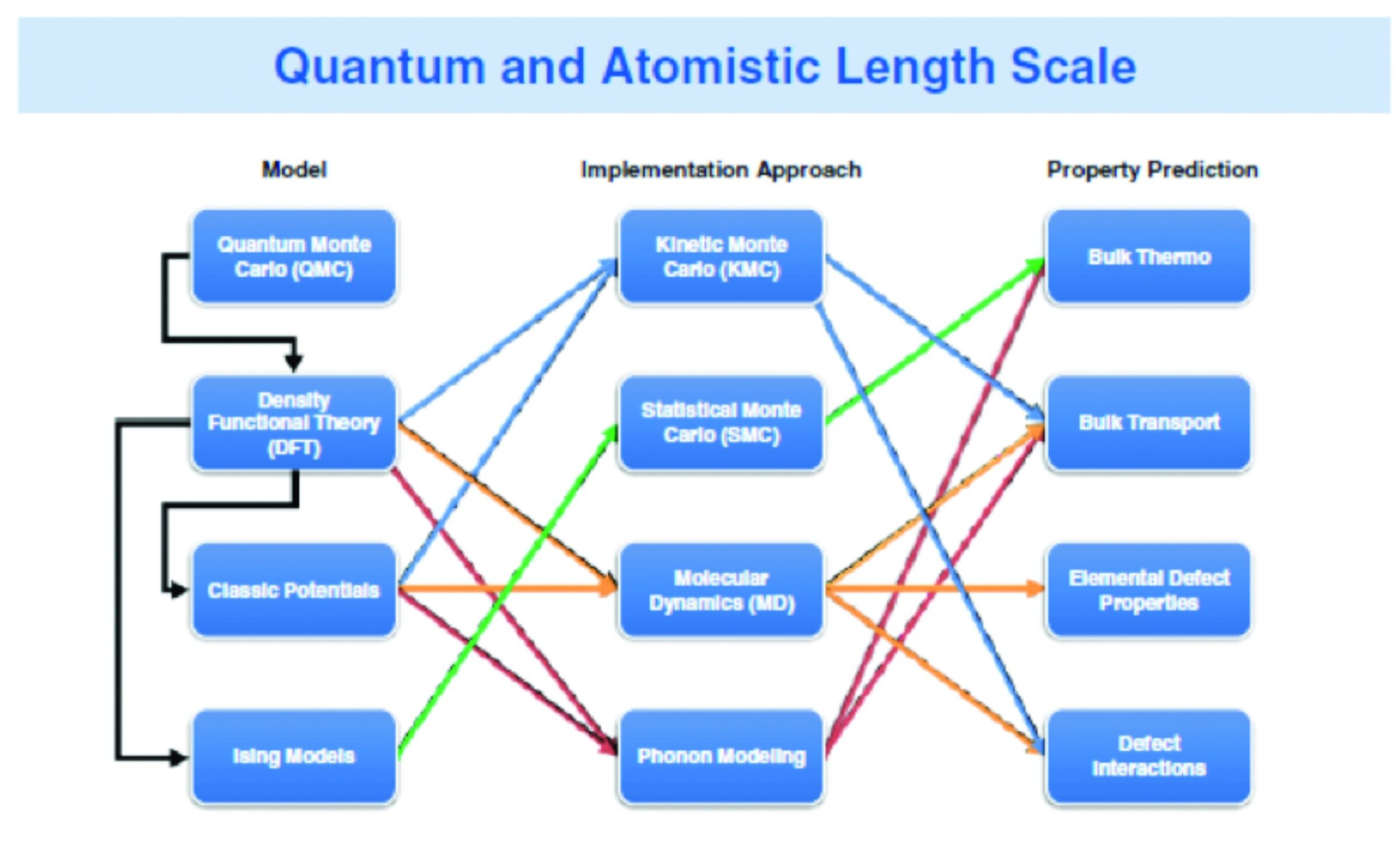
Figure 2. Modeling methods across length scales.12 Credit: TMS
For example, TMS report authors at the ICCCRD workshop suggest DFT as the primary technique available for calculating many properties of inorganic solids. The TMS report suggests that DFT is limited to strongly correlated materials with volumes of localized electrons, e.g., molecular materials and some insulating solids.
A 2008 publication13 details some of the limitations of DFT. The authors note that DFT succeeds in predicting structure and thermodynamic properties of molecules and solids. Nevertheless, they point out some of the major failures of this technique, namely, underestimation of barriers to chemical reactions, band gaps of materials, energies of dissociation, and charge transfer excitation energies. DFT also overestimates binding energies of charge transfer complexes and response to an electric field in molecules and materials. The authors also note that DFT can describe accurately a chemical bond, e.g., H2, but fails as the molecule is stretched. This failure perhaps explains the difficulty in calculating fracture behavior.
The TMS report mentions another modeling tool: quantum Monte Carlo (QMC). This is a relatively new technique that is undergoing development. However, the computational expense to use QMC is quite high.
The TMS report suggests other possible modeling methods, including use of classical potentials to represent the complex bonding interaction between atoms. The report notes that “when deriving a potential for a specific system, it is important to recognize in advance that properties are ultimately to be predicted by the simulation.”
Fracture of brittle materials
Fracture of brittle materials is an area of computation and modeling particularly relevant to the ceramics field. Researchers can calculate elastic properties of a single crystal fairly accurately. However, fundamental resistance to fracture of this crystal, fracture toughness (KIC) or fracture energy (ϒ)—although known to be directly proportional to the elastic modulus14—cannot be determined a-priori. Most factors that influence fracture behavior of even simple single crystals are available only through direct measurements, many of which are difficult to conduct, and are not necessarily fundamental in nature. This measurement problem becomes more severe as the size of materials reaches nanoscale regimes. In addition, there are anomalies to fracture behavior that researchers cannot explain. A recent review article15 gives an up-to-date perspective on the atomistics of fracture.
Environmentally enhanced crack growth under stress that can lead to time-dependent failure occurs in most ceramics. Researchers have attempted to predict stress-dependent reactions of environments, e.g., in water, with silica and silicon. Wong-Ng et al.16 used molecular orbital calculations to determine effects of bond strain on charge distribution in silica. They noted that although absolute value of the electron distribution depends on the exact configuration of strain, the general trends remain the same. In another part of the study, Lindsay et al.17 used the same molecular orbital approach to examine effects of applying stress to the Si—O bond in the presence of environments, including water and other crack-growth-enhancing environments.
Bartlett and co-workers18 conducted a quantum mechanics calculation on the reaction of water with silica using second-order perturbation theory. Their calculations showed that it should be a water molecule dimer rather than a monomer that reacts with the Si—O—Si bond.
West and Hench19 used a semiempirical method to model fracture of silica rings. Although a drawback of semiempirical techniques is their reliance on experimental data, they can model much larger groups of atoms. West and Hench concluded that in the presence of water, threefold rings will be the primary site at which bond rupture will occur, i.e., cracks will seek out threefold ring structures to follow as they grow.
Silicon in bulk form shows no evidence of water-enhanced crack growth. Molecular orbital calculations on strained silicon20 suggest that silicon shows no tendency to charge polarization as a result of strain and that straining a Si—Si bond does not lead to an attractive force between the bond and a water molecule.
Molecular dynamics (MD) is an approach to model the fracture process, in which researchers can follow simulated motion of atoms or molecules of material. Basically, it solves Newton’s equations of motion for a set of particles. Researchers have used MD fairly extensively to explore structure and brittle fracture in glasses. They can evaluate static and dynamic properties of the system as a function of temperature. A primary requirement is an accurate representation of interatomic potential between entities. Muralidharan et al.21 provide an excellent review of the field of MD simulation of silica fracture.
Ceramic-matrix composites
Because of their mechanical properties at elevated temperatures, ceramic- matrix composites, particularly SiC/SiC, are particularly attractive for many applications. According to Sullivan, one of the participants at the workshop, a pressing need exists for models of oxidation behavior of materials and life prediction methodologies for SiC/SiC composites in engine environments. Sullivan noted that this approach requires obtaining a more complete understanding of the BN coating–fiber interface oxidation mechanisms and development of algorithms that permit modeling of oxidation at the constituent level. He also indicated there is a need for improved capabilities in process modeling to streamline tool design and reduce manufacturing costs.
Computationally derived materials play a significant role in NASA’s 2015 Technology Roadmap.22 The Roadmap notes, “The objective of this emerging technology is to design materials that are optimized for their intended usage, accelerate materials development and integration of physics-based models of materials at multiple length scales with new experimental capabilities to fully capture the relationship between processing, microstructure, properties, and performance for structural and multifunctional materials.” The Roadmap indicates that “simulation methods can span nearly 10 orders of magnitude in length scale and 15 orders of magnitude in time scale.”
Summary and ongoing questions
This workshop raised many questions regarding future needs and opportunities for computation and modeling as applied to glasses, single crystals, polycrystalline ceramics, and ceramic-matrix composites. Although we have made significant progress in predicting fundamental properties of simple materials, considerable work remains. Some of the many questions follow.
- What are the most important material properties and behaviors to address?
- Which calculation techniques offer the most promise (e.g., DFT, ab-initio quantum mechanics, molecular dynamics)? Limitations on use of DFT have been indentified4—are these limitations being overcome?
- How can temperature effects be readily incorporated into calculations?
- Is fundamental data necessary for calculations easily available?
- Are the results of simulation and modeling projects being archived in such a way as to make them fully accessible to the community?
- What education is needed in computation and modeling for experimentalists and experts in the area? How can computation and modeling techniques be better used for discovery of new ceramics, reproducibility of ceramics, and obtaining robust descriptors of a material’s properties?
Disclaimer
Any opinion, finding, recommendation, or conclusion expressed in this material are those of the authors and do not necessarily reflect the views of NSF.
Acknowledgments
The authors gratefully acknowledge the many conversations with participants in the workshop and others on this topic. Steve Freiman and William Hong gratefully acknowledge the support of ASDR&E for this work. Chandler Becker acknowledges the work of her colleagues at NIST who contributed to the section on computation and modeling.

Related Articles

Market Insights
Next-gen superconducting ceramics could change how we travel and much more
Forty years ago, two physicists from IBM’s research laboratory in Zürich, Switzerland, reported a groundbreaking discovery: Superconductivity, or the quantum mechanical phenomenon in which certain materials exhibit zero electrical resistance when cooled, could be achieved at higher temperatures using ceramics. Superconductivity had been discovered decades before, but its applications had…

Market Insights
Why most AI manufacturing projects fail and how to fix it
Artificial intelligence is reshaping advanced manufacturing, especially processes involving ceramics, glasses, and other hard or brittle materials. But adopting AI is far more difficult than simply buying software and connecting machines. Manufacturers must understand the advantages and limitations of different models, so they can determine where AI fits best within…

Bulletin Features
Radiation effects on rare earth chemistry in molten salts for nuclear applications
Across the nuclear energy sector, molten salts are shaping the next generation of nuclear technologies, from advanced power reactors to used nuclear fuel recycling. In molten salt reactors (MSRs), molten salts uniquely serve as both the primary coolant and fuel medium, a dual role that sets MSRs apart from conventional…