
In a famous prediction of the longevity of his poetry, Quintus Horatius Flaccus (65–8 BCE) wrote: I have crafted a monument more lasting than bronze, more imposing than the royal structure of the pyramids, one that neither eroding rain nor the furious North Wind can bring to ruin, nor the passage of countless years and the flight of time. –Odes 3.30 (31–23 BCE); translation by J.P. Oleson
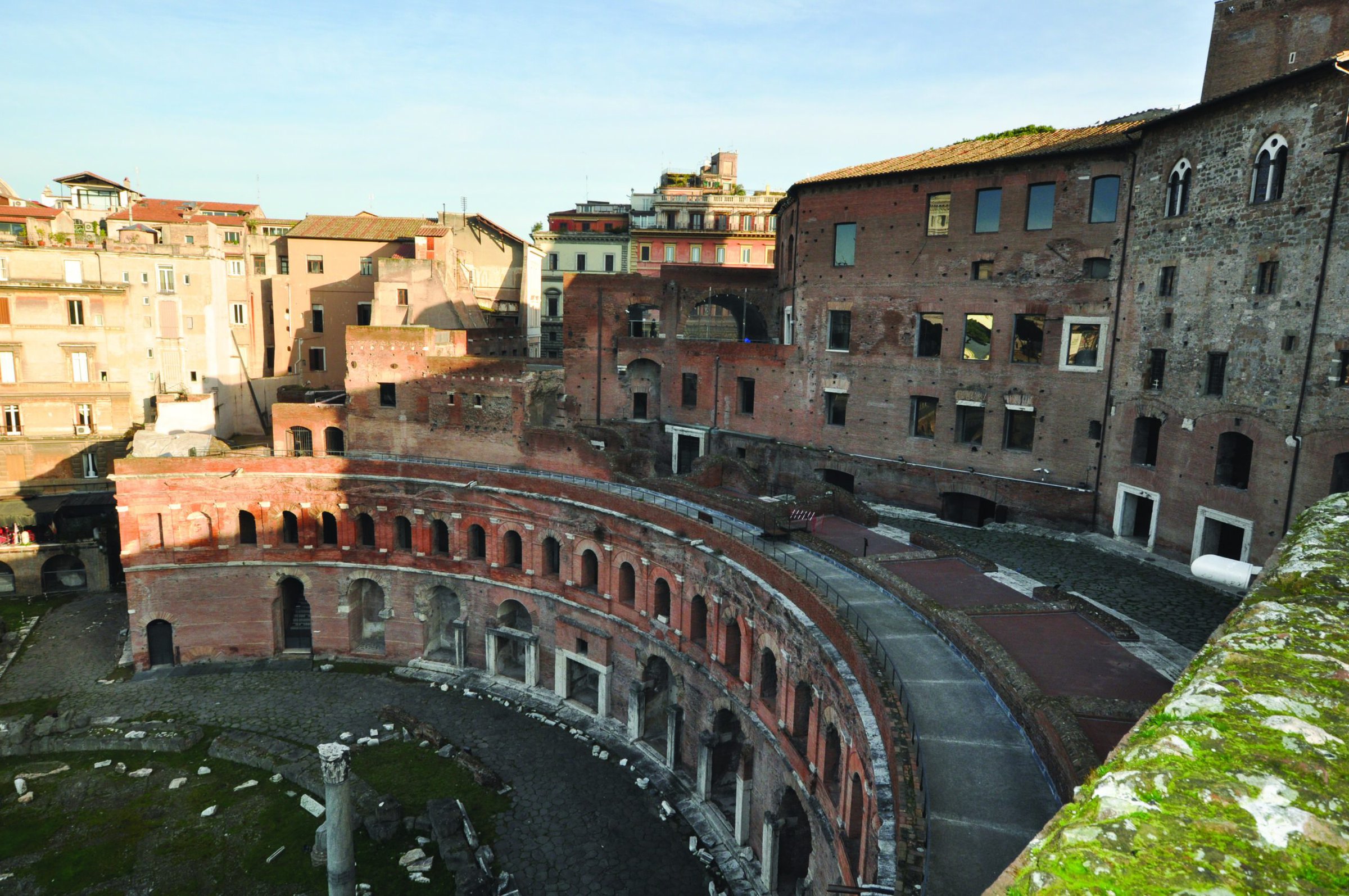
Horace could more accurately have compared the celebrated lifespan of his poems to the extremely durable concrete monuments that were being constructed in Rome and the harbors of the Mediterranean region by his patron, Octavian, who would become Emperor Augustus (27 BCE–14 CE) (Figure 1a–c).
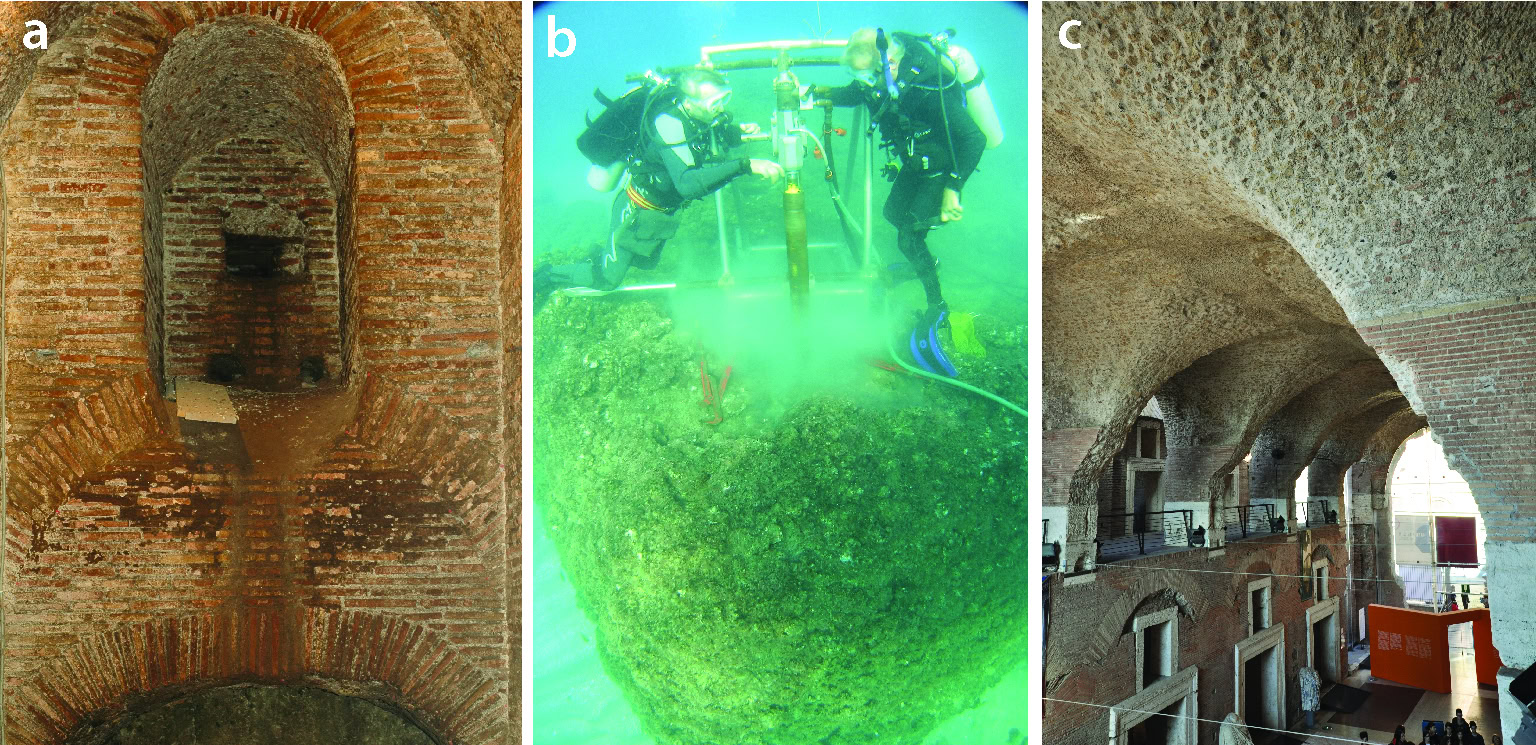
Figure 1. Roman concrete structures. a) The Tomb of Caecilia Metella, Rome (ca. 30 BCE) and b) Sebastos Harbor in Caesarea, Israel (ca. 22–10 CE) were under construction when Horace wrote the Odes. c) Trajan’s Markets (ca. 100 CE), Museo dei Fori Imperiali, Rome. (a) Credit: M.D. Jackson, (b) Credit: R.L. Hohlfelder, (c) Credit: M. Vitti
Bronzes irreversibly and inexorably decay through chloride corrosion in coastal and marine environments, and Egyptian pyramids are now collapsing—having suffered progressive differential movement and detachment of their limestone blocks, probably through anisotropic thermal expansion of calcite during heating by transit of the sun in the desert1 and subsequent disruption through seismic ground shaking.
By contrast, ancient Roman concretes appear to grow more resilient over time. They have preserved audacious architectural designs and massive harbor piers and breakwaters in seismically active environments for two millennia.2,3
Vitruvius, a Roman architect and contemporary of Horace, described in his book de Architectura (30 BCE) the geotechnical principles that form the foundation of architectural and marine concretes. These are based on a hydrated lime and volcanic ash mortar (materia) that binds a self-reinforcing framework of volcanic (or carbonate) rock fragments (caementa) (de Architectura 2.4.1–3, 2.6.1–6., 2.5.1–3, 5.12.2–6) (Figure 2a,b). The volcanic ash is a pozzolan, a material that reacts with lime in the presence of moisture to produce cementitious binding hydrates.4
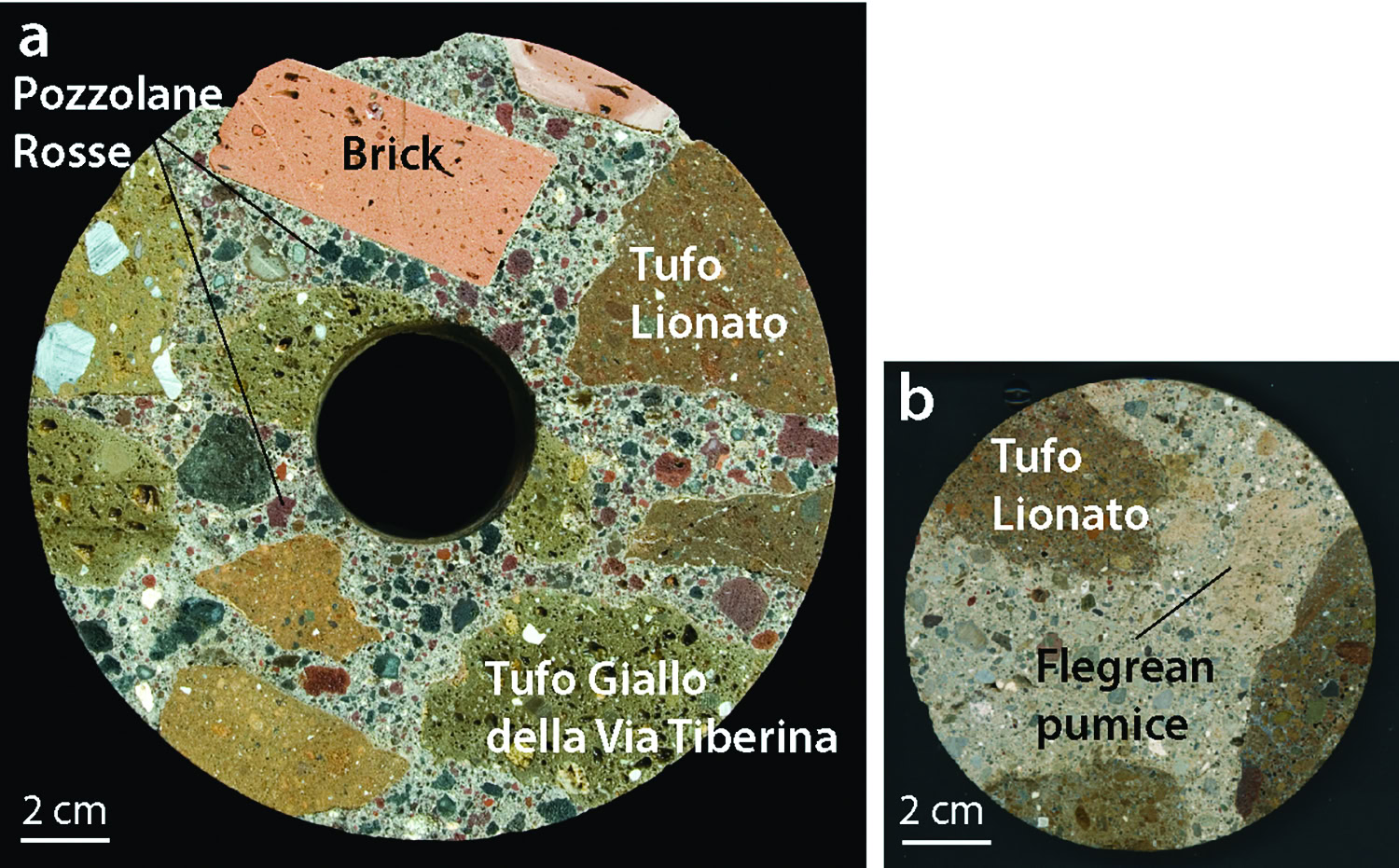
Figure 2. Drill cores of Roman concrete from a) Trajan’s Markets in Rome and b) Trajan’s Port (110–112 CE).2,3 Credit: Jackson et al., 2014; Brandon et al., 2014
Vitruvius dedicated de Architectura to Octavian who, as Emperor Augustus, transformed Rome into an imposing capital city of monuments constructed of volcanic tuff and travertine dimension stone masonry integrated with brick-faced concrete structural elements. Marble, travertine, and plaster (tectoria) cladding protected the tuff and concrete masonry.
The uniform composition and exceptional coherence of Augustan age mortars reflect more rigorous standards for calcination of lime, selection of scoriaceous tephra (Figure 3) from specific horizons of the Pozzolane Rosse pyroclastic flow from nearby Alban Hills volcano, and methods for mortar mixing and installation, as compared with republican era architectural concretes.2,5
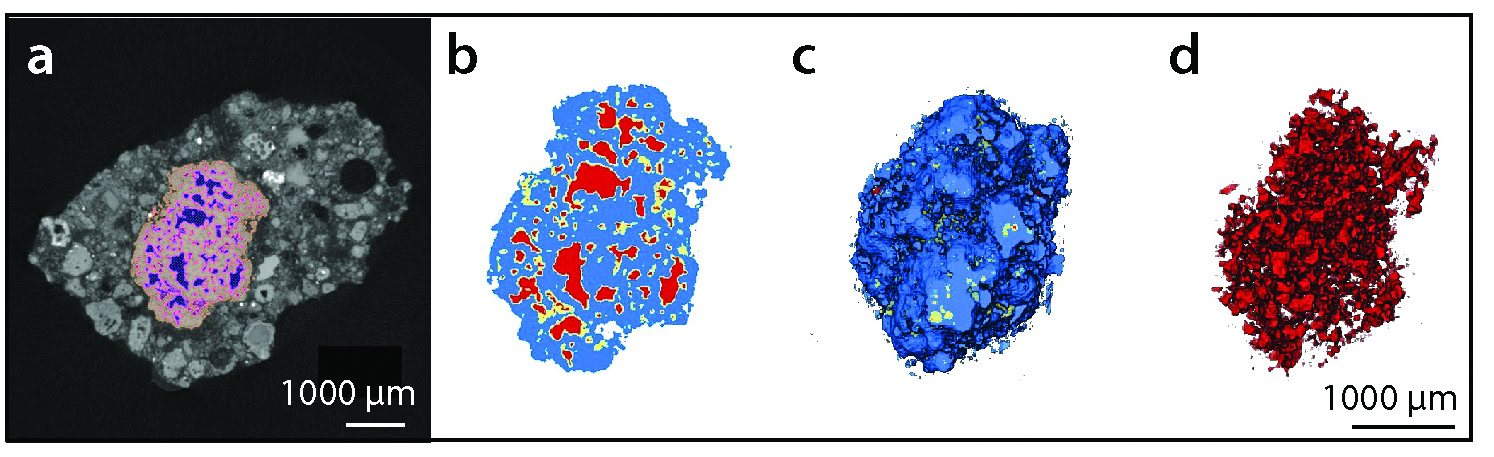
Figure 3. a) X-ray tomography of a sample of Trajan’s Markets mortar, with Pozzolane Rosse scoria highlighted. b–d) 3-D segmentation of scoria shows residual glass (blue), cementitious hydrates (yellow), and pore space (red). Credit: Y. Zhang
Meanwhile, mortars of marine harbor concretes used a different preparation of lime, complex mixing and hydration procedures, and installation in subaerial and submarine forms. All eleven harbors drilled by the ROMACONS project—an interdisciplinary study of the materials and nature of concrete cores drilled from Roman harbors and maritime structures—contain pumiceous tephra (pulvis) with geochemical trace element ratios associated with the Campi Flegrei and Vesuvius volcanic districts in the Gulf of Naples (Figure 2b).3 About 20,000 metric tons of pumiceous volcanic ash were shipped from the Gulf of Naples to Israel to construct the concrete harbor at Caesarea Maritima (Figure 1b).
Pliny the Elder described the long-term durability of marine concrete: “as soon as [pulvis] comes into contact with the waves of the sea and is submerged, [it] becomes a single stone mass (fieri lapidem unum) impregnable to the waves and every day stronger” (Naturalis Historia 35.166; 70–79 CE).
How did Romans produce concretes that gained resilience over time?
Architectural concretes
Augustan era architectural concretes, as at the Tomb of Caecilia Metella (ca. 30 BCE) (Figure 1a), have a porous yet highly durable mortar that binds coarse conglomerate of local volcanic tuff and brick. The perimeters of scoriae and the cementing matrix are reinforced through growth of platy strätlingite crystals (Figure 4a), a phyllosilicate mineral (Ca4Al2OH12[Al, Si(OH)8]∙2.2 H2O).5,6 The same mortar was used in the concrete walls of later Imperial age monuments, as at Trajan’s Markets (ca. 110 CE) (Figures 2a). Concrete vaulted structures span the large, complex interior spaces of these monuments, which have resisted moderate magnitude earthquake ground shaking for two millennia (Figure 1c).
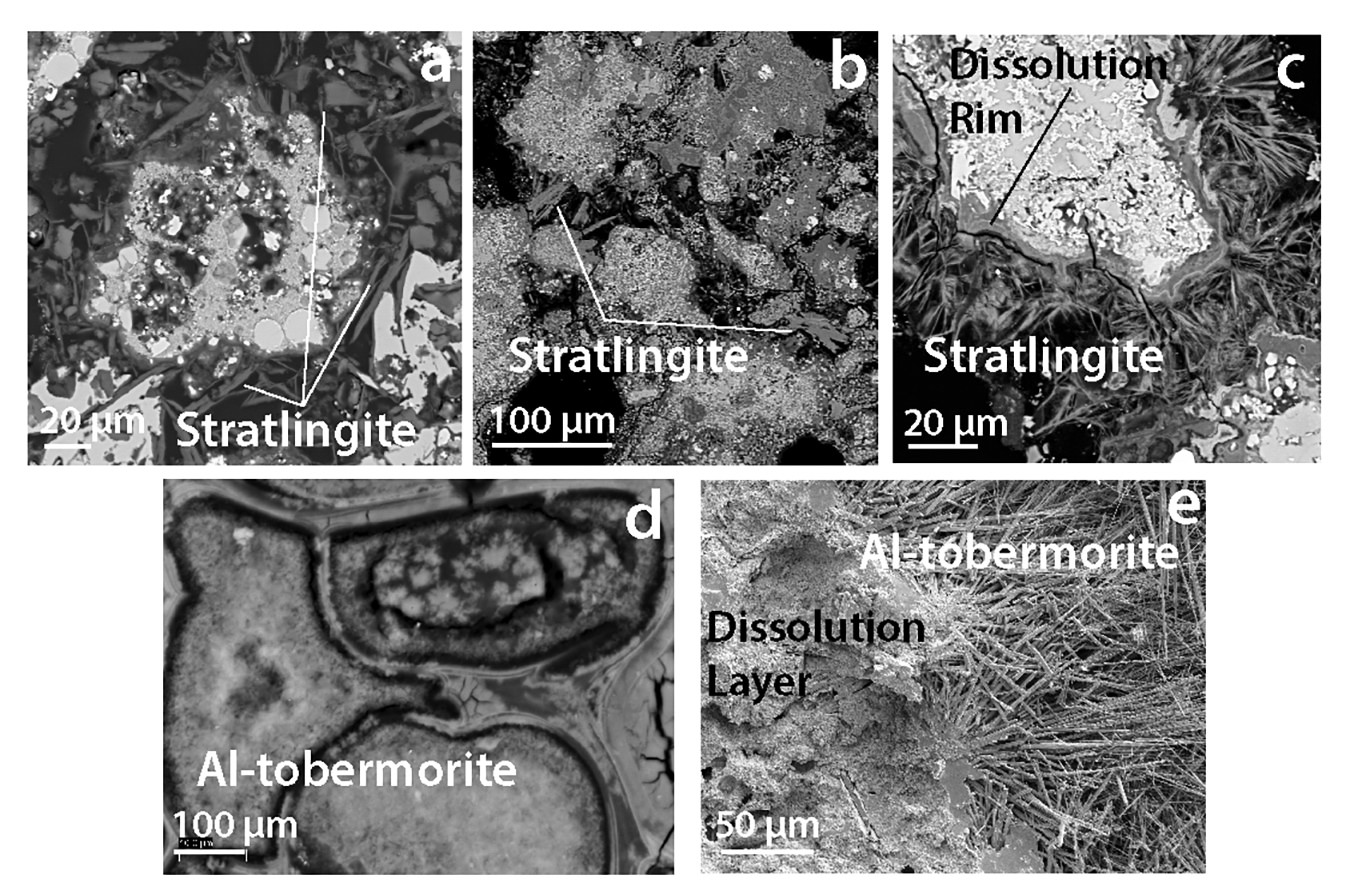
Figure 4. Mineral cements in ancient mortar samples. Strätlingite crystals in (a) Caecilia Metella mortar, (b) 180-day mortar reproduction sample (Figure 5), and (c) Trajan’s Markets mortar. Al-tobermorite in (d) Baianus Sinus pumice sample and (e) Surtsey basalt from 2017 SE-02B core at 120°C and from 107.5 m-below surface. Credit: M.D. Jackson
X-ray computed tomography (CT) investigations indicate that scoriae, volcanic crystals (leucite, clinopyroxene), poorly crystalline calcium-aluminum-silicate-hydrate (C-A-S-H) binder, and cementitious hydrates occupy about 34%, 5%, 28%, and 32%, respectively, of the total volume of mortar (Figure 3); larger scoriae (>4 mm) contain ~12% pore space.
Reproduction of the Markets of Trajan wall mortar and fracture testing experiments provide insights into how the porous concrete has resisted chemical and mechanical degradation over two millennia (Figure 5).2,7 A three-point bending experiment with a stiff testing frame measured crack mouth opening displacement, allowing mapping of crack surfaces on X-ray CT slices. Hydrated lime (calcium hydroxide, Ca(OH)2) reacts with components of the Pozzolane Rosse pyroclastic flow—alkali-rich glass in scoria and opal, poorly crystalline clay mineral (halloysite) and zeolite mineral (phillipsite and chabazite) surface coatings—to produce C-A-S-H binder and associated cementitious minerals in a complex cementing matrix at 28 days of hydration.2
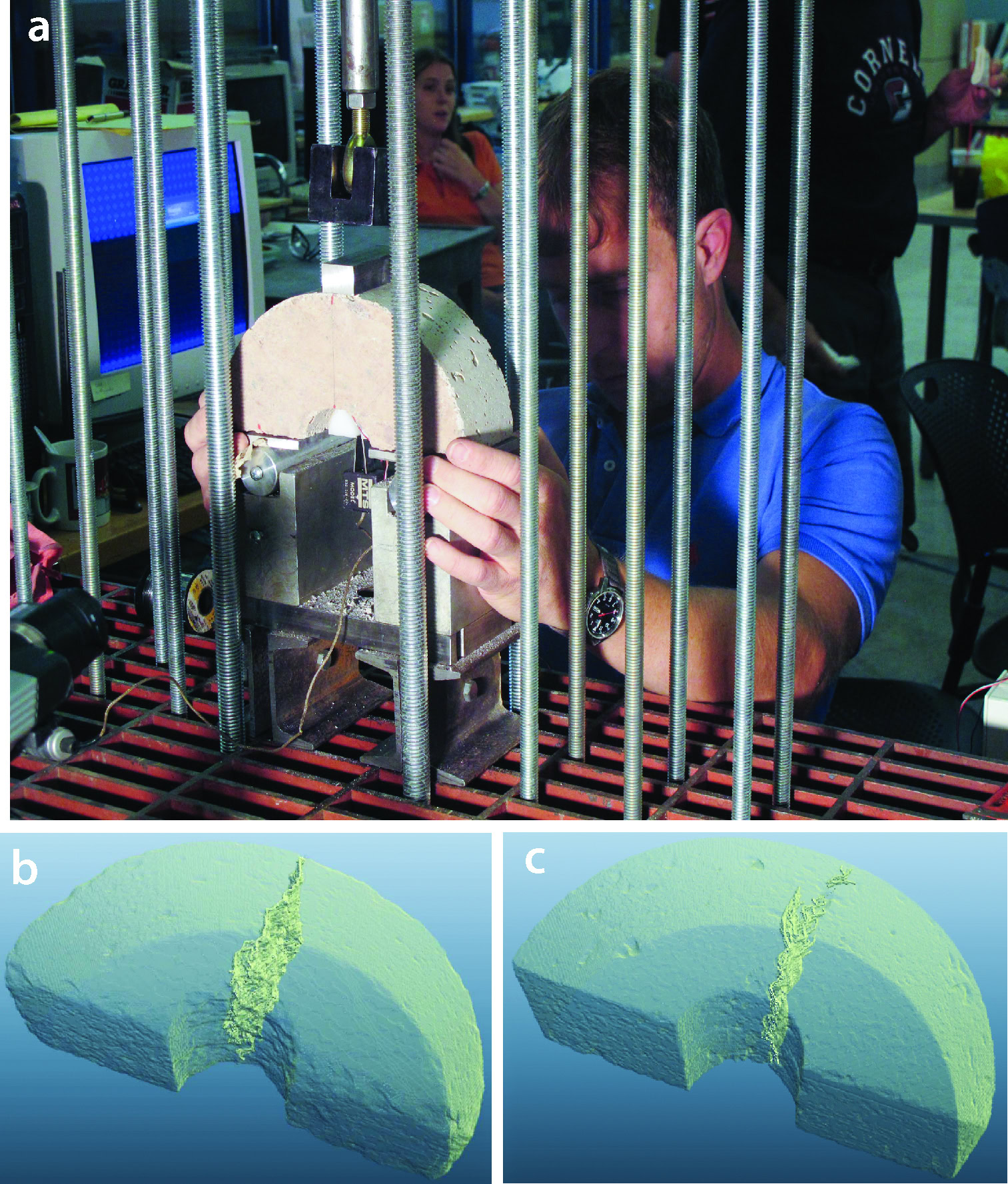
Figure 5. Analysis of reproduction of Trajan’s Markets mortar. a) P. Brune performing a fracture testing experiment. X-ray tomography results for fractures at (b) 28 days or (c) 180 days of hydration. (a) Credit: M.D. Jackson, (b, c) Credit: E. Landis
At 90–180 days, strätlingite crystals grow in the cementing matrix and interfacial transition zones of scoria (Figure 4b). Testing at 28 days (Figure 5b), produces cracks that propagated along scoria perimeters. The work, Gf, required to produce a unit increase in crack area (Gf = ΔU/ΔA, where U is strain energy and A is crack surface area) is very small, 66 N/mm. At 90 and 180 days of hydration (Figure 5c), a much larger Gf, 675 and 886 N/mm, respectively, creates a much smaller crack surface area. The well-consolidated C-A-S-H binder and strätlingite crystals form obstacles for microcrack propagation in the cementing matrix and interfacial zones of scoriae, and the cracks create segmented structures.2,7 A slow gain in strength is counterbalanced by growth of a self-reinforcing system of resilient strätlingite plates and fibers that traverse and partially fill pore spaces.
Over centuries, fluids from ground and flood waters and high relative humidity percolated through concrete foundations and walls of the monuments. Ingress of these fluids into porous scoria (Figure 3) dissolved residual alkali-rich glass (Figure 4c) and leucite (KAlSi2O6) crystals; fluids became supersaturated in calcium, silicon, aluminum, sodium, and potassium; and mineral cements, mainly strätlingite, crystallized from these fluids in vesicles (relict gas bubbles), interfacial zones, and pore spaces. A residual reservoir of alkali-rich glass still persists in larger scoriae (Figure 3, 4c). The high porosity of scoriae and the permeability characteristics of the mortar, which remain poorly understood, are critical to these autogenous, self-healing, post-pozzolanic glass dissolution processes and to the future longterm chemical and mechanical reinforcement and resilience of concrete structures.
Marine concretes
Drill cores of Mediterranean harbor concrete acquired by the ROMACONS project3 reveal that marine mortars also have a resilient C-A-S-H binder, yet the principal cementing mineral is Al-tobermorite, an unusual layered calcium-aluminum-silicate hydrate ([Ca4(Si5.5Al0.5O17 H2)] Ca0.2∙Na0.1∙4H2O) (Figures 2b, 4d, 6).8,9 Exothermic reaction of hydrated lime with components of Gulf of Naples pumiceous tephra—alkali-rich glass and zeolite surface coatings—produced C-A-S-H binder and a short-lived period of high pH (>12) and elevated temperatures (65°C – 95°C) in the enormous marine structures. Substitution of alumina tetrahedra (AlO4)-5 for silicon tetrahedra (SiO4)+4 in the layered C-A-S-H structure and in the Al-tobermorite lattice produces a charge imbalance that is resolved through incorporation of alkali cations, Ca2+, Na2+, and K+.8,9 This provides added chemical resilience as compared with calcium-silicate-hydrate (C-S-H) and ideal tobermorite.10,11
Synchrotron X-ray microdiffraction (µXRD) and microfluoresence (µXRF) investigations at the Advanced Light Source (ALS) Beamline 12.3.2 map the distribution of mineral cements in Baianus Sinus concrete in the Bay of Pozzuoli (ca. 70—30 BCE) (Figure 6). Relict lime clasts contain mainly C-A-S-H and Al-tobermorite (Figures 6a, c, f), produced pozzolanically.8,9 Pumice vesicles also contain Al-tobermorite (Figures 6b, c, d), but produced post-pozzolanically.
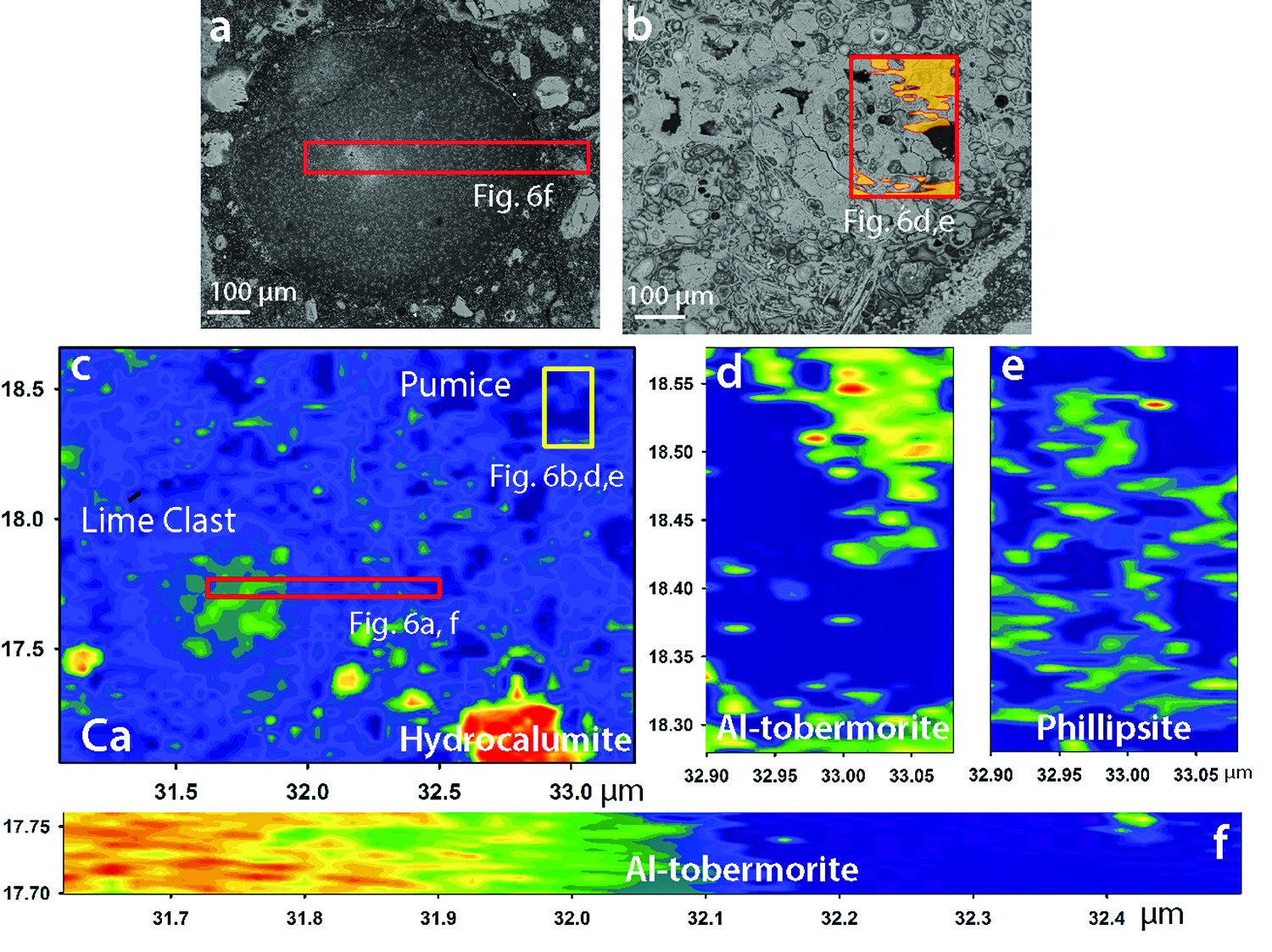
Figure 6. Baianus Sinus mortar sample analyzed at ALS Beamline 12.3.2. a, b) Scanning electron micrograph-backscattered electron images showing relict lime and pumice clasts. c) X-ray microfluorescence map of calcium. d,e) X-ray microdiffraction maps showing (d) Al-tobermorite and (e) phillipsite mineral cements from panel B and (f) Al-tobermorite from panel A. (a, b) Credit: M.D. Jackson, (c, d, e, f) Credit: H. Chen
Pozzolanic and post-pozzolanic Al-tobermorite crystals show differences in their Ca/(Si+Al) compositions and silicon-aluminum bonding environments.12 Experimental data indicate that hydrated lime was quickly consumed early in the history of the marine concrete.3 Then, seawater percolating through the large structures dissolved residual pumice glass and zeolite; the fluids changed composition and became locally supersaturated in calcium, silicon, aluminum, sodium, and potassium; and Al-tobermorite and new zeolite mineral cements crystallized from these fluids at ambient temperatures. Renewed episodes of fluid flow caused additional dissolution of glass and some mineral cements; the fluids changed composition; and new mineral cements precipitated.12
Pliny the Elder accurately compared these active cementitious processes to geologic processes in pyroclastic deposits, which transform glassy pumiceous tephra (pulvis) into a cemented rock called volcanic tuff (tofus) (Naturalis Historia 35.166).13 The geologic analog for these evolving mineral cements is the Surtsey volcano in Iceland, a small basaltic island and UNESCO World Heritage site that grew from the seafloor during 1963—1967 eruptions (Figure 7).14 In drill cores recently obtained from the still-hot volcano (http://surtsey.icdp-online.org), the basaltic glass is dissolving around vesicles, and Al-tobermorite is crystallizing from the strongly basic solutions in these relict pore spaces (Figure 4e).15
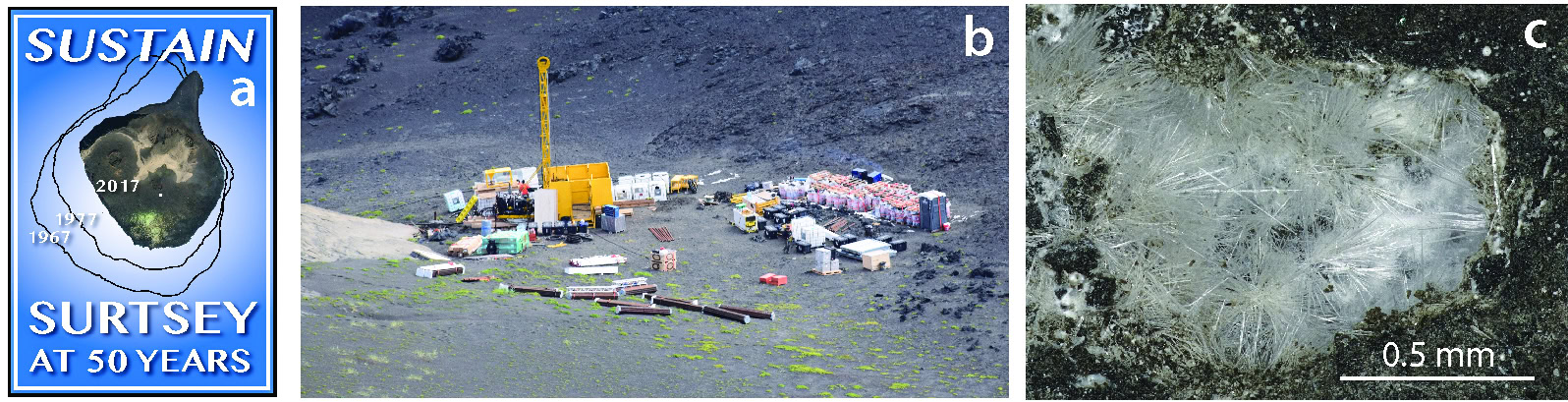
Figure 7. a,b) Surtsey volcano in Iceland is the location of the 2017 International Continental Drilling Program SUSTAIN project.
c) Scanning electron microscope-secondary electron image of Al-tobermorite from SE-03 core at 124°C and a 147-m inclined depth. Credit: J. Kück
Beneficial corrosion of glass aggregates
During the first century BCE, Roman artisans perfected the art of durable glass fabrication for vessels and decorative objects. Studies of these glasses submerged in seawater from the Iulia Felix shipwreck (200—300 CE) in northern Italy are attracting interest from a community of scientists who are designing glasses and vitrified products to immobilize nuclear waste that must remain durable for thousands of years. Alteration of the Roman glass in seawater mainly occurred along internal fracture surfaces. Slow renewal of fluid flow into the cracks caused dissolution of the glass; supersaturation of the solution with calcium, silica, and aluminum; and eventual precipitation of crystals, mainly calcite and clay mineral, that sealed the cracks, preventing further fluid flow and dissolution of the surrounding glass.16–18
During this same period, Roman engineers perfected technologies for concrete production that emphasized, by contrast, the beneficial chemical attack of volcanic glass in architectural and marine mortars. These technologies entailed: a) rapid glass dissolution during pozzolanic reaction at high pH (>12); b) an extended period of metastable equilibrium with internal fluids; c) intermittent periods of renewed fluid flow that dissolved glass and crystals and produced alkaline, supersaturated solutions in fine-scale microenvironments at lower pH (9–10.8 for Stage II, and >10.8 for Stage III glass dissolution); and d) eventual crystallization of mineral cements in these microenvironments.12,15
Romans selected a wide-ranging particle size distribution for scoriae and pumice (and, also, ceramic fragments) in the mortars. In fine particles in the cementing matrix, glass has been mainly replaced by cementitious hydrates. In larger scoriae and pumice, however, glass persists (Figures 3 and 4c,d). Understanding residual glass in the Roman mortars (and Surtsey tuff) and the permeability characteristics of concretes (and Surtsey tuff) will provide insights into their future performance, as well as to the development of extremely durable, environmentally sustainable, Roman concrete prototypes that could be applied to modern concrete infrastructure.
How can Roman principles benefit modern cementitious materials?
Natural pozzolans are earth materials—pumice, volcanic glass, and metakaolin—that partially replace Portland cement to reduce CO2 emissions, enhance durability, and create high-performance characteristics in innovative cementitious materials.19 These materials played an important role in increasing the durability of early cement-based concrete infrastructure of the western United States,20 but were largely replaced by fly ash, a waste product from coal-fired power plants, in the 1970s. With the current decline in coal-fired energy, fly ash is now becoming technically and/or economically unfeasible for use in concrete.
Production of cement powder, through sintering of carbonate rock and carbonate- and/or silicate-rich argillaceous rock at ~1,450°C, currently emits ~8% of global anthropogenic CO2. When cement powder is mixed with water (and additives), it forms a dense paste that binds inert sand and gravel aggregates. Concrete durability and longevity rely on low porosity and minimal aggregate reactivity with interstitial fluids, since chemical attack results in deleterious expansions, increased permeability, and disaggregation over time. The resilience of concretes that partially replace cement with natural pozzolans is due, in part, to production of resilient C-A-S-H binder, for which the layered structure of Al-tobermorite is a crystalline model.8,10,11,19
Metakaolin, for example, is a natural pozzolan produced through calcination of kaolin clay deposits at 600°C–800°C. The highly reactive, amorphous powder increases pozzolanic consumption of calcium hydroxide and enhances availability of aluminum to produce C-A-S-H binder in blended cement paste. Poorly crystalline halloysite surface coatings on Pozzolane Rosse scoriae played a similar role in Roman architectural concretes (Figures 2a and 3).5
By contrast, the slow hydration of Roman architectural mortar (Figure 5) is not considered an advantage in modern structural concrete systems. For drill hole cementing, however, set-delayed compositions are needed to preserve downhole flow. The addition of siliceous pumice, hydrated lime, and set retarders produces a pumpable fluid state in set-delayed cement for extended periods. Reasonable compressive strengths develop after activation at low temperatures, and the pumiceous glassy component seems to prevent expansive alkali-silicate reactions (ASR) that crack and deform concrete.
Recent advances have increased the compressive strength and durability of structural concretes that regularly replace up to 35 weight% Portland cement with finely ground siliceous volcanic glass containing up to 8 weight% Na2O + K2O. At 28 days of hydration, strengths exceed 27 MPa (4,000 psi) and ASR is entirely mitigated in mortar bar tests. This blended pozzolanic volcanic glass–cement mix is becoming a common, cost-reducing component of high-performance concrete construction in northern California.
An LC3 system (limestone + calcined clay + clinker, ground to produce Portland cement powder) was implemented in early California concrete construction.20 It now combines calcined impure clays with limestone filler to improve performance and provide a global, locally sourced, low-cost, low-CO2 cement. The limestone addition is analogous to travertine and marine limestone coarse aggregate that increases compressive strength at the structural scale in Roman concrete foundations and marine breakwaters.
Challenges
Roman concretes produced substantially less CO2 than conventional Portland cement concretes, which were first patented in 1824. This is because the Roman mixes contained <15 volume% hydrated lime (calcined at ~900°C from limestone), ~45–50 volume% coarse rock aggregate, and 35–45 volume% fine sand to gravel-sized volcanic tephra.2,3,9 The conglomeratic rock and tephra fabric apparently created a 3-D clast-supported framework that resists displacement and fracture when subjected to the force of impact of large storm waves and seismic ground shaking. A better understanding of this conglomeratic fabric is needed, however, before applications can be developed in a Roman prototype.
Volcanic tephra forms a beneficially reactive, residual glass reservoir in Roman concretes, yet substituting Roman alkali-rich volcanic glass with less alkali-rich compositions available in the U.S., mainly basalt and rhyolite, remains problematic. Investigations of active cementitious systems recorded by time-lapse basaltic drill cores from the Surtsey volcano natural laboratory (Figure 7) (http://surtsey.icdp-online.org) will provide important guideposts for maintaining the longevity of glass aggregates in chemically dynamic microenvironments and evolving alkaline water chemistries.15 These reactions are especially important in geopolymer-type concretes, which contain little calcium and are produced through reaction of aluminosilicate materials with a caustic activator.
The pH of Roman post-pozzolanic cementitious systems is lower than the portlandite [calcium hydroxide, Ca(OH)2] system required to sustain a passivating layer that prevents corrosion of steel reinforcement. The long term persistence of portlandite in cement-based concretes, however, gives rise to numerous forms of attack and degradation.4 Through early, rapid consumption of portlandite, Romans quickly transitioned their concretes to a state of metastable equilibrium that could adjust to the inevitable ingress of fluids through beneficial corrosion of a reactive glass reservoir.12,15 The optimal packing of aggregates at multiple scales (mm, cm, m) that Romans apparently achieved with coarse rock aggregate and tephra could potentially be applied to concrete infrastructure without steel reinforcement. Intermittent saturation with fluids and dissolution of glass (and crystals) would drive long-term, energetically self-sustaining cementitious systems.
Conclusions
After 2,000 years, the greater part of Horace’s poetry, along with the monumental concrete structures produced by his patron, Emperor Augustus, clearly have escaped oblivion. The concretes developed by Roman architects and engineers have unique material characteristics that have never, to date, been replicated. Roman volcanic rock-hydrated lime concrete prototypes could potentially further reduce CO2 emissions; enhance chemical and mechanical resilience and self-healing properties; conserve freshwater resources through the use of seawater (or brines); and greatly extend the service life of concrete structures in marine environments.
They also could be applied to concrete encapsulation of hazardous wastes and cementitious waste forms for low-activity nuclear wastes through crystallization and cation exchange in certain mineral cements, such as Al-tobermorite.10 By virtue of their extreme durability and long service life, they could substantially reduce the energetic and environmental costs of rebuilding an aged and deteriorating concrete infrastructure, using the exceptional knowledge and expertise (scientia), theory (ratiocinatio), and skillful effort (fabrica) developed by astute Roman architects and engineers (Vitruvius, de Architectura 1.2.1–2).
Acknowledgements
The authors appreciate contributions of Carol Jantzen, Savannah River National Laboratories; Massimo Vitti, Sovrintendenza Capitolina di Roma; Philip Brune, Magic Leap; Eric Landis, University of Maine; Maria Juenger, University of Texas, Austin; Chris Whidden, Optipozz; Brian Jeppson, Hess Pumice; and Tom Adams, Nevada Cement Company. Data acquired at ALS beamlime 12.3.2 at Lawrence Berkeley Laboratories were supported by the Director of the Office of Science, Department of Energy, under Contract No. DE-AC02-05CH11231. The SUSTAIN drilling project is sponsored by the International Continental Drilling Program.
Key terms
– Pozzolan: material that reacts with lime (CaO) in the presence of moisture to form cementitious hydrates
– Post-pozzolanic processes: precipitation of mineral cements from pore fluids and transformations of reactive components after portlandite [Ca(OH)2] has been fully consumed through pozzolanic reactions
– Alkali-activated material:* material formed by the reaction between an alumino-silicate precursor and alkaline activator, with properties
comparable to those of a traditional cement binder
– Geopolymer:* alkali-activated binder material containing little or no calcium; often derived from a metakaolin or a fly ash precursor
*J.L. Provis, S.A. Bernal, “Geopolymers and related alkali-activated materials,” Annu. Rev. Mater. Res., 44, 299–327 (2014).
Capsule summary
Past lessons
Ancient Roman concretes have survived for thousands of years thanks to the materials’ unique characteristics. Careful analysis of
Roman cemetitious microstructures and properties can provide insights to improve engineering strategies for modern cementitious materials.
Current needs
Evolving material supply streams, rising concern over environmental sustainability, and the need for more durable formulations are driving
innovations in modern formulations for cementitious materials. New strategies are needed to address all these concerns to improve modern concretes.
Future potential
Roman concrete prototypes could potentially reduce greenhouse gas emissions, enhance resilience and self-healing properties, conserve resources, and greatly extend the service life of modern concrete structures in marine environments, in addition to providing encapsulations for hazardous wastes.

Related Articles

Market Insights
Next-gen superconducting ceramics could change how we travel and much more
Forty years ago, two physicists from IBM’s research laboratory in Zürich, Switzerland, reported a groundbreaking discovery: Superconductivity, or the quantum mechanical phenomenon in which certain materials exhibit zero electrical resistance when cooled, could be achieved at higher temperatures using ceramics. Superconductivity had been discovered decades before, but its applications had…

Market Insights
Why most AI manufacturing projects fail and how to fix it
Artificial intelligence is reshaping advanced manufacturing, especially processes involving ceramics, glasses, and other hard or brittle materials. But adopting AI is far more difficult than simply buying software and connecting machines. Manufacturers must understand the advantages and limitations of different models, so they can determine where AI fits best within…

Bulletin Features
Radiation effects on rare earth chemistry in molten salts for nuclear applications
Across the nuclear energy sector, molten salts are shaping the next generation of nuclear technologies, from advanced power reactors to used nuclear fuel recycling. In molten salt reactors (MSRs), molten salts uniquely serve as both the primary coolant and fuel medium, a dual role that sets MSRs apart from conventional…