
Society values renewable energy technologies for the carbon they do not contribute to the environment. They do, however, wreak havoc on electricity markets and can collapse the price of electricity, almost instantaneously, at times of high wind or solar input.
Charles Forsberg, MIT principal research scientist, and his team developed the Firebrick Resistance-Heated Energy System (FIRES) to smooth the roller coaster fluctuation of electricity markets.
Forsberg, a nuclear scientist, leads a multi-university research team on combining salt-cooled reactor technology and gas turbines to generate electricity. That work led to a need to store heat. The idea is to have power plants buy their own power when it is cheap and use it to electrically heat firebrick. Later, the stored heat is used to reduce the cost of bringing gas turbines up to temperature for maximum electricity production when prices are favorable.
Forsberg, with his deep knowledge of electricity market dynamics, saw a near-term market opportunity for FIRES.
“You essentially have two markets—the market for heat input into industrial boilers and the second one into higher-temperature, direct-fire industrial processes,” he says.
The system has been demonstrated in China to heat large apartments, for example. “They’re using electric heat to minimize burning of coal near cities. The electricity generator sells cheap electricity at night to charge the 8 MWh heat storage unit,” says Forsberg.
The promise of FIRES is the opportunity to capture and save extremely low-cost electric power in the form of high-temperature heat for industry.
“This is an economic tradeoff. I can buy cheap electricity at certain hours or I can buy natural gas and the market will determine what my preferred course of action is and how much firebrick I should buy for each storage unit,” he says. “This is a bottom-price driven market.”
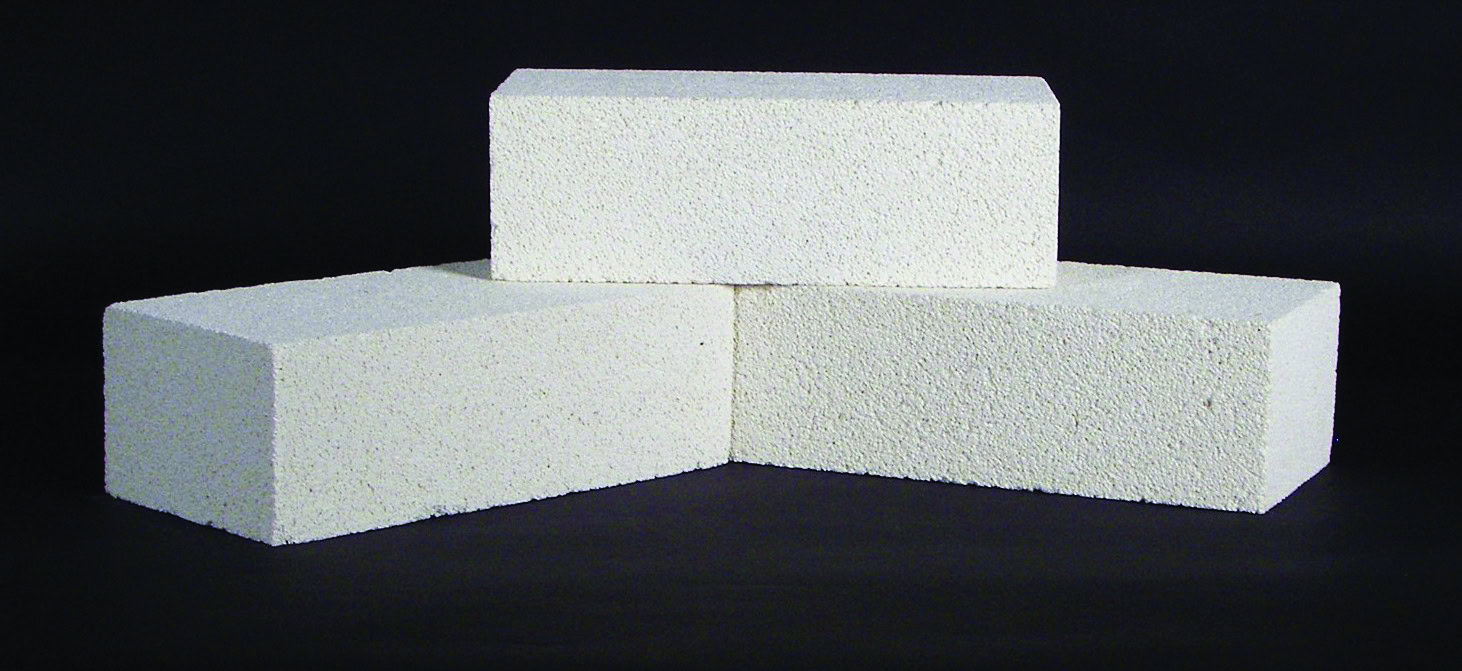
The concept is simple. Electric heating elements heat a firebrick structure, which can be quite large—on the order of hundreds to thousands of cubic meters. Clay-based firebrick is cheap. “Firebrick is good to 1,600˚C. The limiting factor is the electrical heaters,” according to Forsberg. Cal-rod heating elements—similar to the type used in household kitchen ovens—heat only to about 850˚C. Typical silicon carbide heating elements are too expensive for this system, so the team is developing conductive firebrick made of low-grade silicon carbide.
Conductive firebrick would have the advantage of heating brick directly. These heating ‘elements’ made of many bricks with cooling channels can be large, up to several meters thick. The channeled structure offers many pathways for electric heating, which eliminates failure if a crack occurs. Direct heating of the brick will heat brick more uniformly. The key will be cost, which is why the team is focused on low-grade silicon carbide. The team plans to evaluate mixed clay-based and conductive firebrick systems, too.
“We want cheap conductive firebrick. It’s still early. Our goal is to find a cheap material with control over electrical conductivity in an oxidizing environment,” Forsberg says.
Because electricity markets are regional, FIRES likely will be adopted first in the Great Plains (wind), then the Southwest (solar). Ethanol producers, many of which are located near wind farms, would be prime candidates for FIRES. “Manufacturing companies and utilities have the biggest commercial incentive to get it deployed,” says Forsberg. The first commercial units should come online around 2020.
FIRES offers another advantage—the ability to stabilize the grid. Over-supply of wind or solar energy contributes to price collapse of electricity.
“With wind and solar there are a lot of transients generated that FIRES can stabilize. Energy producers can sell large amounts of electricity very quickly, or the FIRES owner can turn it off at a moment’s notice—for a price. The near-term market may be cogeneration facilities that currently send electricity to the grid and heat to industry,” he says.
The market for FIRES only emerged in the last four years with the diversification of the nation’s energy portfolio. It will take time for the energy producing portfolio to settle into its optimal mix.
“Oh, there will be decades of wild changes in the electricity markets. We think maybe 20 years of chaos.”
Return to main article: “Converting excess low-priced electricity into high-temperature stored heat for industry and high-value electricity production“


Related Articles

Market Insights
Engineered ceramics support the past, present, and future of aerospace ambitions
Engineered ceramics play key roles in aerospace applications, from structural components to protective coatings that can withstand the high-temperature, reactive environments. Perhaps the earliest success of ceramics in aerospace applications was the use of yttria-stabilized zirconia (YSZ) as thermal barrier coatings (TBCs) on nickel-based superalloys for turbine engine applications. These…

Market Insights
Aerospace ceramics: Global markets to 2029
The global market for aerospace ceramics was valued at $5.3 billion in 2023 and is expected to grow at a compound annual growth rate (CAGR) of 8.0% to reach $8.2 billion by the end of 2029. According to the International Energy Agency, the aviation industry was responsible for 2.5% of…

Market Insights
Innovations in access and technology secure clean water around the world
Food, water, and shelter—the basic necessities of life—are scarce for millions of people around the world. Yet even when these resources are technically obtainable, they may not be available in a format that supports healthy living. Approximately 115 million people worldwide depend on untreated surface water for their daily needs,…