
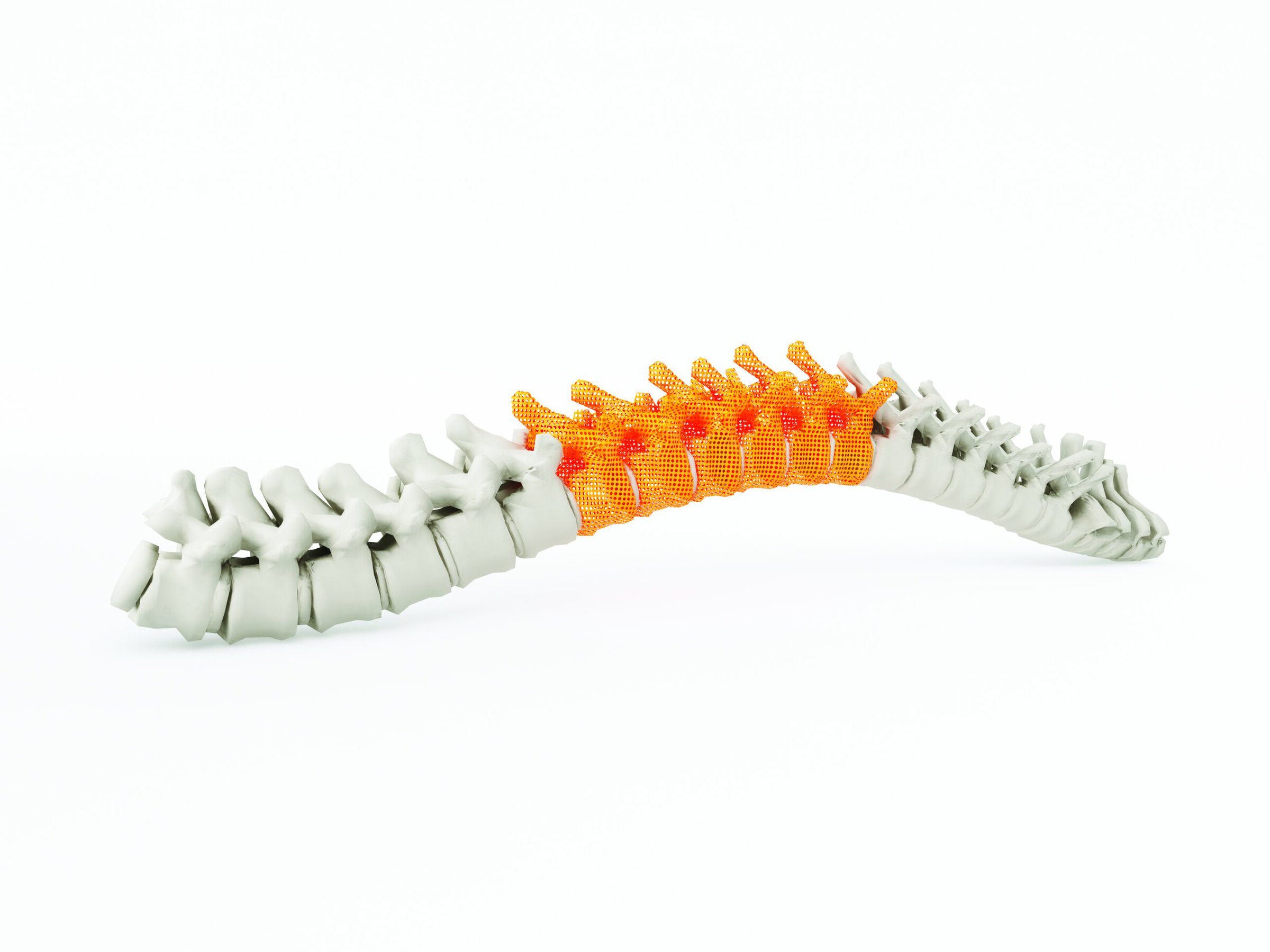
Four-dimensional viscous flow sintering of 3D-printed bioactive glass scaffolds
Bioglass® is a leading synthetic bone graft material as it can help regenerate damaged or diseased bone. Invented in the 1970s, its success has been limited to powder or granular forms. Granular Bioglass has been revolutionary in non-load bearing defects; however, to repair and regenerate bone in loaded defects, a 3D scaffold is required to support and guide the bone through repair.
To form a 3D construct from glass materials, the traditional processing methods use an organic binder mixed with glass to create a green body of the desired shape; also, a surfactant, space holder, or polymer foam acts as a template. The mixture is then heated, removing the organic binder and fusing the glass particles together by sintering. Bioglass products have not been produced in this manner because when glass is subjected to the sintering heating cycle, it crystallizes. This crystallization affects how glass behaves in biological environments, resulting in a reduction of its bioactivity.1 Therefore, a compromise needs to be made—either the produced scaffold is well sintered, giving it good mechanical properties but losing some of its bioactivity; or, the scaffold has poor mechanical properties but optimum bioactivity.