
Refractories are essential to the industries that we as a society rely on. From steel, aluminum, and glass manufacturing to the cement industry, from hydrocarbon processing industries to paper and even food processing, refractories work behind the scenes in a crucial capacity anywhere that involves thermal processing.
As these industries commit themselves to reducing their carbon footprints, for example, by adopting alternative energy sources such as hydrogen, refractory manufacturers will need to develop new products that can support customers in reaching their goals. In turn, the raw materials suppliers that work with the refractories industry have a role to play in supporting these sustainability initiatives.
Imerys S.A. (Paris, France) is a multinational group that specializes in the production and processing of industrial minerals, including for the refractories industry. In an email exchange, Bulletin editor Eileen De Guire talked with ACerS Fellow Nancy Bunt, global sustainability director of Imerys’ Refractory, Abrasives, and Construction Business Area, about the need to sustainably manage the consumption of minerals and how Imerys is working toward that goal.
Bunt
Sustainability at Imerys
Q. What is Imerys’ approach to sustainability?
A. In the last two years, we have seen a dramatic acceleration of the importance of sustainability and corporate social responsibility in the eyes of the public. Our stakeholders’ expectations are rapidly changing.
As consumption levels around the world increase, the growing demand for natural resources places pressure on our natural systems. Our expertise and innovative mindset as the world’s leading supplier of minerals-based specialty solutions enable us to extract and transform minerals responsibly.
Q. What is the Imerys SustainAgility Framework, and how did it come about?
A. Launched in 2018, our SustainAgility program focuses on continuous improvement to empower our people, care for our planet, and build for the future by fostering positive change and creating value for our shareholders.
SustainAgility is structured around six pillars and 16 interconnected themes, allowing us to unlock better futures for our people, our customers, and our planet. Through SustainAgility, we create value for our stakeholders, and we are aligned with the operations of the United Nations Global Compact Ten Principles, which we became a signatory of in 2016. We strategically act to advance nine of the United Nations Sustainable Development Goals, with more than 365 community initiatives since 2012 and 55 initiatives launched in 23 countries in 2021.
Q. What are some of the sustainability initiatives taking place within the SustainAgility Framework?
A. Decarbonizing our operations is a massive challenge for us, and we now have made the future commitment to our planet to accelerate toward the 1.5°C trajectory, using science-based targets to reduce emissions by 42% in absolute terms by 2030. We are working on increasing our energy efficiency, increasing our use of renewable electricity, changing our energy mix to further integrate biomass waste, investing in innovative technologies, and accelerating our partnerships with value chain partners.
Environmental management is based on eight environmental protocols. All our sites have been audited for environmental management using a maturity matrix for self-assessment, which is then audited against by auditing teams. Of course, as a mining company, land rehabilitation and biodiversity have been on our radar for years. The proper management of biodiversity is key to the social acceptance of our mining activities, mineral extraction, and to our reputation; as regulations increase, our ability to access resources and sustain our operations for the long term is key.
We have made the commitment to operate with no net loss of biodiversity as a signatory of Act4nature, which requires us to comply with 10 public commitments on biodiversity. By 2024, we will have achieved the ambitious targets set forth by Act4nature. We will have biodiversity action plans at 100% of our quarries and mines.
But we go further by acknowledging that optimizing use of natural resources and water at our sites—plus recycling—is key. In particular, we focus on water management requirements for our sites in areas where water scarcity is an issue.
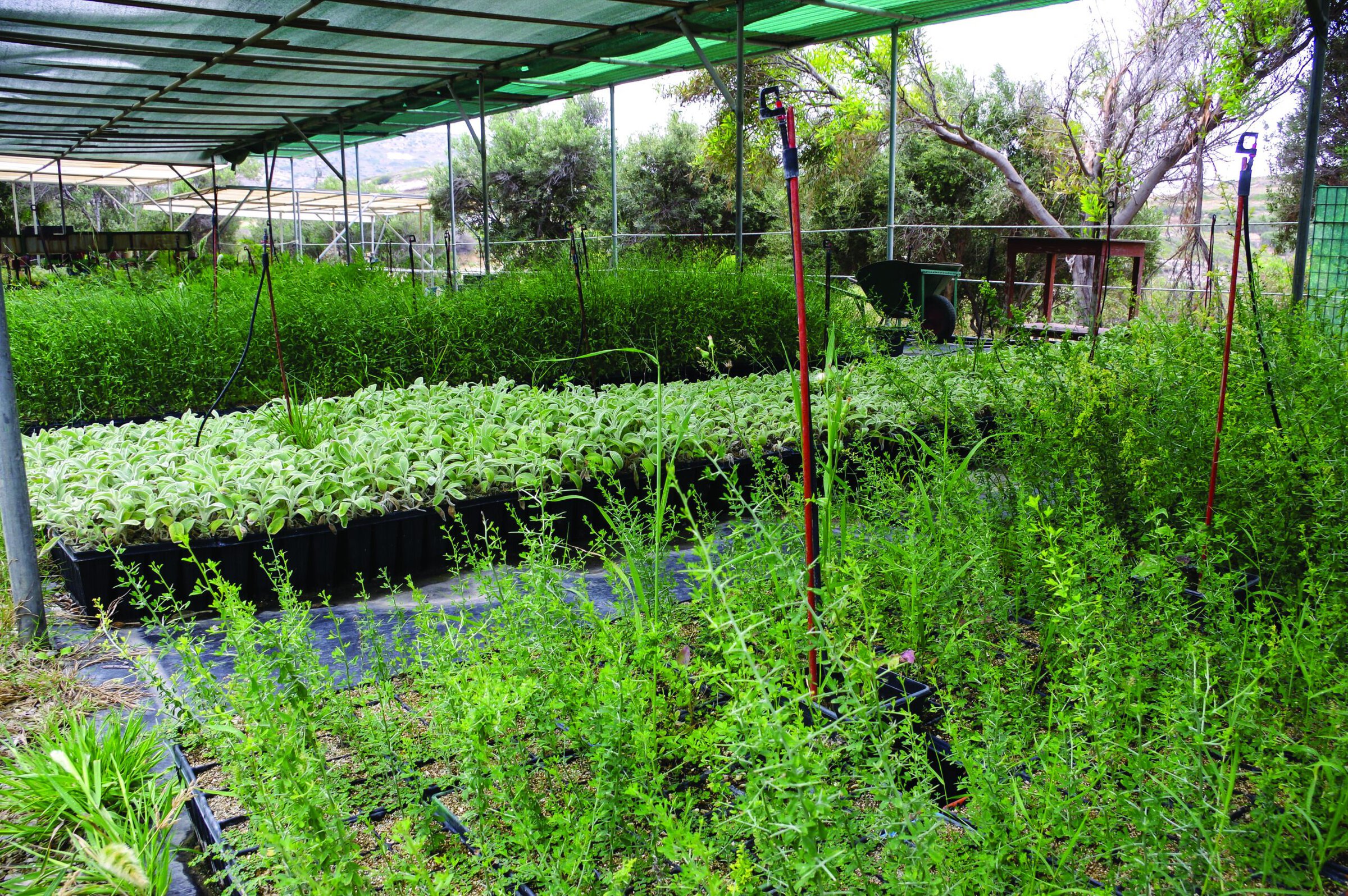
Imerys’ own native plant nursery in Milos, Greece, for land rehabilitation and restoration. Credit: Jean Philippe Siblet
Q. What is your role within the SustainAgility Framework?
A. Within this framework, my role is to lead Imerys’ Refractory, Abrasives, and Construction (RAC) Business Area to drive sustainable performance. We cascade Business Area ambitions to our teams to engage them at all levels within our organization. Practically, this approach involves training, communications, and partnering with our refractory and other customers to help deliver sustainable solutions that create value for both them and us.
Additionally, as a diversity and inclusion ambassador, I facilitate a team of 29 D&I ambassadors within our Business Area to foster a diverse, equitable, and inclusive workplace. Imerys is committed to promoting a culture based on mutual respect and appreciation, where the value and contribution of each individual is welcomed and recognized. Our diversity and inclusion program has focused on gender equality as well as awareness campaigns on mental health, the LGBTQ+ community, multiculturalism, and disabilities.
In 2023, we will launch a new diversity and inclusion index to measure our progress on female participation in senior, managerial, expert, and professional roles; reducing the pay gap; increasing the percentage of underrepresented nationalities in senior managerial roles; increasing the percentage of employees with disabilities; and increasing our diversity and fairness treatment as measured through an employee engagement survey.
Diversity and inclusion are strong drivers of innovation, contribute to recruitment and retention of employees, and ultimately support improved financial performance. The Imerys Board of Directors has specific responsibility to oversee our diversity performance (gender in particular), and customers and investors are increasingly demanding on this topic.
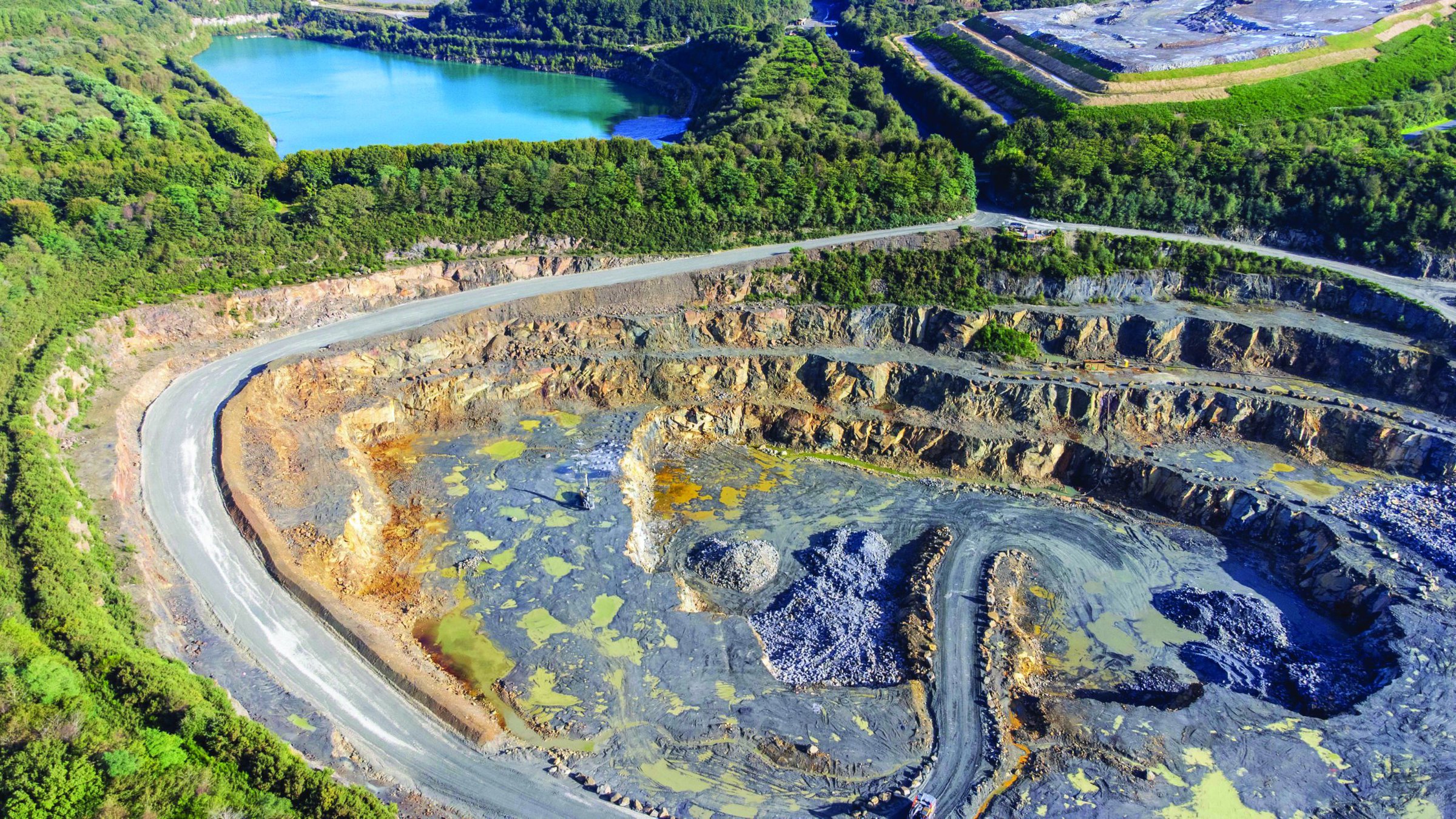
Imerys’ andalusite mine in Glomel, Brittany, France. It is one of the many mines where monitoring for no net loss of biodiversity is continuously performed. Credit: Philippe Zamora and Dominique Lecuivre
Sustainability in the refractories industry
Q. What are the key sustainability challenges for refractory manufacturers?
A. The key sustainability challenges are the same for refractory manufacturers as they are for us. First is our impact on the environment, whether it be climate change and decarbonization; energy efficiency; biodiversity; natural resource efficiency, especially water usage and conservation; and the secondary use of raw materials and recycling.
Second is the social aspects of business, whether it be occupational health and safety of employees, labor rights, human rights, diversity and inclusion, community engagement/involvement, and the social impact of supply chains. The questions refractory manufacturers should be asking include: Do their suppliers of raw materials and goods comply with human rights and practice a duty of care?
Lastly, like all businesses, the governance side of their business is essential. Governance encompasses everything from risk management, business model resiliency, business code of conduct and ethics, information security, legal compliance, and data protection, just to name a few.
The refractory industry must adapt to the changing conditions and requirements of the thermal processing industries they serve as customers. As these industries decarbonize and change technologies, the refractory industry will adapt to these changing environmental conditions, enabling their customers to change process environments and reduce their environmental footprint.
Q. How can a raw materials supplier help the refractories industry meet its sustainability goals?
A. As a raw materials supplier, enabling refractory producers to meet their sustainability challenges by adapting raw materials will be key to addressing their customers’ needs.
As a leader in both specialty minerals and as a raw material supplier to the refractories industry, Imerys can help navigate the dimensions of sustainability and offer guidance and solutions that many other suppliers will not be able to do. We partner with our customers to provide sustainable solutions with products that have been verified for life cycle analysis through third party independent verification using ISO methodology.
We assess our products using the SustainAgility Solutions Assessment, a methodology adapted and aligned to the Portfolio Sustainability Assessment framework that was developed by the World Business Council for Sustainable Development. It is a scientific, fact-based tool to measure social and environmental impacts from cradle to grave to identify and steer the portfolio toward “sustainable solutions.”
Q. A recent corporate presentation states Imerys is committed to recovering and dealing with wastes and recycling. In practical terms, what do these commitments look like for a materials supplier to the refractories industry?
A. Optimizing the use of our natural resources and contributing to resource recovery by finding destinations for all our wastes will be key going forward. In our manufacturing processes, we will continue to introduce non-virgin materials for virgin materials, all the while developing products that enable circular economy downstream. We know we must reduce our environmental footprint by increasing circularity.
Q. What can a minerals company do to support downstream circular economies?
A. By reassessing where waste is most prevalent in their value chains, companies can learn to close those loops to get more from the resources and minerals they use. The refractories industry has been part of the circular economy for years mainly for economic reasons, and many refractories and raw materials are used and designed with circularity in mind. We must continue to support this circularity and find homes for all the waste stream minerals and resources we produce.
Q. Any final thoughts?
A. After spending 37 years in the sales and technical support of minerals to primarily the refractory and traditional ceramics industries, the opportunity to change focus late in my career has been a rewarding, challenging, and eye-opening experience. I learn something new every day, and, more importantly, I feel like I am doing my small part to leave the world a better place, using our resources wisely and channeling my inner Girl Scout.
Sustainability is at the core of our strategy, operations, and innovation. By reducing the environmental footprint of our operations, we are leading the industrial minerals industry to solve global challenges. This result will in turn help our customers to achieve their sustainability targets and to develop sustainable solutions that meet societal needs. We must drive this sustainable performance at all levels of our organization, and I am proud to contribute to this mission.
For information, contact Bunt at nancy.bunt@imerys.com.

Related Articles

Market Insights
Engineered ceramics support the past, present, and future of aerospace ambitions
Engineered ceramics play key roles in aerospace applications, from structural components to protective coatings that can withstand the high-temperature, reactive environments. Perhaps the earliest success of ceramics in aerospace applications was the use of yttria-stabilized zirconia (YSZ) as thermal barrier coatings (TBCs) on nickel-based superalloys for turbine engine applications. These…

Market Insights
Aerospace ceramics: Global markets to 2029
The global market for aerospace ceramics was valued at $5.3 billion in 2023 and is expected to grow at a compound annual growth rate (CAGR) of 8.0% to reach $8.2 billion by the end of 2029. According to the International Energy Agency, the aviation industry was responsible for 2.5% of…

Market Insights
Innovations in access and technology secure clean water around the world
Food, water, and shelter—the basic necessities of life—are scarce for millions of people around the world. Yet even when these resources are technically obtainable, they may not be available in a format that supports healthy living. Approximately 115 million people worldwide depend on untreated surface water for their daily needs,…