
Asia has no shortage of ceramic technology leaders. But while the industry’s attention is focused chiefly on India, China, Japan, and South Korea, countries in Southeast Asia are making major investments—and significant advances—in ceramic research and product commercialization.
These developments are unfolding in tandem with seismic shifts in the region’s economic fortunes. The Association of Southeast Asian Nations, known as ASEAN, “is forecasted to overtake the EU and Japan to become the fourth largest economy in the world by 2050, behind China, India, and the U.S.,” the U.S.–ASEAN Business Council notes on its website. The organization adds that the region is home to the world’s third-largest labor force and that its middle class is projected to double in size by 2030. That year, the middle class is expected to cross the 334 million mark—equal to 51% of the total population—up from 135 million, or 24% of the population, in 2015.
To put those numbers in perspective, consider that the U.S. population was just under 324 million in July 2016 and that, according to the Pew Research Center, the country’s middle class fell below the 50% mark in 2015.
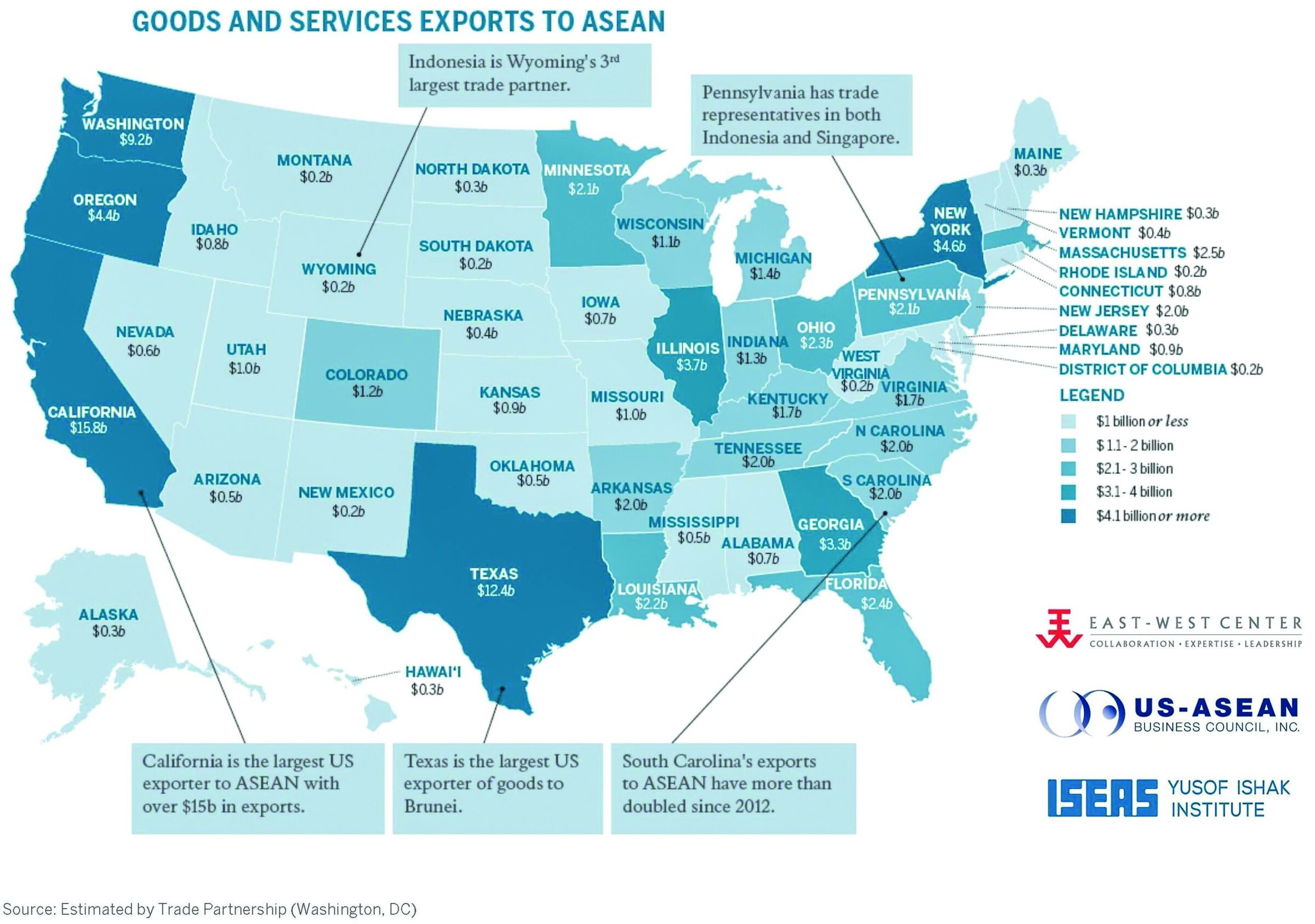
Figure 1. The U.S. exported more than $100 billion in goods and services to ASEAN countries in 2015—this map shows a breakdown of exports by state. For more information, download the entire report from ASEAN here. Credit: ASEAN Matters
Collectively, ASEAN countries are the fourth-largest U.S. export market (after Canada, Mexico, and China). In 2015, exports exceeded $100 billion (Figure 1), including $75 billion in goods and $27 billion in services, the U.S.–ASEAN Business Council reports (Figure 2); that is an 81% increase since 2004.
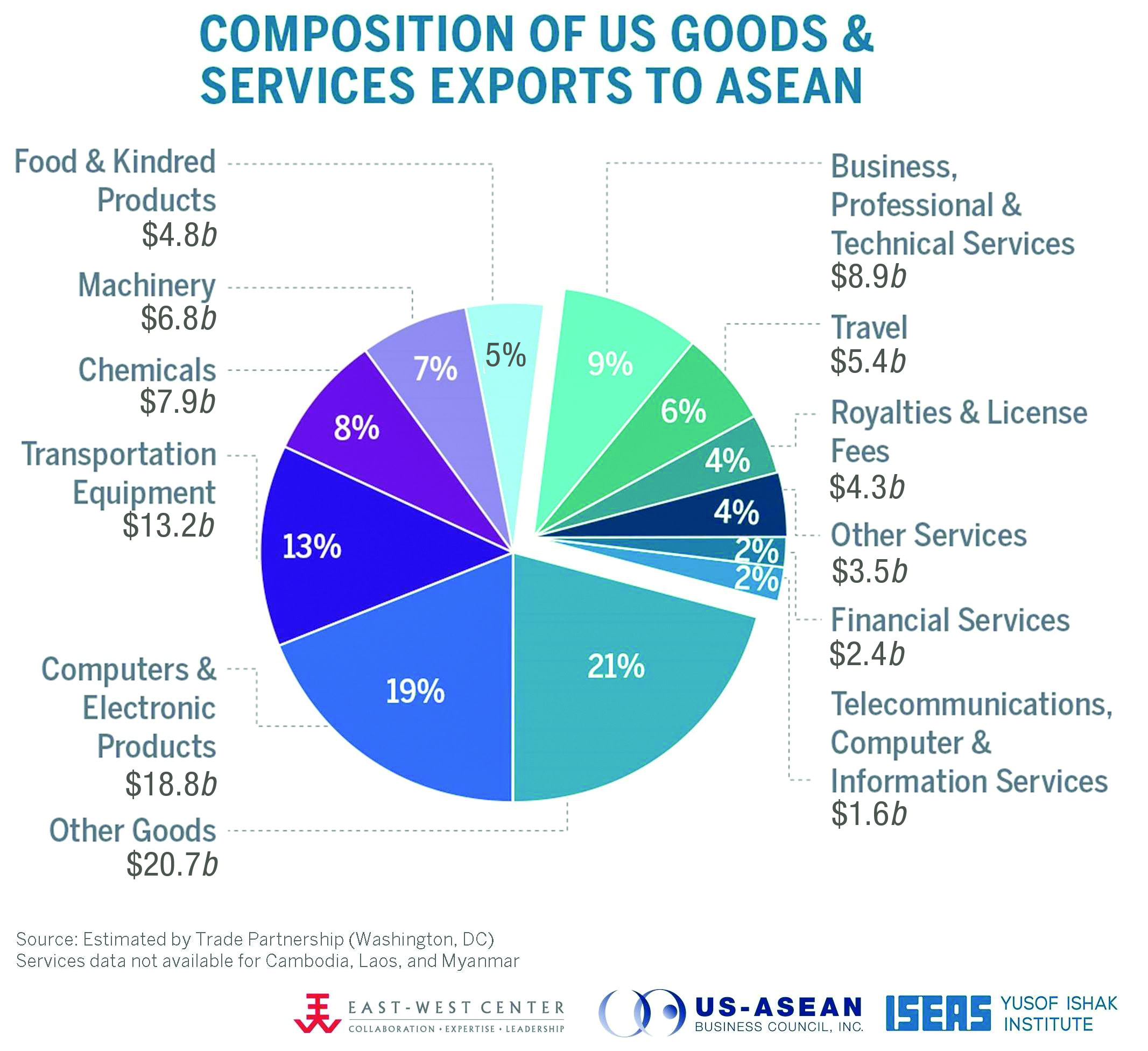
Figure 2. Composition of the $100 billion of U.S. goods and services exports to ASEAN countries in 2015. Credit: ASEAN Matters
Riding the nanotechnology wave
Among the notable developments in the region is its focus on nanotechnology research. While companies in the refractories sector rely on (and market themselves as offering) technology and equipment licensed from Japan or Germany, nanotechnology advances are emerging from original work conducted in Southeast Asia.
Professor Venky Venkatesan, director of the National University of Singapore’s Nanoscience & Nanotechnology Initiative (NUSNNI), believes several factors contributed to the rise of this research concentration. The field offers a low barrier to entry to the extent that while complex, sophisticated projects may require investments in the millions, there is a lower level at which “you can basically do beaker technology,” he says. “A fantastic, dynamic range of research investments were possible. Of course, even if you use beaker technology, ultimately to get real data you have to go top end, so it’s not cheap. But an individual who’s making stuff could make it on a low budget and then interact with some major laboratory.”
As a bonus, he adds, a nanotechnology project presents well, shows promising market potential, and therefore is a strong candidate for landing significant government funding. “So it was a fantastic vehicle to really promote research in materials science. That’s why it worked really well and took off in Southeast Asia.”
The ten ASEAN member states are Brunei Darussalam, Cambodia, Indonesia, Laos, Malaysia, Myanmar, Philippines, Singapore, Thailand, and Vietnam. Here, we take a look at developments in four of those countries: Singapore, Malaysia, Thailand, and Indonesia (Figure 3). See our market snapshot sidebars for an economic and trade overview of each of these countries.
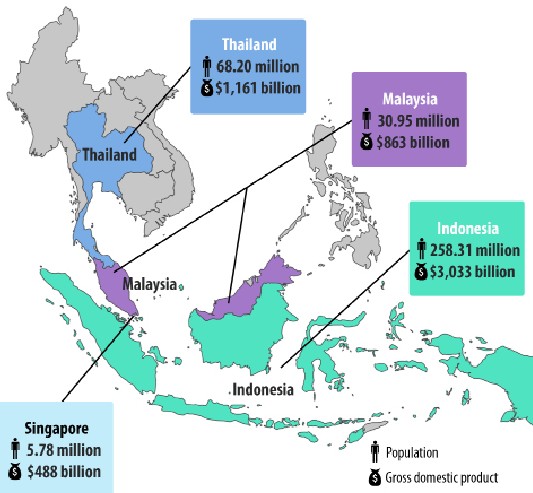
Figure 3. 2016 population and gross domestic product figures for ASEAN countries Singapore, Malaysia, Thailand, and Indonesia. Credit: April Gocha
Singapore: A commitment to innovation and the capital to fund it
With a workforce of just 3.6 million people, Singapore’s capacity to make meaningful contributions to materials science research could easily be constrained by the limits on its human capital. But the country has financial resources on its side: it ranks 41st in the world in GDP, just behind Switzerland and well ahead of such affluent economies as Hong Kong, Norway, and New Zealand. Equally important, says Venkatesan, it has the will to compete for talent and pursue innovation.
He was given a simple mandate when he was recruited to direct the Nanoscience & Nanotechnology Initiative: to use his expertise to determine the program’s priorities and direction. Based on his interest in (and confidence in the commercial potential of) oxide electronics, his first goal was to “launce a major program in next-generation electronics” (Figure 4).

Figure 4. Researchers led by T. Venky Venkatesan (first row, center), director of NUSNNI, have uncovered extraordinary properties of the semiconductor material strontium niobate. Credit: National University of Singapore Nanoscience & Nanotechnology Initiative
With encouragement from the university president, he submitted a $220 million funding proposal and got commitments from leading players in the field worldwide who agreed to sign on to the project if the proposal was approved. “Plan B was that in case it didn’t work out, the university would pitch in roughly one-fifth of that money or one-fourth of that money, and I would try to build something on a slightly less grandiose scale,” he says. He wound up having to execute that Plan B, “so I created this Institute here with slightly less ambitious goals, but still we are working on every issue: health, energy, and electronics, photonics, plasmonics, magnetics, you name it.”
From concept to commercialization
The result has been a series of start-up companies launched in Singapore and abroad. A foreign exchange student from Poland developed an idea that addressed a challenge in microscopes: viewing and capturing images of the same sample under different instruments (such as optical and electron microscopes). The student developed a technique that was dubbed the universal stage and launched a company in Poland to market that solution. Another student “has developed an organic memory which I am absolutely convinced is going to be commercialized one day.”
Venkatesan’s team is in the process of launching three companies, including one focused on “how cells interact with ceramic surfaces.” Intrigued by the problem of human cells that will grow only on zirconium oxide, the team investigated using coatings “to either enhance cell growth or prevent cell growth in the body” and made enough progress to proceed with a commercial venture.
“In any science, you’ve got to be able to produce numbers. If you can’t produce numbers, it’s very difficult to optimize processes,” he says. “So how do you make biology more quantitative? That’s one of the areas that I felt we can really make a contribution.”
The organization is free to commercialize its processes and products anywhere in the world, which is essential to progress given the country’s small population. But a growing number of students from abroad are expressing interest in the program, and Venkatesan sees increased quality—and by extension, increased competitiveness—in the candidates he is attracting.
Profile and partnerships
He needs to raise the program’s profile in markets abroad so he can pursue more partnerships and collaboration. “Companies in the U.S. don’t know anything about us, and we don’t have clear ways of getting in touch with them,” he says. “There are big investments going on here. They could very easily leverage these things.”
One example is the recent approval of a $9 million funding request for a five-year project. The proposal was titled Oxide Electronics on Silicon Beyond Moore. The project’s interdisciplinary approach encompasses physics, chemistry, electrical engineering, materials science, and chemical engineering, and the team includes members from the University of California, Berkeley; Cornell University; Northwestern University; Yale University; and Purdue University.
Innovation incubator
Another key player in Singapore’s research sector is known as A*STAR, the Agency for Science, Technology and Research, which facilitates collaboration among corporations, academia, and the public sector. It serves as an incubator for both “mission-oriented research” that “creates economic growth and jobs for Singapore” and for cultivating talent; students go on to work at its research institutes, elsewhere in the research community, and in industry.
A Biomedical Research Council and Science and Engineering Research Council fall under its umbrella, and its Exploit Technologies Pte. Ltd. (ETPL) arm is charged with commercializing the organization’s research. The Institute of Materials Research and Engineering (IMRE), which is organized under the Science and Engineering Research Council, includes the departments of Ceramic Materials, Metallic Materials, Molecular Materials, Polymeric Materials, and Materials Processing & Characterisation.
Among IMRE’s areas of focus in research and development are sensing and transduction, infrared absorption and reflection, ultrawetting, energy upconversion, biological imaging and chromogenics. IMRE has been awarded patents for a variety of devices created using ferroelectric and piezoelectric materials developed in its labs. These include “piezoelectric acceleration sensing elements batch-fabricated on a silicon wafer; a batteryless remote controller prototype powered with lead-free piezoelectric transducers; 6 piezoelectric sensors in-situ processed on a machine part for real-time vibration monitoring; and a UV sensor (with dosimeter function) made of a ferroelectric thin film.”
Within the commercial sector, nanotechnology is once again the focus at Ceramic Pro, which develops, manufactures, and markets advanced nano-ceramic protective coatings for the aerospace, automotive, marine, and heavy industry sectors as well as residential use. Products include permanent and 24-month paint coatings as well as coatings designed to protect glass, textiles, leather, and plastic. In addition, the company provides maintenance coating and air purification solutions.
Strategies and symposia
Singapore’s Materials Research Society, an affiliate of the International Union of Materials Research Societies, was founded in 1999. Its mission is to promote materials science and publicize “the niche capabilities of local researchers” throughout Asia and elsewhere abroad. Its chief activity is organizing national and international conference series that are held biannually in alternating years.
The most recent national event was held in December 2016 and encompassed 7th MRS-S Conference on Advanced Materials and the 7th Trilateral Conference on Nanoscience: Energy, Water & Healthcare. In June, it hosted ICMAT 2017: 9th International Conference on Materials for Advanced Technologies. The six-day event’s 29 symposia covered topics related to materials science, technology, and engineering.
Notable titles included: III-V Semiconductor Integration with Silicon and Other Substrates; Nanomaterials for Advanced Energy and Environmental Applications; Advanced Materials for Thermoelectrics; Advanced Ceramics and Nanohybrids for Energy, Environment and Health; Multifunctional Nanomaterials and Composites for EMI Shielding/Absorption and Related Devices Applications; Micro-Nano-Optics and Photonics; and Optically Resonant Nanostructures. A full list of symposia, including links to descriptions and abstracts, can be found at http://icmat2017.mrs.org.sg/symp-list.
A concurrent expo featured materials science and engineering exhibitors from throughout the world. This is a major conference in the region that normally attracts thousands of researchers from more than 40 countries.
Malaysia: Connecting nano-technology to economic growth
Nanotechnology is also a dominant theme in Malaysia’s ceramic sector, and the NanoMalaysia Program, launched in 2010, has afforded increased structure and organization within nanotechnology research and development. The following year, the Ministry of Science, Technology, & Innovation made RM 10 million available for a new National Nanotechnology Directorate (NND) Nano Fund. (The country’s currency is the Malaysian ringgit; in June 2011, RM 10 million was equivalent to $3.3 million.)
Awards were given to support a total of 20 three-year projects, such as: Nano Diagnostic Chips for Single Bio-Molecule Label Free Detection; Development of Lab-on-Chip for Peripheral Blood Stem Cell Isolation and Rapid Detection of Tropical Diseases from Blood; Creating Silicon Nanostructure Platforms Integrated with Nano-biosensors for the Rapid Determination of Biohazards to Ensure Food Safety; Functionalized Nanosilica-based Chemosensor Materials; and Systemic Delivery of sIRNA-based Therapeutics Using Functionalized Single-walled Carbon Nanotubes.
Also in 2011, NanoMalaysia Berhad was incorporated as a company limited by guarantee (CLG) under the Ministry of Science, Technology, & Innovation. It is charged with responsibility for commercializing and industrializing nanotechnology and with facilitating investments in and development of human capital for nanotechnology projects.
Professor Datuk Dr. Halimaton Bt Hj Hamdan was founding director of the National Nanotechnology Directorate and a founding member of the Asia Nano Forum (established in 2008). She notes that these projects were carried out successfully and led to the publication of papers, grants of patents, and in some cases, pilot plant activities. Under her direction in 2012, the NND designated five National Nano Research Centers and provided them with annual research and development funding. “These centers are mostly located in the public universities, managed and operated by local researchers in specific areas of interest using facilities supported by the universities,” she says.
A global nanotechnology consortium
In 2015, the Malaysia Institute for Innovative Nanotechnology (NanoMITe), a consortium of five programs, each led by a research university, was established as a global research consortium on nanotechnology. Five-year research terms are funded by the universities and the Ministry of Higher Education; the 18 current projects are being conducted in collaboration with such universities as Harvard, MIT, and Cambridge. The commitment to cross-border collaboration is such that the University of Nottingham maintains a Malaysian campus that houses a Centre for Nanotechnology & Advanced Materials.
“The Malaysian government has given emphasis and priority to nanotechnology as one of the emerging technologies under the technology foresight and New Economic Model,” Hamdan says. “A number of initiatives such as NanoMITe research consortium and top-down research Nano Fund encourage collaborative participation of government agencies, universities, research institutes, and companies in order to give a sustainable impact to the economy.”
Looking ahead
In the next five to ten years, she anticipates that the number of researchers with nanotechnology expertise will rise and drive a higher rate of research activity. Realizing this vision will require local industries’ commitment to and investment in commercialization, but she is confident that their transition to nanotechnology will improve both their product quality and their long-term business prospects.
She also hopes to secure increased investment in her own patented product, Maerogel, a silica aerogel derived from discarded rice husks. “A number of the products have been tested by the industry, and there has been encouraging demand for them,” she says. “Unfortunately, my production capacity is limited since I have yet to find the right investor. There are a couple of commercial arrangements being coordinated by NanoMalaysia which involve foreign companies.”
Another key player in these developments is the Malaysia Nanotechnology Association, an NGO that organizes forums and other events to promote public awareness. It networks with nanotechnology associations beyond Malaysia’s borders and serves as the official organizer of the annual NanoMITe Symposium.
“The annual symposium is a public gathering of nanoscientists and players to present their latest research findings and activities,” Hamdan says. “The papers presented will be reviewed and published for the masses. It also provides a platform for researchers to pitch to industries for funding and commercialization opportunities.” The 2017 symposium will be held September 20 and is planned as a regional rather than national event, which opens the door to participation by research partners in other countries.
The refractory sector
Of course, nanotechnology is not the entire ceramic story in Malaysia. The country is also home to extensive activity in the refractories space.
Refracon Sdn. Bhd., founded in 1985, offers a portfolio that includes ceramic fiber products, calcium silicate, refractory firebricks and cast shapes, rockwool, insulating firebricks, buller rings, refractory castables, and insulation cloth, tape, and ropes. The company focuses on design, implementation, and installation in harsh industrial environments.
Associated Refractories Manufacturer Sdn. Bhd., established in 1991, markets itself as “Malaysia’s first all-castable refractory manufacturer.” The company used European technology in its monolithic refractory products, which include HY-CAST for castables, HY-RAM for plastic moldables, and HY-SET for mortar. It works in partnership with Yap Construction Group Sdn. Bhd. to provide “complete refractory services, including manufacturing, R&D and engineering, project management, application consultation, and installation of various types of refractory materials for a wide spectrum of industries.” Yap Construction Group works in these areas both within Malaysia and internationally and has exported to companies in the steel, cement, ceramic, lime, incinerator, brick, nonferrous, oil and gas, and power industries in the Middle East, North America, and South America as well as the Southeast Asia region.
With 20,000 MT annual production, ECORP is one of the sector’s largest producers in Malaysia. Established in 2001, it serves the monolithic refractory design, engineering, installation, and supply needs of customers in the oil and gas, steel, aluminum, cement, industrial boiler, incinerator, foundry, and palm oil industries. It is ISO 9001:2007 certified.
Thailand: A focus on economic growth and environmental responsibility
In Thailand, the epicenter of nanotechnology development is the National Nanotechnology Center (NANOTEC). Established in 2003, it is both a national research and development center and a funding agency that supports projects that are “of national importance” and promote “the betterment of life as a result of economic improvement” in industry and agriculture.
With that mandate in mind, it has launched five flagship programs: future energy, functional textile, smart health, food innovation, and clean environment. To advance its work toward those goals, it has adopted three core technologies: nanomaterials by design and synthesis; nanoscale characterization by metrology, safety, and standards; and nanosystems by engineering and advanced manufacturing. The agency also maintains a strong focus on nano safety issues, which it addresses in news announcements that can be found at http://www2.nanotec.or.th/en/?cat=3.
Its analytical capabilities and equipment include atomic force microscopy, environmental scanning electron microscope, scanning tunneling microscope, MTT assay, UV-visible spectrophotometer, and freeze dryer.
NANOTEC operates under the auspices of the National Science and Technology Development Agency and the Ministry of Science and Technology. It comprises 14 labs; for details on each and areas of focus, see the links at http://www2.nanotec.or.th/en/?page_id=1899.
Learning and leverage
The National Metal and Materials Technology Center, an affiliate of the National Science and Technology Development Agency, supports metal and material technology research and development. Its mission is to develop capabilities in the public and private sectors.
Among its departments is the Ceramic Technology Institute Program, whose project leader, Somnuk Sirisoonthorn, is president of the Thai Ceramic Society, which organized the International Conference on Traditional and Advanced Ceramics held August 31–September 2 in Bangkok. The conference was held concurrent with ASEAN Ceramics 2017, the latest in the series of biennial events, and saw a rise in the number of buyer delegations attending this year due to increased international participation.
“The changing climate in Europe has also helped drive investment and competition in the region with companies looking to new markets for expansion,” Sirisoonthorn said in a conference announcement. “Exchange rate advantages, high quality production, and lower domestic demand has created positive incentives for businesses penetrating Asia, and this too has been reflected in recent trends.”
Refractory review
As in Malaysia, refractories have a high profile in Thailand.
Bangkok Seng Thai Limited Partnership (BST) began with a narrow focus: runner brick production for the iron and steel industries. But since its founding in 1975, its areas of expertise have expanded to include fire clay, high alumina, insulation bricks, and, more recently, heat resistant products such as plastic refractories, tundish coating, precast shapes, gunning mixes, ramming mixes, mortars, and castables. Its practices are certified by the Thai Industrial Standard Institute and ASTM, and it is ISO 9001:2000 certified.
Almat Thai International specializes in high temperature insulation products and heat management solutions. Included in its portfolio are: glass fiber mesh for aluminum filtration, aluminum casting mesh, flux for aluminum alloy, high temperature-resistant gaskets, silicon nitride protection tubes, and high temperature coating powders.
Prominent within the cement sphere is SGC, which was founded by royal decree in 1913 as the Siam Cement Group. Its three core businesses are SCG Cement-Building Materials, SCG Chemicals, and SCG Packaging. In keeping with its international operations and its “vision to be a regional market leader in sustainable innovations in ASEAN,” the company announced on July 20 the launch of the Open Innovation Center by SCG. The project is intended to promote worldwide public-private-academic collaboration in research and development innovation.
More recent news further underscores SCG’s commitment to sustainability and corporate social responsibility. The company announced on August 7 a joint launch with the Thailand Post Company Limited of “Love the Earth, love stamp.” The project involves recycling more than 800 postcards into 200 bookshelves for distribution to schools in the Bangkok area.
Indonesia: Capitalizing on initiatives to promote innovation
Many countries attempt innovative approaches to fostering public-private partnership and collaboration between academia and industry. An Indonesian initiative put a fresh spin on these goals when the government merged the Directorate General of Higher Education (which had been a division of the Ministry of Education and Culture) with the Ministry of Research and Technology to create the Ministry of Research, Technology, and Higher Education.
The merged organization has oversight of the Nuclear Energy Agency, National Nuclear Energy Agency, Agency for the Assessment & Application of Technology, National Standardization Agency of Indonesia, National Institute of Aeronautics and Space, and the Indonesian Institute of Science. Its primary objective is to increase the percentage of the workforce that is skilled and has completed higher education. In that context, it seeks to enhance the quality of universities and R&D institutes so that research and development projects achieve higher productivity, and the country is better equipped to innovate and compete in the global marketplace.
A new nanotechnology player
Not surprisingly, one area that Indonesia has identified as a target for increased activity is nanotechnology.
The Institut Teknologi Bandung established the Research Center for Nanoscience and Nanotechnology both to respond to complex challenges and “to reaffirm a strong commitment” to “research, development, and application of frontier science and technology for the betterment of Indonesia.” It comprises four research laboratories dedicated to nanomaterial, nanomedicine, nanobiotechnology, and nanodevices.
“Supported by state-of-the-art equipment, such as High Resolution Transmission Electron Microscopy (HRTEM), Focus Ion Beam (FIB), Scanning Electron Microscopy (SEM), Atomic Force Microscopy (AFM), our activities may cover wide spectrum areas of science and engineering disciplines,” the website notes. “For the next five years, RCNN activities are directed toward achieving national center of excellence status and as such key performance indicators are streamlined to the guidelines given by the Ministry of Research, Technology and Higher Education.”
Within the refractory space, PT Indoporlen has a four-decade record of supplying high-grade refractory systems and innovative installation technologies for customers in such industries as cement, steel, non-ferrous metal, ceramic, oil and gas, petrochemicals, fertilizers, coke ovens, power plants, incinerators, and boilers. Its focus is on delivering “better and more durable solutions” for high-temperature processing industries. In 2013, the company and Calderys entered into a joint venture for operations in Indonesia.
ASEAN collaborations: navigating cultures, pursuing profitability
What is the bottom line for U.S. academics, researchers, and businesses that want to connect with this rapidly emerging market? Opportunities abound, but it is important to remember that cultural differences can present challenges as well. Although these and other countries in the region are warming to the benefits of information sharing and joint projects, the culture is still more conservative and more reluctant to embrace the level of openness—for example, in discussing research that has not yet been published—with collaboration partners who could also be competitors, Venkatesan says.
But he adds that as the scope of scientific and economic opportunity becomes clear, the region is adopting a more open posture with regard to strategic partnerships with Asian, European, or North American research and product development entities.
“It is happening more and more. Compare today with ten years ago, and the difference is quite striking,” he says. “Governments are also realizing that the way they are going to make real impact is not by funding one individual a ton of money, but through creating really well-balanced interdisciplinary teams which are also leveraged in international collaborations.” And that creates an environment with the potential to promote innovation that profits everyone.
ACerS leaders strengthen ceramic ties during summit in Singapore and Bangkok
In early 2016, ACerS then-president Mrityunjay Singh, current president Bill Lee, and executive director Charlie Spahr traveled to Southeast Asia to participate in a two-day, two-location event organized as the Asia Pacific Ceramic Cooperation Summit (APCCS), Febuary 29–March 3, 2016. The summit was structured as two symposia, located in Singapore and Bangkok, which gave invited researchers the opportunity to present updates on their work as well as an opportunity to network in their broad geographic regions.
“This was an important visit for The American Ceramic Society. Our visit began the process of laying a foundation for stronger relationships amongst our colleagues and helped us better understand the research and industry climate in this area of the Pacific region,” Spahr says.
The meeting in Bangkok, hosted by the Thai Ceramic Society, attracted over 60 participants. Universities represented at the summit included Chulalongkorn University, which hosted the summit, Thammasat University, Kasetsart University, Suranaree University of Technology, and Silpakorn University. Additional organizations in attendance were the National Metal and Materials Technology Center, Thai Institute of Science and Technological Research, Department of Science Service, and the summit’s host, the Thai Ceramic Society.
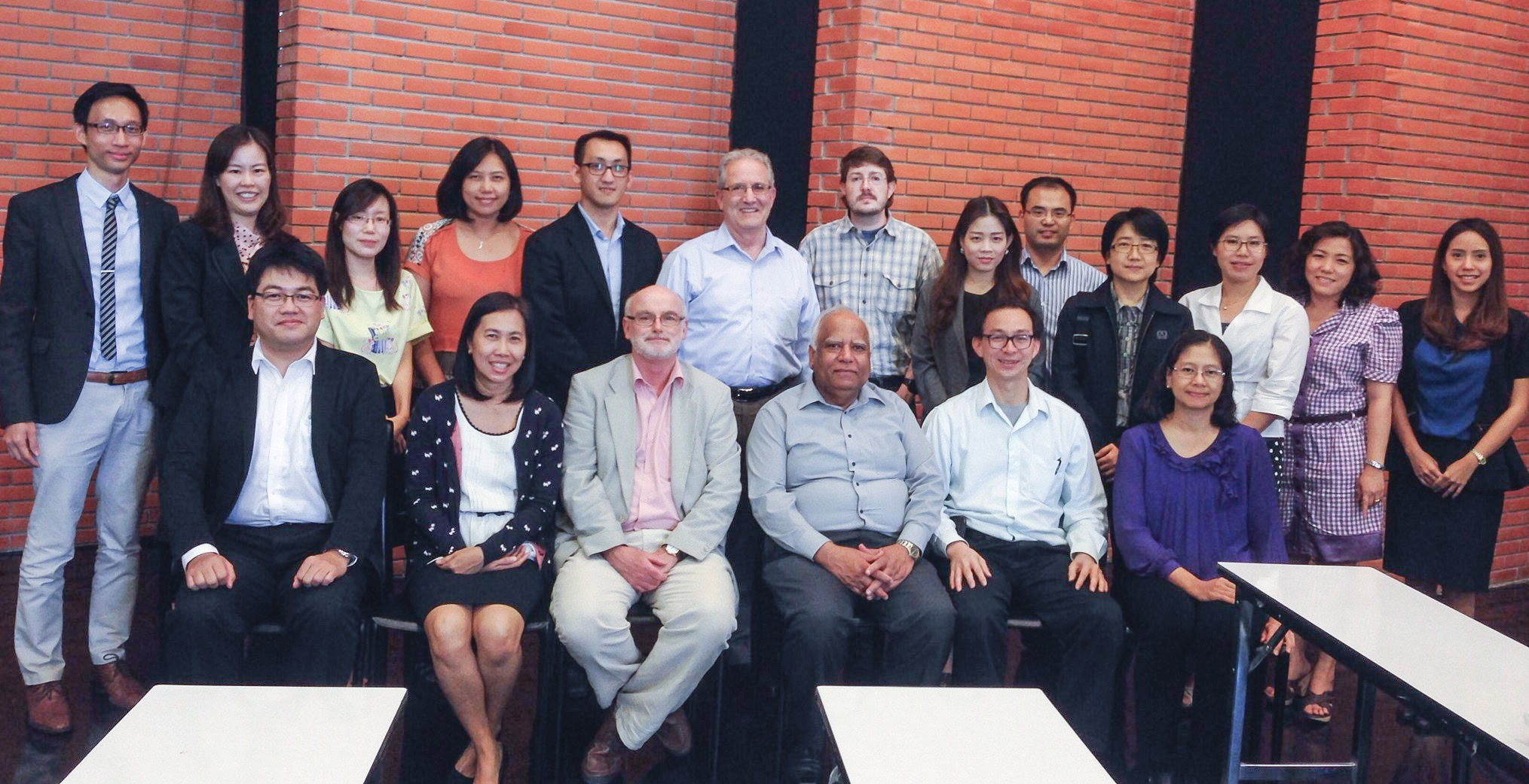
Asia Pacific Ceramic Cooperation Summit in Bangkok. ACerS participants included 2016 president-elect Bill Lee (front center, pink shirt) and president Mritunjay Singh (right of Lee). Executive director Charlie Spahr is behind Lee and Singh. Credit: NUS
In Singapore, one of the world’s outstanding universities, the National University of Singapore, hosted ACerS and the APCCS. Other organizations and companies represented included Singapore Technologies Kinetics Ltd., Nanyang Technological University, Dawnyx Technologies Pte. Ltd., University Teknikal Malaysia Melaka, Institute of Materials Research and Engineering, University of Malaya, Taylor’s University, Advanced Materials Technology Centre, and University of Tenaga Nasional.
“All in all, it was a very productive trip and provided insight into the current priorities of ceramics professionals in the region,” Spahr says. “We appreciate the efforts of our hosts Palani Balaya at NUS and Somnuk Sirisoonthorn, president of TCS, to make the summit a successful event, and we thank our hosts in Singapore and Bangkok for their extraordinary hospitality and warm welcome!”
Read more: “Market snapshots: Singapore, Malaysia, Thailand, Indonesia“
Read more: “Southeast Asia ceramic directory“


Related Articles

Market Insights
Engineered ceramics support the past, present, and future of aerospace ambitions
Engineered ceramics play key roles in aerospace applications, from structural components to protective coatings that can withstand the high-temperature, reactive environments. Perhaps the earliest success of ceramics in aerospace applications was the use of yttria-stabilized zirconia (YSZ) as thermal barrier coatings (TBCs) on nickel-based superalloys for turbine engine applications. These…

Market Insights
Aerospace ceramics: Global markets to 2029
The global market for aerospace ceramics was valued at $5.3 billion in 2023 and is expected to grow at a compound annual growth rate (CAGR) of 8.0% to reach $8.2 billion by the end of 2029. According to the International Energy Agency, the aviation industry was responsible for 2.5% of…

Market Insights
Innovations in access and technology secure clean water around the world
Food, water, and shelter—the basic necessities of life—are scarce for millions of people around the world. Yet even when these resources are technically obtainable, they may not be available in a format that supports healthy living. Approximately 115 million people worldwide depend on untreated surface water for their daily needs,…