

The National Science Foundation’s Faculty Early Career Development (CAREER) program supports junior faculty who exemplify the role of teachers–scholars through excellent research and education. The purpose of this NSF CAREER award series is to give these junior professors and their work better visibility in the ceramics and glass community and to inspire academic careers of ceramic researchers and educators.1–8 Incoming junior faculty sustain and grow the field—they are indeed the future as well as the guardians of the future. Therefore, it is my honor to present the three 2017 CAREER awardees from the Ceramics Program of the Division of Materials Research at NSF.

Matthew McDowell in his laboratory at Georgia Tech. Credit: Matthew McDowell
Matthew McDowell, Georgia Tech Research Corporation — Award 1652471
Matthew McDowell’s CAREER project focuses on interfacial transformations in ceramic ion conductors for solid-state batteries. Interfacial transformations and instabilities at ceramic electrolyte interfaces in alkali metal-based solid-state batteries often increase impedance and reduce cycle life. The goal of this project is to understand the spatiotemporal evolution of structure, chemistry, and morphology of ceramic electrolyte interfaces within solid-state batteries and to determine how these factors influence ionic conductivity and stability of ceramic electrolytes.
To improve lifetime and stability, this research uses novel experimental techniques to understand interface degradation processes in real time and to determine how to protect these interfaces from degradation. Multiple in situ experimental techniques probe nanoscale transformations at ceramic electrolyte/alkali metal interfaces before and during battery operation and examine the influence of tailored protection layers on interfacial transformations.
Broader impacts include:
- A fundamental understanding is critical for creation of reliable, long-lasting solid-state batteries. Rechargeable solid-state batteries could be used in electric vehicles and mobile applications that demand improved safety (in comparison to lithium-ion batteries). By directly revealing nanoscale transformations at ceramic electrolyte interfaces for the first time, this research helps create a scientific foundation for stabilizing critical interfaces in next-generation solid-state batteries, thereby enabling superior energy storage technologies.
- Graduate and undergraduate students will receive training in the science of materials for energy applications.
- Collaboration with a high school teacher to develop a new high school curriculum focused on integrating materials and energy sciences in ways that are relevant to high school students’ daily lives. These new learning tools will better prepare high school students from underrepresented groups for careers in science and engineering.
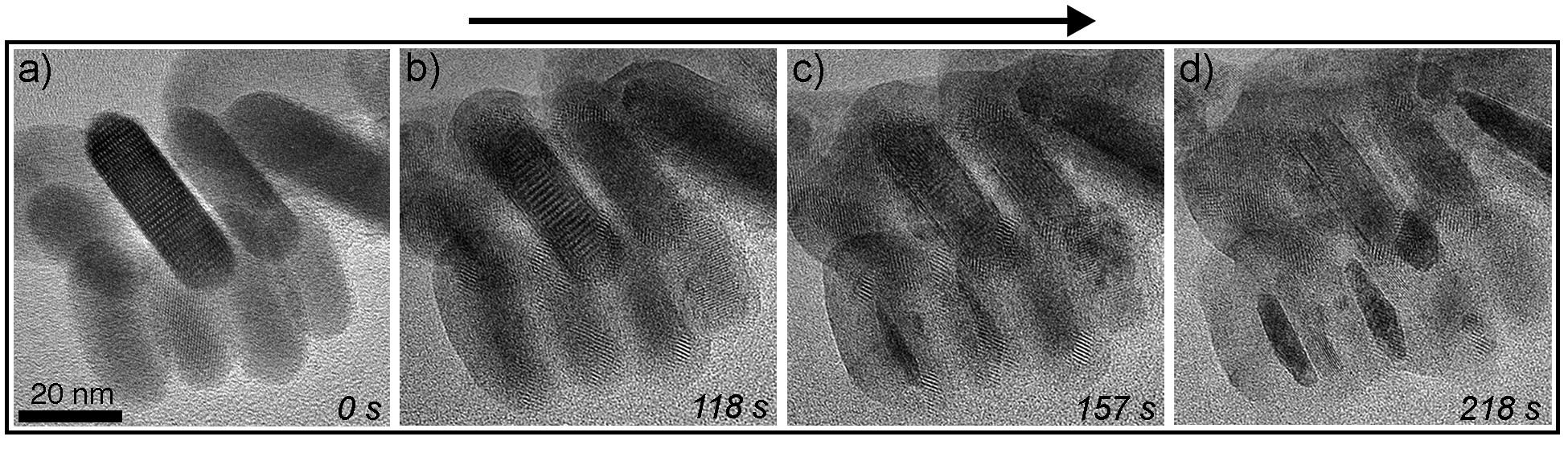
This series of in situ transmission electron microscopy images show the reaction process of Cu2S nanocrystals with sodium. These nanoscale images reveal the phase transformation process that occurs when these materials are used in batteries. a) A group of pristine Cu2S nanocrystals. b-c) The reaction proceeds via growth of Na2S shells with lighter contrast at particle edges. d) Fully reacted particles feature Cu metal cores surrounded by a Na2S network. Adapted from article M. G. Boebinger, M. Xu, X. Ma, H. Chen, R. R. Unocic, M. T. McDowell J. Mater. Chem A, 5, 11701-11709 (2017) with permission from The Royal Society of Chemistry. Credit: The Royal Society of Chemistry
Luiz Jacobsohn, Clemson University — Award 1653016
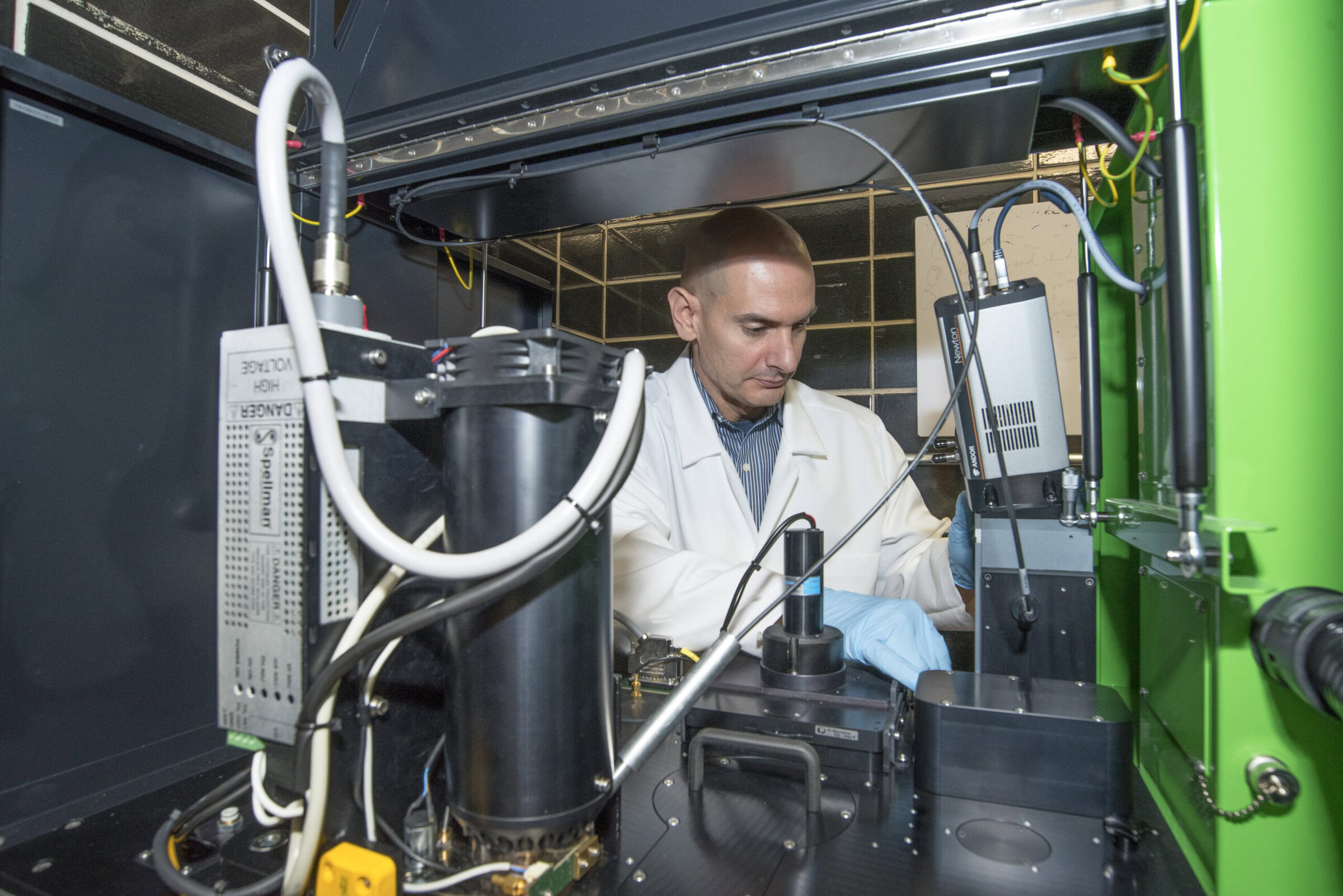
Luiz Jacobsohn prepares a custom-designed spectrofluorometer for a round of measurements at his laboratory, The Light Factory, at Clemson University. Credit: Clemson University
Luiz Jacobsohn’s CAREER project targets engineering of electronic defects in inorganic luminescent materials. The performance of scintillators and dosimeters is related to, among other things, the presence of electronic traps that correspond to localized energy levels within the band gap that are generated by defects, such as vacancies, interstitials, and impurities. This project is the first comprehensive investigation to relate characteristics of luminescent materials, such as chemical composition and crystallographic structure, to specific characteristics of electronic traps. Within this context, the goals of this project include investigating relationships between the structure of families of materials and dopants with characteristics of their electronic traps and their luminescent/scintillating properties, as well as guided discovery of new compositions and development of luminescent materials in diverse forms to address scintillating and dosimetric needs. Given the serendipitous nature of the discovery of scintillators and dosimeters to date, this project offers an innovative and transformative approach toward engineering electronic traps in luminescent materials to guide discovery, create functionality, and enhance performance of dosimeters and scintillators.
Broader impacts include:
- Discovery and development of more efficient sensors for ionizing radiation. In addition, advances in luminescence affect applications such as electronic screens, lighting, and medical imaging.
- Undergraduate and graduate students will receive training in cutting-edge research methods and techniques related to synthesis, processing, and characterization of inorganic luminescent materials.
- A cooperation among high school, undergraduate, and graduate students, including the Luminescence Across Borders (LAB) summer program at Clemson University, will integrate research, training, and education.
- Developing resources and strategies to incorporate fundamental materials science and engineering concepts into science classes will enhance the educational infrastructure of high schools in South Carolina. In addition, these activities will increase students’ visibility of materials science and engineering careers.

Luminescent materials are used for detection and measurement of ionizing radiation. Credit: Clemson University
Jessica Krogstad, University of Illinois at Urbana-Champaign — Award 1654182
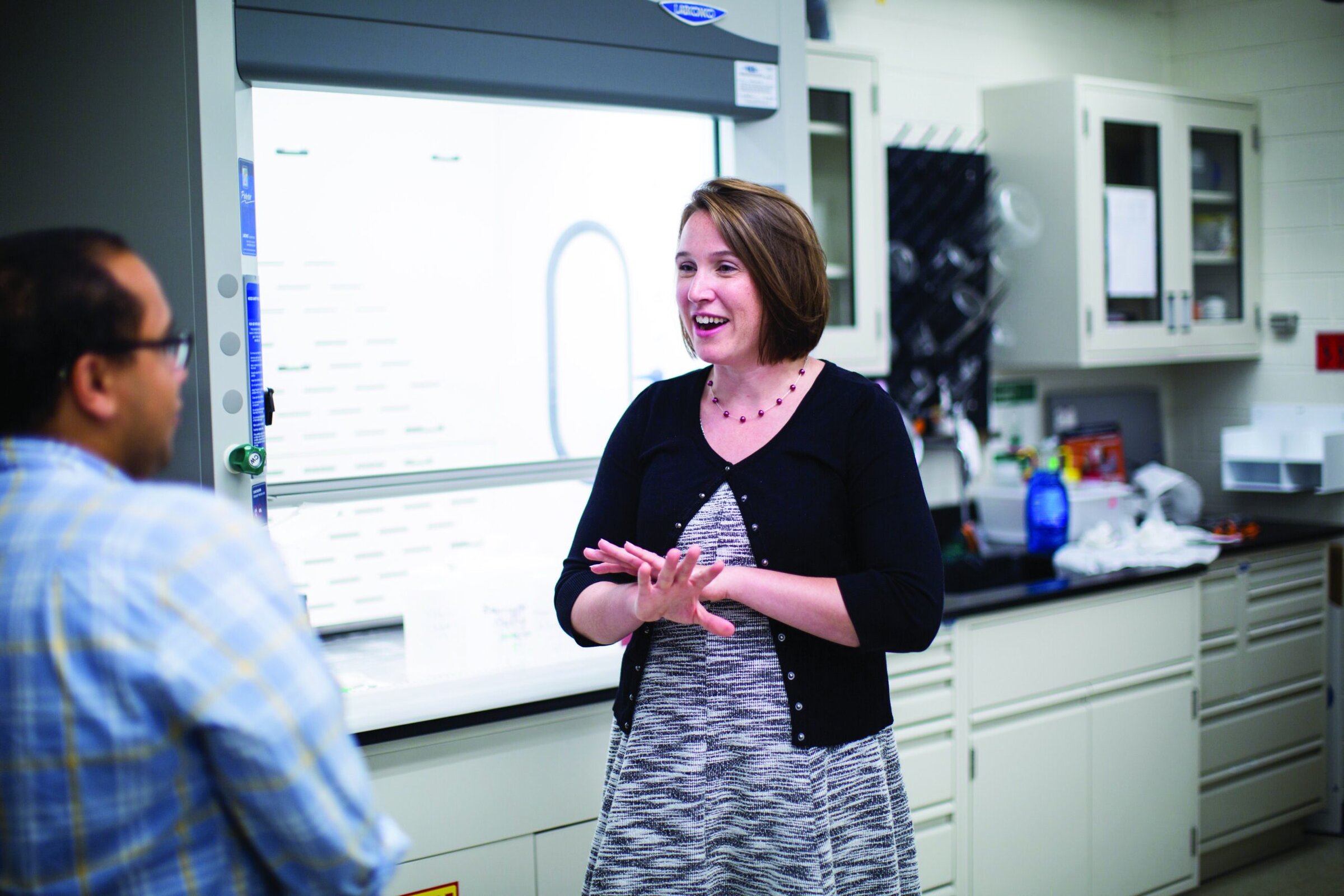
Jessica Krogstad in her lab in the Frederick Seitz Materials Research Laboratory in Urbana, Ill. Credit: Caitlin McCoy; University of Illinois Urbana-Champaign
Jessica Krogstad’s CAREER project focuses on achieving enhanced ferroelastic toughening in electroceramic composites through microstructural coupling. Experimentation is establishing a fundamental relationship between otherwise stochastic morphological features and intrinsic toughening mechanisms to systematically design highly durable, ferroelastic/ferroelectric functional composites. Ferroelastic switching is one of a limited number of intrinsic toughening mechanisms available for advanced ceramics, yet it is not fully utilized due to a largely uncharacterized relationship among localized morphological features, efficient activation of domain nucleation and motion, and resultant improvements in toughness. By bridging this gap using in situ microscopy and targeted micromechanical probes, this research provides the foundation for accelerated physics-based design of more durable ceramic composite systems.
Broader impacts include:
- Better functionality in a wide range of advanced applications, including superconductive wires in supercomputers, precise gas sensors in automotive exhaust, and tilt sensors in consumer electronics. New perspectives are being generated on fundamental mechanical responses within a class of electrical ceramics necessary to enhance durability without sacrificing electrical performance. Accelerating development of new electroceramic materials and material systems could dramatically expand the existing limits of performance and durability.
- Training to prepare graduate students for a more digitally-reliant materials science industry, with state-of-the-art characterization and processing methods in combination with data-driven integrated computational materials engineering.
- Cross-curriculum integration of industrially relevant computational tools into undergraduate material science and engineering courses.
- Exploration of mentoring as an approach to increase work force diversity and appreciation of diversity by working with the week-long summer camp for high school students, Girls Learning about Materials (GLAM).
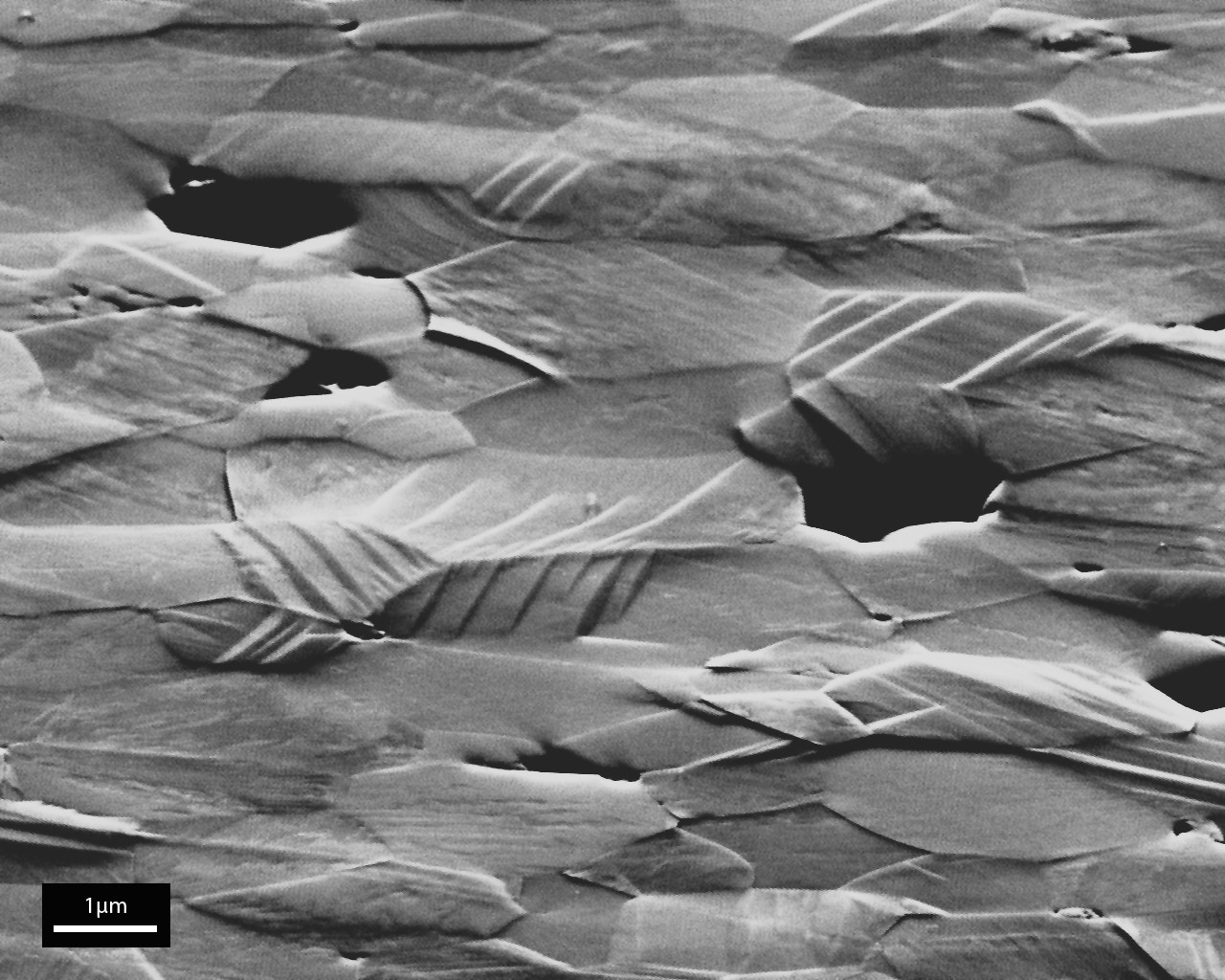
Twinning is one of few mechanisms capable of accommodating permanent deformation in ceramics. In this example of a polycrystalline tetragonal zirconia ceramic, the bands are twins induced by a nearby crack that contribute to enhanced toughness. Credit: Krogstad group, unpublished data
Closing remarks
A CAREER award is a defining step for these researchers, and it identifies them as emerging world leaders in their respective fields. The junior faculty supported through these NSF awards in this Class of 2017 hope to:
- Provide valuable contributions to their research fields;
- Consolidate and increase visibility of their research groups;
- Establish a reputation for impactful research disseminated through publications, presentations, and new collaborations;
- Transform the community’s understanding of dynamic processes in ceramic materials, thereby enabling development of material systems;
- Reach out to schools and attract young students to a professional career in science and technology;
- Engage and develop thoughtful and creative students who are excited about ceramics and materials science; and
- Educate, train, and prepare the next generation of engineers and scientists to tackle important societal challenges in connection with energy and the environment.
Ceramic and glass research is in an exciting era. To realize the full potential of these unique materials, we celebrate rising professors who are undertaking fundamental research and educating the next generation.
Acknowledgements
This article would not have been possible without the input from Professors Brennecka, Chan, Jacobsohn, Krogstad, and McDowell.
Professional Development Workshop Series

Attendees of the 2017 Professional Development Workshop in Ceramics.
Geoff Brennecka (Colorado School of Mines), Hui (Claire) Xiong (Boise State University), and Liping Huang (Rensselaer Polytechnic Institute) organized a 2017 Professional Development Workshop in Ceramics (1734055), which took place in conjunction with the 12th Pacific Rim Conference on Ceramic and Glass Technology in Hawaii. Similar workshops were held annually from 2011 to 2014. In all cases, NSF provided support so that participants were not charged registration fees for the workshop. Early-career faculty, post-doctoral associates, senior graduate students, and senior faculty interested in mentoring were encouraged to attend these open workshops. The goal of the workshops is to enhance career development of the next generation of future leaders in ceramic materials research and education.
This 2017 workshop focused on early-career faculty who were awarded NSF CAREER grants in 2015 or 2016 from the Ceramics Program in the Division of Materials Research. The intensive two-day workshop brought together targeted technical panels of international experts from the awardees’ chosen research specialties in a forum that promoted professional discussions, mentoring, and networking. The panel’s feedback impacted research and training, broadened exchange of best practices for training and teaching, and forged new relationships for collaborative research and mentoring. In addition, there were sessions on mentoring success stories, avoiding common pitfalls of junior faculty, navigating the tenure track, work–life balance, and the future of ceramics research and education. The workshop series provides a strong basis for all attendees to better succeed as outstanding researchers and educators, and thereby it strengthens the broader ceramic materials research community.
Planning is underway for the next workshop in the series by Candace Chan of Arizona State University. Expressions of interest or ideas can be sent to Chan at candace.chan@asu.edu.

Related Articles

Market Insights
Engineered ceramics support the past, present, and future of aerospace ambitions
Engineered ceramics play key roles in aerospace applications, from structural components to protective coatings that can withstand the high-temperature, reactive environments. Perhaps the earliest success of ceramics in aerospace applications was the use of yttria-stabilized zirconia (YSZ) as thermal barrier coatings (TBCs) on nickel-based superalloys for turbine engine applications. These…

Market Insights
Aerospace ceramics: Global markets to 2029
The global market for aerospace ceramics was valued at $5.3 billion in 2023 and is expected to grow at a compound annual growth rate (CAGR) of 8.0% to reach $8.2 billion by the end of 2029. According to the International Energy Agency, the aviation industry was responsible for 2.5% of…

Market Insights
Innovations in access and technology secure clean water around the world
Food, water, and shelter—the basic necessities of life—are scarce for millions of people around the world. Yet even when these resources are technically obtainable, they may not be available in a format that supports healthy living. Approximately 115 million people worldwide depend on untreated surface water for their daily needs,…