
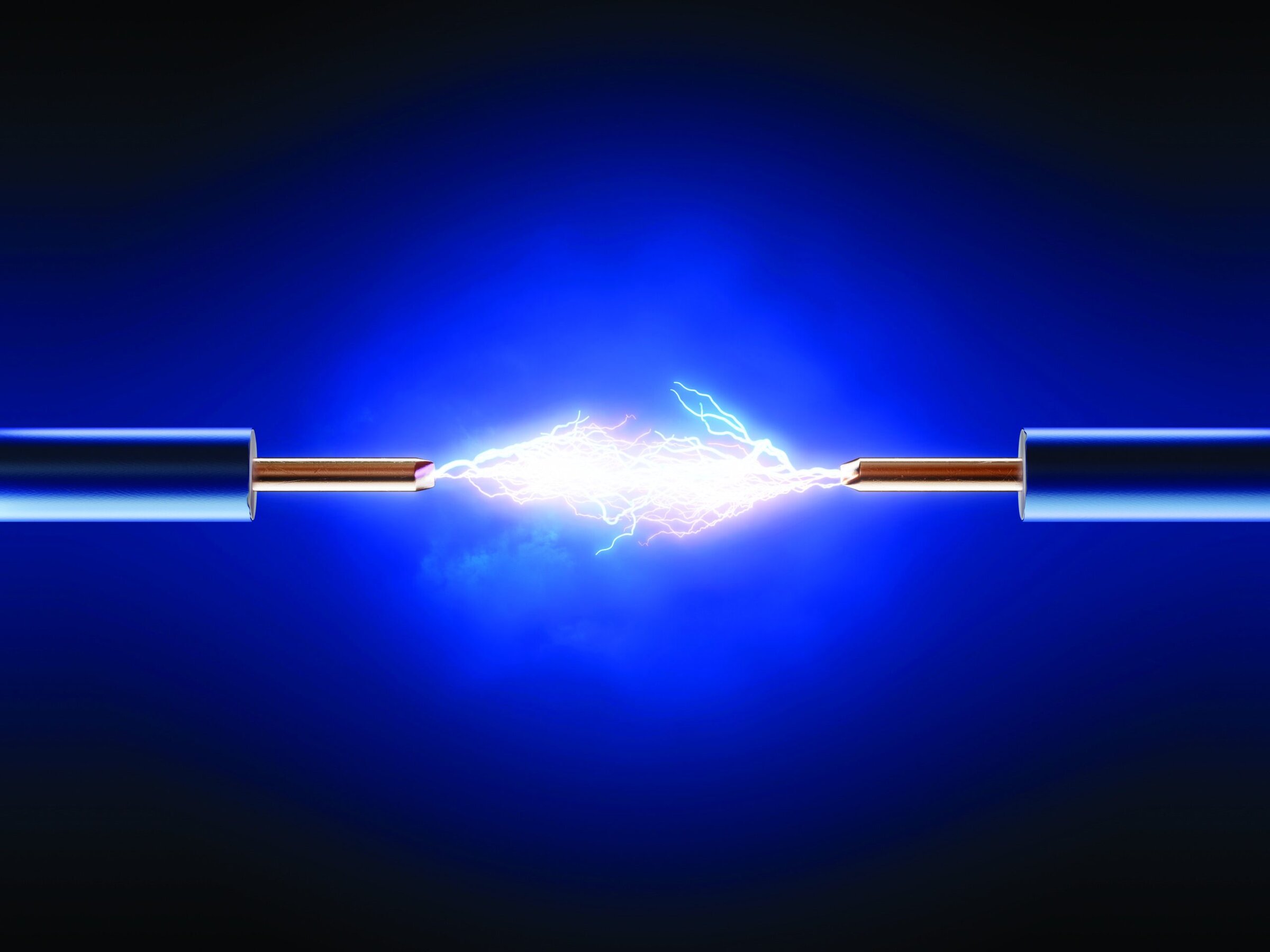
Spark plasma sintering in a flash
Many processes and devices use Joule heating to achieve high temperatures, including electric-current-assisted sintering. These techniques became widely available in the 1990s with the commercialization of spark plasma sintering units produced in Japan. During the past few years, we have experienced renewed interest in rapid consolidation of materials, and total discharge times have been reduced to a few seconds.
As in the case of incandescent lamps and resistive heating elements, flash sintering techniques use localized Joule heating developed within the consolidating particles using—typically—a die-less configuration. Heating rates are extreme (104–106 °C/min), and the sintering temperature is reached almost instantaneously. The flash sintering literature suggests that any ceramic, ranging from insulating oxides (Al2O3) to conductive ceramics (ZrB2), can be consolidated in a few seconds.