

Over the past century, the automobile industry has traversed across the world, with global vehicle sales of over 94 million units in 2016.1 That figure, which includes commercial vehicles, heavy trucks, buses, and coaches, is anticipated to be close to 96 million units in 2017. Industry experts estimate that global automotive manufacturing revenues are worth almost $2 trillion annually, and that number jumps closer to $4 trillion when you consider the entire industry (parts, service, dealers, etc.).2
And projections point to an automotive economy that keeps growing. Looking into the future towards 2030, global consulting firm McKinsey & Company predicts significant growth: “Driven by shared mobility, connectivity services, and feature upgrades, new business models could expand automotive revenue pools by ~30%, adding up to ~$1.5 trillion.”3
Looking at the impact of the automotive industry on the landscape of both the global and United States economies reveals a familiar major player—the ceramic and glass industries. In this article, we look at the automotive industry as a whole and the large role ceramics and glass have played in the history—as well as the future—of the automobile.
Automotive industry drives the world
To get an idea of the volume of cars produced globally, the International Organization of Motor Vehicle Manufacturers reports that 72.1 million new passenger cars were produced in 2016 in more than 40 different countries.1 Of these, the top five auto manufacturing countries—China, Japan, Germany, U.S., and Japan—manufactured 45.7 million cars, nearly two-thirds of the entire global production (Figure 1).
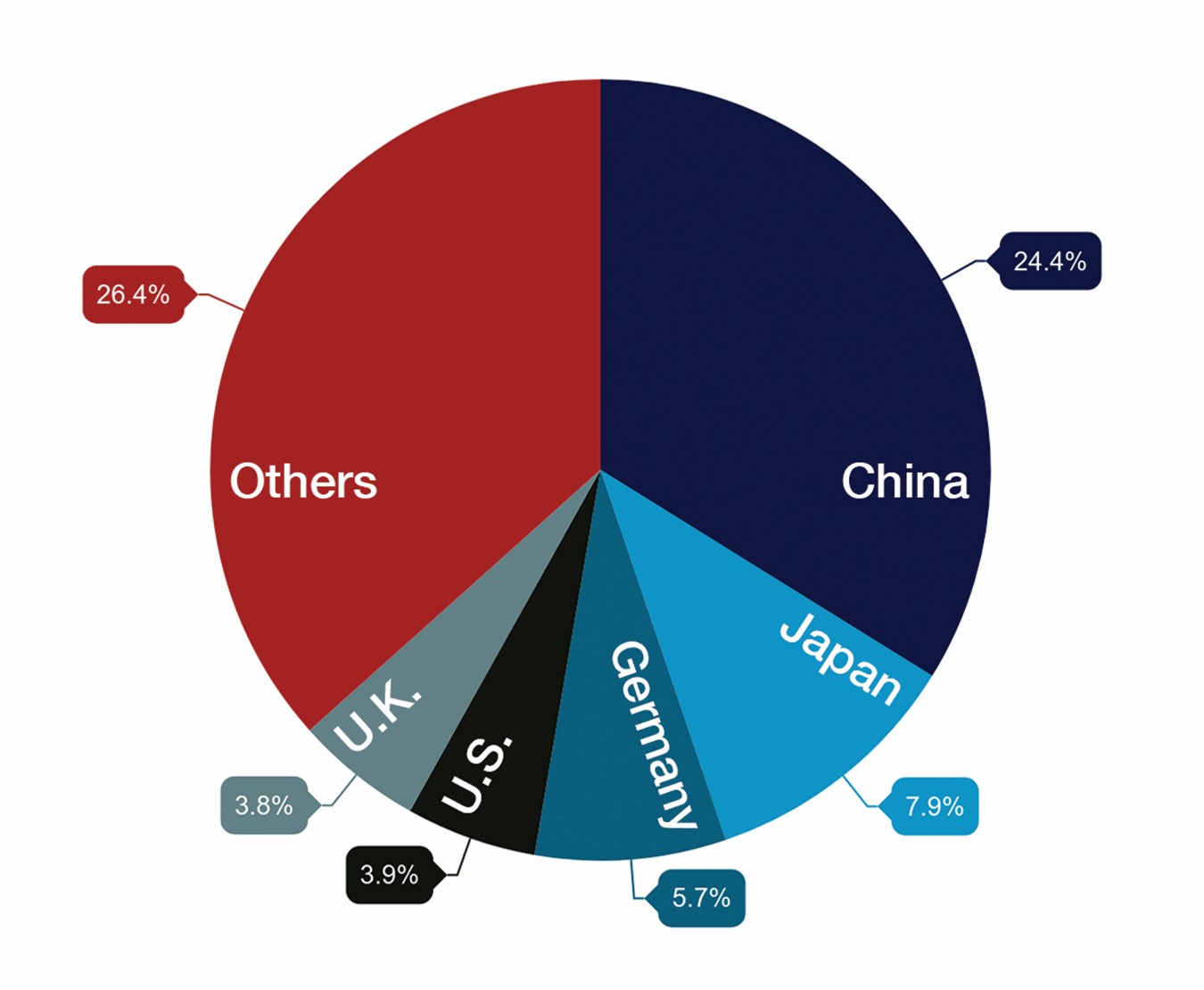
Figure 1. The top five countries leading passenger car production in 2016 account for nearly two-thirds of the total 72.1 million vehicles produced.1 Credit: Graphic created by ACerS using data from Reference 1.
Besides being a top producer of new cars, China is a top consumer, too. Strong sales in China helped boost global sales for the top three manufacturers in 2016. Volkswagen led the global sales chart for the first time in 2016 (Figure 2). Toyota, a leader on the global sales chart in recent years, was a very close second to Volkswagen. General Motors was third, reporting a record year in sales and profit worldwide for the first time in its more than 100-year-history.4
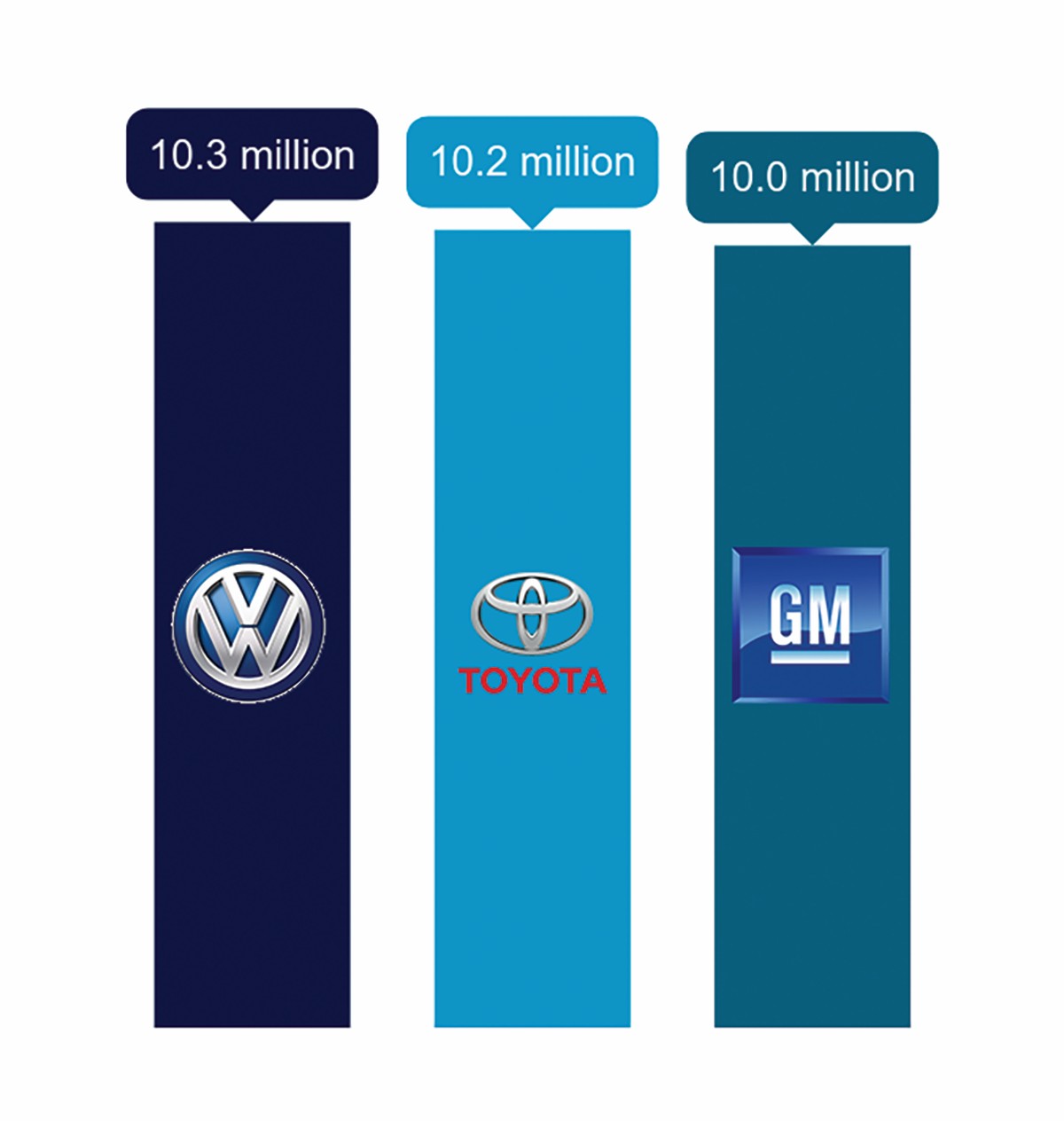
Figure 2. Worldwide vehicle sales of the top three automotive manufacturers—Volkswagen, Toyota, and General Motors—in 2016.4 Credit: Graphic created by ACerS using data from Reference 4.
Annually, Automotive News publishes a “Top 100” list of global OEM parts suppliers, most of which are large, multinational companies. Between them, the top 100 companies sold about $785 billion worth of parts to the auto industry in 2016.5 The largest company—Bosch (Stuttgart, Germany)—contributed a stunning $46.5 billion. The top 100 list also reveals the truly international character of the automotive supply chain—companies from 18 countries are listed. Not surprisingly, the countries most vested are Japan (29 companies), U.S. (22 companies), and Germany (16 companies). At present, only five Chinese companies are on the top 100 list.
Another indicator of the automotive industry’s global impact is its contribution to R&D. According to the Alliance of Automobile Manufacturers, the automotive industry annually spends $105 billion on R&D worldwide.6 In comparison, the entire global aerospace and defense industry spent about $21.8 billion on R&D in 2015. In the U.S., 99% of this automotive R&D is generated and funded by the auto industry, with the federal government contributing only 1%.
Also, we need to consider global capital investment by the automotive industry. If 72 million new passenger cars were produced and sold globally in 2016, we must consider costs of building and maintaining the plants to produce those vehicles, requiring billions of dollars in investment each year. A recent study by the European Commission on the capital investment (plants and equipment) of 2,500 of the world’s leading companies found that the automotive industry ($175 billion) as a whole was second only to oil and gas producers ($275 billion) in terms of annual capital investment.7
Impact on America
In its 2017 “State of the U.S. Automotive Industry” report, the American Automotive Policy Council reported that Americans bought more than 17.5 million cars and trucks.8 Of those, 12.2 million were produced at one of America’s 46 automotive assembly plants. Lined up end-to-end, those assembled cars and trucks would stretch almost 37,000 miles—or more than 6.5 round-trip drives from Los Angeles to New York City.
According to the Auto Alliance, an advocacy alliance of auto manufacturers, U.S. automotive sales broke the all-time record in 2016 with 17.46 million units sold, a 0.4% increase over 2015’s 17.39 million.6 In fact, 2016 marked the seventh consecutive year-over-year sales growth, a first in the history of automobile sales. The Center for Automotive Research projects sales to exceed 17 million vehicles per year through 2022.
At the same time, U.S. auto production doubled from 5.6 million vehicles in 2009 to 12.2 million vehicles in 2016, and that trend of at least 12 million vehicles per year is expected to continue through 2019 and grow to 13 million by 2020. In other words, the industry is doing well. But what impact does the industry have on the U.S. as a whole?
According to selectusa.gov, the industry historically accounts for 3.0%–3.5% of U.S. gross domestic product and comprises the largest sector for manufacturing jobs in the U.S.7 Auto Alliance reports that the auto industry, which includes manufacturers, parts manufacturers and suppliers, and dealerships, directly supports more than six million jobs (Table 1).6 The automotive industry is the top U.S. exporter, just ahead of the aerospace industry. Exports of cars and parts amounting to over $99 billion were shipped from U.S. ports in 2015, almost double the $50.8 billion of auto products America exported just over a decade ago.6
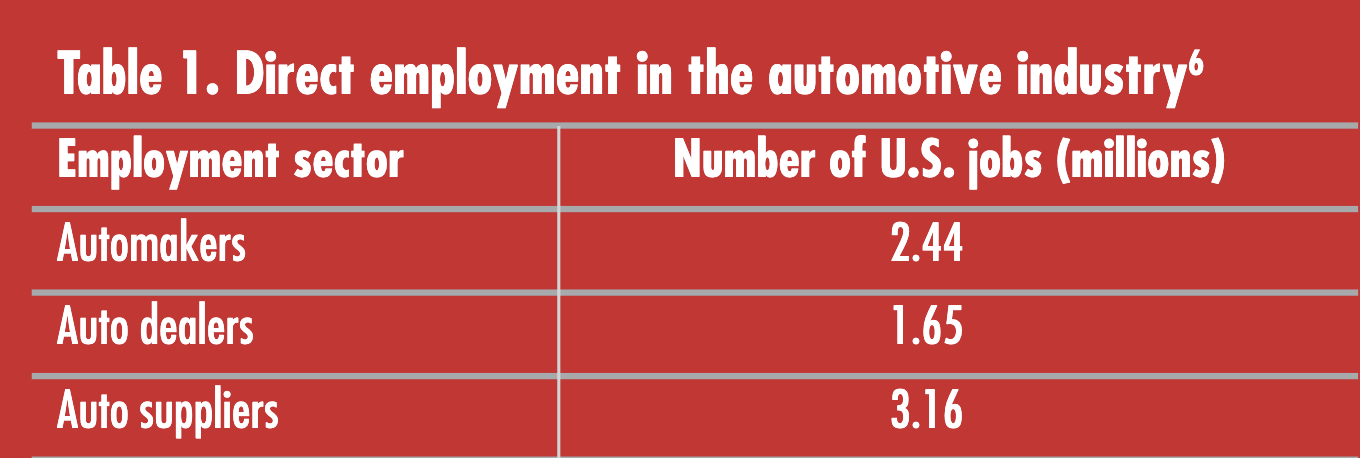
Credit: Industry employment graphic created by ACerS using data from Reference 6.
When we think of the automotive industry, we typically think of individuals in automotive factories working on the assembly line to build cars and trucks. While automakers are the most visible part of the industry, auto manufacturing encompasses many diverse businesses coast to coast. As a result, 45 of 50 U.S. states have more than 10,000 auto-related jobs, and 20 of those states have more than 100,000 auto jobs. In addition, auto-related suppliers are headquartered in virtually every state, and half of the companies listed in the Dow Jones Industrial Average depend on autos for revenue.6
Auto manufacturing drives $953 billion into the economy each year through sales and servicing of autos. That money flows through the economy, from revenue to parts suppliers to paychecks for assembly plant workers, from income for auto-related small business to revenue for government. According to Auto Alliance, auto production remains the country’s largest manufacturing sector, with 13 automakers operating 44 assembly plants across 14 states.6
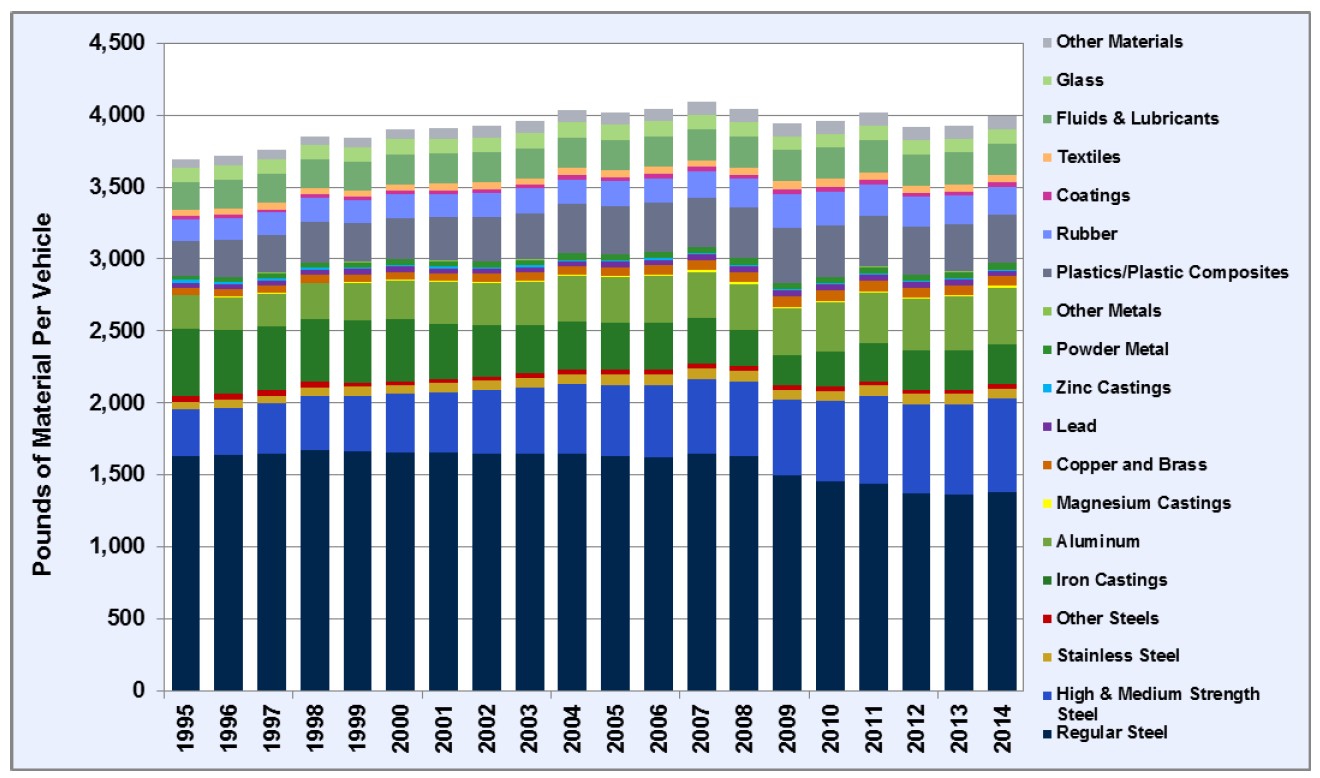
Figure 3. Average materials content of light vehicles during 1995–2014. From Oak Ridge National Laboratory’s 2016 Vehicle Technologies Market Report.10 Credit: Oak Ridge National Laboratory
Jobs related to the auto industry go far beyond designing, building, and selling vehicles. The automotive industry buys hundreds of billions of dollars worth of American steel, glass, rubber, iron, and semiconductors each year.7 Each assembled vehicle contains anywhere from 8,000 to 12,000 components, and as many as 15,000 individual parts.9 Figure 3 shows the relative weight distribution of materials in a vehicle. Glass and ceramics (in the ‘Other Materials’ category) contribute relatively little to the overall weight, but much in terms of function, as Figure 4 illustrates.10
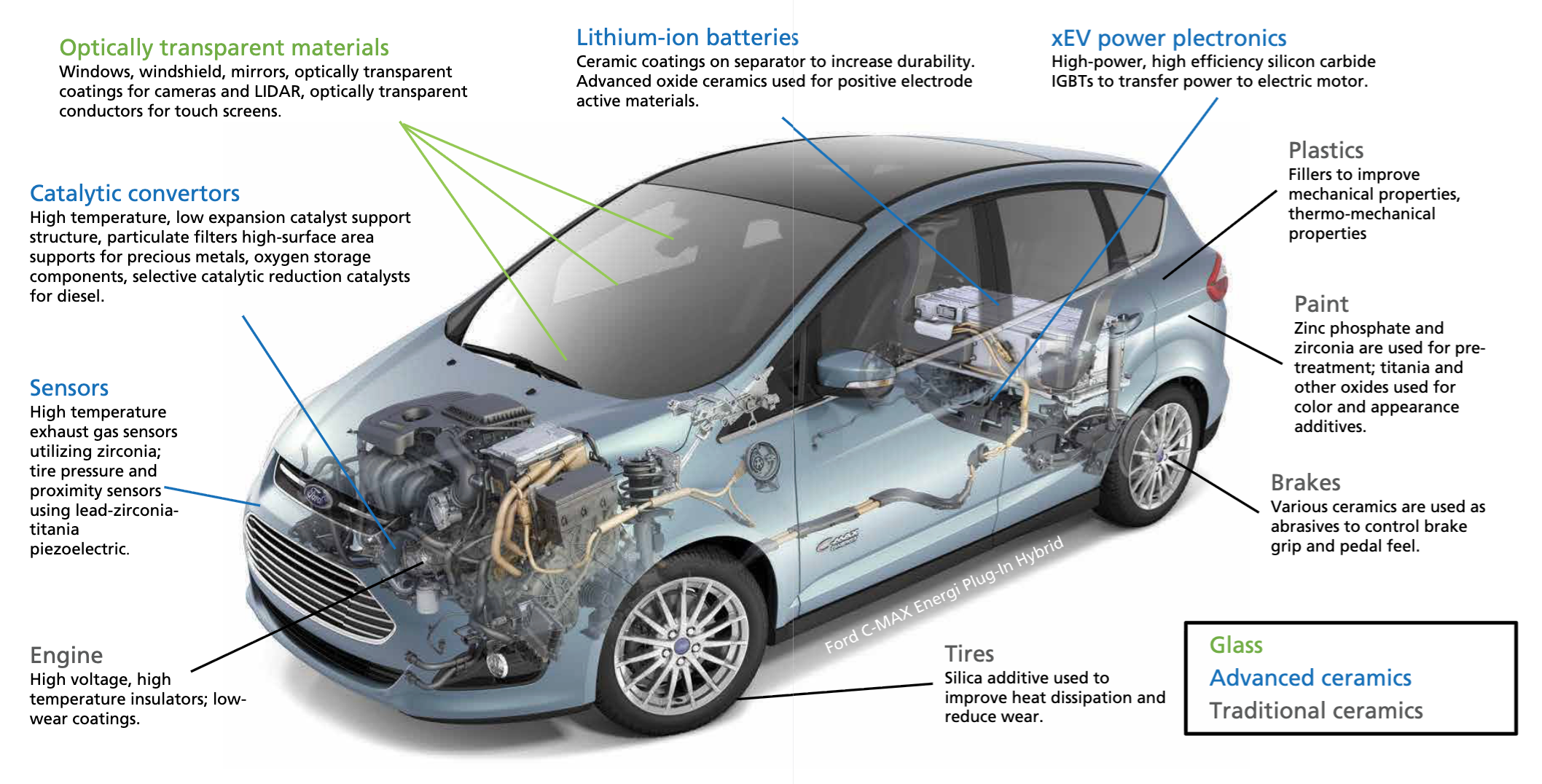
Figure 4. A sampling of contributions of ceramic and glass materials in a modern automobile. Credit: William A. Paxton, Ford Motor Company 2017
Ceramics and glass in the driver seat
Annual global production of 72.1 million vehicles means glass and ceramic companies around the globe supply 72.1 million windshields, back windows, mirrors, and catalytic converter substrates, and many times that number of headlamps, sensors, brakes, electronics, and paint colorants. In other words, a healthy automotive industry is good for the ceramic and glass industry.
According to market research firm Research and Markets, the global automotive ceramic market is expected to grow at a compound annual growth rate (CAGR) of 8.52% during 2017–2022.11 Although North America is the biggest player in the ceramics market, Japan, India, and China are projected to experience strong growth during the period. A February 2017 Research and Markets report forecasts growth of the global automotive glass market at a CAGR of nearly 6.7% in the next ten years, reaching $32.5 billion by 2025. Table 2 shows estimates of market size and growth projections for a few major ceramic- and glass-based components.12
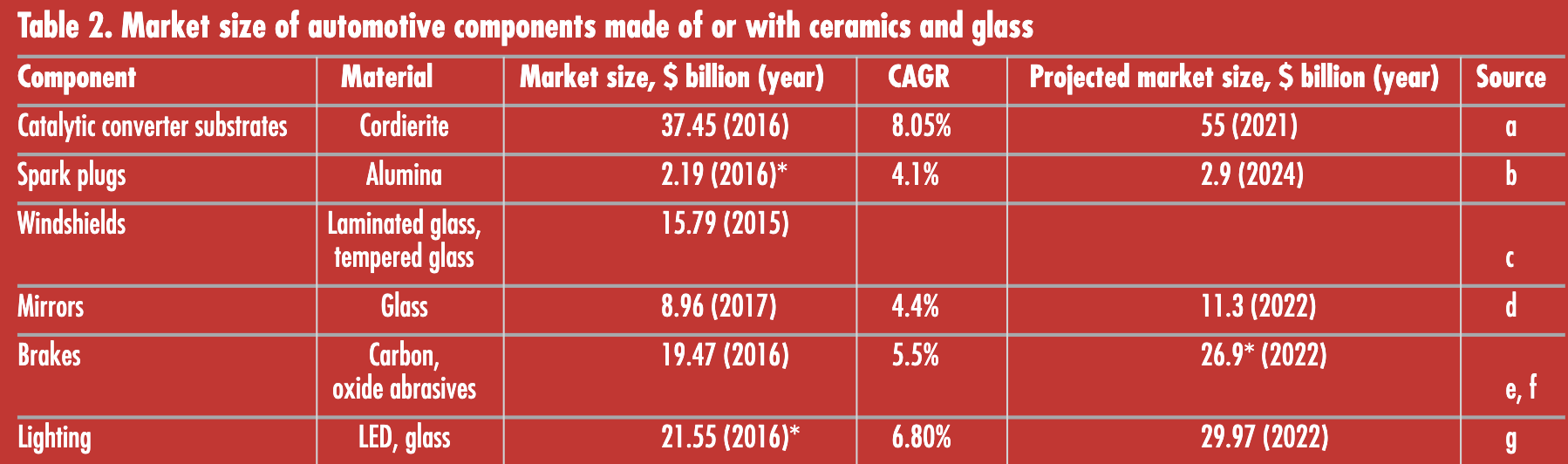
Credit: Market size calculated from source data
a. “Catalytic converter market worth 55.16 billion USD by 2021,” Markets and Markets, April 2017.
b. “Spark plug market: Global demand analysis and opportunity outlook 2024,” Research Nester, September 2017.
c. “Automotive glass market analysis by product, by application, by end-use, by vehicle type, and segment forecasts, 2014–2025,” Grand View Research, December 2016.
d. “Automotive rear view mirror market—Global industry analysis, size, share, growth, trends, and forecast 2017–2022,” Transparency Market Research, September 2017.
e. “Automotive brake systems market analysis by brake type, by vehicle type, by technology, by region, and segment forecasts, 2014–2025,” Grand View Research, October 2017.
f. “Automotive carbon ceramic brakes market: LCV and HCV vehicle type segments anticipated to hold minimal market share over the forecast period: Global industry analysis and opportunity assessment, 2016–2026,” Future Market Insights, April 2017.
g. “Lighting market for ICE & EVs by technology, position, application, adaptive lighting, and region—Forecast to 2022,” Markets and Markets, June 2017.
Exactly how much monetary value the ceramic and glass industry contributes to today’s automotive industry is impossible to isolate. Tables 3 and 4 provide revenue data for automotive suppliers for representative companies whose product portfolio includes products or systems that use ceramic or glass. Table 5 lists select ceramic and glass companies that supply the auto industry, often with components to top 100 companies.
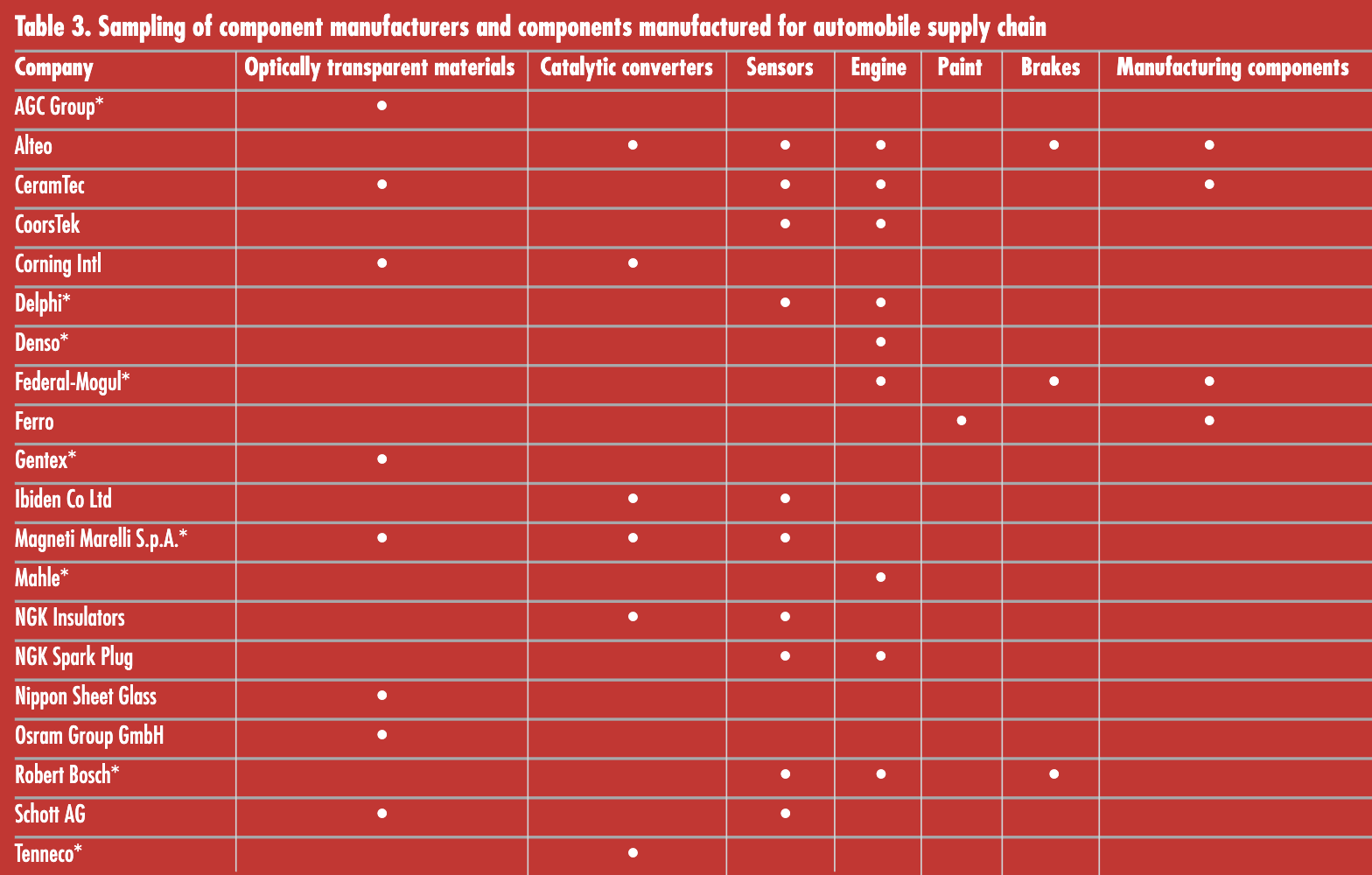
Credit: “Top 100 OEM Supplier,” Supplement to Automotive News, June 26, 2017.
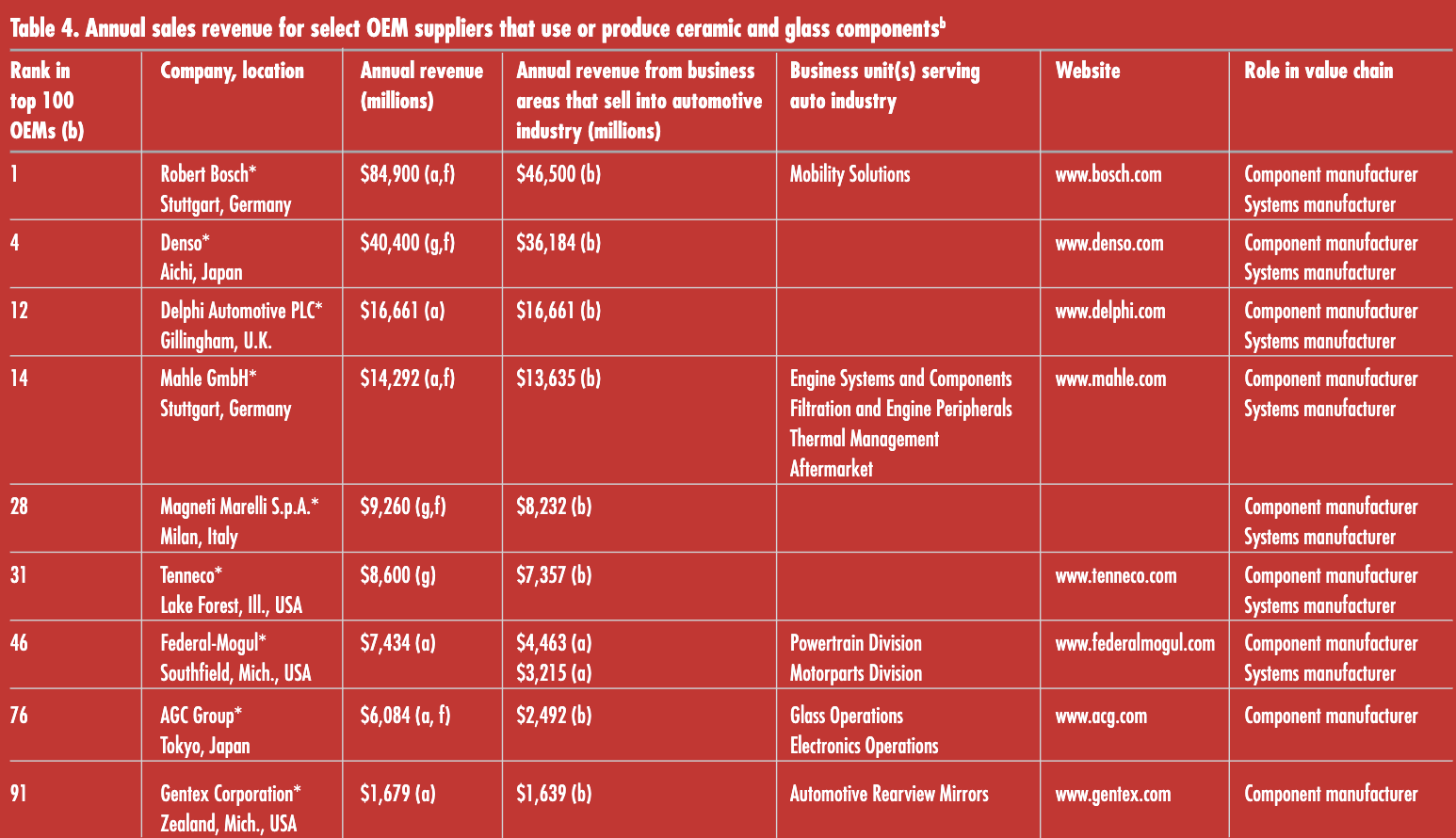
Credit: a) 2016 Annual Report or Form 10K b) North America, Europe, and the world Top Suppliers, Supplement to Automotive News, June 26, 2017 c) Mergent Intellect database d) FY 2017 Annual Report e) Calculated f) Currency conversion (10/27/17) g) Company website
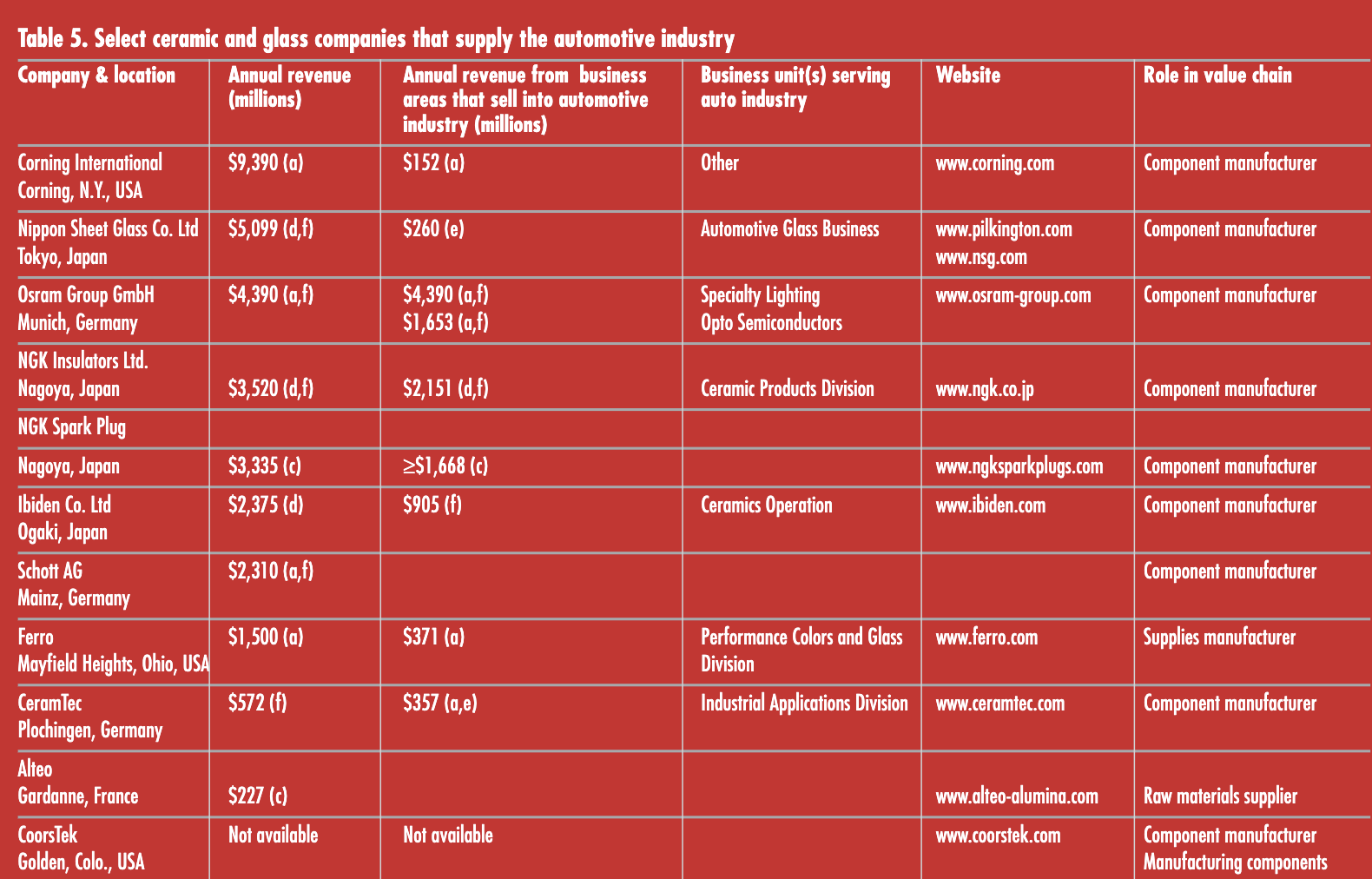
Credit: a) 2016 Annual Report or Form 10K b) North America, Europe, and the world Top Suppliers, Supplement to Automotive News, June 26, 2017 c) Mergent Intellect database d) FY 2017 Annual Report e) Calculated f) Currency conversion (10/27/17) g) Company website
Some companies in Table 3, such as Federal-Mogul, supply exclusively to the automotive industry. Federal-Mogul manufactures spark plugs, brakes, light bulbs, thermal protection systems, and more, to the tune of $7.4 billion revenue per year. The largest of the suppliers in the Automotive News top 100 list are active in many industries. For example, a household that owns a Bosch dishwasher may well have a car in the garage with Bosch sensors, spark plugs, or brake pads. Bosch brings in about $84.9 billion annually, with about $46.5 billion coming from its Mobility Solutions division.
In addition to supplying automotive components, the ceramic and glass industry contributes to the automotive supply chain in the form of ceramic cutting tools, polishing materials, refractories, weld rods, etc. New auto designs use advanced high strength steels, which require new materials solutions in the steel plant. The sidebar on page 20 presents a glimpse into how ArcelorMittal, one of the world’s largest steel suppliers to the auto industry, is using ceramic materials it its manufacture of new lightweight steels.
Innovations and trends steering the automotive market
The automotive industry is undergoing a major evolution. “As they develop new software options, cars are evolving into computers on wheels, a change similar to events in the computer industry 20 years ago and the cellphone industry 10 years ago,” according to McKinsey & Company.13 “As a result, we anticipate that a complex ecosystem will emerge in the automotive sector.”
Some of the major forces influencing the industry are technology integration, lightweighting efforts, and the emergence of electric and autonomous vehicles.
And because the automotive industry is incredibly large and diverse, with tendrils reaching into many different material, component, and consumer markets, the effects of this evolving ecosystem stretch wide. The emergence of a complex ecosystem means huge opportunities are arising for some markets, forcing shifts in others and inevitably shrinking still other markets.
Four trends propelling innovation in the automotive industry will impact the ceramic and glass industry: lightweighting, electric vehicles, autonomous driving, and connectivity.
Skinny cars—Lightweighting
Lightweighting efforts can significantly enhance vehicle efficiency because the effects are additive—for every 10 pounds cut from the weight of the body, another 10 pounds can also be shed from other parts of the now lighter vehicle, according to an MIT Technology Review article.15 For instance, lighter vehicles require smaller engines, downgraded suspensions, and a less robust structure.
However, further weight reduction is increasingly difficult, because much of the low-hanging fruit has already been picked. Eliminating weight by reducing vehicle size is nearing its limit, leaving further weight reductions to improvements in materials themselves. According to the U.S. Department of Energy Vehicle Technologies Office, “Using lightweight components and high-efficiency engines enabled by advanced materials in one quarter of the U.S. fleet could save more than 5 billion gallons of fuel annually by 2030.”16
Thus, vehicle lightweighting creates new or expanded opportunities for lighter materials, including advanced high strength steels, aluminum and its composites, titanium, glass-fiber composites, magnesium, and carbon fiber and its composites, for example.
Replacing traditional iron and steel components with aluminum, high-strength steel, or glass fiber-reinforced composites can decrease weight by 10–60%, while magnesium or carbon fiber composites can achieve 50–75% weight reductions.17 Although no one material is likely to completely replace steel in future lightweight vehicles, each material’s weight reduction potential (Table 6) and specific properties dictate its potential for incorporation in a wide array of vehicle positions and functions.
“You’re going to see aluminum on more products, especially doors and hoods, from Ford and from our competitors,” Matt Zaluzec, Ford’s technical leader of global materials and manufacturing research, says in an Automotive World article.18 “It’s about creativity—are there places in a steel vehicle where I can introduce mixed materials? Or an aluminum vehicle with steel or carbon fiber reinforcements?”
Even small weight reductions on a per vehicle basis add up quickly when multiplied across 72.1 million vehicles annually. How might ceramic and glass materials—not generally thought of as featherweights—help slim down vehicles?
Of necessity, we drive around a lot of window glass, and all of it located above the vehicle’s center of gravity. According to a Materials Technical Team Roadmap published in February 2015 by the US Drive Partnership, lightweight glazing alternatives must overcome hurdles associated with cost, manufacturability, durability, and regulations.19 Remaining technical challenges include reduction of noise transmission and increasing durability to meet performance requirements. Corning estimates up to 50 pounds of glass could be eliminated by replacing traditional soda-lime glass with chemically strengthened glass, such as its Gorilla Glass.20 Ford partnered with Corning to integrate Gorilla Glass into the Ford GT supercar as a proof of concept.
Every wheel is outfitted with a braking system, and cast iron brakes weigh about nine pounds apiece. REL (Calumet, Mich.) has developed a functionally graded aluminum metal matrix composite disc brake reinforced with ceramic. The composite brakes weigh about five pounds apiece, and they last about four times as long. According to the company website, the composite “enables the placement of a higher volume loading of ceramic in one area and a lower volume loading in another. For a brake disc application, this enables high loading of ceramic on the outer perimeter where the disc is moving the fastest, generating the most heat, and a lower loading inward, which helps the disc maintain flatness and minimize fade in long braking events.”
More opportunities exist for metal matrix composites to reduce vehicle weight. Metals reinforced with ceramic fibers, whiskers, or particles offer improved properties such as tensile and compressive properties, creep stability, tunable thermal expansion, and wear resistance, which could allow increased application-specific incorporation in lightweight vehicles.21
Federal Mogul revealed in 2017 plans to use high thermal conductivity and thermal interface coating materials to protect engine valves, which is particularly important in downsized engines. These unspecified coating materials can reduce valve head temperatures by up to 70ºC for better combustion with lower emissions, in addition to reducing wear.22
Designers want to trim weight from less obvious areas, too. Automakers are reportedly exploring aluminum seats as a steel alternative, although carbon fiber and glass fiber offer potential for additional weight savings. However, with those alternative materials, cost remains a major obstacle. “Seats are so optimized right now in steel, and it’s such an inexpensive material, that it’s very hard to find a replacement,” according to an Automotive World article.18
Perhaps surprisingly, automobile wiring harnesses can even add considerable heft to a vehicle—the weight of a large adult—driving automakers to consider alternative materials for interconnects, including aluminum, thinner copper coated wires, and fiber optics.18 These technologies are not ready for integration, but represent a future target for additional targets for vehicle lightweighting efforts.
Novel opportunities exist for reducing weight as well. Sofegi Group (Milan, Italy) and Audi (Ingolstadt, Germany) developed a glass fiber-reinforced epoxy suspension spring that could save about 2.5 pounds per spring—40% less than steel springs.23 Audi introduced the new springs on its 2016 A6 Avant Ultra.
Road buzz—Electric vehicles
Lightweighting efforts only go so far to reduce emissions, and beyond incremental improvements in reducing vehicle emissions, many countries have committed to eliminating vehicle emissions completely by reducing reliance on the internal combustion engine.
The world’s most populous countries, India and China, are taking definitive steps towards cleaner air by eliminating future sales of vehicles powered by internal combustion engines. The U.K. and France will entirely ban sales of new cars powered by gasoline or diesel by 2040, with Austria, Denmark, Germany, Ireland, Japan, the Netherlands, Portugal, Korea, and Spain all on board with similar policy shifts. Perhaps the most aggressive policy comes from Norway, which will require all new passenger vehicles to have zero emissions by 2025.
As the world’s biggest automotive market, China exerts heavy influence on the entire industry. China has already mandated that automakers meet a minimum score based on sales of reduced emission vehicles starting in 2019. China’s government has a goal to become the biggest world player in new energy vehicles, setting the stage for a quiet revolution in the automotive industry, according to a National Public Radio story.24 More than 140 Chinese companies currently manufacture electric vehicle batteries, compared to only about half a dozen elsewhere in the world.
Policies to lower emission standards, rising consumer acceptance, reduced battery costs, and increasing availability of electric charging stations all contribute to the gaining momentum of electric vehicles (EV). Morgan Stanley analysts predict the electric vehicle share of the global automotive market will rise slowly for the next ten years, but take off nearly ten-fold by 2050 (Figure 5).25
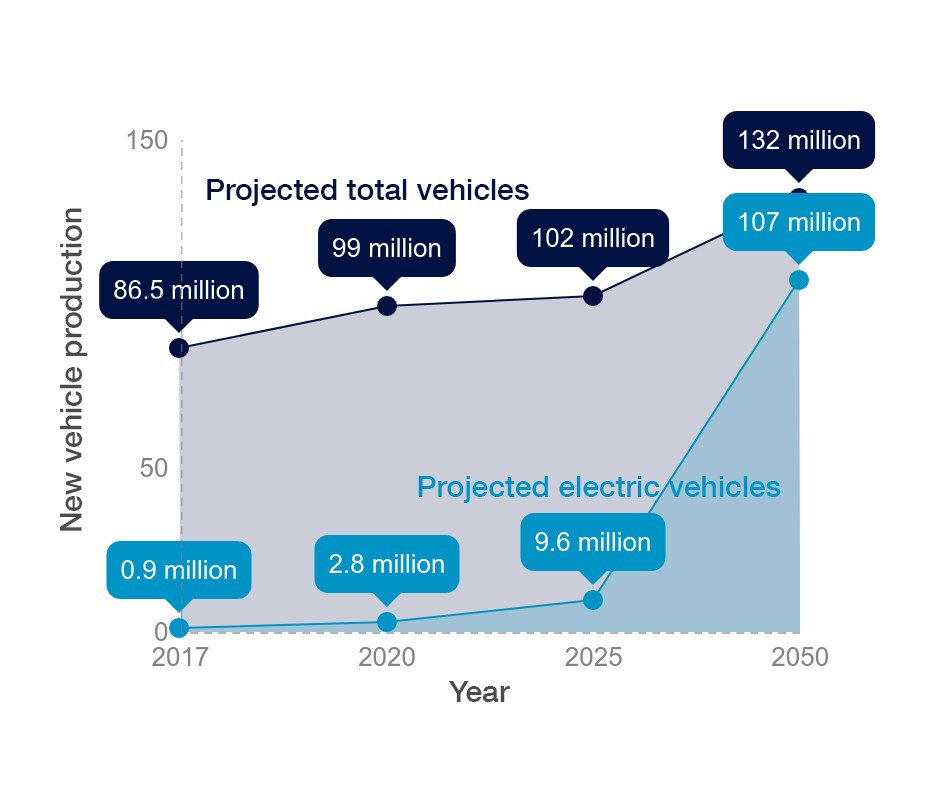
Figure 5. Morgan Stanley predicts that electric vehicles will command a growing proportion of the global automotive market over the coming decades, accounting for 81% of new vehicles produced in 2050. Currently, electric vehicles account for just 1.1% of new vehicle production.25 Credit: Graphic created by ACerS using data from Reference 25.
GM, one of the world’s largest automakers with 10 million cars sold in 2016, will debut two new electric vehicle models by early 2019 as part of its more comprehensive plan to sell 20 all-electric vehicle models by 2023. “GM believes the future is all electric, a world free of automotive emissions,” Mark Reuss, executive vice president of global product development at GM, says in a Bloomberg Technology article.26 “It’s real.”
Does the rise of EVs signal the end of the line for the internal combustion engine? A 2015 National Research Council report on fuel economy technologies for light-duty vehicles predicts that the gas-fueled spark ignition engine is likely to dominate the U.S. light-duty vehicle market through 2025.27 And, according to a McKinsey & Company perspective of the automotive market towards 2030, “It is important to note that electrified vehicles include a large portion of hybrid electrics, which means that even beyond 2030 the internal combustion engine will remain very relevant.”3
Nonetheless, despite the growing popularity of EVs, the electric powertrain concept is not new—automobiles were battery-powered until the invention of the electric starter made the internal combustion engine possible. But, today’s EVs bear as much resemblance to their ancestors as eagles do to pterodactyls.
Today’s internal combustion engines have some 2,000 moving parts, and EVs have around 20.28 The rise of EVs will affect markets built around these components—as well as their maintenance and replacement—for both powertrain types. EV technology also opens new opportunities for ceramic and glass materials, particularly in batteries.
A 2017 Transparency Market Research report predicts the global automotive battery market will reach $54.5 billion by 2022. Lithium-ion batteries are expected to remain the top-selling battery type, although competing compositions are expected to gain momentum in the near future.29
“Current battery technology will only get us so far,” according to Will Paxton, materials research engineer at Ford Research and Innovation Center (Dearborn, Mich.). “Ford is investing in basic and applied science, and looking beyond lithium-based technologies.” Ford announced plans in January 2017 to invest $4.5 billion by 2020 to build its EV business.30
R&D into new battery compositions and different types of batteries will become increasingly important, as the market demands safer batteries with more energy density. Researchers are looking at alternative battery technologies, such as flow batteries, beta-alumina and lithium-lanthanum-zirconium-oxide fast ion conductor solid electrolytes, and sodium–sulfur batteries, to determine their suitability for EVs. Other materials solutions under investigation include ceramic membrane materials impervious to lithium metal and MXenes—2-D transition metal carbides—for electrodes.
Battery research for EVs is a national priority in the U.S. The Department of Energy announced in July 2017 plans to award $19.4 million to accelerate advanced vehicle technologies, particularly advanced batteries, lightweight materials, engine technologies, and energy efficient mobility systems.31 Fifteen of the 22 funded projects focus on new battery materials and efforts to boost energy capacities of lithium technologies, with goals of smaller, safer, lighter, and less expensive batteries for EVs.
Beyond better batteries, other technical barriers to solve for electric motors include price volatility of magnets and rare-earth elements, performance of non-rare-earth electric motors, and material property optimization, according to a US DRIVE Electrical and Electronics Technical Team Roadmap.32 NdFeB magnets in electric traction drive systems account for 20%–30% of total electric motor costs, so reducing these costs would help reduce overall costs of EVs. New systems that eliminate rare-earth magnets through incorporation of improved materials, such as silicon steel, ultra-conductive copper, and improved thermal materials, offer potential to reduce costs and enhance performance of electric motors. Further, advanced thermal management systems—which ceramic materials are particularly well-suited—are an R&D priority to decrease the size and cost and increase the reliability of electric motors, according to the roadmap.
Undesignated driver—Autonomous vehicles
Autonomous vehicles—so called self-driving cars—are a disruptive influencer coming quickly on the horizon. Most major automakers are making big investments in driverless technology. In early 2017, Ford announced plans to introduce a hybrid engine autonomous vehicle in 2021, targeted initially at the North American ridesharing market.30 Bosch and Daimler AG, thinking similarly, formed a partnership in April 2017 to produce driverless taxis.33
McKinsey & Company predicts fully autonomous vehicles will not be commercially available prior to 2020, and vehicle control will transition incrementally from the driver to the car through partially autonomous technologies via advanced driver assistance systems, such as self-parking and collision avoidance systems.3 In the four years from 2016 to 2020, the number of vehicles with collision avoidance systems will rise from 10.9 million to 85.9 million, Automotive News reports.5
Getting autonomous vehicles to market will be a long, expensive road. R&D efforts are well underway by automakers and their big suppliers to develop artificial intelligence, mapping technologies, cameras, sensors, onboard computers, etc. Already, a lot of money is involved. Automotive News reported that Bosch, the largest company on the top 100 list, sold more than $1.2 billion of products in 2016 for collision avoidance systems, including sensors, actuators, and software. Bosch reportedly plans to invest $336 million to develop artificial intelligence for autonomous vehicles in the next five years.5
How soon will consumers be able to take one out for a test ride? A Boston Consulting Group analysis predicts 12 million fully autonomous vehicles will be sold annually around the world by 2035, with 18 million partially autonomous vehicles sold by the same time.34 Together, vehicles with varying degrees of autonomous features are expected to account for 25% of new vehicles by 2035. The combined market is expected to grow from $42 billion by 2025 to $77 billion by 2035. However, that timeline is subject to technical, infrastructure, and regulatory challenges, which are not insignificant for this technology.
What ceramics and glass will automakers need to make the dream a reality?
“Autonomous car systems require a lot of sensors and a lot of computational power. It will take a lot of electrical power and computational power to drive them,” according to Ford’s Will Paxton.
That means sensors, camera lenses, electrical components (capacitors, dielectrics, resistors, etc.) for the light detection and ranging (LiDAR) systems, electronic packaging, dashboard controls, and onboard computers, to name a few.
For example, autonomous vehicle development is growing the market for complementary metal-oxide semiconductor (CMOS) sensors, due to increasing dependence on visual data to inform autonomous vehicles of their surroundings. According to a September 2017 article in Photonics Spectra, the automotive market is expected to drive a $1.83 billion increase in CMOS sensor revenue during 2015–2020.35
LiDAR sensors, just like many other sensor types, are complex systems that integrate ceramic and glass components throughout the sensing system. For example, LiDAR sensors that enable Google’s self-driving vehicle use 64 laser beams to collect 1.3 million readings per minute, which the vehicle’s on-board computing system then integrates into a 3-D model of the environment for the vehicle to navigate (Figure 6).36 This requires cameras, radar systems, ultrasonic sensors, gyroscopes, altimeters, and tachymeters, in addition to a CPU to process all that data.

Figure 6. Light detection and ranging (LiDAR) technology detects objects and measures distances and speeds using infrared light. Credit: LeddarTech
LiDAR systems represent an area ripe for potential future growth of component markets, as technical demands drive innovation to improve existing sensing technologies. How much is hard to say, however, a 2017 Markets and Markets report predicts that the automotive LiDAR market will grow to a value of $735 million by 2025.37
Recent investments and business activity testify to this future growth. Velodyne (San Jose, Calif.), a company currently leading the market for automobile LiDAR technology, announced in October 2017 that it is quadrupling its LiDAR production to meet increasing global demand.38 Also in October 2017, GM took steps to secure its future in autonomous vehicle development with the acquisition of California-based LiDAR startup company Strobe Inc. 39
Integration by parts—Connectivity
Industry observers see adding your car to the Internet of Things (IoT) as a game-changing trend and liken the current state of the connected automotive market to where the smartphone market was in 2010. It comes as no surprise then that manufacturers with roots in consumer electronics are edging into the automotive sector, with companies like Samsung, Sharp, Kyocera, and LG Display seeing new opportunities for themselves in our cars.
“They know how to build a phone, and they know how to build consumer electronics,” IHS analyst Mark Boyadjis says in an Automotive News article from June 2016. “Now they are looking to grab a larger piece of the pie and start shipping directly to the automakers.”40
Business Insider Intelligence predicts that 82% of the 94 million cars shipped in 2021 will be IoT connected.41 That growth translates to a whopping CAGR of 35% from 2016 levels. In total, 381 million connected cars are expected to be on the roads by 2020, generating $8.1 trillion during 2015–2020.
Onboard electronics—which rely heavily on ceramic and glass materials—already occupy a huge share of the automobile market. Statista data estimates that electronics account for about a third of the cost of a vehicle today, and could to rise to 50% by 2030.42
In particular, the sensor segment of the automotive market is expected to grow rapidly to meet the demands of integrating technology into nearly every aspect of vehicles, including safety, autonomy, and connectivity features. Auto manufacturers will use an estimated 10 billion sensors—including pressure, temperature, speed, position, gas, and image sensors—annually by 2020, driven by the demand for data acquisition.43 A 2017 Research and Markets report says that the sensor market will grow at a CAGR of 8.4% to reach a market value of $48.3 billion by 2025, propelled by demand for fuel efficient systems, adoption of driver assist and autonomous systems, safety, and emerging technologies.44
According to an October 2017 Electrical and Electronics Technical Team Roadmap from US DRIVE, a remaining technical barrier for automotive power electronics is the need for higher thermal tolerances. High-performance materials with high-temperature capabilities—which ceramic materials excel at—will help address these close these barriers and advance further integration of power electronics.32
Although backup cameras are standard in many new models today, future vehicles may also incorporate more cameras in more vehicle positions to reduce blind spots and enhance safety. For example, display screens integrated into A-pillars—the vertical supports between a vehicle’s windshield and front windows—could allow live camera feeds to replace side mirrors. Similar live camera-fed rearview displays could enhance viewing angles and field of vision.
All this integration calls for more in-vehicle displays as well, with enhanced sophistication of the sort Corning imagines with its all-glass dashboard concept. The technology indicates it is possible—thin and durable glass compositions, such as Gorilla Glass, and advanced OLED displays offer thin and rich displays as a replacement to bulky panels, allowing display screens to be incorporated in new spaces.
Entirely new designs may take hold as well. For example, AGC will introduce an innovative curved touchscreen glass display in the cockpit of the new Audi A8.45 The business opportunity is not chump change—an IHS Automotive forecast estimates cockpit displays (including center display screens, instrument clusters, and heads-up displays) will generate $18.6 billion in revenue in 2021, an 84% increase from 2017 figures.46
Some new technology ideas connect only to the humans who will occupy vehicles, whether as drivers or passengers. For example, automakers are using more solar reflective glasses to reduce heat in cars and privacy glass, according to Technavio.47 Some automakers are even working to integrate solar cells directly into automotive glass. Audi is reportedly working with Chinese solar cell manufacturer Alta Devices on integrated solar cells to provide an additional auxiliary power source. Audi expects to test a solar cell-embedded panoramic glass roof by end of 2017.48
Final Thoughts
“Personal freedom in America is deeply rooted in the car,” Paxton notes, and it surely applies globally. At Ford, he says, “Our focus is on how [people] interact with the vehicle and how it supports their lives.”
The nature of our interaction with our vehicles will evolve as industry moves toward electric vehicles, autonomous driving, and new functions made possible by IoT. Ultimately, these innovations will extend the personal freedom our cars provide. The automotive industry is at the cusp of radical shifts and will look very different 10, 20, and 30 years from now. And so will the ceramic and glass industry that will make these radical innovations possible.
A changing role for ceramics in steel plants?
Helping steelmakers produce lightweight, advanced high strength steels

Automobile designers reduce weight by using advanced high strength steels (AHSS) in areas where alternative materials lack necessary mechanical properties, such as high stiffness or high energy absorption. ArcelorMittal, a multinational steel and mining company, produces multiple grades of AHSS for automakers.
According to Matt Kremer, division manager for operations technology at ArcelorMittal’s plant in Cleveland, Ohio, the market for AHSS is expanding rapidly, with new grades being developed every year. The Cleveland plant began selling AHSS to the automotive industry in 2010. Between 2012 and 2016, Kremer says AHSS production grew from 75k tons to 400k tons, just at the Cleveland plant.
Cleveland processes all AHSS through its hot-dip galvanizing line, and ceramic materials help solve a variety of issues specific to AHSS. For example, air knives control coating weight on steel strips continuously rolling through the zinc pot. Zinc dust can build up on the ceramic rolls in that part of the line. Trials with new boron nitride-coated stainless steel rolls show promise for reducing buildup.
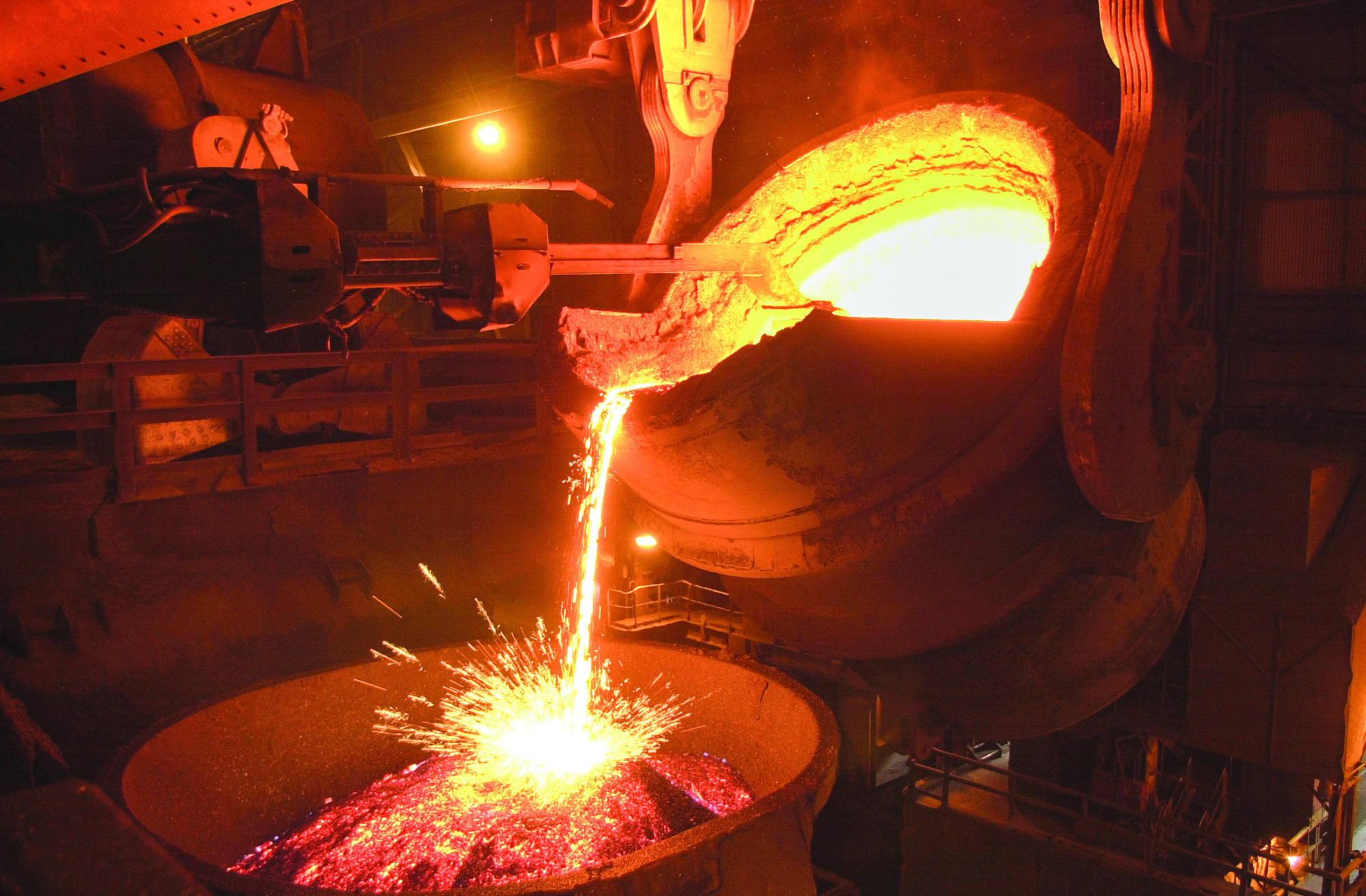
Basic oxygen furnace. Credit: ArcelorMittal
Also in the hot-dip galvanizing line, chromium from chromium carbide-coated bridle rolls in the gas jet cooling section can react with manganese and silica oxide phases that form on the AHSS surface, leaving complex oxide deposits on the bridle roll. These deposits may then imprint dimples into fresh steel as it is processed. “We are considering a new coating that contains a higher volume fraction of ceramic phases to better resist these mixed oxide formations,” says Kremer.
At present, AHSS comprises only 12% of overall steel production at the Cleveland plant. Thus, production of other steels drives refractory selection through most of the process. Kremer notes that AHSS alloys used today were developed in the 1970s and 1980s, and new, highly alloyed steels are in development. “Refractory requirements for those products are going to be different,” Kremer says. “There are definitely opportunities [for new refractories]. As we move as an industry to more specialty products, there’s going to be more of a need.”
Corporate Average Fuel Economy (CAFE) standards
The U.S. first enacted Corporate Average Fuel Economy (CAFE) standards in 1975. With automaker support, the Obama administration in 2012 set relatively aggressive fuel economy standards for passenger vehicles, light-duty trucks, and medium-duty passenger vehicles for model years 2017–2025. Those standards are set to incrementally increase vehicle fuel efficiency to an average of 54.5 mpg by 2025.14
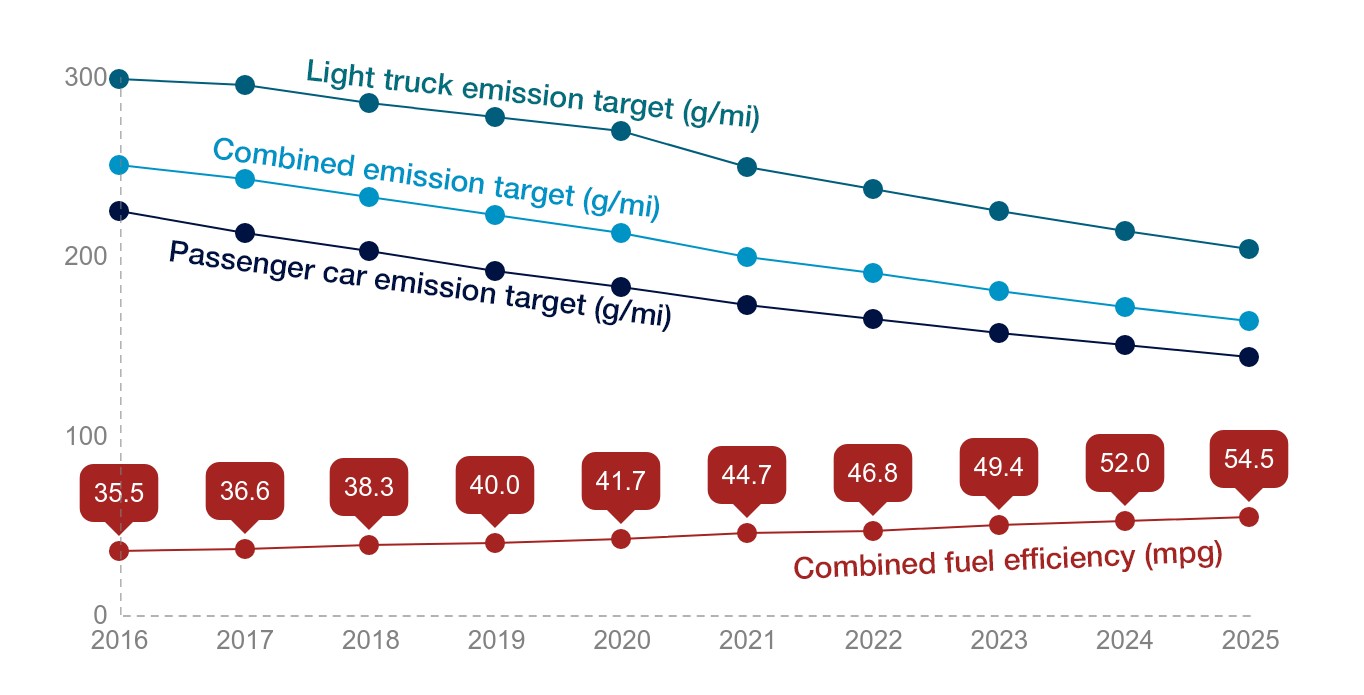
Current CAFE standards have set incremental targets to reduce automotive emissions for new passenger cars and light trucks through model year 2025, with a combined emission target of 163 grams of carbon dioxide per mile (g/mi) by 2025. Those targets equate to a combined fuel efficiency target of 54.5 miles per gallon (mpg) by 2025.14 Credit: Graphic created by ACerS using data from Reference 14


Related Articles

Market Insights
Engineered ceramics support the past, present, and future of aerospace ambitions
Engineered ceramics play key roles in aerospace applications, from structural components to protective coatings that can withstand the high-temperature, reactive environments. Perhaps the earliest success of ceramics in aerospace applications was the use of yttria-stabilized zirconia (YSZ) as thermal barrier coatings (TBCs) on nickel-based superalloys for turbine engine applications. These…

Market Insights
Aerospace ceramics: Global markets to 2029
The global market for aerospace ceramics was valued at $5.3 billion in 2023 and is expected to grow at a compound annual growth rate (CAGR) of 8.0% to reach $8.2 billion by the end of 2029. According to the International Energy Agency, the aviation industry was responsible for 2.5% of…

Market Insights
Innovations in access and technology secure clean water around the world
Food, water, and shelter—the basic necessities of life—are scarce for millions of people around the world. Yet even when these resources are technically obtainable, they may not be available in a format that supports healthy living. Approximately 115 million people worldwide depend on untreated surface water for their daily needs,…