
It is not unusual to hear about advancements in the use of ceramics and glass materials. What is unusual is getting an exclusive, inside look into how innovation giant 3M integrated California-based Ceradyne Inc. into the fold; the accomplishments since 3M acquired the advanced technical ceramics manufacturer in 2012; and what is to come for the industry.
The approximately $860 million purchase of Ceradyne—a company that served demanding applications with operations in the United States, Canada, China, and Germany—was one of the largest in the history of 3M. Joel Moskowitz, ACerS Distinguished Life Member, cofounded Ceradyne in 1967 and helped the company grow into an international, publicly traded company with annual revenues of $500 million prior to the acquisition. Moskowitz passed away in March 2015.
As part of the acquisition, Ceradyne joined the Advanced Materials Division (AdMD) within 3M’s Industrial Business Group, which provides valued materials for lightweight solutions and materials for performance in harsh environments to customers in a broad array of growth industries. 3M executives described Ceradyne as “an excellent complement to 3M’s existing businesses in transportation, energy markets, and defense.”
By joining 3M, Ceradyne predicted that its associates would have the opportunity to use the power of 3M’s strengths—including global reach, culture of commercializing new products, and operational discipline—to accelerate its platform in serving customers with highly valued solutions. 3M also speculated the combination with Ceradyne would enable new technologies and innovations for uniquely tailored materials requiring advanced ceramics.
Biljana Mikijelj Credit: 3M
Join us as we dive into a Q&A dialogue with two of 3M’s business and R&D leaders to gain insights into how 3M has integrated Ceradyne technologies. Providing insights from 3M is David Gunderson (DG), global business director for the advanced ceramics platform based in St. Paul, Minn., and Biljana Mikijelj, Ceradyne R&D director for the ceramics platform, who is now lab manager of the 3M ceramics team. Although Ceradyne is part of 3M, to help distinguish what each company has brought to the acquisition we will refer to them here as Ceradyne and 3M.

David Gunderson Credit: 3M
What fueled 3M’s decision to acquire Ceradyne?
DG: 3M strives to improve lives with smarter, better products. With any acquisition, the goal is to go bigger and broader to leverage 3M’s strengths and the diversity of its portfolio and global reach. For these reasons, the acquisition and possibilities with Ceradyne intrigued 3M on many levels. Pairing its technology platforms with Ceradyne’s ceramic technology has opened doors for development of new, unique solutions unmatched in the industries 3M serves. But acquiring a company goes beyond potential products—3M considers multiple components. In particular, it looks for consistencies across four fundamentals: technology, manufacturing, global capabilities, and brand. Because of the strength of Ceradyne’s alignment with 3M in these areas, it has been an exciting two years of growth.
3M currently has 46 technology platforms, so it was important that Ceradyne had technology and know-how that could complement and strengthen the current platforms (Figure 1). With more than 50 years of experience producing oxide ceramic technology, 3M has built a portfolio that was expanded by incorporating Ceradyne’s non-oxide ceramics. With a goal of applying science to life, 3M has found ways to integrate Ceradyne into current applications and is focused on finding new applications that improve production efficiency and durability, lower costs, create new possibilities, and serve and protect people and property.
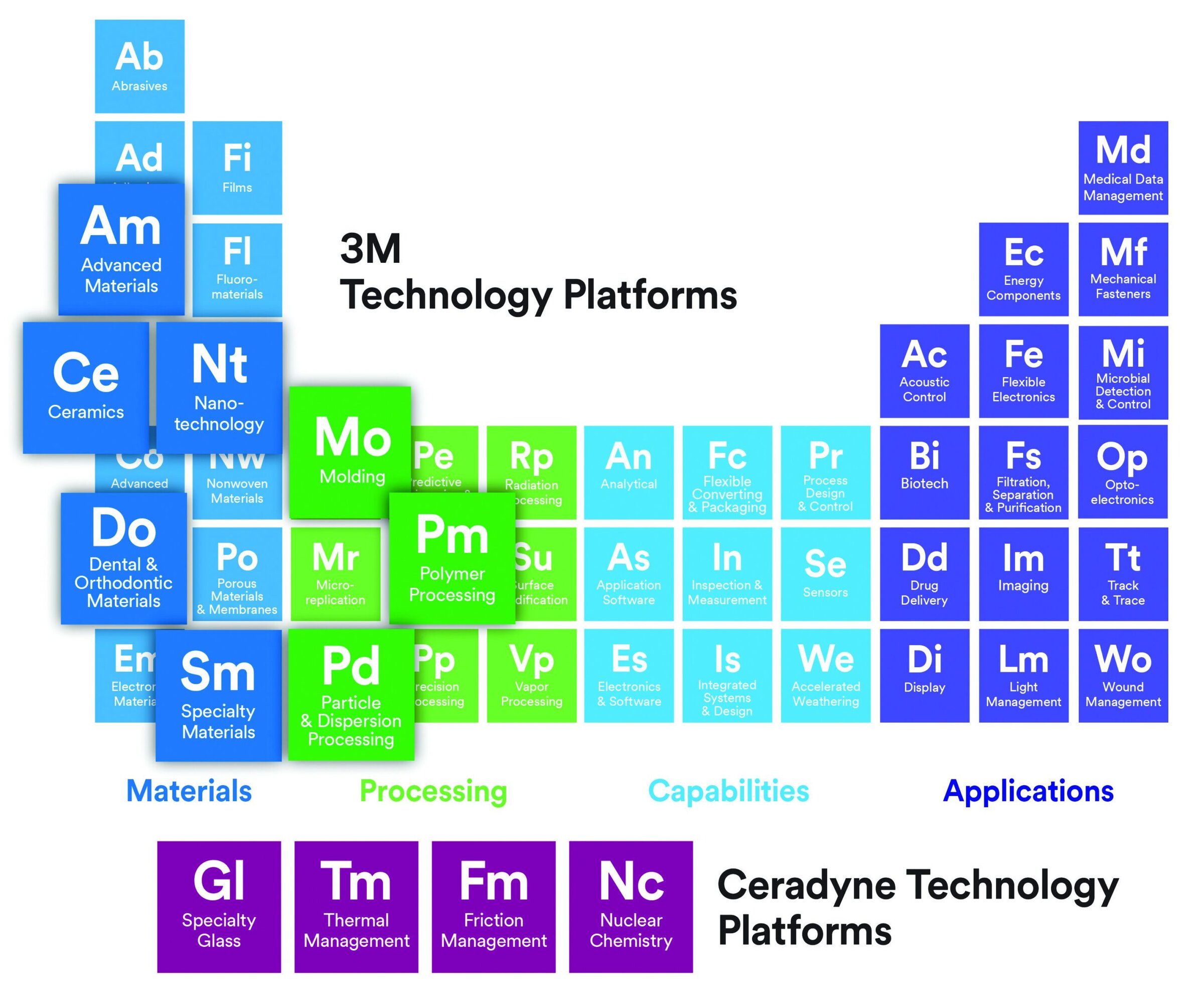
Figure 1. This periodic table of 3M’s technology platforms calls out technology synergies in materials and processing between 3M and Ceradyne. Blending four additional technology platforms acquired through Ceradyne opens doors for numerous possibilities to help solve customer challenges. Credit: 3M
3M recognized very early on that Ceradyne’s culture was similar, because Joel Moskowitz hired talent as does 3M. Both companies hire people who care about the work they are doing, and many are recognized globally as experts in their field. They take pride in what they do. The people at both companies also are interested in the long-term play and skillsets associated with understanding how to work with new technologies to innovate—not just short-term sales benefits. These shared values have solidified the companies’ brand goals and have enhanced their manufacturing processes.
Prior to the acquisition, Ceradyne supplied 3M with ceramic dental brackets, providing 3M with considerable exposure to Ceradyne’s culture. The more we at 3M learned about Ceradyne, the more intrigued we became as we peeled back layers and saw how the two companies could begin to collaborate and leverage technologies that are different from 3M’s.
At 3M, we innovate and apply science to life, and Ceradyne has been helping us drive growth. Together we understand that to grow we need to find the right opportunities and take calculated risks. With this mentality, our companies have gained a collective knowledge and have entered new markets.
BM: 3M has a long history of using and developing advanced oxide-ceramic-based products, such as 3M Nextel Structural Ceramic Fibers, specialized abrasives, and translucent dental brackets (codeveloped with Ceradyne) during its 115-year history. Ceradyne’s expertise in non-oxide ceramics meant 3M was acquiring an entirely new and complementary technology platform, including non-oxide ceramic materials and processes.
In many high-performance applications, products made of advanced technical ceramics meet specifications that similar products made of metals, plastics, or traditional ceramics cannot achieve. Non-oxide ceramics can withstand extremely high temperatures and combine hardness with light weight. They are highly resistant to corrosion and wear, and often have excellent electrical capabilities, special electronic properties, and low friction characteristics. Access to these types of performance benefits opens new markets and creates innovation potential for 3M.
The acquisition by 3M allowed Ceradyne to strengthen its broad product portfolio—which spanned defense, industrial, oil and gas, solar, electronics, medical, automotive/diesel, and nuclear applications—through strong, established relationships 3M had in these markets that Ceradyne did not. Additionally, some of Ceradyne’s ceramics, such as boron nitride, have facilitated 3M’s expansion into Japan. This, along with being an existent 3M supplier, resulted in a relatively easy integration into 3M’s business.
3M and Ceradyne have considerable expertise—What is the overall strategy to incorporate the many 3M and Ceradyne technologies into existing products?
DG: 3M and Ceradyne work to solve customer problems through their technologies. This is not new since the acquisition, because striving to find new ways to solve customer problems and driving innovation with disruptive technologies is an inherent part of both cultures. Since the acquisition, both companies have been able to continue incorporating the technologies into existing products. The implementation strategy was a three-pronged approach.
First, the processes for integrating were similar. At 3M, all technologies are owned at the corporate level, which does not allow any division or operating unit sole access. This is part of 3M’s innovation culture, allowing its broader technical communities and global organizations access to education and deployment of technologies across all businesses and applications. 3M integrates products into its Corporate Research Group, a team comprised of hundreds of employees responsible for understanding the fundamentals of technology so they can make connections and incorporate technology quickly across the company. Through this process, the company has been able to involve more than 80 global subsidiary organizations in a “Jump Start” program for integrating Ceradyne, where country-specific opportunities were identified, prioritized, and resourced.
Second, there were already numerous overlaps in many applications and industries, so 3M paired Ceradyne technology experts with 3M application and product development experts in divisions where it made sense. Connecting Ceradyne’s Thermally Conductive Fillers with 3M’s Electronic Market Solutions Division (EMSD) or developing next-generation technical ceramics for 3M Evaporation Boats using 3M’s film manufacturing capabilities are excellent examples.
BM: The third phase to the strategy centered on Ceradyne’s Kempten, Germany, facility (formerly known as Elektroschmelzwerk Kempten (ESK)), which is where research and processing efforts are conducted in addition to those at the 3M Center in St. Paul (Figure 2). On top of R&D work, the Kempten facility manufactures products from advanced ceramics and powders (boron carbide, boron nitride, and calcium hexaboride) to friction-controlling functional coatings. Kempten is now a 3M Corporate Global Center of Technical Excellence for Ceramics, an exclusive club of four that includes Gendorf, Germany (fluoropolymers); Seefeld, Germany (dental materials); and 3M Sweden (hearing protection). Company-wide, 3M employees know that the first place to start when working to solve customer challenges is at these Centers of Technical Excellence for innovation and collaboration.
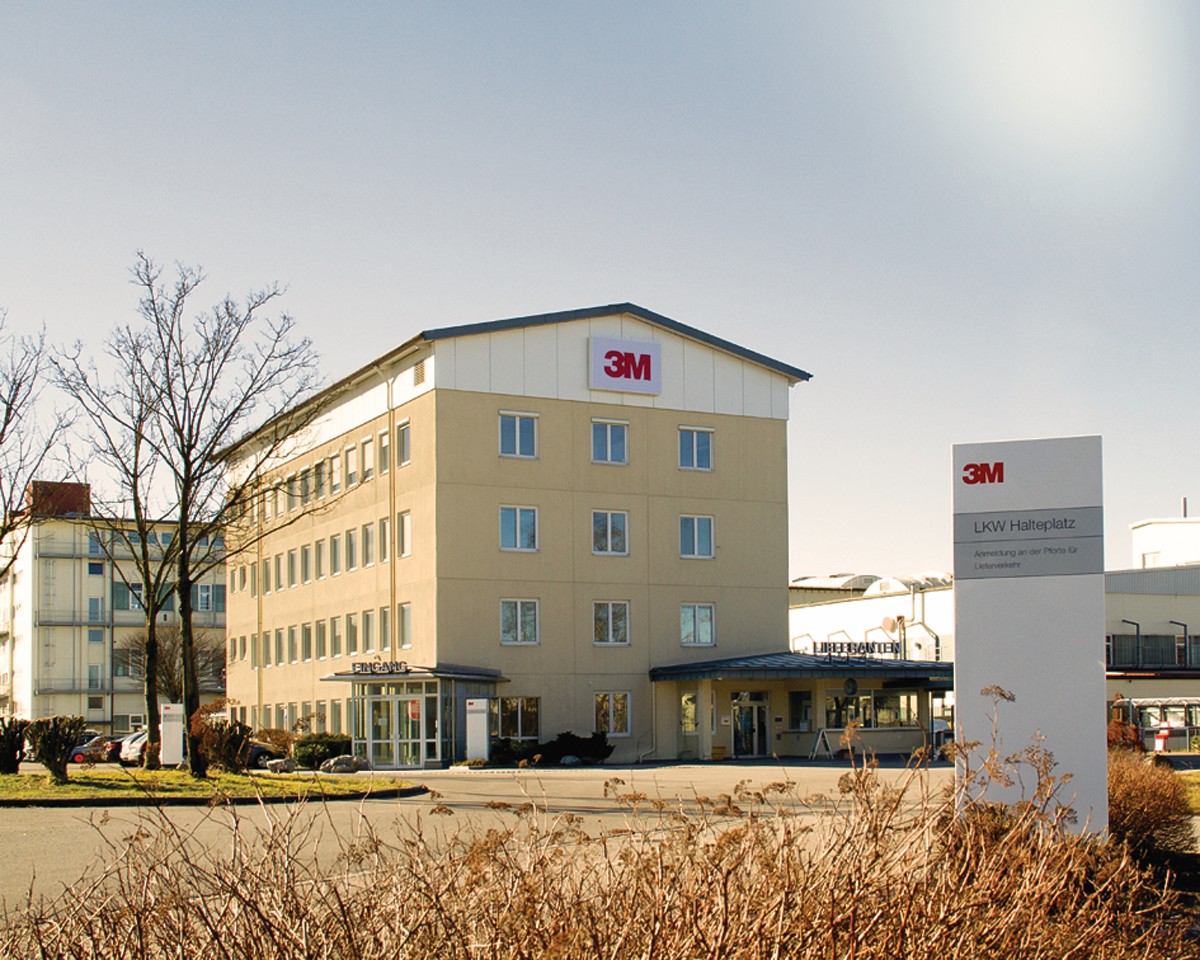
Figure 2. 3M’s Kempten, Germany, facility—which innovates and collaborates to solve customer challenges—has been named a 3M Corporate Global Center of Technical Excellence for Ceramics. Credit: 3M
Disrupting the marketplace through an acquisition is not new to Ceradyne. In the past, it has acquired other companies, such as ESK. Because it was important for 3M to have brand and cultural synergies, the strategies to incorporate technologies into existing products have been very effective out of the gate.
What is the overall strategy to incorporate the many 3M and Ceradyne technologies into new uses and applications?
DG: The strategy relates back to why 3M decided to acquire Ceradyne. As I mentioned, Ceradyne met all four of the acquisition criteria, with one of the biggest strengths being that it also enabled 3M to continue to expand its technical platforms. We at 3M blend that with an overall strategy of finding new uses and applications for technologies. To get us there, we hire innovative people, provide them with the tools, freedom, and ability to take risks to invent new products that make a positive impact on the world. This model prevents complacency and allows our engineers to push the boundaries of innovation.
With our in-house technical community and laboratory networking and collaboration, we find where there is the most traction and then fund technologies that will enable new company growth. This strategy allows 3M to create the most advanced and high-performance material product solutions, giving it greater value proposition than competitors. But at the end of the day, it really comes down to our people, who have the right knowledge base and know-how.
BM: As David addressed, it is about giving staff the opportunity to apply these technologies. Mainly, this meant 3M using Ceradyne’s technology to find new opportunities in energy, electronics, oil, and gas. These industries have larger applications that need ceramics because of problems with metals and alternative materials. To illustrate this point, 3M has been able to transition Ceradyne’s expertise in boron nitride cooling fillers to electronics, an industry in which 3M has extensive expertise. Boron nitride is an adaptable ceramic material that provides thermal conductivity, temperature stability, chemical resistance, and electrical insulation. When the boron nitride powder, which is produced in our Germany facility, is combined with 3M polymers, the product enables increased thermal conductivity to dissipate heat in electronics and prevent overheating. On the other hand, Ceradyne’s fused silica, high-purity powders can achieve the opposite—reduce thermal conductivity, thereby keeping heat in applications such as power generation and batteries.
And, as with any good partnership, both companies are able to bring their unique strengths in the R&D process to get to market faster.
What are some examples of how 3M has integrated its own technology with that acquired from Ceradyne to improve specific products?
DG: Ceradyne is a key producer of lightweight composite and ceramic-based soldier protection systems, including ballistic helmets and body armor for military and law enforcement personnel. In the two years since the Ceradyne acquisition, 3M has been able to make important advances in how these systems are made by combining 3M and Ceradyne materials and production technologies to deliver the next level of lighter-weight, integrated armor products.
To enhance Ceradyne’s product portfolio and overall performance, we have applied our expertise in adhesives to helmets and body armor. The body armor division was a very important part of Ceradyne founder Joel Moskowitz’s work with the company, and it has been an honor to be part of this market and support his efforts of protecting every life and every soldier.
Ceradyne’s technology included a hard ceramic outer shell to protect soldiers from projectiles, and the backside was a polymer material. When hit with impact, the ceramic shell fractures by design, meaning the polymer and ceramic layers need to be strongly bound to serve their purpose of capturing the fracture and protecting the wearer. Our adhesive know-how very effectively binds these layers together.
BM: As another example, 3M is bringing its knowledge of electronics and sensor technology to Ceradyne’s body armor. Sensors will allow the person wearing the armor to determine if the vest is damaged. This is especially helpful for warriors in the field because if they drop the equipment or fall, they need confidence the armor will protect them from further threats.
3M also is incorporating its technologies, such as safety goggles and communication devices, with Ceradyne’s next-generation ballistic helmets. The 3M Ultra-Light-Weight Ballistic Bump Helmet (ULW-BBH) was introduced in October 2014, and it eliminates trade-offs between protection level, weight, and comfort (Figure 3). These helmets are designed for air, water, and ground transportation to provide blunt-impact protection.
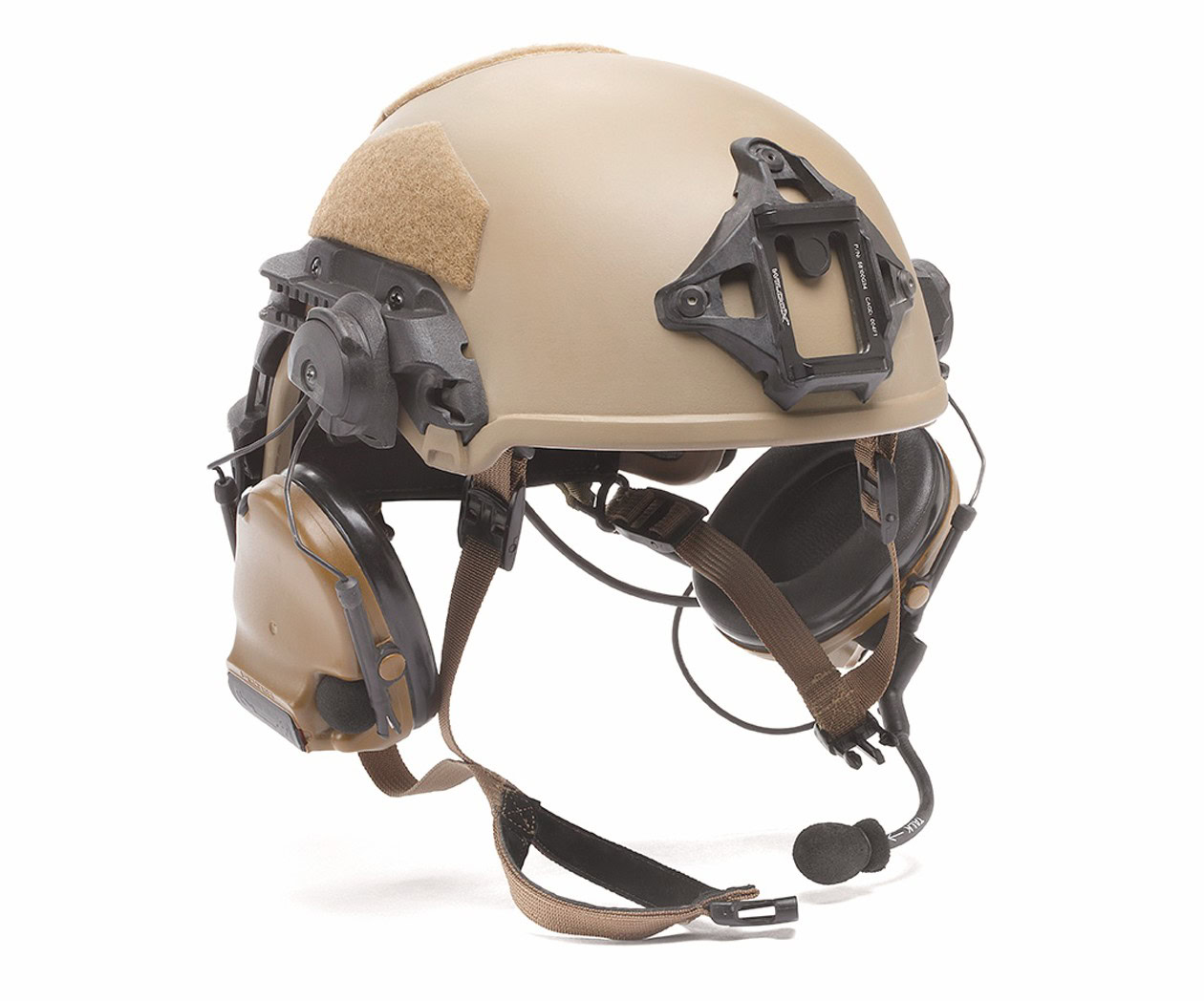
Figure 3. The 3M Ultra-Light-Weight Ballistic Bump Helmet helps protects lives by reducing fatigue and improving mobility, because it weighs 30% less than the closest alternative. Credit: 3M
The ULW-BBH shell weighs 30% less than the closest alternative and is designed to reduce fatigue while improving mobility. The helmet uses the latest polymeric materials and is manufactured using a proprietary and seamless ballistic molding technology. The retention system’s boltless design minimizes overall weight, removes a potential design weakness, and eliminates the possibility of bolts acting as secondary projectiles. ULW-BBH also uses a flexible rail system that is compatible with standard operational accessories, including night-vision goggles, hearing and vision protection equipment, lights, and communications devices.
3M also is expanding the use of Ceradyne’s specialty glass into health care and dental markets (Figure 4). For example, 3M’s dental bioactive glass powders provide protection for temperature-sensitive teeth. Markets for these materials include dental, wound care, hearing loss correction, and several other medical uses.
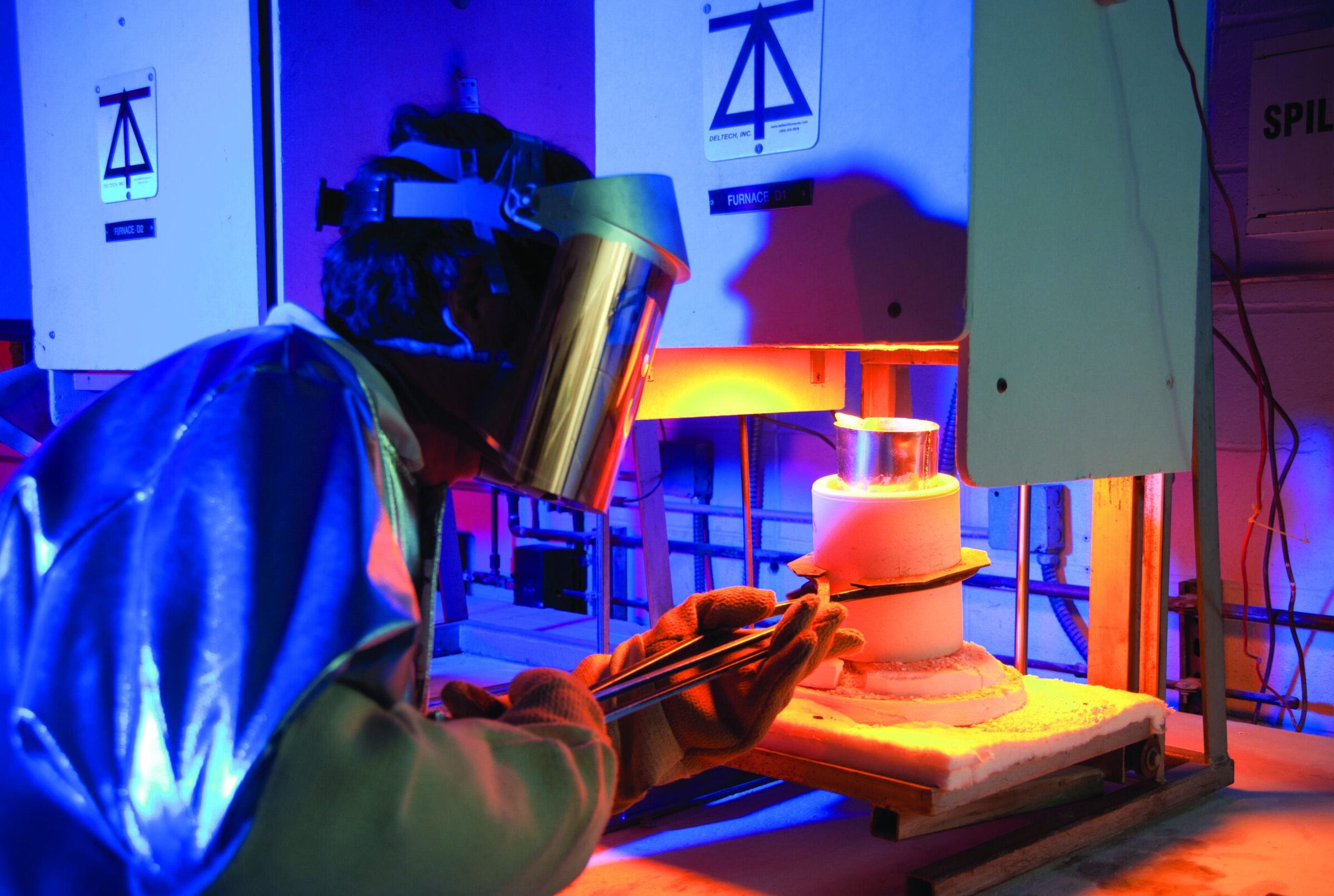
Figure 4. 3M specialty glasses can be used in a wide variety of applications from wound care and dental to printing metalized tracing on solar panels. Not many suppliers have this type of solar technology and only a few in the world have the expertise. Credit: 3M
What new products or applications have resulted at 3M with the help of Ceradyne’s technologies, knowledge, or know-how?
BM: Beyond body armor and helmets, the acquisition has resulted in a wealth of new products that have helped 3M’s customers solve some of their most unique challenges.
Over the past decade, the U.S. has become a major supplier of oil, making it less dependent on imports. The 3M Ceramic Sand Screen is a disruptive technology that enhances this ability by enabling economic production of conventional and unconventional hydrocarbons in areas where it had not been cost effective before (Figure 5). These screens are based on sand and proppant flowback control technology that provide erosion resistance in demanding hydrocarbon well applications.
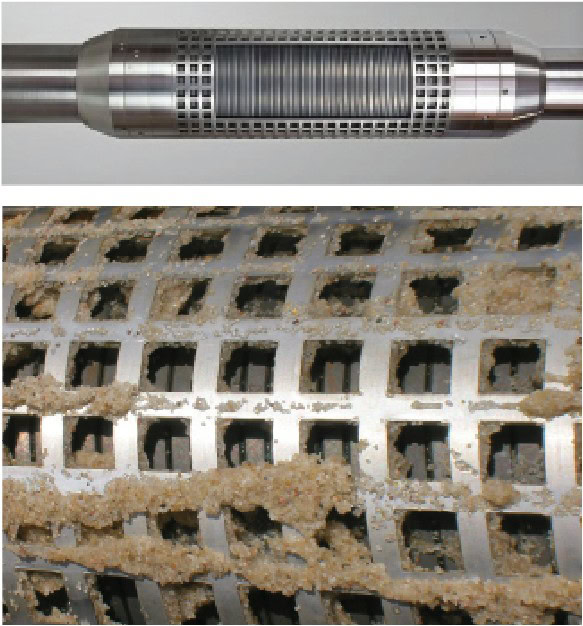
Figure 5. 3M Ceramic Sand Screens are first-of-its-kind in the oil and gas market to replace metal screens. Credit: 3M
Traditional sand screen systems are typically made of metals that are vulnerable to erosion, which can lead to early failure. The net result of early failure is costly and timely workover or intervention, and reduced or lost hydrocarbon recovery. The new 3M ceramic sand screens offer a major improvement over conventional metal screens by utilizing the unique properties of technical ceramics and an advanced sand screen design, providing virtually no indications of erosion under reservoir conditions and improving oil and gas production by eliminating return of sand to the surface. With about 20 successful oil and gas well downhole installations globally, customers are realizing the added value of this unique ceramic technology.
3M Boron Nitride Cooling Fillers are another technology that has expanded since the acquisition. Cooling fillers, developed by the Kempten team, are engineered to increase thermal conductivity. These advanced materials have shown particular utility in applications such as automotive electronics and e-drive components, where it is essential to dissipate heat from small, confined spaces. Low-density, nonabrasive 3M boron nitride cooling fillers offer a cost-effective solution where conventional mineral or oxide-based fillers do not work nearly as well.
An example of an emerging application for boron nitride cooling fillers is simpler, lower-cost LED lighting systems. Traditional LED systems are composed of an LED, printed circuit board, thermal interface tape, and a cast aluminum secondary heat sink. 3M has developed a demonstration LED concept based on a functionally integrated system. The LED is placed on a directly metallized secondary heat sink made of a thermally conductive and electrically insulating polymer containing 3M boron nitride cooling filler, potentially reducing system costs by 25%. This demonstration has attracted considerable interest at industry events, including the Fakuma International Trade Fair for plastic processing in Friedrichshafen, Germany—an indication that this new LED design has the potential to be a significant growth market.
3M currently is exploring the unique chemistry of the element boron (whose compound is used in armor) and applying it to the nuclear industry as a safety material in nuclear reactors and spent fuel transport. Boron has two stable isotopes: 10B and 11B. The 10B nucleus absorbs neutrons, which have no charge and are necessary to start nuclear reactions. In the nuclear industry, safety is a big concern, making it critical to control flux of neutrons available in the reactor. There are two facilities in the world with the capability to separate isotope 10B from 11B, one of which is 3M’s facility in Quapaw, Okla. Ceradyne had acquired the facility, previously known as Eagle Picher Boron, prior to the 3M acquisition. 3M now is developing highly water-soluble, high-boron-content compounds that help give nuclear power plants more control of fission reactions and can help shut down reactors in emergency situations. The inclusion of enriched 10B materials into commercial nuclear power plants provides increased safety margins.
What new areas of research and applications are 3M actively exploring with the help of Ceradyne’s materials?
DG: We are not in a position to disclose these types of specifics, but I can provide an idea of where we are heading.
3M currently has 50 active pending projects that incorporate Ceradyne technologies into areas such as wound care, electronics (for solid-state sensors and insulators), and defense (for integrated goggles, communications, and sensor devices on helmets and armor). These projects span across all five major business groups—consumer, electronics and energy, health care, industrial and safety, and graphics.
In addition, 3M has identified six top growth areas that align with mainstream trends and customer needs, such as energy, electronics, and nuclear, that will drive 90% of growth in the next five years. Where Ceradyne’s sales have come from in the past will be very different from where 3M is heading in the future. Armor vest sales, which had been strong, are currently declining due to demand, so business will come from various other markets and global growth (e.g., 3M Ceramic Sand Screens in Asia). Customer demand always will mold and shape the company’s direction.
How has 3M’s processing technology changed Ceradyne’s innovations?
BM: One of 3M’s strengths is the ability to develop large-scale processes for a variety of technologies to ensure consistency in manufacturing across the globe. The processes are comprehensive with various stage gates that start with an idea, move to evaluating the feasibility of the idea, and then proving out the feasibility. Once that happens, 3M makes sure the idea can be scaled up before committing to marketing opportunities and beginning beta tests before launch. This disciplined process prevents projects that are unlikely to pan out and sets a good foundation for success with a customer. 3M also is steeped in applying Lean Six Sigma, which has greatly lowered the cost of manufacturing. Ceradyne has been able to benefit from both of these processes, helping to ensure consistency in manufacturing and reduce costs.
In addition, 3M is the leader in microreplication and applying it to abrasives, lenses, and films to produce more consistent materials. Although changing the shape of ceramic material is difficult, through collaboration with the Center of Technical Excellence, we at Ceradyne are working to enable near net shape, a process that enables a desired shape without extensive grinding. This practice includes making specific, tiny shapes used in specialty abrasives. It also is very specialized technology, and we continue to look at how it can be applied to produce non-oxide particles.
3M also has introduced Ceradyne to a nontraditional process of starting with gels rather than powders, which has been used at 3M for 15–20 years (e.g., 3M Nextel Structural Ceramic Fibers and Textiles). We are continuing to explore how this process can be applied to future Ceradyne innovations. The ceramic fibers are made from sols, and under a proprietary process they are spun in a spool of continuous fiber that can be woven into fabrics. These fibers are very strong and can be used at high temperatures. Their most common application is in the aerospace industry, where high-temperature capability is needed but monolithic ceramics that can fail cannot be used. The fibers in the Nextel structural ceramic fibers and textiles are highly resistant to fracture. We are excited to continue exploring how we can use this in ceramic parts.
What has Ceradyne brought to the table that 3M could not achieve alone?
BM: Ceradyne brought 3M non-oxide ceramics along with expansive knowledge of the industry. It also brought deep knowledge and expertise. Its people have the industry know-how as well as a proven track record on how to apply the technology to meet customer needs and solve problems. Together we have been able to synergize our knowledge, staff expertise, and experience to create award-winning products. In fact, in 2013 the Enhanced Combat Helmets were named one of 100 greatest innovations of the year in Popular Science’s 26th annual “Best of What’s New” issue.
Ceradyne also offered its high-temperature, high-pressure processes, such as hot pressing (HP) and hot isostatic pressing (HIP), which have assisted Ceradyne/3M in creating its non-oxide ceramics. HP or HIP is a technology used to produce some of the non-oxide ceramics that require a strong bond between elements. The normal process starts with powders, which are heated to form parts. Sintered parts shrink and densify, resulting in a pore-free article. When making an oxide ceramic, this can be achieved at relatively low temperatures and atmospheric pressures. But non-oxide ceramics require higher temperatures and application of pressure while heating.
The sintered reaction-bonded silicon nitride (SRBSN) process technology was acquired from Ford Motor Company, but Ceradyne has scaled it up and has a large production facility in Lexington, Ky., to advance its development. Joel Moskowitz also set the stage for Ceradyne to expand its knowledge and technology set beyond ceramics with the ESK acquisition and investment. He was the driving force in Ceradyne adding new technology, such as the 10B isotope for nuclear safety and the polymeric material used in the Ballistic Bump Helmet. Ceradyne’s expertise in these non-ceramic-based technologies further extended 3M’s knowledge base.
What has 3M brought to the table that Ceradyne could not achieve alone?
BM: 3M has helped Ceradyne take its efforts to the next level by giving it access to a larger customer base. 3M and Ceradyne overlapped in many market segments and geographies that they served. The only difference was that 3M had a larger, global reach and more marketing power in certain industries—oil and gas, energy, electronics, and automotive—elevating and expanding Ceradyne’s footprint globally. In these areas, 3M simply used its global marketing channels to introduce existing Ceradyne technologies and products.
As an example, prior to the acquisition, Ceradyne was convinced it needed to sell sand screens through traditional channels (i.e., by partnering with sales companies). But with 3M’s large presence and strong relationships in the oil and gas market, Ceradyne moved beyond that thinking and brought its product directly to the end user. There is nothing else in the industry like the ceramic sand screens, and this change in direction has helped the company expand and reach customers faster than it may have otherwise.
3M also implemented this approach with Ceradyne’s friction shims in the automotive market. Friction shims have been part of the Ceradyne portfolio since it acquired ESK. Friction shims are metal foils with a coating of electroless nickel embedded with diamond particles, used to ensure a tight connection between components subject to high pressures and torque. Because 3M Friction Shims are lighter and more compact than conventional solutions, they have garnered increasing interest from automotive engineers seeking new ways to reduce vehicle weight and save space. Since the acquisition, Ceradyne has experienced significant growth because 3M opened the door to a strong customer base in the automotive industry, making it easier to contact buyers.
One particular area that left an impression on me was when we at Ceradyne were developing lightweight armor and needed specialized equipment to make enhancements. Through 3M expertise, we were able to build highly specialized equipment in the lab from concept to testing in just two to four months—something Ceradyne would never have been able to achieve without 3M.

Related Articles

Market Insights
Next-gen superconducting ceramics could change how we travel and much more
Forty years ago, two physicists from IBM’s research laboratory in Zürich, Switzerland, reported a groundbreaking discovery: Superconductivity, or the quantum mechanical phenomenon in which certain materials exhibit zero electrical resistance when cooled, could be achieved at higher temperatures using ceramics. Superconductivity had been discovered decades before, but its applications had…

Market Insights
Why most AI manufacturing projects fail and how to fix it
Artificial intelligence is reshaping advanced manufacturing, especially processes involving ceramics, glasses, and other hard or brittle materials. But adopting AI is far more difficult than simply buying software and connecting machines. Manufacturers must understand the advantages and limitations of different models, so they can determine where AI fits best within…

Bulletin Features
Radiation effects on rare earth chemistry in molten salts for nuclear applications
Across the nuclear energy sector, molten salts are shaping the next generation of nuclear technologies, from advanced power reactors to used nuclear fuel recycling. In molten salt reactors (MSRs), molten salts uniquely serve as both the primary coolant and fuel medium, a dual role that sets MSRs apart from conventional…