
Case study: Building an ultra-high-temperature mechanical testing system
Ultra-high-temperature ceramics (UHTCs), such as refractory metal borides and carbides, are candidate materials for use in the extreme environments associated with hypersonic flight, scramjet engines, rocket propulsion, and atmospheric re-entry.1 For example, zirconium diboride- and hafnium diboride-based ceramics are candidates for the sharp wing leading edges of future hypersonic aerospace vehicles where temperatures in excess of 2,000°C are predicted. The ability to test these materials near their expected service temperatures is an important step in their continued development. However, the upper test temperature for most commercial testing systems is limited to about 1,500°C. As a result, little is known about the mechanical behavior of UHTCs at temperatures relevant to the proposed applications.
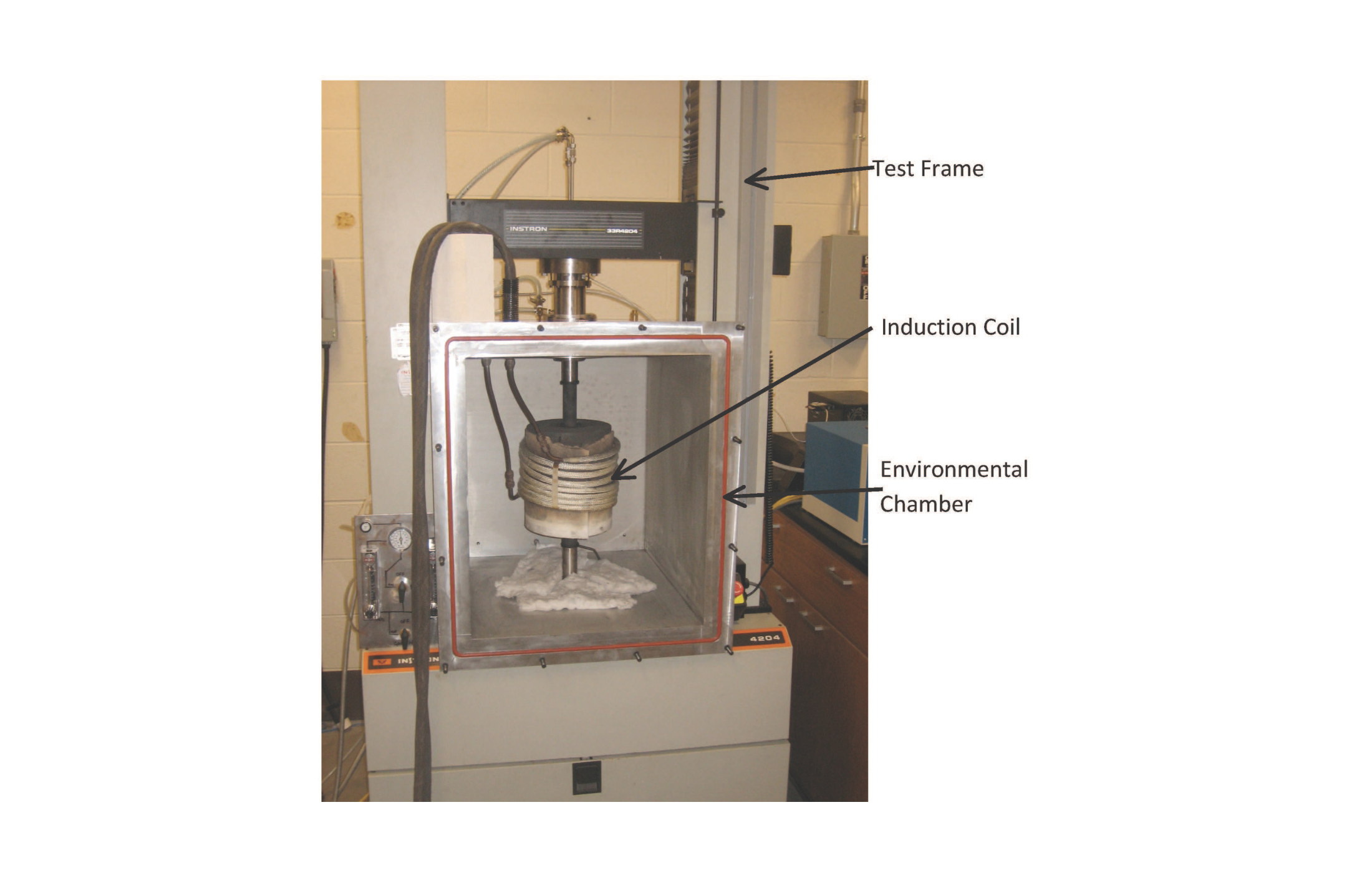
The high-temperature testing lab in the Department of Materials Science and Engineering at Missouri University of Science and Technology recently added atmosphere-controlled mechanical testing capability for temperatures up to 2,600°C. Figure 1 shows the ultra-high-temperature test system, comprising a screw-driven universal test frame, custom-built environmental chamber, and an inductively heated hot zone with a graphite susceptor; it can achieve heating rates as high as 500°C per minute.