

Global energy use is expected to rise 50% by 2050 due to population growth and increase in per capita energy use.1 Concerns about the influence of burgeoning energy consumption on climate change drive interest in sustainable energy technologies that produce minimal environmental impact, avoid resource depletion, and are economically viable and socially beneficial.
Solar, wind, water, bioenergy, nuclear, geothermal, hydrogen, and fuel cell technologies have important roles to play in paving the path to sustainable development. Given the variability of wind and solar power, advances in energy storage are crucial to support increased adoption of renewable electricity generation and the reliability of the electric grid.
Ceramic and glass materials are ubiquitous in energy technologies because of their unique properties, such as high temperature stability, wear and corrosion resistance, thermal and electrical insulating properties, superconductivity, and radiation tolerance. These materials find uses in thermal barrier coatings, photovoltaic cells, solar cell substrates, thermoelectrics, batteries, supercapacitors, fuel cells, solid oxide electrolysis cells, refractories, electrical insulators, superconducting magnets, gas turbine components, fission reactor fuel, fusion reactor structures and blankets, and wasteforms for safe, long-term immobilization of nuclear waste.
Given the sheer diversity of these applications, we focus this brief overview on recent developments in selected energy technologies in which ceramic and glass materials are proving indispensable.
Electrochemical energy storage
Ceramics play a vital role in energy storage and conversion devices widely used in portable electronic devices, electric vehicles, and stationary storage to support the rapid growth of renewable energy. This field is currently dominated by lithium-ion batteries driven by the adoption of environmental norms and regulatory support.2
The discovery of novel ceramic electrodes and ionic conductors with suitable crystal structure, chemical stability, electronic/ionic conductivity, particle size, and grain boundary enabled the commercialization of lithium-ion, sodium-ion, and sodium–sulfur batteries. Among various lithium-ion battery chemistries, the layered lithium nickel manganese cobalt oxide cathode (NMC: Li++MO2, where M=Ni, Mn, or Co) is forecasted to grow at a higher rate than other chemistries due to higher energy/power density at lower cost with better thermal stability than commercial LiCoO2 (LCO), LiNi0.8Co0.15Al0.05O2 (NCA), LiMn2O4 (LMO), LiNi0.5Mn1.5O4 (LNMO), and LiFePO4 (LFP).3
As an original NMC cathode, LiNi1/3Mn1/3Co1/3O2 (NMC-111), also known as “1-1-1,” has been developed as one of the most successful lithium-ion cathodes. Subsequently, the NMC family grew in diversity through the composition of NxMyCz cathodes (x:y:z = 4:3:3, 5:3:2, 6:2:2, 8:1:1, and x + y + z = 1). To meet the requirements for future automotive markets (electric, hybrid electric, and plug-in hybrid electric vehicles), progress toward NMC with a high nickel content (> 70%), high capacities of more than 200 mAh/g, and voltage of about 3.8 V vs. Li/Li+ is inevitable. However, the challenge is that higher nickel content in NMC aggravates surface-related degradations, including surface phase transformation, transition metal dissolution, lattice oxygen release, and electrolyte decomposition. Therefore, in recent years, battery manufacturers are actively transitioning from polycrystalline to single-crystal nickel-rich material to reduce internal surfaces (Figure 1).
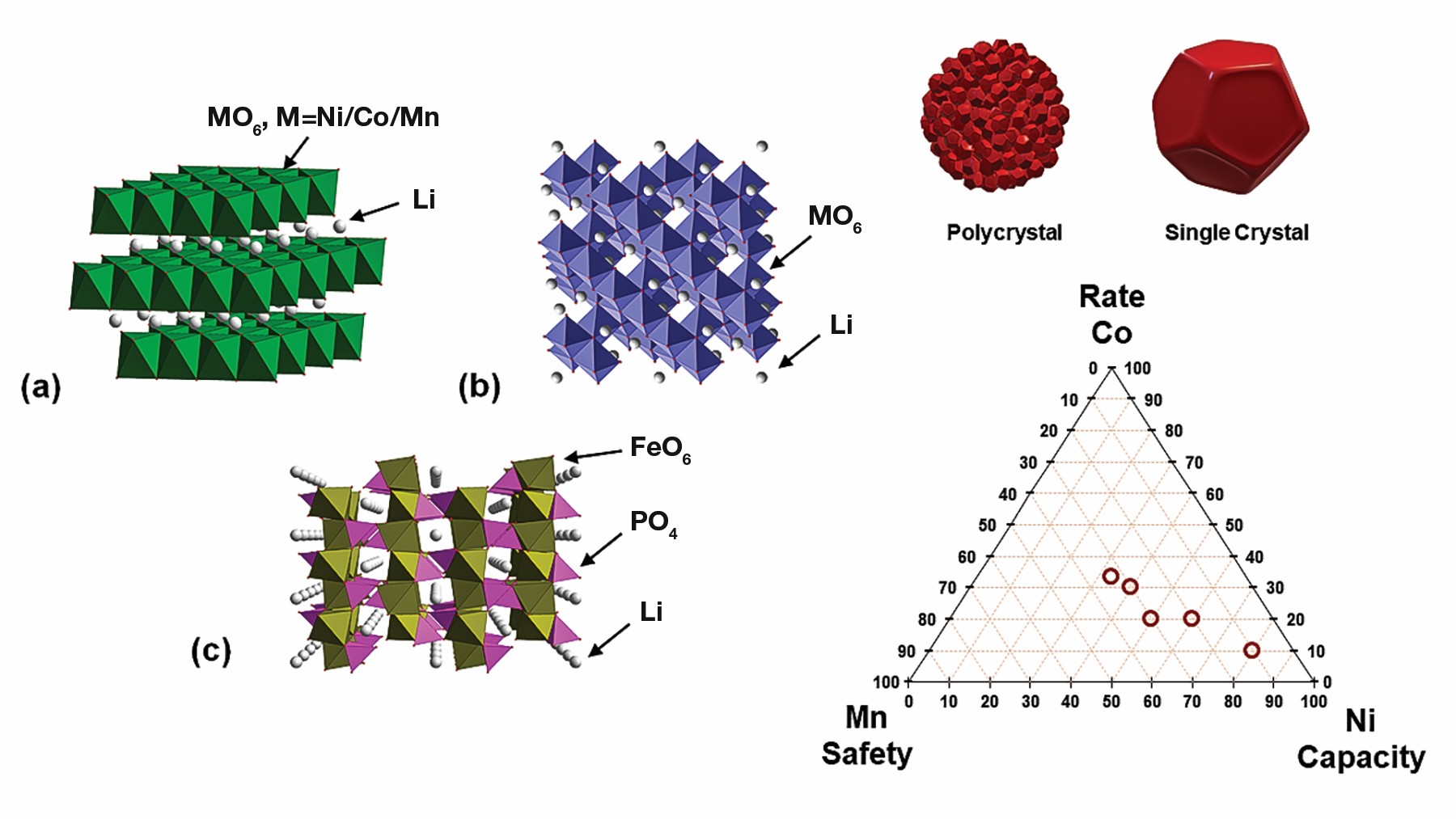
Figure 1. Crystal structures of cathode materials. (a) Layered structure (LiMnxNiyCozO2), (b) Spinel structure (LiMn2O4), and (c) olivine structure (LiFePO4). The polycrystal and single crystal morphologies and a representation of compositions of interest are also shown. Credit: Devanathan et al., PNNL
The tuning of microstructure and particle morphology4 to optimize high-Ni NMC is promising because intergranular fracture disrupts the electronic/ionic conduction pathway and dramatically increases particle surface area. In addition, higher electrode compact density (>3.8 g/cm3 for NMC electrodes) is possible with the single-crystal particles because they are less prone to cracking during pressing. Higher density can be realized through control of calcination conditions including temperature, duration, atmosphere, lithium/metal ratio, and post surface treatments. These research advances are pivotal to realizing enhanced cycling stability, energy density, and other desired electrochemical properties.
Solid oxide fuel cells, electrolyzers, and oxygen separation
Ceramics are the main constituents of solid oxide fuel cells (SOFC), which are devices that directly convert chemical energy stored in fuels (e.g., H2, CH4, NH3, and CO) to electrical energy via electrochemical reactions, and high-temperature solid oxide electrolysis cells (SOEC), which are devices that convert water vapor and renewable electricity to green fuel (hydrogen).5 High-temperature electrolysis is a most promising technology for large scale energy storage and production of synthetic fuels in the zero-carbon economy via CO2 electrolysis or co-electrolysis with steam to chemicals, such as CO, synthesis gas, methanol, dimethyl ether, and formic acid.
The all-solid state SOFC and SOEC devices are comprised of a ceramic oxygen ion- or proton-conducting electrolyte, a ceramic oxygen electrode, and a ceramic or ceramic-metal composite hydrogen electrode. This arrangement requires that the thermal expansion coefficients of a fully dense electrolyte and highly porous electrodes must match at the interfaces without forming any interfacial compounds on sintering or operation to produce the maximum electrochemical performance. The solid electrolyte must possess an adequate ion conductivity; be chemically stable in both oxidizing and reducing environments; and chemically, thermally, and mechanically stable during thermal cycling and operation. The ionic transference number of the electrolyte must be close to unity.
The most commonly used oxygen-ion conducting electrolytes are scandia- or yttria-doped zirconia (YSZ), gadolinia- or samaria-substituted CeO2, and (La,Sr)(Mg,Ga)O3. These electrolytes all exhibit high oxygen ion conductivity above 600°C, thus making SOFCs and SOECs suitable for operation at high temperatures, 600–1,000°C. Proton-conducting electrolytes, barium cerates, BaCe0.9Y0.1O3–δ, and barium zirconates, BaZr0.9Y0.1O3–δ, exhibit high conductivity in a lower temperature range of 400–600°C, but they are highly refractory, with poor sinterability below 1,600°C. By using multiple dopants, such as cerium, yttrium, and ytterbium, the sintering properties of the zirconates were recently significantly improved, yielding a relative density of 95%.6
Steam electrolysis in SOEC or fuel oxidation in SOFC takes place on a hydrogen electrode, typically a nickel-YSZ or nickel-ceria cermet. However, highly electrically conductive ceramics also are being used as the electrodes and the interconnects. Pacific Northwest National Laboratory developed a new class of high performing electrically conductive and catalytically active ceramic electrodes, such as lanthanum-doped SrTiO3 – ceria and yttrium-doped chromite-ceria composites, that unlike metal electrodes also offer redox, carbon, and sulfur tolerance (Figure 2). The opposite electrode, where the oxygen reduction or oxygen evolution reaction takes place, is often made of the ceramics with the perovskite structure: (La,Sr)MnO3, (La,Sr)(Co,Fe)3, or doped nickelates.
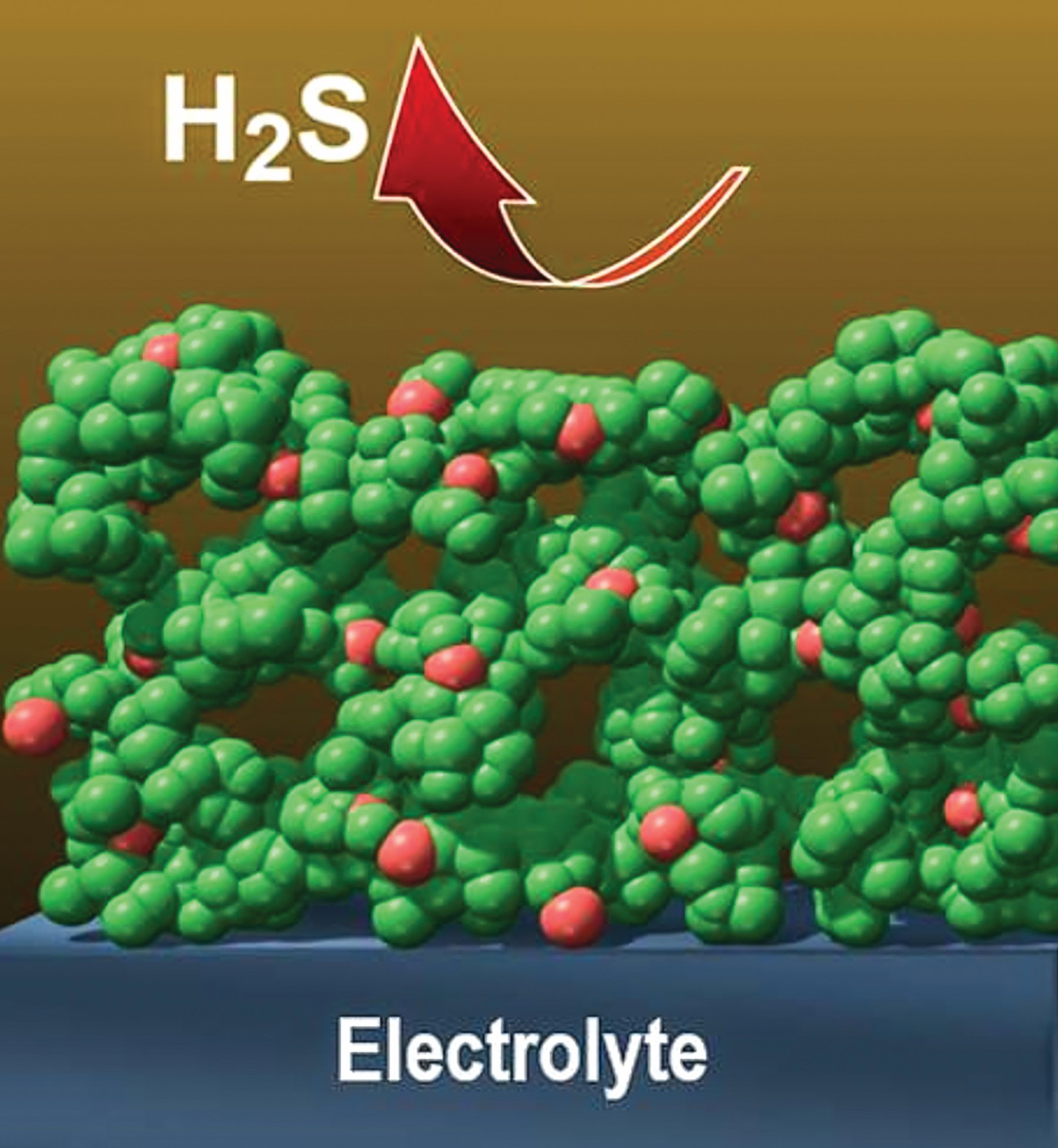
Figure 2. Schematic representation of a new class of high performing, electrically conductive, and catalytically active ceramic electrodes that tolerate carbon and sulfur. Credit: Devanathan et al., PNNL
Because of limited metal stability at high temperatures in dual gas environments, ceramics are being investigated for use as an interconnect. Acceptor-doped lanthanum chromites and calcium- and transition metal-doped yttrium chromites were identified as promising ceramic interconnects to potentially overcome technical limitations of metals. In addition, highly stable ceramic composite membranes based on mixed ionic-and electronic-conducting ceramics are receiving increasing attention due to their potential applications for high-purity oxygen production, oxyfuel combustion, hydrogen/syngas production, coal gasification, and waste recovery.
Nuclear fission and fusion reactors
Ceramic science and technology have a crucial role to play in advancing nuclear fission power, which provided 55% of the carbon-free clean electricity generated in the United States in 2019. Because nuclear reactors operate at full capacity most of the time and their output can be ramped up and down, they can be used to balance the intermittency of renewable energy.
The typical fuel used in light water reactors is UO2, a fluorite structured ceramic. Plutonium–uranium mixed oxide is an alternative fuel that powers about 10% of France’s nuclear reactors. These oxides are ideal for the extreme environment of a nuclear reactor because of their high melting temperature (2,865°C for UO2), radiation tolerance, ability to retain fission products, and chemical and dimensional stability. There is interest in increasing the fuel burnup to improve the economics and extend the operating cycle. It is essential to understand the effects of high fuel burnup on the fuel pellet microstructural stability, formation of noble metal phases from the aggregation of metallic fission products (palladium, ruthenium, rhodium, technetium, and molybdenum), gaseous fission product transport and release, and internal pressure on the cladding.7
In addition to actinide oxides, silicon carbide (SiC), a strong, durable, and radiation resistant ceramic with good thermal conductivity, is of considerable interest to the nuclear energy community. SiC is being investigated as an accident-tolerant cladding material. SiC also serves as a pressure vessel and barrier to fission product release in the TRi-structural ISOtropic (TRISO) particle fuel proposed for advanced reactors that are safer by design, able to quickly ramp output to balance renewables, and produce less waste. Micro and small modular versions of advanced reactors are being considered for deep space missions, powering military bases, and providing electricity and heat to remote communities.
SiC-based composites also are promising candidates for fusion reactor structural applications because of their low induced radioactivity and ability to withstand thermal shock and neutron damage.8 Nuclear fusion powers the sun. Deuterium-tritium fusion has the potential to power human civilization for centuries without long-lived nuclear waste if it can be harnessed. However, recreating controlled fusion on earth is challenging due to the need for durable materials that can survive the harsh environment for years. In a fusion reactor, materials at the plasma interface are regularly exposed to extreme operating conditions, such as high temperatures, large heat loads, neutron bombardment, and surface erosion by ions. Ceramic–ceramic and ceramic–metal composites are well suited to this challenge. In addition to structural applications, ceramics and composites are needed for uses as plasma-facing materials, insulators, superconductors, and tritium breeding blankets in fusion reactors.
Immobilization of nuclear waste in glasses and ceramics
The increased use of nuclear power and the associated reprocessing of spent nuclear fuel would produce nuclear waste of varied composition and quantity. This new waste, together with radioactive waste from past activities, requires effective and safe nuclear waste management. Chemically and mechanically durable ceramics, such as pyrochlore, zircon, and Synroc, glass-ceramics, and glasses are needed to develop waste forms with high waste loading for safe and long-term storage (Figure 3).
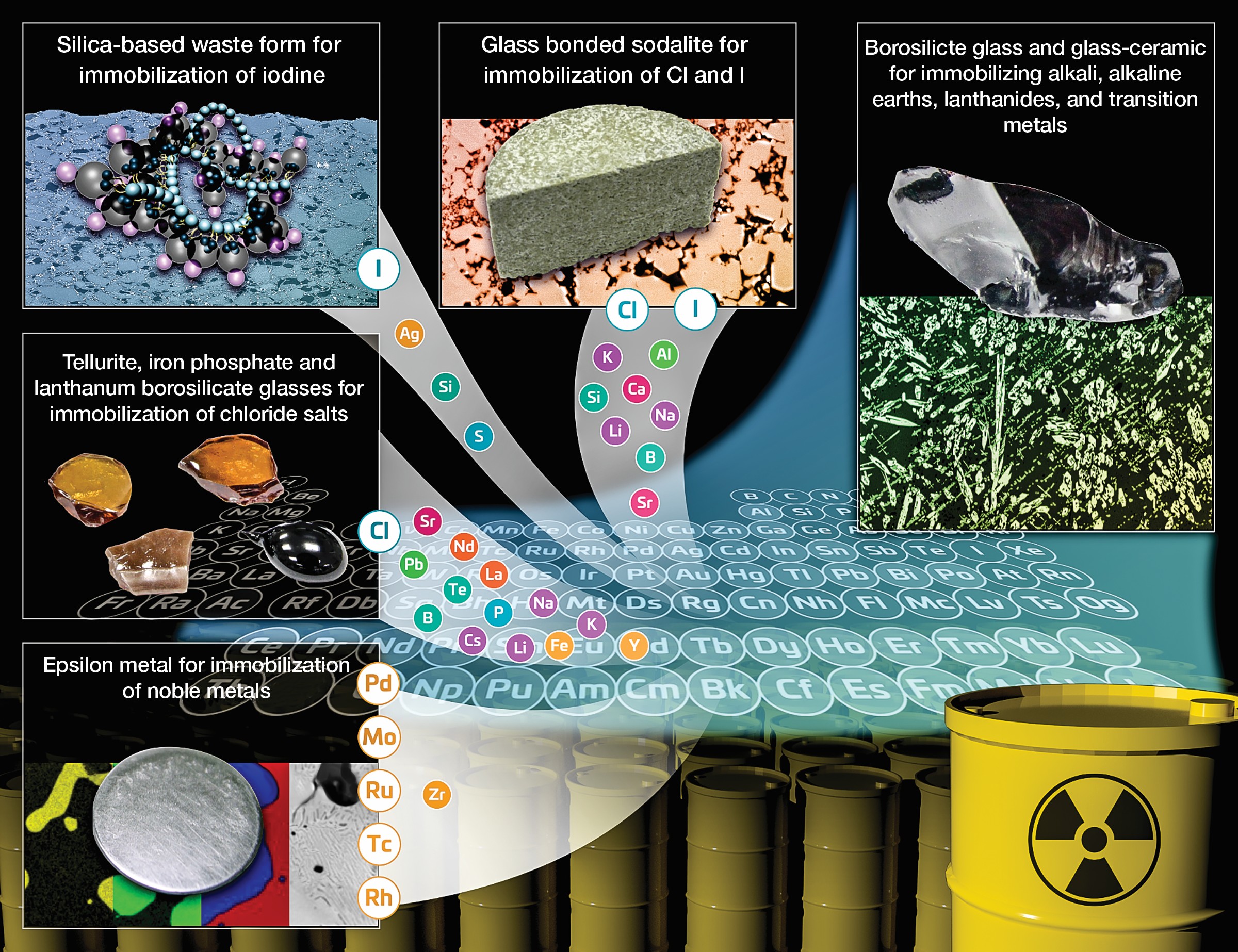
Figure 3. Illustration of ceramics and glasses being considered for immobilization of nuclear waste. Credit: Devanathan et al., PNNL
Borosilicate glass is accepted throughout the world as universal waste form for immobilization of radioactive waste. The advantage of its versatility comes from the fact that the glass structure can accommodate almost all the elements of the periodic table. However, this benefit comes with the cost of low waste loadings for some components such as molybdenum, lanthanides, noble metals (e.g., palladium, ruthenium, and rhodium), and halogens (chlorine and iodine) because of their limited solubility in the glass. Glass-ceramics9 offer the option to incorporate these components at high loadings into specific durable crystalline phases by tailoring the chemistry and cooling rates. Lead tellurite, iron phosphate, lanthanum borosilicate glasses, and glass-bonded sodalite exhibit high chloride salt loadings. A high iodine-loaded and durable silica-based waste form can be produced by consolidation of silver-functionalized silica aerogel sorbent by simultaneous application of fast heating rates to temperatures above 1,000°C and pressures up to 210 MPa.10 There is considerable potential to tailor glasses and ceramics for specific waste streams.
Outlook
The growing focus on sustainable development worldwide will drive energy and materials technology developments. The need for lower emissions, higher efficiency, and improved materials performance will push the operating envelope for materials to more extreme conditions. Innovations in ceramics and glasses will drive advances in energy conversion and storage, hydrogen and fuel cell technology, next-generation fission and fusion nuclear reactors, and environmental remediation.
PNNL internships lead to research experiences and careers
As a U.S. Department of Energy national laboratory, Pacific Northwest National Laboratory (PNNL) occupies a unique position in our innovation ecosystem, acting as a conduit between the fundamental discoveries that expand the boundaries of our scientific understanding and the transitioning of those ideas into tangible products and services.
Approximately 5,000 scientists, engineers, and trained professionals across a range of disciplines, including materials science and engineering, enable PNNL research toward ground-breaking discoveries and technological innovations. PNNL addresses the challenges of today and also helps to build the diverse workforce pipeline of tomorrow.
Notably, PNNL’s capabilities in applied materials science are central to development of better catalysts, manufacturing processes, batteries, fuel cells, nuclear wasteforms, and more. Each year, PNNL hosts hundreds of interns, including those focused on ceramics and glass research. These internships provide students opportunities to work on real-world challenges while having access to cutting-edge scientific instruments and unique facilities.
In partnership with colleges and universities across the nation, PNNL offers undergraduate and graduate student internships through a variety of programs. As PNNL interns, students can work in a laboratory under the guidance of one or more PNNL researchers. The internship experience offers experiential learning opportunities designed to help students expand their knowledge, develop their research skills, and establish working relationships with PNNL scientists and engineers. These immersive programs offer students the type of hands-on work experiences that aid them in refining their interests and leave them better prepared for entering the workforce upon graduation. More details can be found at https://www.pnnl.gov/stem-internships and https://www.pnnl.gov/careers.
PNNL is also expanding its partnerships with graduate schools in the Pacific Northwest and beyond to strengthen and grow research collaborations and to develop a select cohort of doctoral students in science and engineering. The Distinguished Graduate Research Programs (https://www.pnnl.gov/distinguished-graduate-research-programs) connect university faculty and students with PNNL researchers and facilities to provide training, education, and research experiences for outstanding graduate students.
Read more: “Meet a PNNL STEM Ambassador: Charmayne Lonergan“

Related Articles

Market Insights
Engineered ceramics support the past, present, and future of aerospace ambitions
Engineered ceramics play key roles in aerospace applications, from structural components to protective coatings that can withstand the high-temperature, reactive environments. Perhaps the earliest success of ceramics in aerospace applications was the use of yttria-stabilized zirconia (YSZ) as thermal barrier coatings (TBCs) on nickel-based superalloys for turbine engine applications. These…

Market Insights
Aerospace ceramics: Global markets to 2029
The global market for aerospace ceramics was valued at $5.3 billion in 2023 and is expected to grow at a compound annual growth rate (CAGR) of 8.0% to reach $8.2 billion by the end of 2029. According to the International Energy Agency, the aviation industry was responsible for 2.5% of…

Market Insights
Innovations in access and technology secure clean water around the world
Food, water, and shelter—the basic necessities of life—are scarce for millions of people around the world. Yet even when these resources are technically obtainable, they may not be available in a format that supports healthy living. Approximately 115 million people worldwide depend on untreated surface water for their daily needs,…