
Take one island continent rich in natural resources, academic strength, and economic muscle. Add a relatively small population that is concentrated in a handful of metropolitan areas and dispersed across a vast terrain. Throw into the mix a distance from global markets that can make foreign trade daunting—Melbourne is more than twice as many miles from Los Angeles (7,931) as it is from the South Pole (3,614). (“Nearby” is a relative term in this land—from the capital city, Canberra, it is 1,449 miles to Wellington, New Zealand; 3,353 to Jakarta, Indonesia; and 4,920 to Tokyo, Japan.) Combine all these factors and you begin to get a sense of the opportunities and challenges that come together in the Australian ceramic sector.
Wealth of minerals available
For example, Australia is the source of 37% of the world’s supply of zircon. World production in 2012 was approximately 1.3 million tons, according to Iluka, the world’s largest producer of this mineral sand. In its “Mineral Sands Industry Fact Book,” the Australian company notes, “In the majority of mineral sands deposits, zircon is produced in lower quantities than titanium dioxide. The historical average ratio between the two mined product streams is in the range of 1:4 to 1:5. Iluka’s Jacinth–Ambrosia mine in South Australia is the exception, with zircon accounting for approximately 50% of the assemblage of valuable heavy mineral.” Approximately 50% of zircon is used in the ceramics sector, the company says, and demand for it is heavily concentrated in China (41%), Europe (25%), and Asia–Pacific (18%), whereas North America accounts for only 8% of global demand.1
Rare earths are another area of natural resource activity. The government agency Geoscience Australia estimates that the country’s rare earths, reported as rare-earth oxides (REO), as of December 31, 2012, “amounted to 3.19 million tons (Mt) of economic demonstrated resources (EDR), 0.42 Mt of paramarginal resources, and 31.14 Mt of submarginal resources.”
About 67% of Australia’s accessible EDR comprises reserves as defined under the Joint Ore Reserve Committee (JORC) code.” Of this, “33% of the EDR comprises published JORC code compliant measured and indicated resources in operating mines, deposits being developed for mining, and in deposits that have published scoping/feasibility studies with positive results. There is a further 16.13 Mt REO in the inferred resources category.”2
The agency adds, “Using available information, Geoscience Australia estimates that Australia’s monazite resources are around 7.8 Mt. Assuming the REO content of monazite to be about 60%, the heavy mineral deposits could hold a resource of around 4.68 Mt contained REO. Currently, extraction of rare-earth elements from monazite is not viable because of the cost associated with disposal of thorium and uranium present in the monazite.”
The Australia Nuclear Science and Technology Organisation (ANSTO), which is part of the country’s Department of Industry, has been involved in rare-earth processing, analysis, and development for more than 20 years. Its ANSTO Minerals department processing capabilities extend from “rare earths that contain major economic minerals, such as monazite, bastnasite, and xenotime,” to “rare earths from accessory, more complex mineral phases, such as apatite, zirconium/niobium minerals, and other less frequently exploited minerals.” In addition, it has developed “conceptual studies to introduce new technology into existing mineral processing flow sheets” and been involved in “solvent extraction technologies used for production of separated rare-earth products.”3
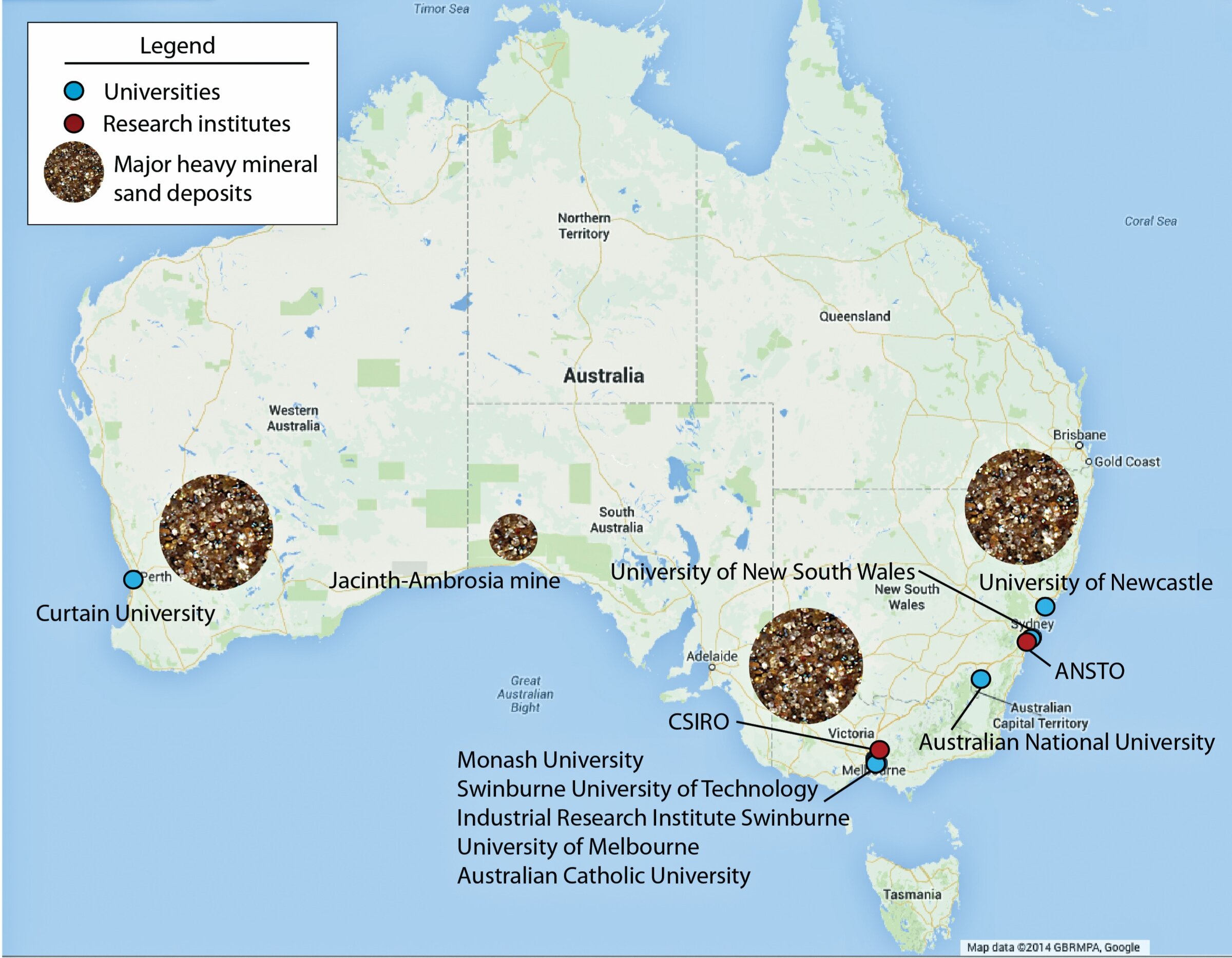
Geographic locations of major universities, research institutes, and primary mineral sand deposits in Australia. Credit: Google
Back-and-forth commercial transactions
But the ceramic sector’s materials requirements and the parameters of Australia’s domestic market can lead to commercial transactions that move across borders and back again. A case in point is the high-purity aluminum oxide and high-purity zirconia that are the principal raw materials used by Ceramic Oxide Fabricators, whose single biggest product is the SIRO2 oxygen sensor. “None of those materials are refined to the high purity that we need in Australia, so we import most of our raw materials, because the market for these high-purity oxides in Australia is too small to justify refining them here,” says Alan Walker, manager.
The company has a long-standing relationship with two suppliers in Japan, which also is the destination for some of its exported finished products. “The great majority of our sales are exports,” Walker says. “We import raw materials from Japan, turn them into finished ceramics, and some of those finished ceramic products we export back to Japan.”
Similarly, the company resells “various parts and materials that we can’t or don’t make here in Australia because the domestic market is too small,” he adds. “In the United States, we have some companies who supply specialty insulation. The market in Australia for them is not particularly big, but we have had a very long-standing relationship with those suppliers.” Its ties to the U.S. also include relationships with Oak Ridge National Laboratory, NASA, and Caltech. “To an engineer, those places are the pinnacle, and we’re tremendously proud of the fact that even though it’s only a very small part of what we do, that those very highly regarded organizations sometimes come to us.”
Working with customers
Because Ceramic Oxide Fabricators’ customers are for the most part in mature industries, such as automotive, “a lot of the changes that they adopt tend to be incremental rather than revolutionary,” Walker says. For that reason, the company’s focus is on increasing the accuracy and extending the life of its sensors. Fifteen years ago, their lifetime could be six months to one year. Today, a span of one year to 18 months is more common, and R&D efforts are targeting opportunities to enhance that aspect of performance. Areas of investigation include novel materials for and new configurations of oxygen sensors. “The intention would be to provide more precise control of combustion to improve fuel efficiency.”
Like the size of the market, limited awareness of ceramic capabilities can pose additional constraints on the industry. Morgan Advanced Materials Technical Ceramics exports close to 80% of what it produces in Melbourne, says Stuart Pratt, sales and marketing manager. On the domestic side, it must contend with prevalent “preconceived ideas about ceramic” that have their roots in memories of alumina ceramic as brittle and lacking strength—“so a lot of my work is almost a re-education of some of those ingrained fears that engineers have about ceramics.”
“The usage of ceramic in Australia is not particularly high. Australia doesn’t have a huge manufacturing base, so we would never survive just making ceramics and selling it in Australia. We have to consider that the world is our customer base and our marketplace,” Pratt says.
“That’s been a challenge over the years. People say, ‘Oh, but you’re over on the other side of the world.’ And I have to say, in my working life here, that sort of perception has changed dramatically,” he adds. That has happened, in part, thanks to another characteristic of the Australian ceramic sector—frequent collaborations by companies, research institutes, and government agencies on materials research, development, and commercialization.
Pratt takes pride in “the fact that Melbourne is the birthplace of toughened zirconia ceramic,” which was invented by a team at the Commonwealth Scientific and Industrial Research Organisation (CSIRO), Australia’s national science agency. “This business licensed that technology, licensed the patent for the material, and over the years we’ve improved it, developed it, and so on. I think a lot of people are surprised that our business was at the very forefront of toughened zirconia ceramic and that we still make, I believe, the best zirconia ceramic in the world.”
Like Ceramic Oxide Fabricators, Morgan Advanced Materials Technical Ceramics is heavily invested in enhancing its existing applications—for example, components for severe service valves—and broadening its customer base for those applications. Its business is focused on customized solutions and often develops replacements not for other ceramics, but, rather, metal parts.
In response to demand from customers in industries such as mining and chemical processing, the company has developed the capability to manufacture larger parts. “Everybody wants to make a process line bigger so that they can get more capacity into it,” Pratt says. However, given the “limitations on how big ceramic parts can be made,” he does not see this trend continuing indefinitely: “I think we’ve got up to a level that caters to most applications.”
But, as with Ceramic Oxide Fabricators, he is seeing increased demand for extended cycle time. “Twenty years ago, a plant would run for three months. Then it would have a close down and they would replace all the valves, pumps, and wear parts, and then they would run for another three months,” he says. “The cost of a shutdown is enormous—not just the cost of the parts that you were having to replace, but the loss of productivity that you get while the plant is shut.” Customers, therefore, are seeking the company’s help in extending cycle time and reducing downtime.
The same goals apply within the company itself. “From the year dot [the year one] we’ve had a continuous improvement program,” Pratt says. “To this day, we’re always looking at more effective ways so that we can get more product out of the same amount of equipment and the same amount of man-hours. That’s something that’s enshrined in every successful business these days.”
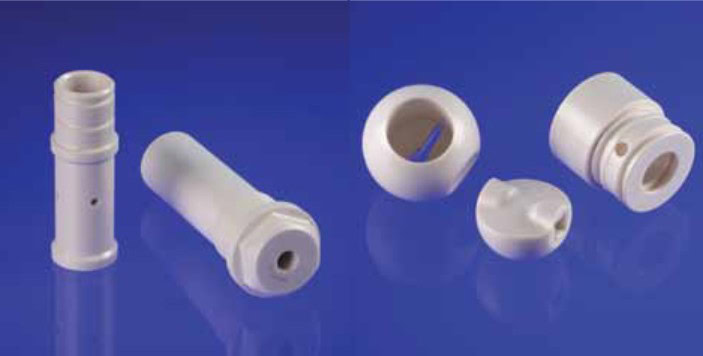
Morgan Technical Ceramics manufactures a variety of advanced ceramic products for many applications including replacement of metal parts. Credit: Morgan
Partnerships and sharing intellectual property
Public–private partnerships take on an added layer of complexity when technologies or products emerge from research at ANSTO, the government’s nuclear science and technology agency.
“In some cases, technology fusion provides the company with materials and processes that will enable them to take or advance their opportunity in their specific domain,” says Gerry Triani, research program leader in Nuclear Materials Science. “What we generally do is, we retain foreground technology in our nuclear space and assign rights to our partners to exploit the technology in their area of application.” In some cases, that means that ANSTO ends up owning the patent, but the agency is “keen to seek licensing opportunities.”
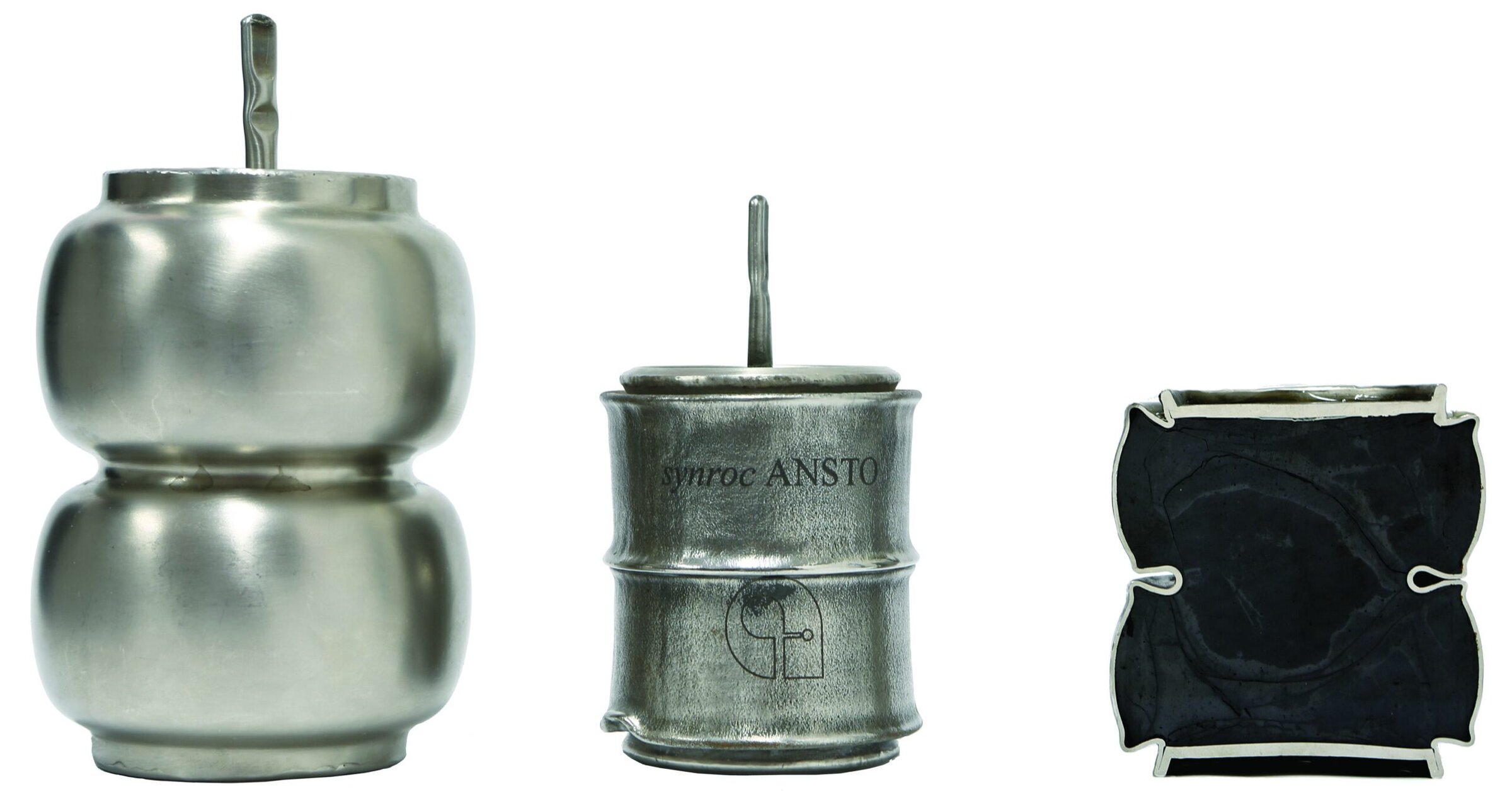
ANSTO’s synroc hot isostatic pressing technology can reduce radioactive waste volume. Metal cans are loaded with radioactive nuclides and a ceramic powder, and then hot isostatic pressed an encapsulate solid waste for disposal into a respiratory. Credit: ANSTO
For example, “I currently hold a U.S. patent in solar, and in that space, we’re looking for licensing opportunities with a number of companies, from hardware providers to module manufacturers,” he says. “We feel that we shouldn’t be the gatekeepers of the intellectual property and that it should be exploited. This IP was generated through our collaborative program in solar through the Cooperative Research Centre for Polymers. We’re looking to find licensing opportunities with partners globally to make sure that the IP is available to innovative companies.”
ANSTO has a record of success in incubating IP, creating seed companies internally, and then selling those companies. One example is Ceramisphere Ltd., a business that was spun off ANSTO’s materials chemistry labs and has “developed a generic platform for delivering controlled release of active molecules” for such applications as “anticorrosion and biocidal coating, including delivery of therapeutics and vaccines.” Another technology company, Biogill Ltd., works in wastewater treatment using “ANSTO’s IP in nanoceramic membranes, which consume nutrients in the wastewater using biomass.”
Immobilization of nuclear waste is the primary area of focus at ANSTO’s Materials Engineering Institute, which developed titanate ceramics for that purpose and continues to pursue advances in that arena. “We use a technology called hot isostatic pressing, and anything that looks good—whether it’s glass, ceramic, or glass-ceramic—we’ll press it as a dense solid for nuclear waste immobilization,” says Lou Vance, chief scientist at Wasteforms Research. “Because we don’t have any high-level waste in Australia, we use this information to develop these sorts of solids for high-level waste immobilization. What we want to do is to partner with engineering companies in other countries that actually have the nuclear waste, where we’d provide advice on the composition of the solids.”
Further out on the horizon, “We have this waste from the production of molybdenum-99, a radiopharmaceutical that’s used in cancer treatment and diagnosis,” Vance says. “We’re gearing up in the next two or three years to increase our generation of this material, which produces what is known as intermediate-level waste—about 5,000 liters a year. We’re in the stage of detailed engineering to produce a plant to immobilize this material in a glass-ceramic. This engineering plant is probably our main focus and activity at present.”
“That will be the first-of-a-kind plant of the hot isostatic pressing technology for actual nuclear waste,” Triani adds. “It will be done in a way that it will be in line with our nuclear medicine production facility, and it will be done remotely, in a hot cell to demonstrate the robustness of this technology.”
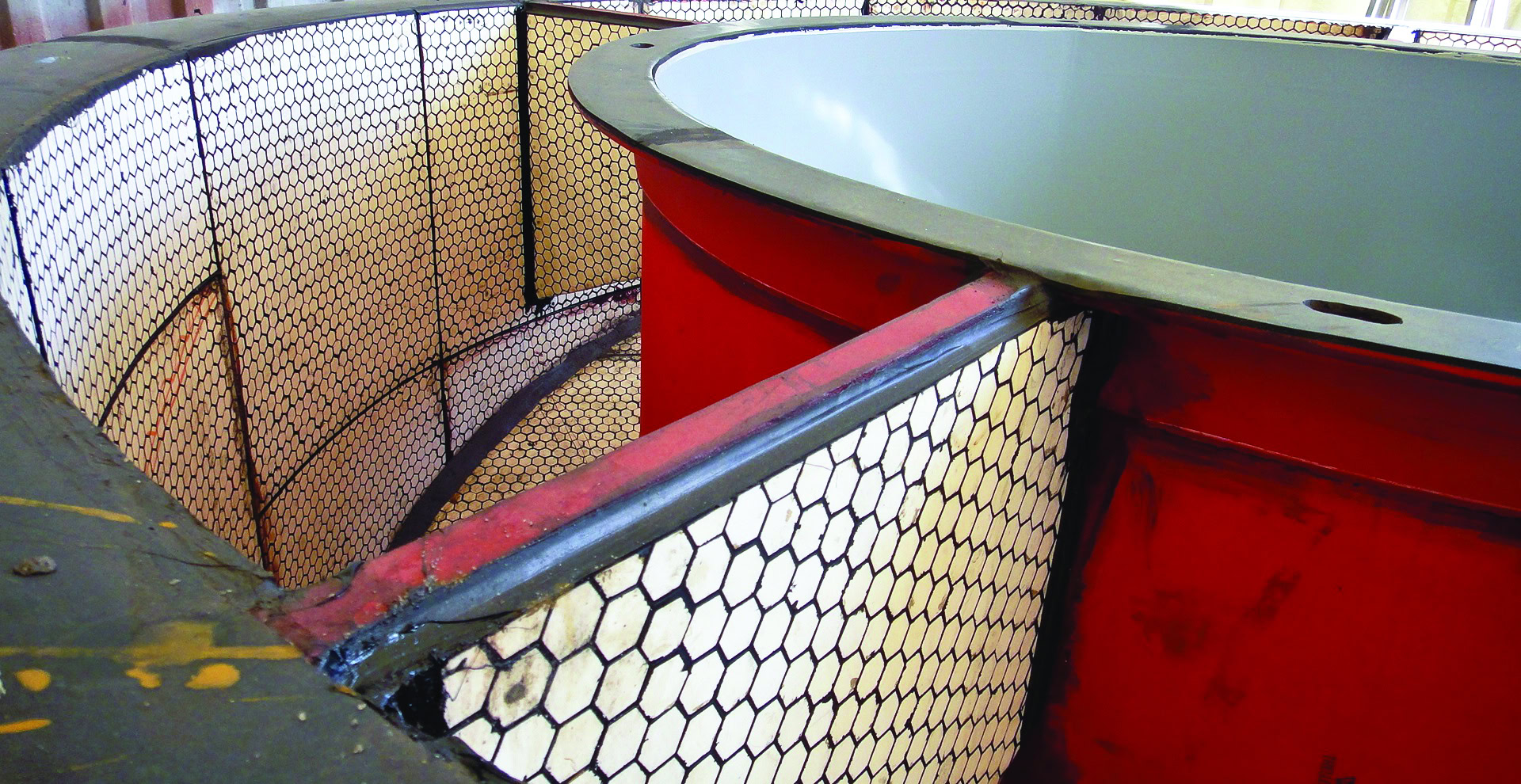
Trelleborg Engineered Systems (Brisbane, Queensland) manufactures a variety of products, including those related to mining and mineral processing. One example is this cyclone underflow launder for iron ore, which is lined with glue in ceramic mats. Credit: Trelleborg
ANSTO is open to working with U.S. researchers and companies in pursuit of joint ventures, joint research, and commercialization and is in the process of completing a Cooperative Research and Development Agreement (CRADA) with Savannah River Laboratory in the U.S. “The object of this CRADA is to study these waste solids produced by melting versus hot isostatic pressing,” Vance says. “In Britain, hot isostatic pressing is the baseline technology now, because we’ve been collaborating with them for years. We’ve worked with researchers from Japan and France over the years. But we’ve never worked with companies to actually engineer a plant to do the job, basically because in all countries the immobilization of nuclear waste, while considered important, is a bit low on funding these days.”
“We leverage our know-how and technology into other areas of classical ceramic application,” adds Triani, who is working with U.S. companies—including several start-ups on the west coast—on solar projects. “We are developing our ceramic powders and films for their applications. These connections have come about through an evolution of other technologies that we actually have here at ANSTO, such as sol–gel processing and atomic layer deposition.” Examples include perovskite ceramics and piezoelectric ceramics for sonar application.
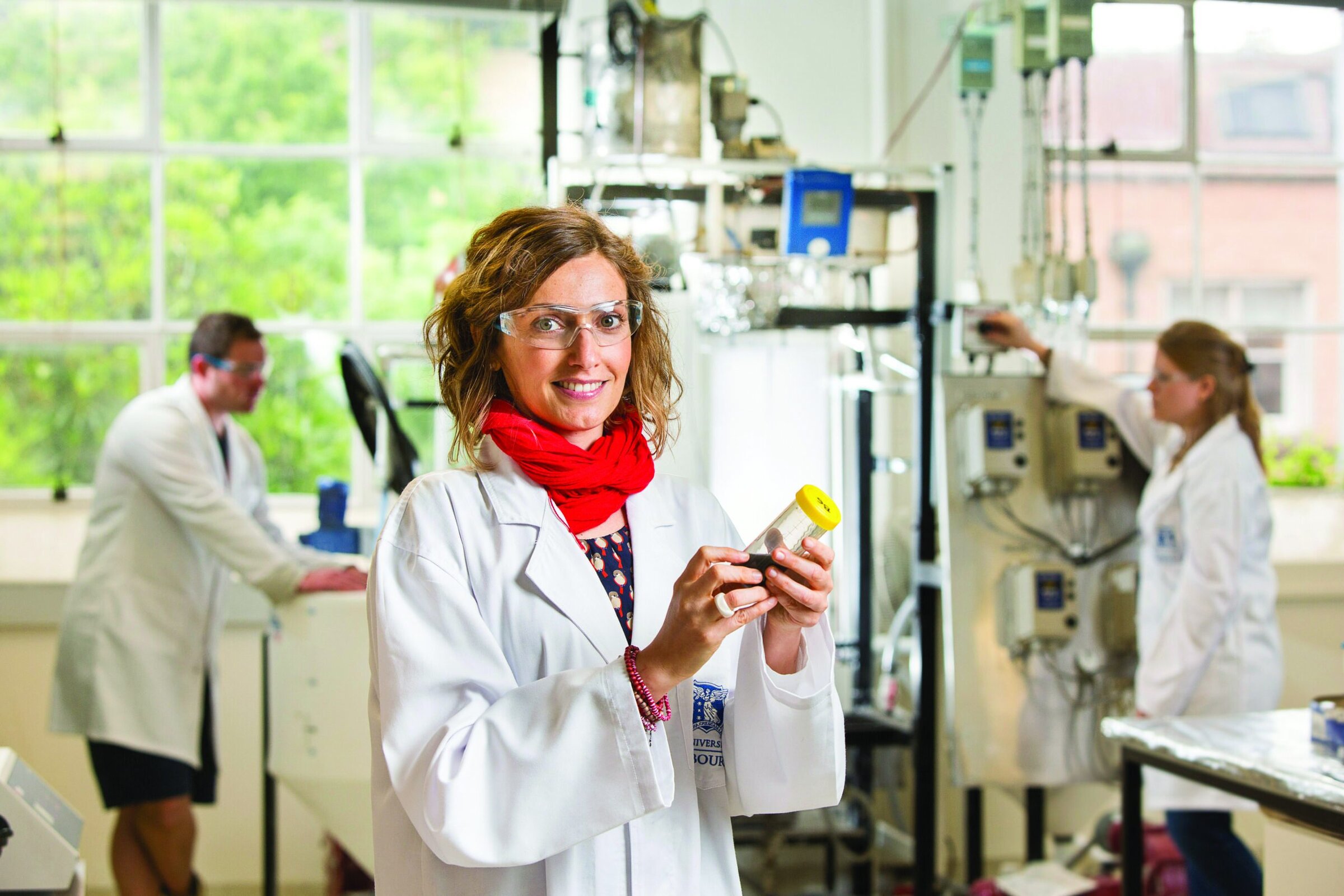
Carolina Tallon is a postdoctoral researcher at the University of Melbourne. Credit: U. of Melbourne
Looking ahead to the next five to ten years, ANSTO will continue to monitor trends and emerging technologies in the immobilization of nuclear waste, which it regards as an area of continuing market opportunities. “There’s quite a bit of interest in countries that house nuclear energy programs,” Vance says. “When the plans for those countries are more advanced, we’d be seriously interested in engaging engineering companies to actually do the work. It’s a bit odd, actually—in Australia we don’t have even a low-level waste dump after all this time, and yet we’ve been working with academics and the practicalities of nuclear waste for about 35 years.”
Another key driver of future business at ANSTO is expanded production of molybdenum-99, the base material for nuclear medicines used to diagnose cancer, heart disease, and muscular and skeletal conditions. “At the same time, within the nuclear science and technology portfolio, we’re also developing inorganic sorbent materials for our next-generation radioisotope medical generators that will be used in positron emission tomography imaging,” Triani says. “Our outreach projects within the Institute of Materials Engineering also see our researchers working closely with several firms. In one such case, we are working with a U.S.-based SME to develop semiconducting materials for low-cost flexible solar cells.” So, although half the planet separates the Australian and U.S. markets geographically, there’s a world of opportunity available to U.S. companies that are willing to go the distance to collaborate on ceramic innovations and advances.
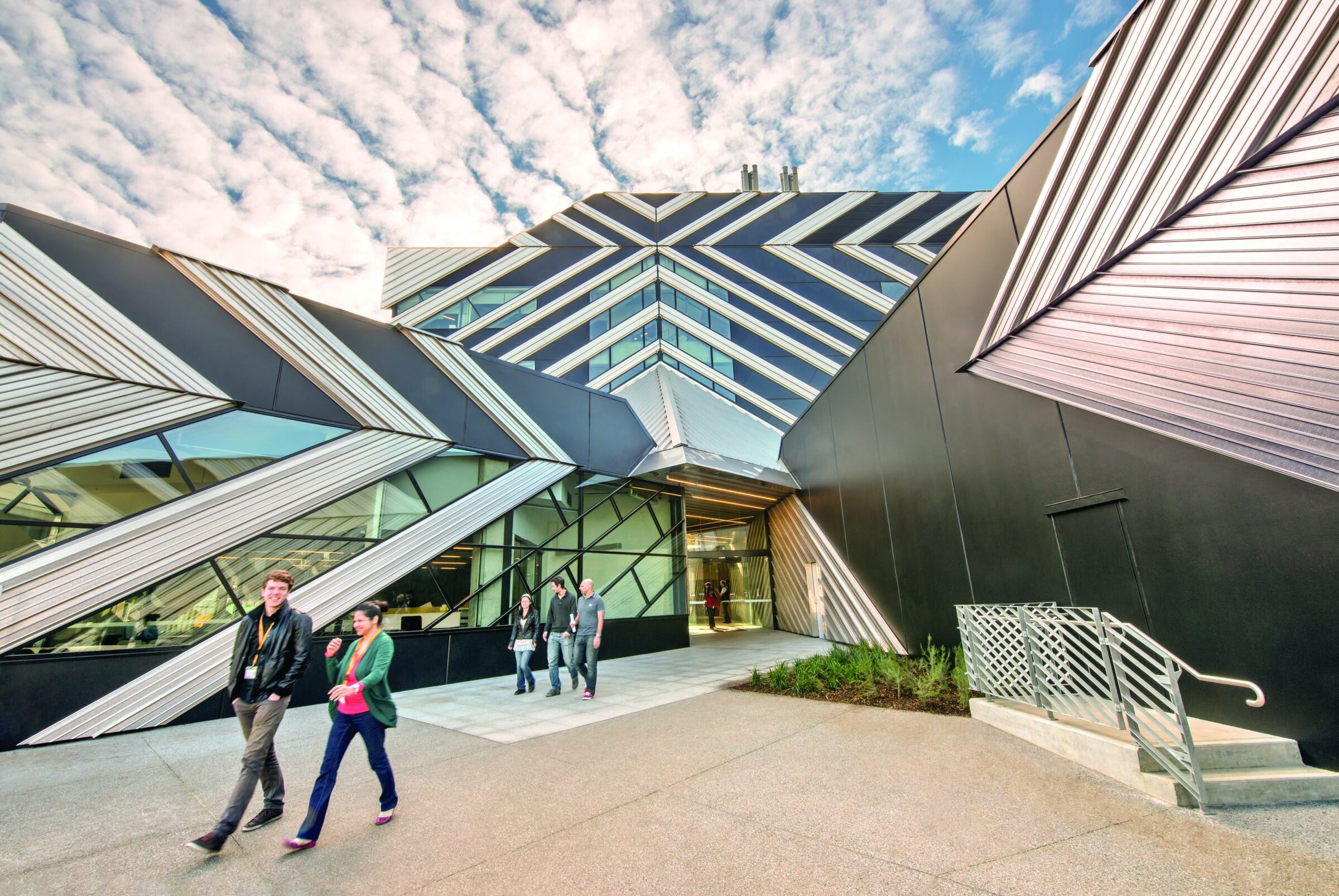
Monash University has several campuses in Australia, including locations in Berwick, Caulfield, Clayton, Parkville, and Peninsula, and around the world. Credit: Monash U.
The overachievers down under
Australia sprawls across 2,988,901.76 square miles, an area slightly smaller than that of the 48 contiguous U.S. states. All that terrain is home to only 22,507,617 people—roughly 8% less than the combined populations of Ohio and Pennsylvania—and a labor force of 11.58 million.
But if the home team is small in numbers, it compensates with economic brawn. The CIA World Factbook notes that, as of 2012, Australia has achieved “more than 20 years of continued economic growth, averaging 3.5% a year” and that its economy is characterized by “contained inflation, very low public debt, and a strong and stable financial system.” Until recently, its economic virtues also included consistently low unemployment. However, in August, the Australian Bureau of Statistics announced that the seasonally adjusted unemployment rate had risen to 6.4%, the highest in more than a decade.
The country’s GDP (purchasing power parity) is $998.3 billion, which makes it the 18th largest in the world and translates to $43,000 per capita. Services generate 68.7% of GDP, followed by industry (27.4%), and agriculture (3.8%). Major industries include mining, industrial, and transportation equipment; food processing; chemicals; and steel. For 2013, the industrial growth rate was 3.2%.
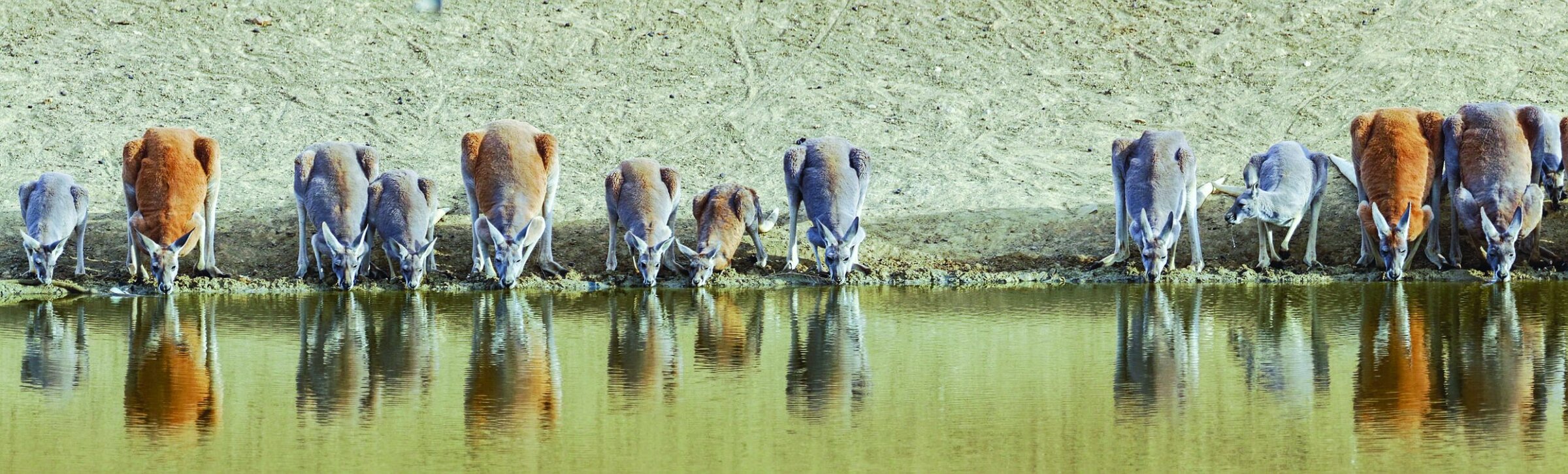
The kangaroo is the unofficial symbol of Australia. David Cook; Flickr CC BY-NC 2.0
Australia’s trading partners are concentrated in the Asia–Pacific region. Leading destinations for the country’s exports, which totaled $251.7 billion in 2013, were China, Japan, South Korea, and India. The world’s largest net exporter of coal, Australia generates 29% of global coal exports. Its natural resource exports also include bauxite, iron ore, copper, tin, gold, silver, uranium, nickel, tungsten, rare-earth elements, mineral sands, lead, zinc, diamond, natural gas, and petroleum. Additional exported commodities include meat, wool, alumina, wheat, and machinery and transport equipment. The country also is home to 37% of the world’s zircon mining, although the mineral sands are mostly exported to trading partners, such as Japan for processing and then reimported into Australia for commercial use.
Imports for 2013 totaled $245.8 billion and included machinery and transport equipment, computers and office machines, telecommunication equipment and parts, crude oil, and petroleum products. Top import trading partners are China, U.S., Japan, Singapore, Germany, Thailand, and South Korea. The U.S.–Australia Free Trade Agreement has been in effect since 2005 and made more than 99% of U.S. manufactured exports to Australia duty-free.
For information about trade or joint venture opportunities in Australia, contact the American Chamber of Commerce in Australia, the U.S. Chamber of Commerce Australia Working Group, or one of the regional Chamber of Commerce offices listed on the Embassy of Australia webpage. The Office of the U.S. Trade Representative maintains online market information about Australia, and the U.S. Commercial Service offers further information through an online library of resources related to doing business in Australia.

Related Articles

Market Insights
Next-gen superconducting ceramics could change how we travel and much more
Forty years ago, two physicists from IBM’s research laboratory in Zürich, Switzerland, reported a groundbreaking discovery: Superconductivity, or the quantum mechanical phenomenon in which certain materials exhibit zero electrical resistance when cooled, could be achieved at higher temperatures using ceramics. Superconductivity had been discovered decades before, but its applications had…

Market Insights
Why most AI manufacturing projects fail and how to fix it
Artificial intelligence is reshaping advanced manufacturing, especially processes involving ceramics, glasses, and other hard or brittle materials. But adopting AI is far more difficult than simply buying software and connecting machines. Manufacturers must understand the advantages and limitations of different models, so they can determine where AI fits best within…

Bulletin Features
Radiation effects on rare earth chemistry in molten salts for nuclear applications
Across the nuclear energy sector, molten salts are shaping the next generation of nuclear technologies, from advanced power reactors to used nuclear fuel recycling. In molten salt reactors (MSRs), molten salts uniquely serve as both the primary coolant and fuel medium, a dual role that sets MSRs apart from conventional…