
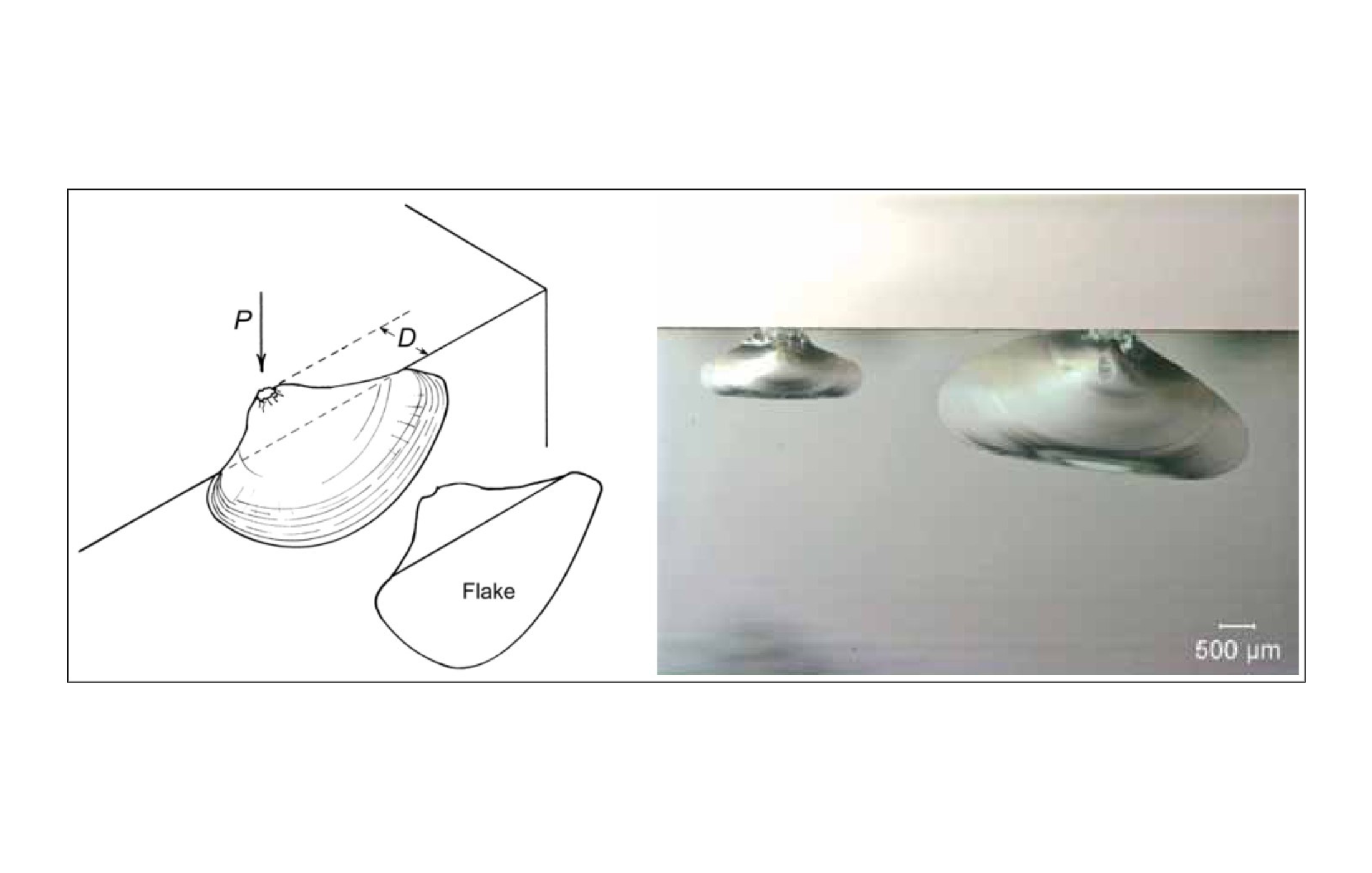
Edge chip testing of ceramics
Edge chipping is a common mode of fracture for ceramics, glasses, and lithic materials. Edge chipping is a useful technique for shaping lithic (“of the nature of or relating to stone,” New Oxford American Dictionary) materials into cutting tools and, indeed, was a key manufacturing innovation for prehistoric cultures making spear tips. However, it is a nuisance and often a problem for technical ceramics and glasses. For instance, one report mentions an incident wherein 49 silicon nitride cam roller follower parts fell from a measurement bench and 40—more than 80 percent—sustained chip damage.1
McCormick and Almond2–4 started quantitatively assessing edge-chipping resistance of technical ceramics in 1986 at the National Physical Laboratory outside London. They initially evaluated carbide cutting-tool materials, but also looked at polycrystalline alumina, sapphire, zirconia, ceramics, and crown glass for comparison and to investigate the general applicability of their method. Other groups adopted their methodology and applied it to other materials.