

A ceramic engineer or scientist unfortunately must admit that there is an unwelcome member of the family among us—iron oxide, or rust. This unpleasant family member is disruptive at best. More often it is destructive, nearly impossible to control, and a consumer of resources that are devoted to it in an attempt to mitigate its impact or at least slow it down. Metal bars, wires, and sheets require protective coatings to prolong their use on exposure to service environments wherein they inevitably encounter corrodant species and conditions conducive to the initiation of rust formation. Society invests enormous amounts of time and financial resources to rust prevention, repair, and replacement. Indeed, the Department of Defense has a long history of fighting rust (Figure 1), and the Government Accountability Office estimates that today the United States military spends more than $20 billion per year in corrosion-related expenses.
As the advanced manufacturing industry in the United States rejuvenates, sustainable processes and materials will be increasingly important.1,2 New materials will offer opportunities for new solutions to old problems. Graphene and carbon nanotubes represent a class of new materials with unique properties that are just beginning to find applications in emerging and existing industries. This article presents promising results of an active–passive approach to protecting low-alloy steels from corrosion using a nanocomposite coating comprising exfoliated graphene or multiwalled carbon nanotubes dispersed within a polyetherimide matrix.
Keeping rust at bay
The earliest reports of efforts to prevent fouling of surfaces date back to 412 BC when explorers coated the wooden hulls of ships with tallow and pitch poisoned with arsenic and sulfur to keep barnacles at bay.
Today, zinc-based alloys are the “gold standard” sacrificial electroactive corrosion coatings for low-alloy steels. The extent of protection is proportional to the thickness of the coating, with inevitable cost penalties for sensitive components requiring prolonged corrosion protection.3 Zinc coatings are less ductile than the steel substrates they protect. Deformation of the steel can induce flaking or cracking of the galvanic coating and compromise the coating’s corrosion-resistance properties.4 Furthermore, zinc coatings are susceptible to fluctuations in precursor prices, an issue that has increased in importance in recent years. Zinc and tin prices spiked dramatically in 2005–2006, but have stabilized since the discovery of new mines and mitigation of supply chain restrictions. Nevertheless, many steel companies anticipate a severe shortage of zinc in 20 to 25 years resulting in substantial research efforts dedicated to mitigating reliance on this material.
Manufacturers used chromium and various chromate coatings to plate carbon steel, zinc, and aluminum substrates for most of the last century because of the ease of plating, excellent corrosion resistance, remarkable wear resistance, Vickers hardness values ranging up to 1000 kg/mm2, and lustrous surface finish.5 However, because of the potent carcinogenicity of hexavalent chromium and environmental concerns regarding disposal of electroplating dips, and the harmful effects of the mist created during the plating process,6 the European Union’s stringent regulations— the Restriction of Hazardous Substances (RoHS) directives—limit chromate use to 0.1 wt% in conversion coatings.7
The growth of chrome electroplating and metal-finishing shops paralleled the boom in the US steel industry between the late 19th century to the middle of the 20th century as railroads linked an integrated supply chain across the Great Lakes region that would become the bedrock of the manufacturing base. Historically, small- and medium-sized customized metal-finishing enterprises dominated this sector, and, not surprisingly, these businesses were buffeted by the upheavals in the steel industry starting from the 1970s.
Despite the nation’s increasing reliance on imported steel, metal-finishing shops continue to be important to the manufacturing economy in traditional steel towns across the “Rust Belt.” In the Buffalo–Niagara region that is home to the primary authors of this article, for example, the closing of the Bethlehem Steel plant in Lackawanna, N.Y., devastated the local economy. Even so, the Brookings Institute estimates the region provides more than 14,500 jobs directly related to metal finishing, fabrication, and tool manufacturing and has enjoyed strong job growth during the last two years.
Beyond the economics of the steel industry, increasing alarm regarding the environmental impact of heavy metals from the metal finishing industry is reframing the national conversation regarding the environmental consequences of a manufacturing economy. The Environmental Protection Agency (EPA), the Occupational Safety and Health Administration (OSHA), and the National Institute for Occupational Safety and Health (NIOSH) have issued successively more restrictive regulations regarding disposal of chromium-based effluents. The Clean Air Act, the Clean Water Act, the Resources Conservation and Recovery Act (RCRA), and the Toxic Substances Control Act8 directly address chromium concentrations in air, water, and soil.
As the Buffalo–Niagara region, along with other manufacturing towns, seeks to once again “seize the manufacturing moment,” there is opportunity for a renewed focus on sustainability and sustainable materials, process efficiency, and additive approaches to manufacturing that could potentially bring innovation to metal-finishing, joining, and forming industries that will enable them to once again be important drivers of economic growth.
Hybrid nanocomposites: Putting graphene to work in coatings
The vast array of materials that have been tested as alternatives to zinc and chromate coatings includes engineered polymers, conductive polymers, polysiloxanes, metal oxides, thermally sprayed cermets, self-assembled monolayers, active corrosion inhibitor technologies, encapsulated monomers, and bioactive or biomimetic materials.5,9–11 Polymeric coatings have shown potential as corrosion inhibitors, but adhere poorly to metal substrates.12,13 Nanostructured coatings show promise, but suffer from inherent porosity, which creates channels for water and ions to permeate the coating and corrode the metal surface.14
There is growing interest in designing hybrid nanocomposites comprising multiple components, where the individual components act in concert to deliver corrosion resistance, formability, and adhesion to steel substrates.15,16 Herein, we present a hybrid nanocomposite coating system that combines the electroactivity of carbon nanomaterials, such as multiwall carbon nanotubes (MWCNT) and exfoliated graphene, with the water impermeability and excellent adhesion properties of a specialty polymer, polyetherimide (PEI). The nanocomposite protects low-alloy steel substrates through an “active–passive” approach, serving as a physical barrier to water permeation, preventing formation of ion channels at the metal surface, and passivating the metal/metal oxide surface through electron depletion at the interface, likely through establishment of a Schottky barrier.3,9,17,18 Two coating systems were studied: a graphene/PEI composite with high loading of the nanomaterial filler; and a combined graphene/MWCNT/PEI system with a much lower loading of each filler to study synergistic effects between the two types of carbon nanomaterials. (A MWCNT/PEI system also was tested, but it showed no enhanced corrosion-resistance properties.)
Graphene, a single-atom-thick layer of sp2-hybridized carbon atoms, has remarkable electronic, mechanical, and thermal properties. Since their discovery in 1991, carbon nanotubes have been researched extensively. However, their exceedingly high costs and environmental concerns have slowed large-scale commercial implementation. Many methods for producing graphene have been developed, but the facile non-oxidative solution-phase exfoliation of graphite is particularly interesting, because it is scalable and avoids the oxidative functionalization that tends to disrupt the π-conjugated structure (pristine aromatic ring system), which is critically important to many of graphene’s remarkable properties.19 We denote exfoliated graphene derived from ultrasonication of graphite in N-methylpyrrolidone (NMP) as unfunctionalized graphene (UFG).
Several approaches exist for dispersing graphene and MWCNTs in polymer matrices, although composites with PEI have not been reported to the best of our knowledge.20,21 PEI is an optimal candidate for the polymer host matrix because of its flexibility, high glass transition temperature (155°C), excellent thermal stability, and radiation resistance, while also serving as a perfect host for carbon nanofillers through π–π stacking.3,17,20,22,23 The latter noncovalent stacking mode describes the attractive interactions between aromatic ring systems derived primarily from the alignment of positive and negative electrostatic potentials on adjacent aromatic rings. Using in-situ polymerization, the carbon nanomaterials disperse in the PEI precursor (poly(amic acid), PAA) prior to polymerization, results in improved dispersion of the nanostructured carbon fillers in the eventual polymer matrix. The uniform dispersion of nanomaterial in the matrix, along with the remarkable adhesion of the tailored PEI to the steel substrate, facilitates improved corrosion resistance under accelerated corrosion testing conditions (Figure 2).3,17
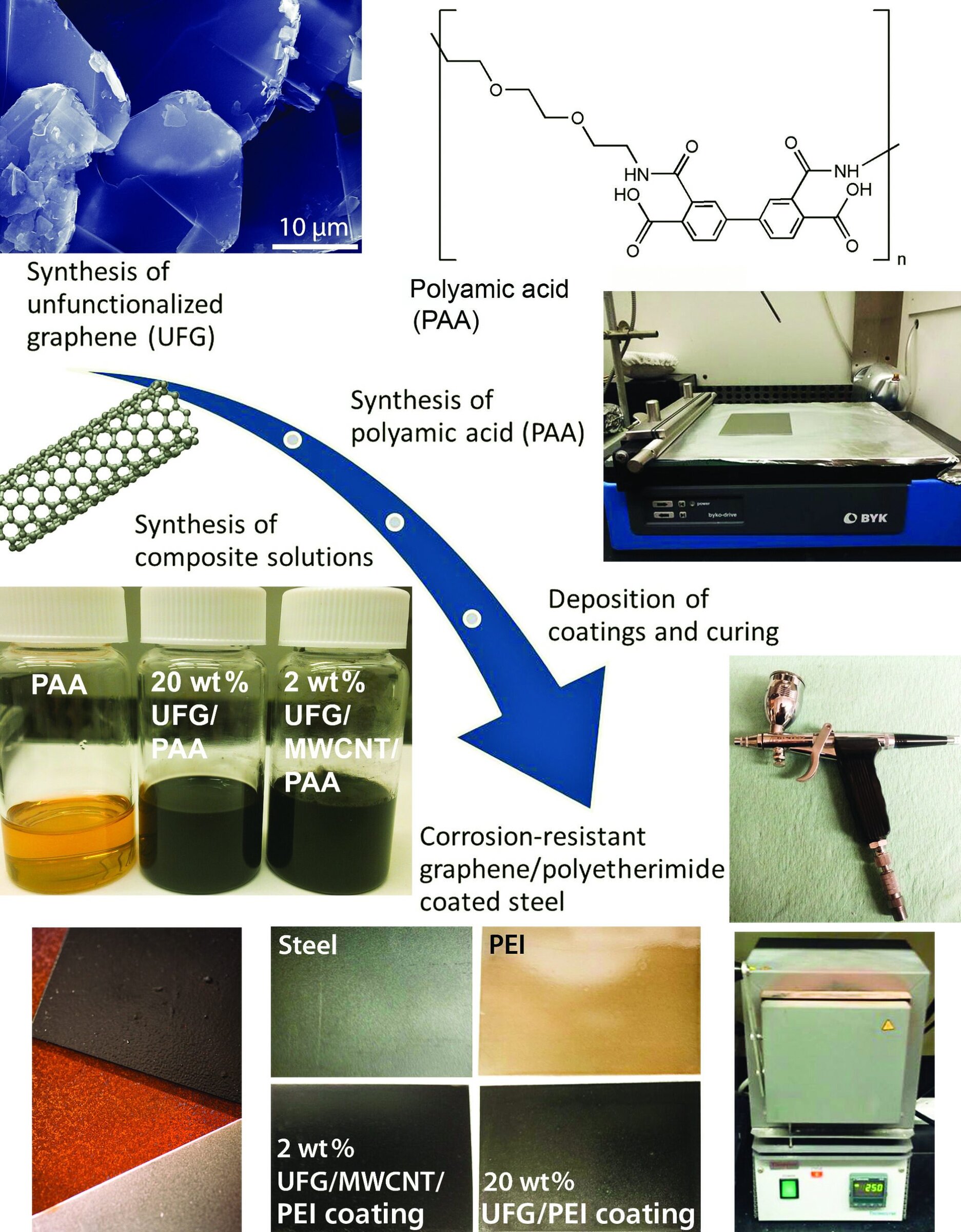
Figure 2. Synthesis and coating of nanomaterial–PEI composite coatings. SEM image of graphene platelets, chemical structure of polyamic acid, photograph of the graphene/PAA dispersions, photographs of two coating methods (wire-bar coating and spray coating) and an oven used for curing, and, lastly, photographs of the coatings on steel. Credit: Banerjee, U. Buffalo
A manufacturing perspective
Applying coatings in a continuous process to low-alloy steel must be fully scalable, allow for high-throughput integration with rolling or casting processes, enable precise control of coating thickness, and not require expensive capital equipment. We have developed coating formulations that can be applied through standard wire-bar and spray-coating processes. The former translates readily to roller-coating (gravure, reverse roll, and knife-over-roll) methods, which tend to be preferred by many metal-finishing shops and steel mills, thereby requiring little retooling. In past work, we also demonstrated electroplating of graphene onto metal substrates from an aqueous solution using a process similar to chrome electroplating.24 Although the results reported here correspond to NMP dispersions, research proceeds on aqueous analogs of these formulations.
Graphene is a potential sustainable replacement for metals, such as zinc and chromium, especially if graphite byproducts from the steel industry can be transformed to high-quality graphene. The cost of sustainable coatings can represent a major impediment to their widespread adoption. As with any new material and the absence of economies of scale, reliable financial projections are yet to be conclusively established for the graphene production. Nevertheless, some industry leaders suggest that a price goal of $20 per pound for graphene is attainable in the short term and that costs of production could soon be as low as $5 per pound. Given the low graphene loadings in our formulations and the high efficacy of much thinner coatings (an order of magnitude thinner than sacrificial metallic coatings), the price proposition of the materials presented here is quite attractive.
Related to sustainable manufacturing, previous work demonstrated the use of blast furnace gases to grow directly well-adhered layers of carbon nanotubes, multilayered graphene, and carbon nanofibers onto low-alloy steel substrates.25 After deposition of PEI, the carbon-nanomaterial/PEI composite coatings provide excellent corrosion resistance.17 This method represents an attractive route for designing a closed-loop process that reduces the carbon footprint of steel plants while adding value to steel substrates.
Corrosion rate drops two orders of magnitude
We synthesized UFG from natural flake graphite through ultrasonic exfoliation of graphite powder in NMP. The MWCNTs used in this study are more than 99 percent pure by weight and have outer diameters 13–18 nm with lengths 3–30 µm.
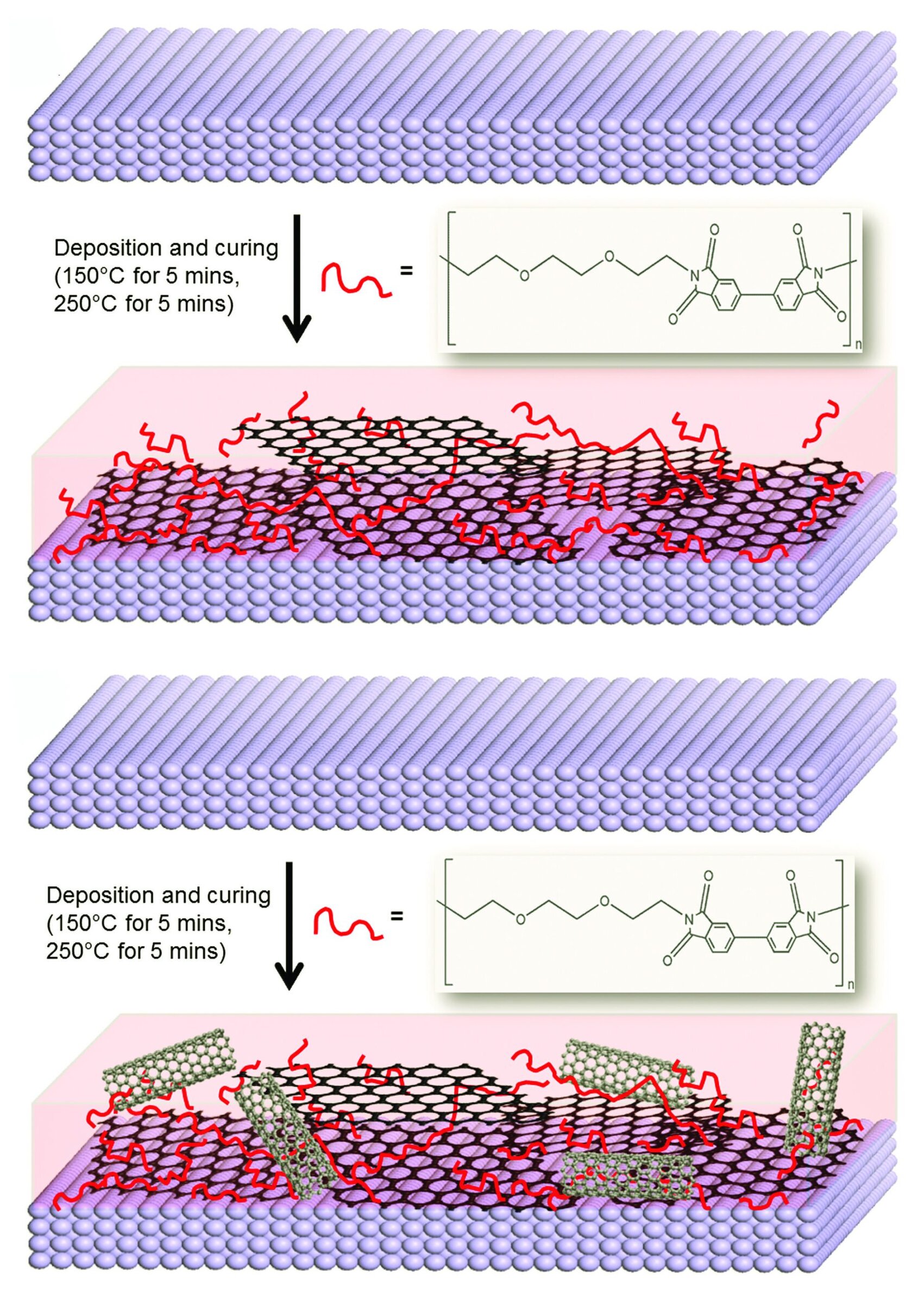
Figure 3. Schematic depictions of (a) UFG/PEI and (b) UFG/MWCNT/PEI nanocomposite coatings on steel. The wavy lines represent PEI polymer, the web-like sheets represent graphene, and the tubes are MWCNTs. Credit: Banerjee, U. Buffalo
Figure 3 depicts the overall process for depositing of PEI nanocomposite coatings. Briefly, PAA is synthesized by copolymerization of an anhydride and diamines in the presence of UFG and UFG/MWCNTs. The desired concentration of UFG or MWCNTs is added to the NMP and ultrasonicated to create a visually nonscattering solution prior to polymerization. The nanomaterial filler disperses well in the viscous UFG/PAA (or UFG/MWCNT/PAA) (Figure 2) allowing it to be roller coated onto freshly cleaned and degreased low-alloy steel substrates (Figure 3). PEI is synthesized in-situ on the steel surface through an imidization reaction. Although the mechanism details have not yet been fully investigated, results show that the in-situ imidization protocol yields coatings with substantially improved adhesion of the polymer to steel, fashioning a robust composite with a dry coating thickness of 15–20 µm.3,17,26 The m-phenylendiamine component prevents crystallization of the polymer and improves flexibility and formability as the coating adopts the contours of the low-alloy steel surface.3
The nanocomposite coatings were deposited by wire-bar coating (chemical coating) onto a clean cold-rolled steel surface using either an automatic film applicator or a spray coating method (Figure 2). The PAA was cured at 150°C for 5 min, followed by a 250°C curing step for 5 min to complete the imidization of the PEI (Figure 3) and to remove residual NMP.
We characterized the UFG synthesized for use in the PEI nanocomposites by scanning electron microscopy and transmission electron microscopy as shown in Figure 4. UFG tends to agglomerate into large fragments on drying as shown in Figures 4(a) and 4(b). However, Figures 4(c) and 4(d) show that the UFG morphology is sheet like, adding to the flexibility of the coating and the formability of coated pieces.
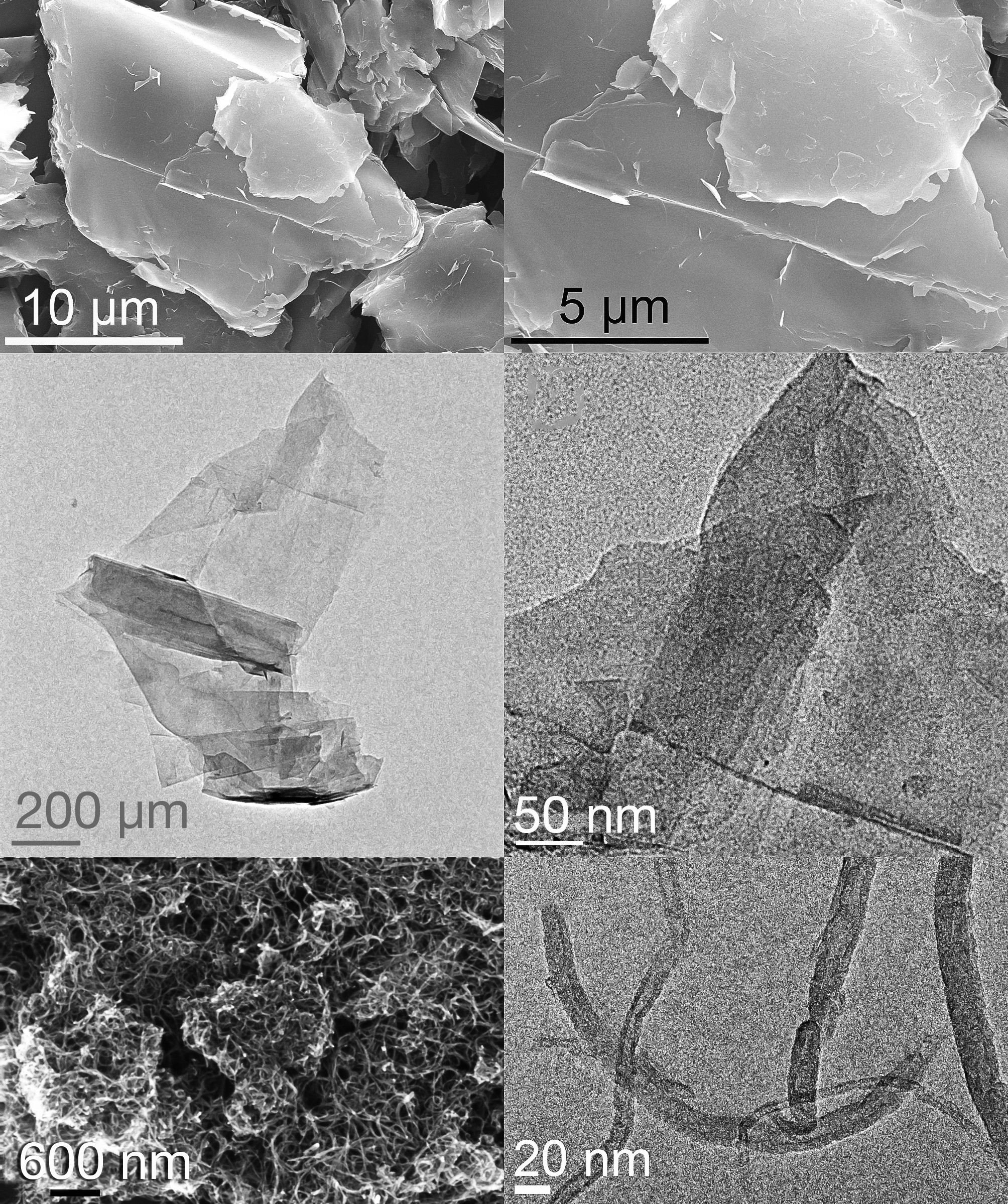
Figure 4. (a) and (b) SEM images of UFG, (c) and (d) TEM images of UFG, (e) SEM image of MWCNTs, and (f) TEM image of MWCNTs. Credit: Banerjee, U. Buffalo
Notably, the agglomeration and phase segregation of UFG in nanocomposites is substantially mitigated by the in-situ polymerization approach. MWCNTs and graphene interact strongly with polyimides via strong π–π stacking interactions. Because of the structural similarity of these materials, good wettability and chemical compatibility between the matrix and the filler are expected.20,27 The PAA envelopes the UFG platelets, and PAA chains interacting with UFG likely impart steric stabilization to the UFG colloids in NMP. Figure 2 shows the highly concentrated, stable UFG/PAA dispersions without phase segregation or flocculation of the UFG filler after several months. Figures 4(e) and 4(f) show high purity of the MWCNTs with outer diameters of 13–18 nm and lengths of 3–30 µm. Analogous to UFG, bundling of MWCNTs is mitigated by ultrasonic treatment in NMP.
Photographs of the coatings are depicted in Figure 2. A top-view inspection of coatings in the SEM reveals a fairly smooth surface finish with no cracks or visible pinholes. Furthermore, we observed no phase segregation of UFG or MWCNT fillers at the surface.
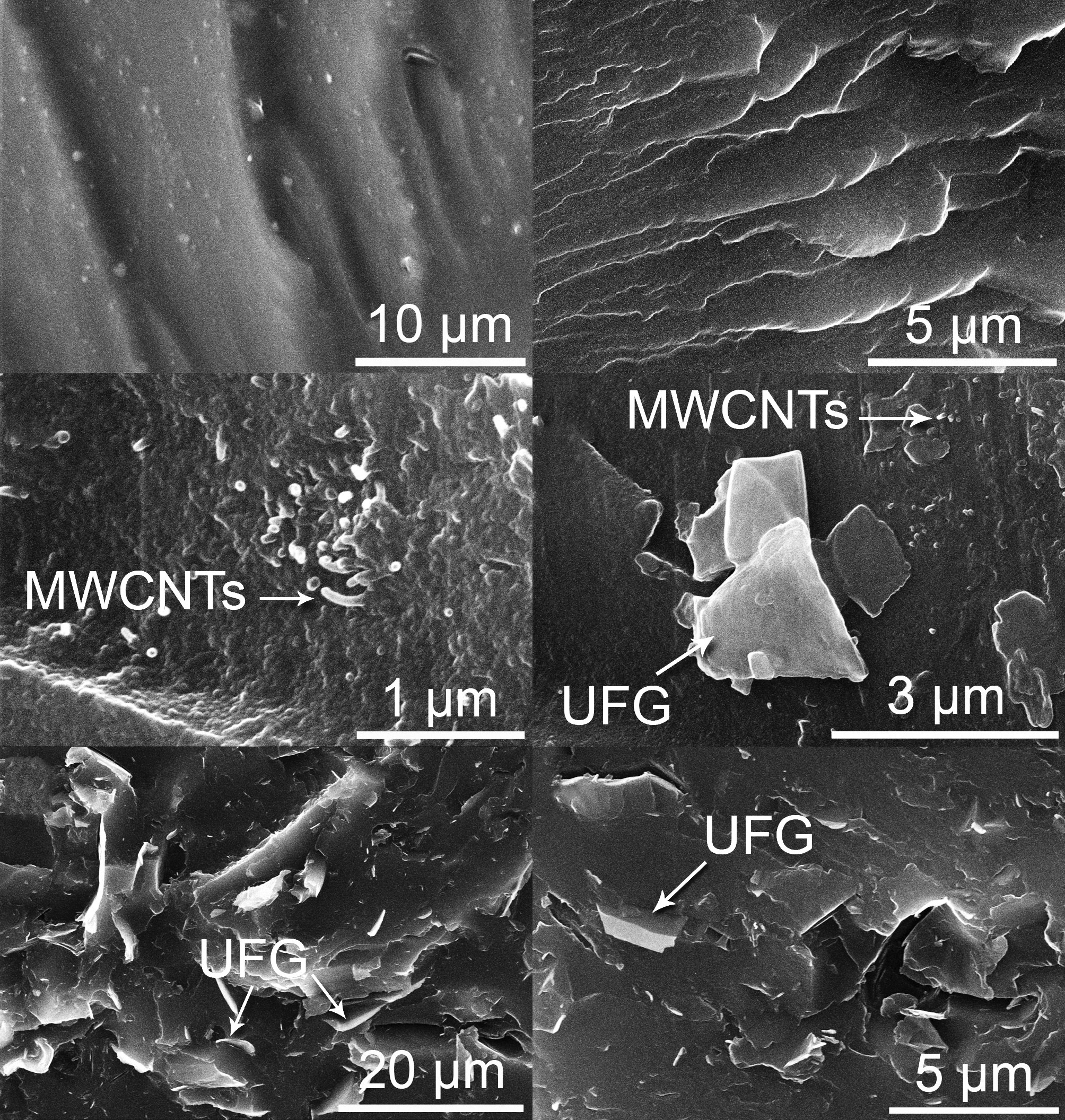
Figure 5. Cryo-fractured SEM images of (a) and (b) PEI (without filler), (c) and (d) 2 wt% UFG/MWCNT/PEI, and (e) and (f) 20 wt% UFG/PEI. Credit: Banerjee, U. Buffalo
MWCNT and UFG sheets are dispersed in the PEI matrix, as the SEM images of cross-sections of cryo-fractured surfaces of the free-standing composite samples show (Figure 5). Figures 5(a) and 5(b) show the PEI is relatively featureless. In contrast, clearly visible UFG and MWCNTs protrusions appear in the fractured composite surfaces (Figures 5(c)–5(f)). Figures 5(c) and 5(e) show that the MWCNTs and UFG sheets are well dispersed, and, again, there is no visible phase segregation of the fillers from the PEI matrix. The images further suggest the presence of an amorphous polymer coating around the UFG sheets and individual MWCNTs. The excellent dispersion of the carbon nanomaterials in the PEI matrix is likely a result of the π–π interactions between the π-conjugated graphene basal planes and the aromatic moieties on the polymer backbone.17,20,23,27,28 Such excellent dispersion of the conductive fillers helps prevent delamination of the composite coating from the metal and appears to aid formation of a passivation layer at the metal surface.
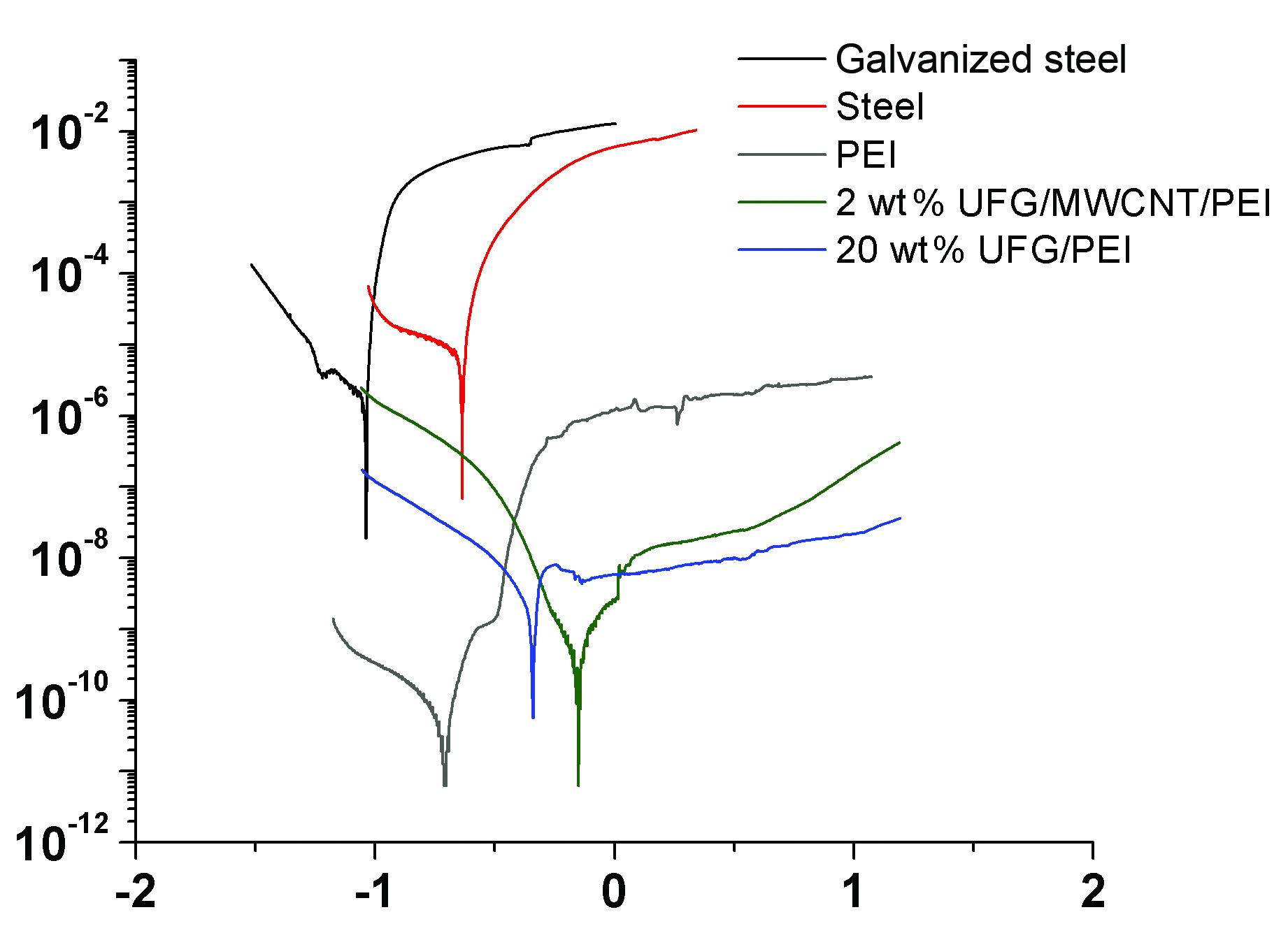
Figure 6. Potentiodynamic plots showing the relatively enhanced corrosion resistance provided by the composite coatings as compared with the behavior of the PEI coating (without fillers), uncoated steel, and galvanized steel. A scan rate of 1.67 mV/s was used with a platinum strip and standard calomel electrode as the counter and reference electrodes, respectively. Credit: Banerjee, U. Buffalo
Potentiodynamic electrochemical tests (following the ASTM-G59 standard) measured corrosion behavior of coated samples, bare steel, and galvanized steel in saline environments. Figure 6 plots current density versus potential for samples tested in 3.5% NaCl solution. The current density for nanocomposite-coated samples was several orders of magnitude less (down to about 10–9 A/cm2) than bare low-alloy steel and galvanized steel (which have current densities on the order of about 10–5 A/cm2). This correlates directly to diminished corrosion of the steel surface and demonstrates the efficacy of the coatings as barrier materials. The potentiodynamic measurements provide further evidence of the formation of a passivation band from –0.243 V to 0.576 V for the 20 wt% UFG/PEI nanocomposite coating and from 0.010 V to 0.576 V for the 2 wt% UFG/MWCNT/PEI coating. The formation of a passivation band for the nanocomposite coatings—but not for PEI alone—suggests that the conductive carbon nanomaterials are important in forming the passivation layer at the metal surface.9,17,26
Furthermore, incorporating UFG and MWCNTs in the coatings shifts the potentiodynamic plots to more positive potentials, suggesting more “noble” behavior for these systems. Although the precise nature of the passivation layer remains unclear, a Schottky barrier often is seen at metal/nanotube and metal/graphene junctions and requires more bias to facilitate electron transfer.29,30 This type of potential barrier at the interface likely impedes the corrosion reaction by restricting the flow of electrons to the steel surface, which is required for oxidation. Also, the hybridization of graphene with metal surfaces can open a bandgap in the semimetallic graphene, resulting in semiconducting behavior for the metal/UFG interfaces.31,32 Charge depletion from the passivating semiconducting layer also could suppress corrosion.
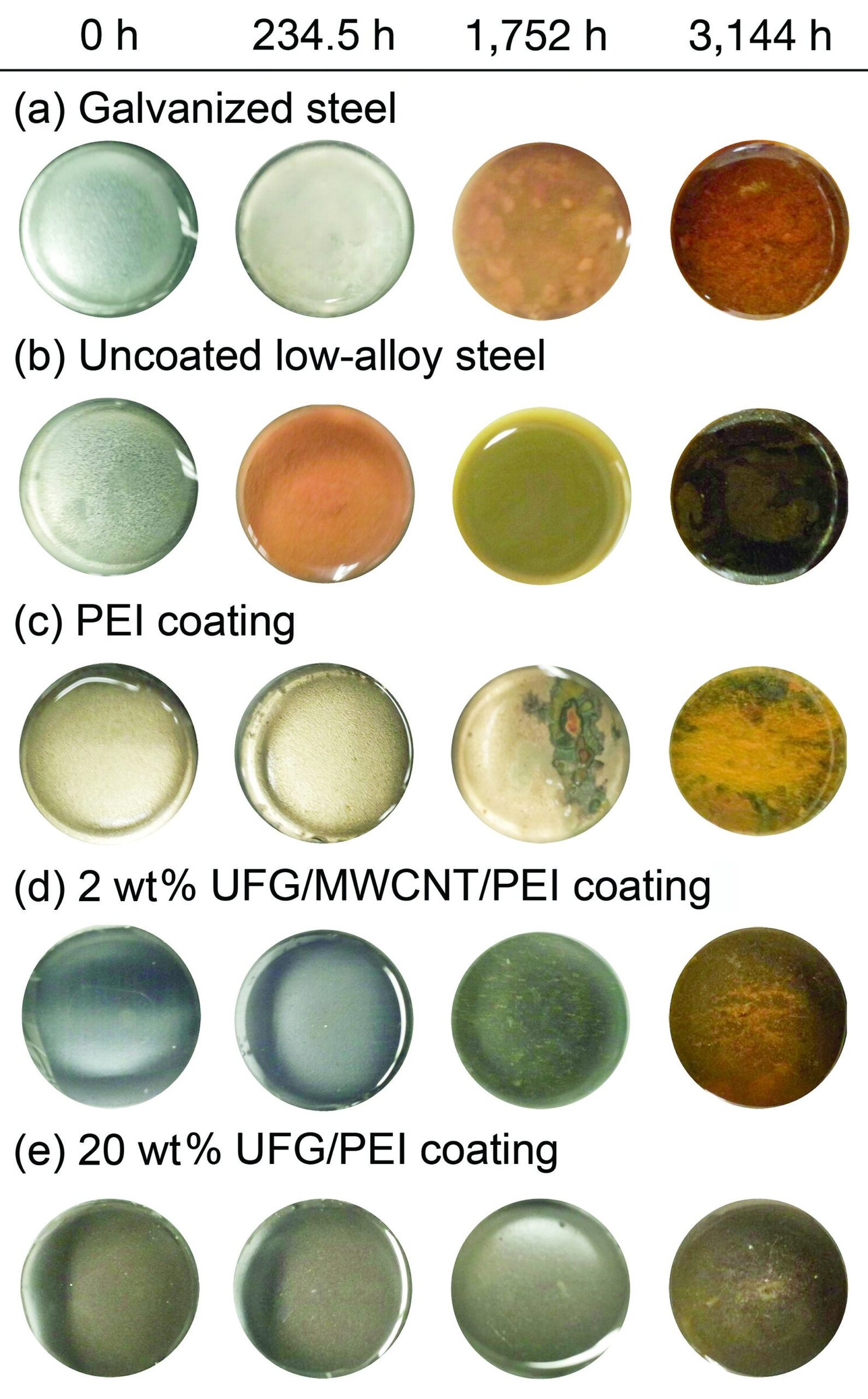
Figure 7. Saltwater (3.5% NaCl) immersion measurements on (a) galvanized steel, (b) uncoated low-alloy steel, (c) low-alloy steel with PEI coating, (d) low-alloy steel with 2 wt% UFG/MWCNT/PEI coating, and (e) low-alloy steel with 20 wt% UFG/PEI coating. Sample exposure diameter 3.5 cm. Credit: Banerjee, U. Buffalo
The photographs in Figure 7 provide a qualitative measure of the relative corrosion rates of the various test substrates of samples immersed in 3.5% NaCl solution for various durations: 0 h; 234.5 h; 1,752 h; and 3,144 h (the end of the immersion test). After 234.5 h exposure, extensive red rust formed on the low-alloy steel surface. Similarly, white powdery deposits on the galvanized sample suggest sacrificial corrosion of the zinc layer. The nanocomposite coatings and the filler-free PEI coating show no visible signs of corrosion. After 1,752 h of exposure to 3.5% NaCl solution, red rust formation on the galvanized steel sample indicates complete oxidation of the galvanic coating. The coating of the PEI-coated steel has partially delaminated, allowing for corrosion to begin. In contrast, the UFG/PEI and UFG/MWCNT/PEI nanocomposite systems appear to have avoided such a fate. Finally, after completion of this test at 3,144 h, extensive corrosion across the test substrates is apparent for all samples, except for the two coated with 20 wt% UFG/PEI and 2 wt% UFG/MWCNT/PEI. Some specks of corrosion are apparent for the latter two samples, especially under microscopic examination, but they are clearly superior to PEI alone or galvanized steel for protecting the low-alloy steel substrates from corrosion. (Despite the differences in appearance in the photographs, the two samples corroded approximately the same amount.)
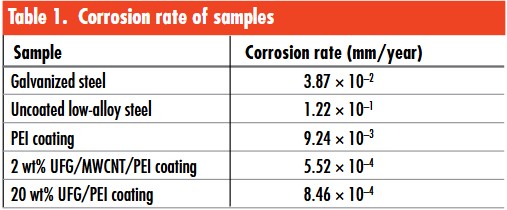
Weight-loss measurements provide a more quantitative perspective of the inhibitory properties of the nanocomposite coatings. The weight-loss measurements of the samples shown in Figure 7 were conducted per ASTM-G1. According to this protocol, the corrosion rate (CR) in millimeters per year is
CR = 87.6(W/DAt) (1),
where 87.6 is a constant, W the weight loss in milligrams, D the density of the metal in g/cm3, A the surface area exposed to the NaCl solution in cm2, and t the duration of exposure to the NaCl solution in hours. The calculated CR values for the samples are listed in Table 1. The 20 wt% UFG/PEI nanocomposite coating corrodes almost three orders of magnitude slower than bare low-alloy steel. The inclusion of UFG or MWCNTs also reduces corrosion by an order of magnitude over the pure polymeric coating.
Conclusions
In summary, tests show that two novel nonmetallic nanocomposite systems protect low alloy steels from corrosion. The in-situ copolymerization of an anhydride and a diamine is used to prepare PAA in the presence of UFG and MWCNTs. PAA disperses and stabilizes the carbon nanomaterials in NMP through π–π interactions. Roller coating and subsequent imidization of the nanocomposite blends yields well-adhered UFG/PEI and UFG/MWCNT/PEI coatings on steel. The nanocomposite coatings combine the water impermeability and excellent formability of the polymer with the electroactivity of the carbon nanomaterial fillers. Potentiodynamic testing and saltwater immersion tests indicate more than three orders of enhancement in efficacy of corrosion protection as compared with bare steel. The developed nanocomposites represent a scalable solution for replacement of hexavalent chromium in anticorrosive coatings.
Acknowledgments
This work was supported by Tata Steel and the New York State Pollution Prevention Institute.

Related Articles

Market Insights
Next-gen superconducting ceramics could change how we travel and much more
Forty years ago, two physicists from IBM’s research laboratory in Zürich, Switzerland, reported a groundbreaking discovery: Superconductivity, or the quantum mechanical phenomenon in which certain materials exhibit zero electrical resistance when cooled, could be achieved at higher temperatures using ceramics. Superconductivity had been discovered decades before, but its applications had…

Market Insights
Why most AI manufacturing projects fail and how to fix it
Artificial intelligence is reshaping advanced manufacturing, especially processes involving ceramics, glasses, and other hard or brittle materials. But adopting AI is far more difficult than simply buying software and connecting machines. Manufacturers must understand the advantages and limitations of different models, so they can determine where AI fits best within…

Bulletin Features
Radiation effects on rare earth chemistry in molten salts for nuclear applications
Across the nuclear energy sector, molten salts are shaping the next generation of nuclear technologies, from advanced power reactors to used nuclear fuel recycling. In molten salt reactors (MSRs), molten salts uniquely serve as both the primary coolant and fuel medium, a dual role that sets MSRs apart from conventional…