
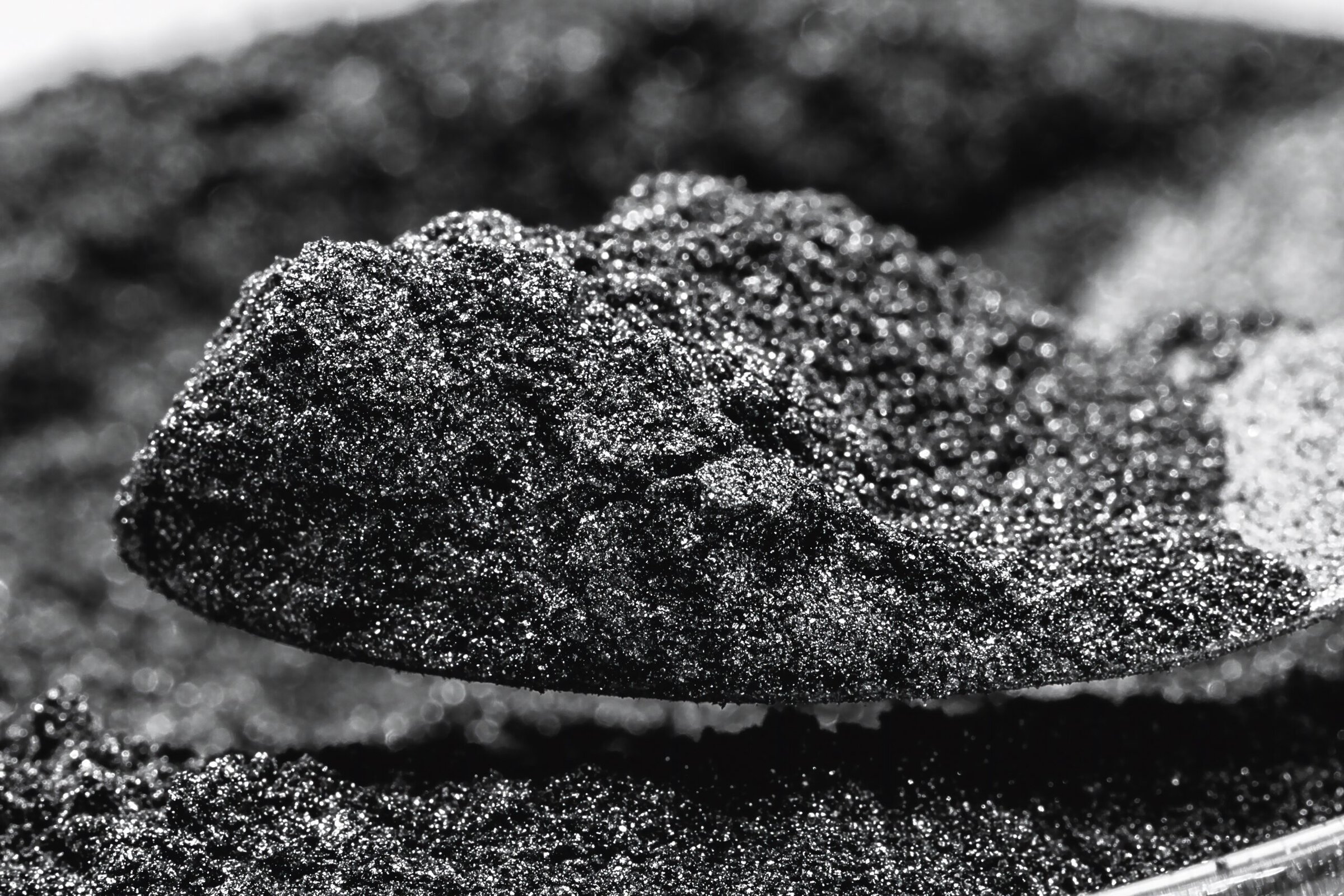
Graphite has emerged as a cornerstone material for the clean energy transition, playing a critical role in lithium-ion batteries, advanced ceramics, and a wide array of high-technology applications.
Graphite’s unique combination of high electrical conductivity, exceptional thermal stability, lubricity, and chemical inertness distinguishes it from other industrial minerals and underpins its indispensability in modern energy and electronics sectors. In lithium-ion batteries, graphite serves as the dominant anode material, enabling efficient lithium-ion intercalation and deintercalation, which is essential for high energy density and long cycle life. Beyond batteries, graphite’s high-temperature resilience and corrosion resistance make it vital for refractory linings, crucibles, and components in the semiconductor and nuclear industries.
However, the performance of graphite in these demanding applications is susceptible to impurities such as iron, silicon, sulfur, and various other metallic elements.1 Even trace amounts of these contaminants can degrade electrochemical performance, reduce thermal conductivity, catalyze unwanted side reactions, or compromise mechanical integrity. These effects are especially problematic in battery, semiconductor, and nuclear applications, where purity requirements often exceed 99.999% carbon content.
The global surge in electric vehicle adoption and the rapid expansion of stationary energy storage systems have driven demand for high-purity graphite to unprecedented levels (Figure 1). According to recent projections, battery and clean energy applications are expected to account for the majority of graphite consumption in the coming decade, with demand for battery-grade graphite projected to quadruple by 2030.2
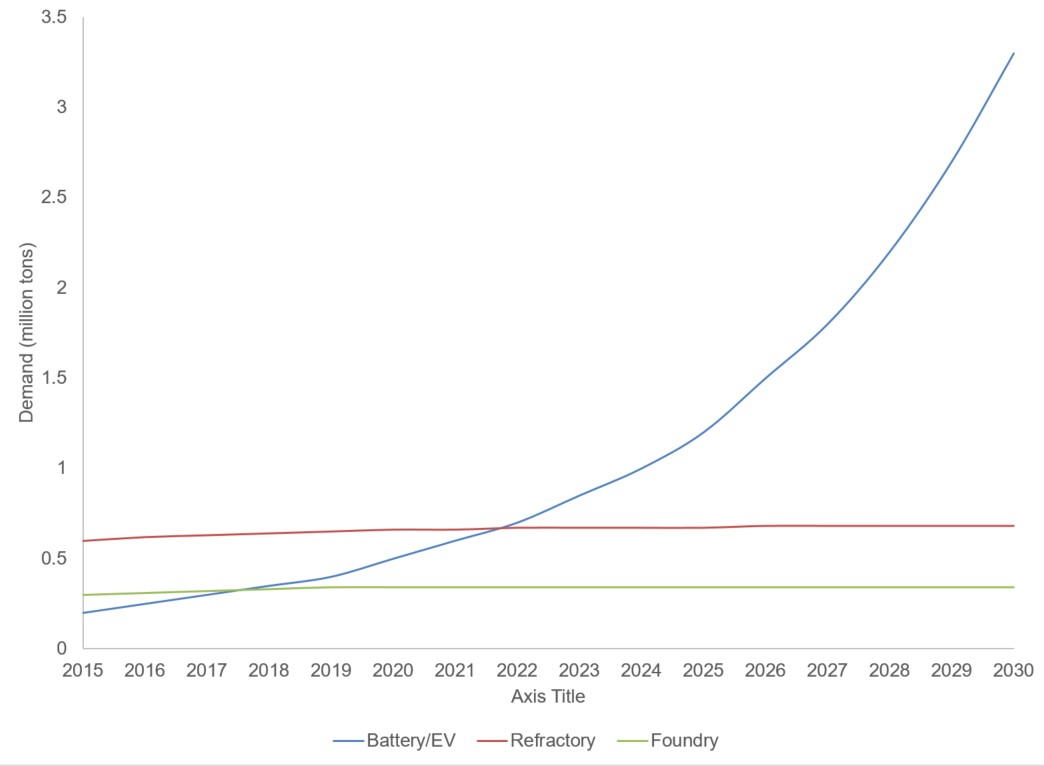
Figure 1. Graphite demand by application over time.2 Credit: International Energy Agency (CC BY 4.0)
This explosive growth has exposed significant vulnerabilities in the graphite supply chain, which is currently dominated by a handful of countries, most notably China. Supply concentration, geopolitical risks, and environmental concerns related to traditional purification methods have underscored the urgent need for advanced, scalable, and sustainable graphite purification technologies to secure future supply and meet the stringent requirements of next-generation energy and electronic systems.
Graphite sources
Graphite exists in both natural and synthetic forms, each with distinct properties, production methods, and industrial uses.
Natural graphite
Natural graphite is classified into three main types based on its crystallinity and morphology: amorphous (microcrystalline), flake, and vein (lump) graphite. None of these types are particularly pure in their natural state, and all require beneficiation and purification before use in high-technology applications.
- Amorphous graphite forms through the metamorphism of coal or carbon-rich sedimentary rocks and typically appears as fine-grained, low-crystallinity aggregates. Its relatively low carbon content (typically 70–85 wt.%) and poor crystallinity make it unsuitable for battery-grade applications without extensive processing, and it is more commonly used in lower-value applications such as lubricants and foundry facings.
- Flake graphite develops in high-grade metamorphic rocks such as schist, gneiss, and quartzite. It is especially valued for its large flake size, high crystallinity, and ease of exfoliation—properties critical for lithium-ion battery anodes and advanced composite applications. The beneficiation and purification of flake graphite can yield carbon contents exceeding 99.95%. This purity, combined with flake graphite’s favorable particle morphology, makes it the preferred feedstock for the battery industry.3
- Vein graphite, found in hydrothermal veins, is the rarest and purest form, with high carbon content and unique electrical properties. However, it is geographically limited, notably to Sri Lanka.3,4
Synthetic graphite
Synthetic graphite is produced by high-temperature graphitization (typically above 3,000°C) of carbon-rich precursors, such as petroleum coke or coal tar pitch. Through this process, a highly ordered, uniform graphite material is obtained, offering the purity and consistency required for demanding applications such as electric arc furnace electrodes and specialty battery systems. However, synthetic graphite production is significantly more energy intensive and costly than mining and processing natural graphite.5
Global supply chains and geopolitical risk
The global graphite supply chain is highly concentrated. China dominates both natural and synthetic graphite production, accounting for more than 80% of global graphite output and an overwhelming 93% of battery anode material production (Figure 2).6 This dominance is rooted in China’s abundant high-quality deposits, established beneficiation and purification infrastructure, and significant cost advantages.
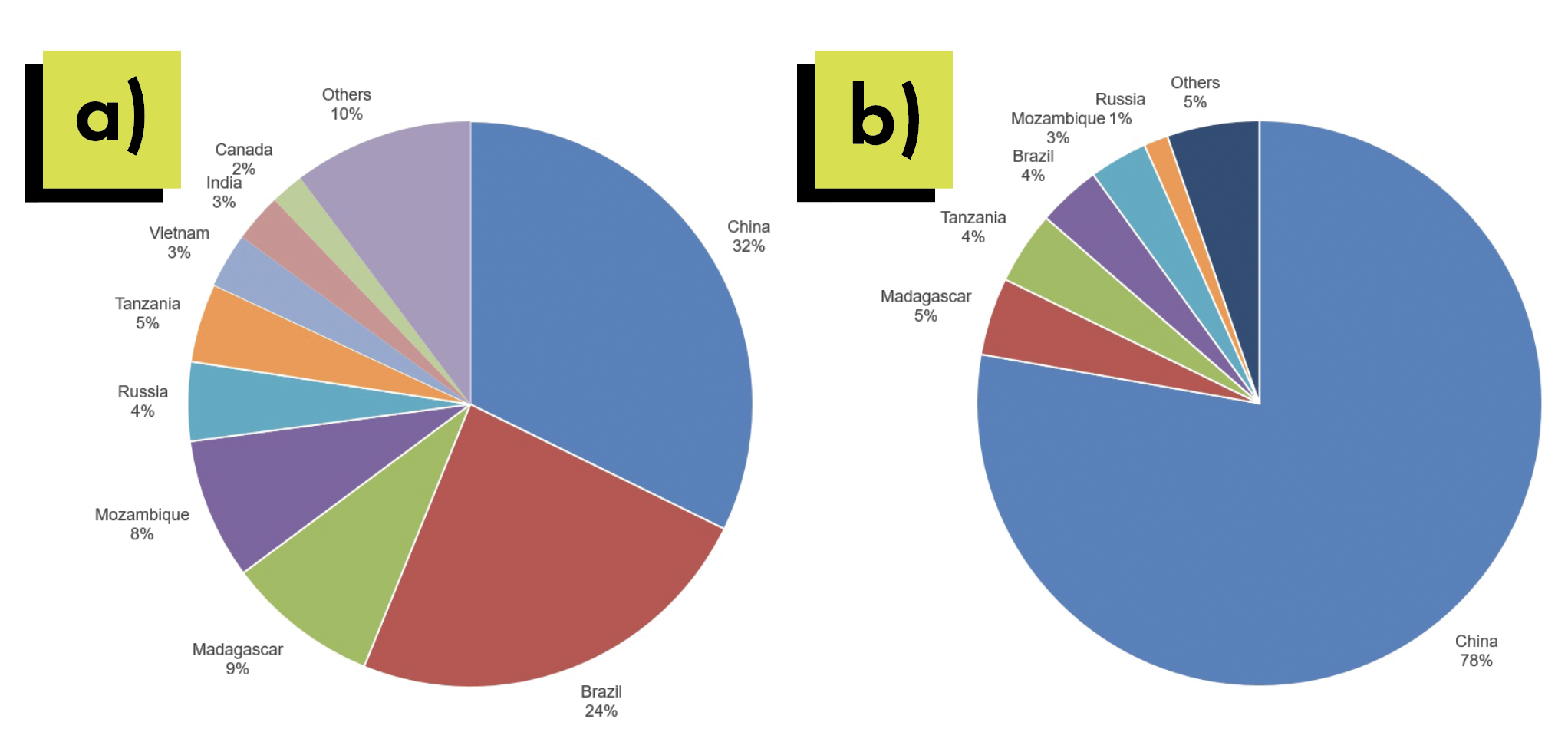
Figure 2. (a) Global natural graphite reserves and (b) production by country (2026). “Reserves” refers to economically extractable quantities identified with reasonable geological certainty; “production” refers to total mined output in the reference year. Chart data comes from Reference 6. Credit: IVS/ PVA TePla AG (charts); U.S. Geological Survey (data)
However, such concentration introduces serious supply chain vulnerabilities. China’s imposition of graphite export controls in late 2023, which required export licenses for high-purity and shaped graphite products, sent shockwaves through global battery supply chains and highlighted the risks of overreliance on a single dominant supplier.3 Rising geopolitical tensions have since prompted major economies to accelerate efforts to secure alternative sources.
Significant natural graphite reserves are also found in Brazil, Mozambique, Madagascar, and Canada. These countries are actively developing new mining and processing projects to diversify the global supply base. Policy frameworks such as the European Union’s Critical Raw Materials Act and incentives under the U.S. Inflation Reduction Act further catalyze investment in domestic and allied graphite projects. The success of these efforts will be critical to ensuring the resilience and sustainability of the graphite supply chain as demand continues accelerating in the clean energy era.3
Purification technologies
A full graphite purification workflow typically encompasses several stages: mining and primary crushing, beneficiation (flotation and classification to remove bulk gangue minerals), chemical or thermal purification to remove residual impurities, and final product finishing (milling, coating, and quality control). The selection and sequencing of purification steps depend on the impurity profile of the specific graphite feedstock and the purity requirements of the target application.
Wet chemical purification
Chemical purification of graphite is a widely used approach for powdered materials to achieve the high-purity levels required for advanced applications such as lithium-ion batteries and electronic devices. The process typically involves the use of strong acids or alkalis to leach impurity-bearing minerals that are physically or chemically bound to the graphite matrix (e.g., silicates, sulfides, various metal oxides).4
The most commonly used chemical reagents are hydrofluoric acid, hydrochloric acid, sulfuric acid, and nitric acid, as well as sodium hydroxide for alkaline leaching.7 Each reagent targets specific impurity types.
- Hydrofluoric acid is highly effective at dissolving silicate minerals such as quartz and feldspar, which are otherwise highly resistant to acid attack. It enables the removal of silica and aluminosilicate phases that are common in natural graphite concentrates and can be especially detrimental to battery performance.
- Hydrochloric and sulfuric acids are effective for dissolving many metallic impurities, such as iron, calcium, and magnesium compounds.
- Nitric acid can oxidize and remove specific organic and metallic contaminants.
In some cases, the high-temperature leaching process of alkaline fusion is employed, which uses sodium hydroxide or potassium hydroxide to convert silicates and sulfides into more soluble forms that can then be leached out in subsequent acid treatments. This multistep approach is often necessary to achieve ultrahigh purity (>99.9 wt.% carbon) demanded by the battery and semiconductor industries.
While chemical purification methods are effective, easily scalable, and can be tailored to address a wide range of impurity profiles, they also present significant environmental and operational challenges. The use of large volumes of strong acids and bases generates substantial quantities of hazardous liquid and solid waste, requiring robust treatment and disposal systems to prevent environmental contamination. In particular, hydrofluoric acid is highly toxic and corrosive, posing serious risks to workers and requiring specialized equipment and handling protocols. The management of spent reagents and the neutralization of acidic effluents are critical considerations for the sustainable operation of chemical purification plants.8
As environmental regulations tighten and sustainability becomes a greater concern, there is increasing interest in developing alternative purification methods or closed-loop chemical processes that minimize reagent consumption and waste generation.
Thermal purification
Thermal purification is a cornerstone technology for producing ultrahigh-purity graphite, especially for applications where even trace levels of metallic or nonmetallic impurities are unacceptable. In this process (Figure 3), graphite is subjected to extremely high temperatures (typically between 2,400°C and 3,000°C depending on the impurity profile and target purity) under vacuum or an inert (argon or nitrogen) atmosphere to prevent oxidation and preserve the graphite structure.8
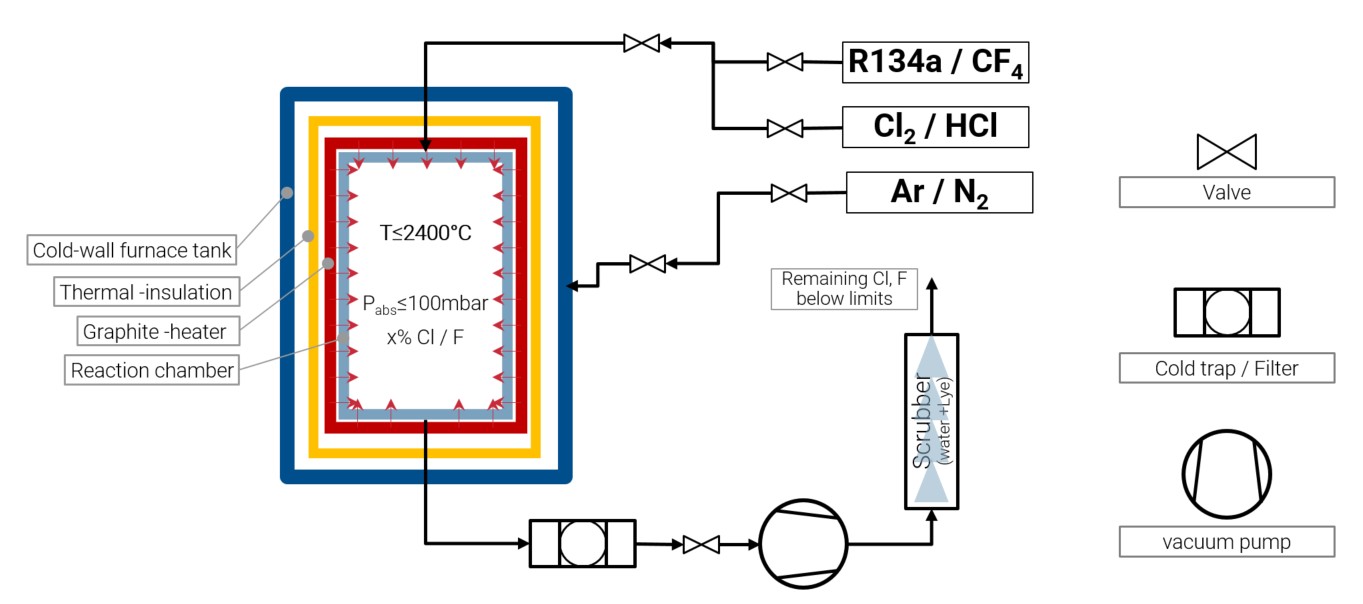
Figure 3. Schematic of a generalized graphite thermal purification reactor. Credit: IVS/ PVA TePla AG
At these elevated temperatures, several purification mechanisms come into play9:
- Volatilization of impurities: Many metallic and nonmetallic impurities (such as sulfur, lead, and alkali metals) have relatively low vapor pressures at high temperatures and can be directly vaporized and removed from the graphite matrix. Vacuum conditions enhance this effect by lowering the partial pressure of volatile species, facilitating their escape from the graphite surface.
- Halogen-assisted purification: For more refractory impurities that form stable carbides and oxides—and are therefore resistant to simple volatilization—halogen gases are introduced into the hot zone. Chlorine gas is particularly effective for removing metallic impurities such as iron, calcium, and aluminum, reacting with them to form volatile metal chlorides (e.g., FeCl3, AlCl3) that are swept out of the reaction zone. Fluorine-based compounds are preferentially used for silicon and silicate-type impurities, forming highly volatile silicon tetrafluoride that is readily removed. These volatile halide compounds are captured in downstream cold traps or neutralized in wet scrubbers, ensuring environmental compliance.
Thermal purification is highly effective at achieving carbon purities exceeding 99.999 wt.%, making it the method of choice for battery anodes, nuclear graphite, and semiconductor applications. The process is also scalable for industrial use, with large batch furnaces capable of treating hundreds of kilograms to several tons per cycle.
However, the method is energy intensive due to the extreme temperatures required, and furnace design must account for thermal stresses, efficient heat transfer, and robust insulation. The use of halogen gases also necessitates stringent safety and environmental controls, although it should be noted that the quantities of hazardous byproducts generated are substantially smaller than those produced by wet chemical purification routes.
Recent advances in reactor design have focused on improving throughput, energy efficiency, and process control. Notably, the development of fluidized bed reactors has enabled more uniform heating and rapid impurity removal. In a fluidized bed reactor, graphite particles are suspended in a stream of inert or reactive gas, enabling excellent heat and mass transfer while allowing continuous feeding and product removal. These innovations are helping to reduce the operational costs and environmental footprint of thermal purification, making it more attractive for large-scale, high-purity graphite production.8
Purification solutions at IVS
Building on the established principles of thermal and halogen-assisted purification described above, PVA Industrial Vacuum Systems GmbH (IVS)—a subsidiary of PVA TePla AG (Wettenberg, Germany)—has developed industrial-scale furnace systems that integrate both approaches into a highly engineered, automated platform. IVS offers advanced graphite purification solutions based on high-temperature vacuum and partial-pressure furnaces (Figure 4), engineered for a wide range of applications including graphite solids, graphite powders, and carbon fiber composite treatments.
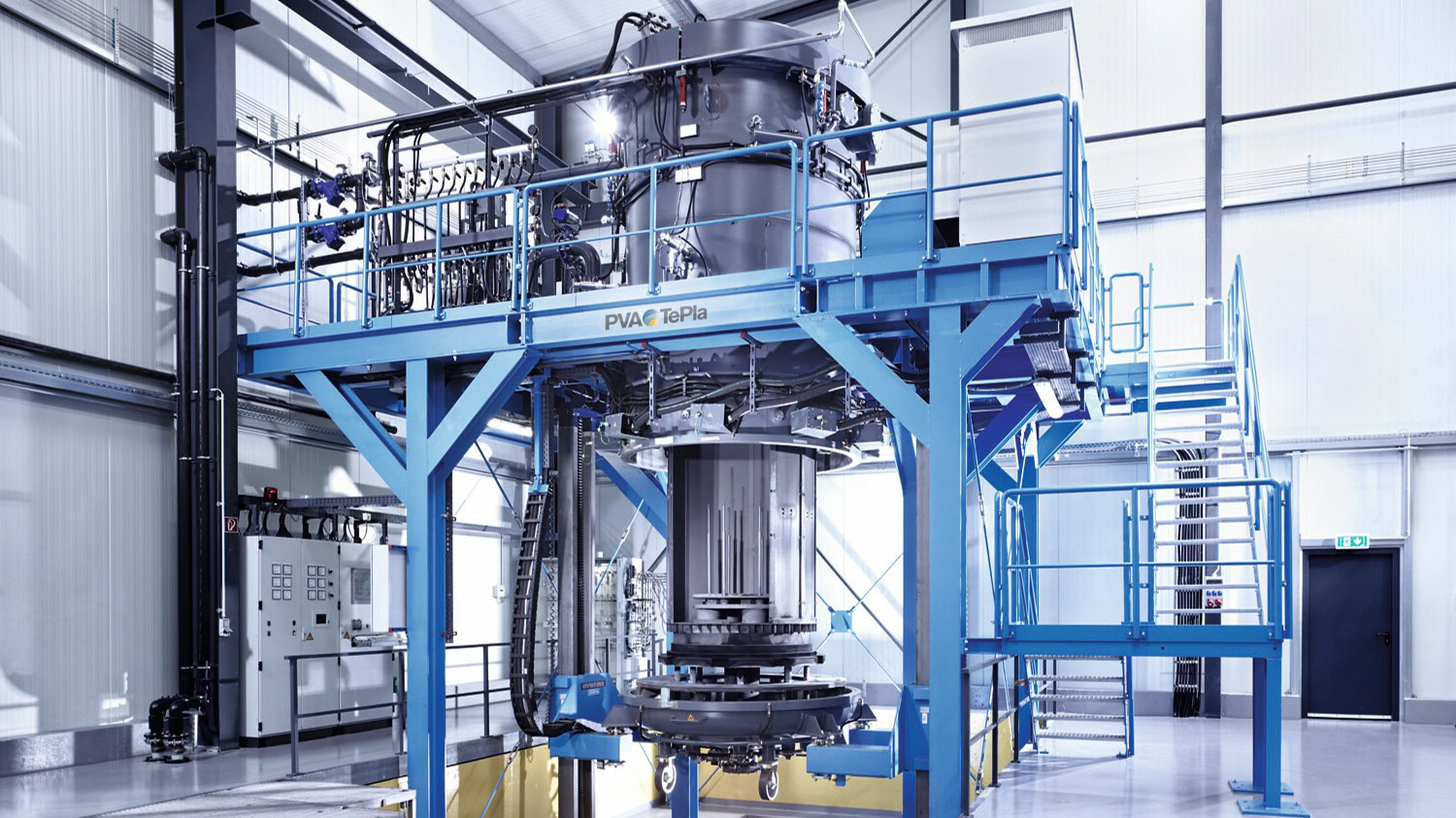
Figure 4. Example of an IVS bottom loader graphite purification solution. The flexibility of the furnace platform allows IVS to support both established and next-generation markets, and the modular design enables systems to be scaled and configured to match specific production volumes and feedstock characteristics. Credit: IVS / PVA TePla AG
The purification process is designed to address both volatile and nonvolatile impurities in a controlled, sequential manner. Sulfur and other volatile species are removed under high vacuum at elevated temperatures. For more refractory metallic impurities that form stable carbides, which cannot be removed via thermal processes alone, IVS systems introduce chlorine and fluorine gases at precisely controlled flow rates and temperatures to form volatile halide compounds, which are then purged from the hot zone. Chlorine is used preferentially for metallic contaminants such as iron and calcium, while fluorine is employed for silicon and silicate-type impurities, reflecting the distinct chemistry of each reagent class. The exhaust gas is routed through cold traps and filters, and any remaining halogens are neutralized in a wet scrubber to ensure environmental compliance.
Safety and environmental controls are integral to the IVS design philosophy. Wet scrubbers for exhaust gas treatment, robust pressure vessel engineering, and controlled process cooling water supply ensure safe operation even at high temperatures and with reactive gases. The systems are adaptable to site-specific requirements and can be equipped with a range of safety and process integration accessories.
IVS furnaces feature fully automated process sequences, including vessel evacuation, vacuum or partial-pressure heating, controlled gas flow, and programmable cooling cycles. The systems support both manual and automatic loading tools, as well as safe gas bottle storage and changeover, thus reducing operator intervention and improving process reproducibility.
All together, these design features enable consistent delivery of carbon purities exceeding 99.999 wt.% at industrial throughput, supporting customer qualification requirements for battery anode material, silicon carbide crystal growth, advanced ceramics, and emerging applications such as carbon nanotubes and graphene.
The future of graphite purification
Graphite purification stands as a technically demanding, multistage process that is fundamental to the performance and reliability of advanced batteries, ceramics, and electronic devices. The stringent purity requirements—often exceeding 99.999 wt.% carbon content—are driven by the sensitivity of these applications to trace impurities, which can degrade electrochemical behavior, thermal conductivity, and mechanical stability. Achieving such high purity involves a sequence of beneficiation, chemical leaching, thermal treatment, and product finishing steps, each tailored to the specific impurity profile and end-use requirements of the graphite feedstock.
Recent advances in chemical and thermal purification technologies have significantly improved the efficiency and effectiveness of impurity removal. Chemical purification remains highly effective for dissolving a wide range of contaminants, including metallic species and silicates. Thermal and halogen-assisted processes are better suited for volatilizing more refractory metals and silicate phases, and ongoing reactor design improvements (including fluidized bed configurations) are enhancing throughput and energy efficiency.
Despite this progress, the graphite industry continues to face substantial challenges. Environmental concerns stemming from the use of hazardous reagents, energy-intensive operations, and waste generation are increasingly coming under regulatory scrutiny worldwide. The global supply chain remains highly concentrated, exposing downstream industries to geopolitical and logistical risks that have already materialized in the form of export controls and trade restrictions.
Looking ahead, several emerging developments are poised to shape the future of graphite purification.
- Electrochemical purification is an area of active research, offering the potential to selectively dissolve metallic impurities at lower temperatures and without the use of bulk acid volumes, potentially offering a more energy-efficient and environmentally benign alternative for certain impurity profiles.
- Battery graphite recycling is moving from pilot to commercial scale, with recovered anode graphite requiring reconditioning and purification before reuse. Developing efficient and cost-effective purification routes for recycled graphite will be essential to closing the loop on battery material supply chains.
- AI-driven process control and digital twins are increasingly being applied to complex high-temperature processes, enabling real-time optimization of temperature profiles, gas flow rates, and cycle times to maximize purity and throughput while minimizing energy consumption and reagent use.
- Regulatory and policy frameworks, including the EU Critical Raw Materials Act and incentives under the U.S. Inflation Reduction Act, will continue to shape investment in domestic purification capacity, encouraging the buildout of supply chains outside of China and raising the bar for environmental compliance.
The future of graphite purification will depend on integrating advanced process control, robust environmental safeguards, and industrial scalability. Companies such as IVS are at the forefront of this evolution, offering state-of-the-art furnace systems that combine automated process management, closed-loop gas handling, and modular design to deliver consistent, ultrahigh-purity graphite at an industrial scale. Such innovations not only address the technical and regulatory challenges of modern graphite production but also support the resilience and sustainability of the global supply chain.
About the Company

Founding and future goals
Established in 1991, Wettenberg, Germany-based PVA TePla AG is a global provider of advanced materials processing and metrology technologies. Its portfolio includes high-temperature vacuum and partial-pressure furnaces for applications such as graphite purification, diffusion bonding, brazing, and sintering, as well as crystal growing systems, plasma treatment technologies, and precision metrology solutions.
PVA TePla AG continues to broaden its technological capabilities through strategic acquisitions and ongoing development within its Technology Hub, which focuses on next-generation materials processing and advanced inspection technologies.

Related Articles

Market Insights
Next-gen superconducting ceramics could change how we travel and much more
Forty years ago, two physicists from IBM’s research laboratory in Zürich, Switzerland, reported a groundbreaking discovery: Superconductivity, or the quantum mechanical phenomenon in which certain materials exhibit zero electrical resistance when cooled, could be achieved at higher temperatures using ceramics. Superconductivity had been discovered decades before, but its applications had…

Market Insights
Why most AI manufacturing projects fail and how to fix it
Artificial intelligence is reshaping advanced manufacturing, especially processes involving ceramics, glasses, and other hard or brittle materials. But adopting AI is far more difficult than simply buying software and connecting machines. Manufacturers must understand the advantages and limitations of different models, so they can determine where AI fits best within…

Bulletin Features
Radiation effects on rare earth chemistry in molten salts for nuclear applications
Across the nuclear energy sector, molten salts are shaping the next generation of nuclear technologies, from advanced power reactors to used nuclear fuel recycling. In molten salt reactors (MSRs), molten salts uniquely serve as both the primary coolant and fuel medium, a dual role that sets MSRs apart from conventional…