
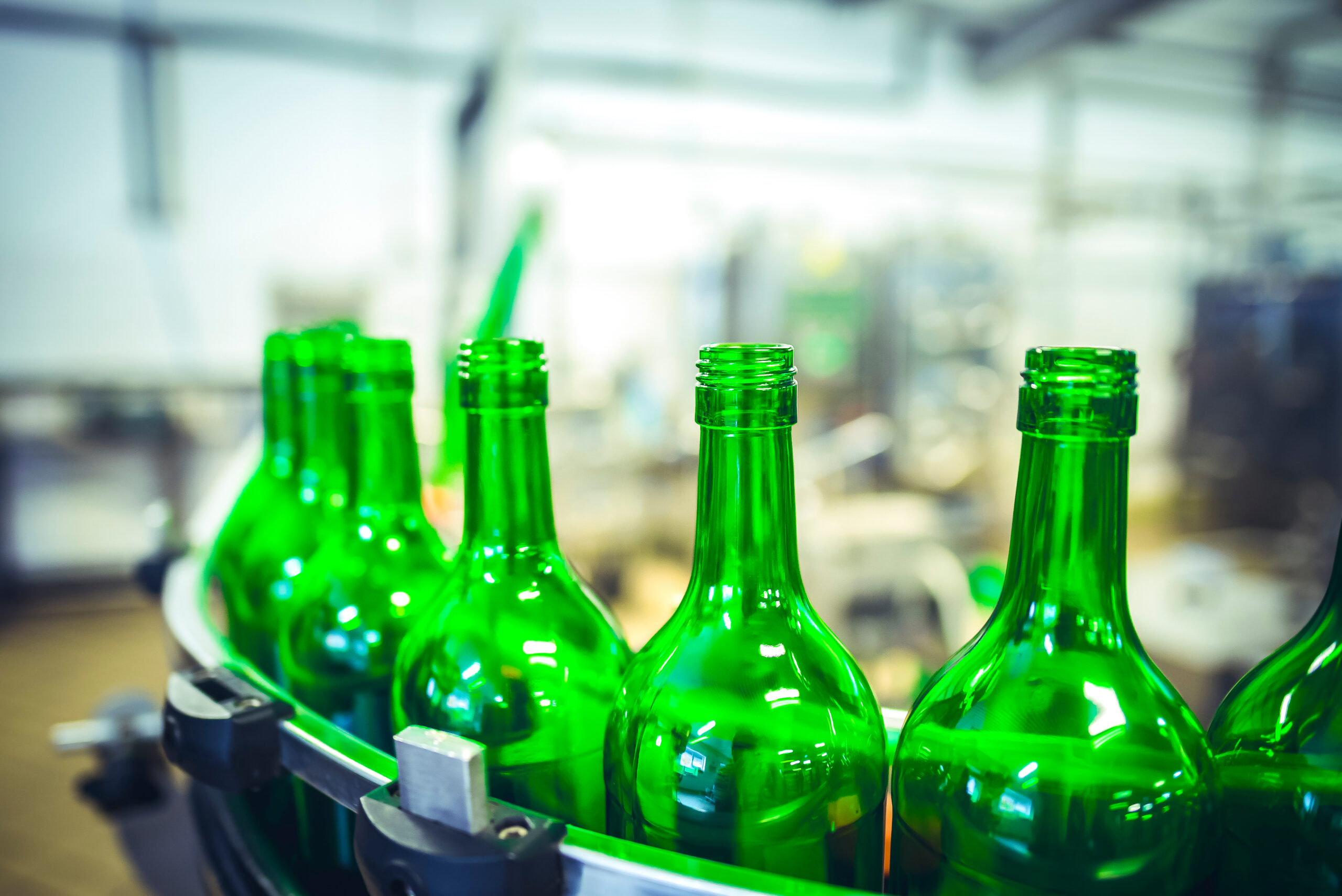
Glass is a core material in modern society, but there are various aspects of its production and usage that remain less than ideal.
Global glass manufacturing produces at least 86 million metric tons of carbon dioxide annually.1 Two aspects of the production process account for most of these emissions. One, soda–lime–silica glass accounts for roughly 90% of all manufactured glass products, and this composition relies on carbonate raw materials that release carbon dioxide when processed. Two, traditional glass processing methods require high temperatures to melt the raw materials, and these high temperatures are mainly achieved through the burning of fossil fuels, which generate even more carbon emissions.
Using cullet (waste glass) as a raw material can significantly improve the environmental friendliness of glass production. The Glass Packaging Institute reports that for every 10 wt.% increase in cullet usage, furnace energy consumption decreases by about 2–3% and greenhouse gas emissions decrease by about 4–10%.2 Unfortunately, the logistics of using cullet as a raw material—from establishing robust transport networks to implementing effective sorting and cleaning processes—limit the economic feasibility of this solution.
Despite these challenges, glass scientists and manufacturers have embraced green manufacturing practices in recent years. Green manufacturing refers to production methods that minimize environmental impact, conserve resources, and reduce waste from industrial processes. Despite short-term complications, implementing green manufacturing practices can result in lower long-term operational costs as well as meet rising consumer demand for eco-friendly products.
Glass scientists and manufacturers are approaching green manufacturing from several angles. While some approaches are closer than others to commercial viability, all contribute to the long-term goal of ensuring glass continues to be a vital, environmentally friendly material in the future.
Raw material innovation: Cut emissions at the source
The raw materials conventionally used for soda–lime–silica glass production account for roughly 15–25% of process-related carbon emissions. Using different raw materials or developing entirely new compositions can help cut emissions from this source.
Using cullet as a raw material can be a straightforward solution because its composition is familiar to manufacturers and it takes less energy to melt than conventional first-use raw materials. However, the logistics of collecting and cleaning cullet for reuse is complicated, as explained in the cover story of the September 2024 ACerS Bulletin.3 Fortunately, organizations such as the Northwest Ohio Innovation Consortium are working to overcome these challenges in the glass recycling ecosystem, as explained in this issue’s “Industry Insights” column.
Using alternative sources for the various components of soda–lime–silica glass is another option to reduce carbon emissions. For example, the “Deciphering the Discipline” column in this issue explores using wollastonite as a source of calcium oxide rather than calcium carbonate because it does not release carbon dioxide during the decomposition process.
Developing entirely new, noncarbonate glass compositions that can match or surpass the performance of soda–lime–silica glass is an idealistic approach to cutting carbon emissions due to the raw materials. Yet researchers at The Pennsylvania State University have made great strides in this area with LionGlassTM, a family of aluminosilicophosphate glasses that do not contain any carbonate constituents and melt at a lower temperature than conventional soda–lime–silica glass.
LionGlass has been in development for several years, and the “Deciphering the Discipline” columns in the past three May issues of the ACerS Bulletin track the history of this development (Figure 1).4–6 The researchers have now developed this glass family to the point that they are working with major glass companies Verallia (France),7 Bormioli Luigi (Italy),8 and Vitro Architectural Glass (U.S.)9 to create commercial products out of LionGlass spanning food and beverage packaging, cosmetic packaging, and flat glass applications, respectively.
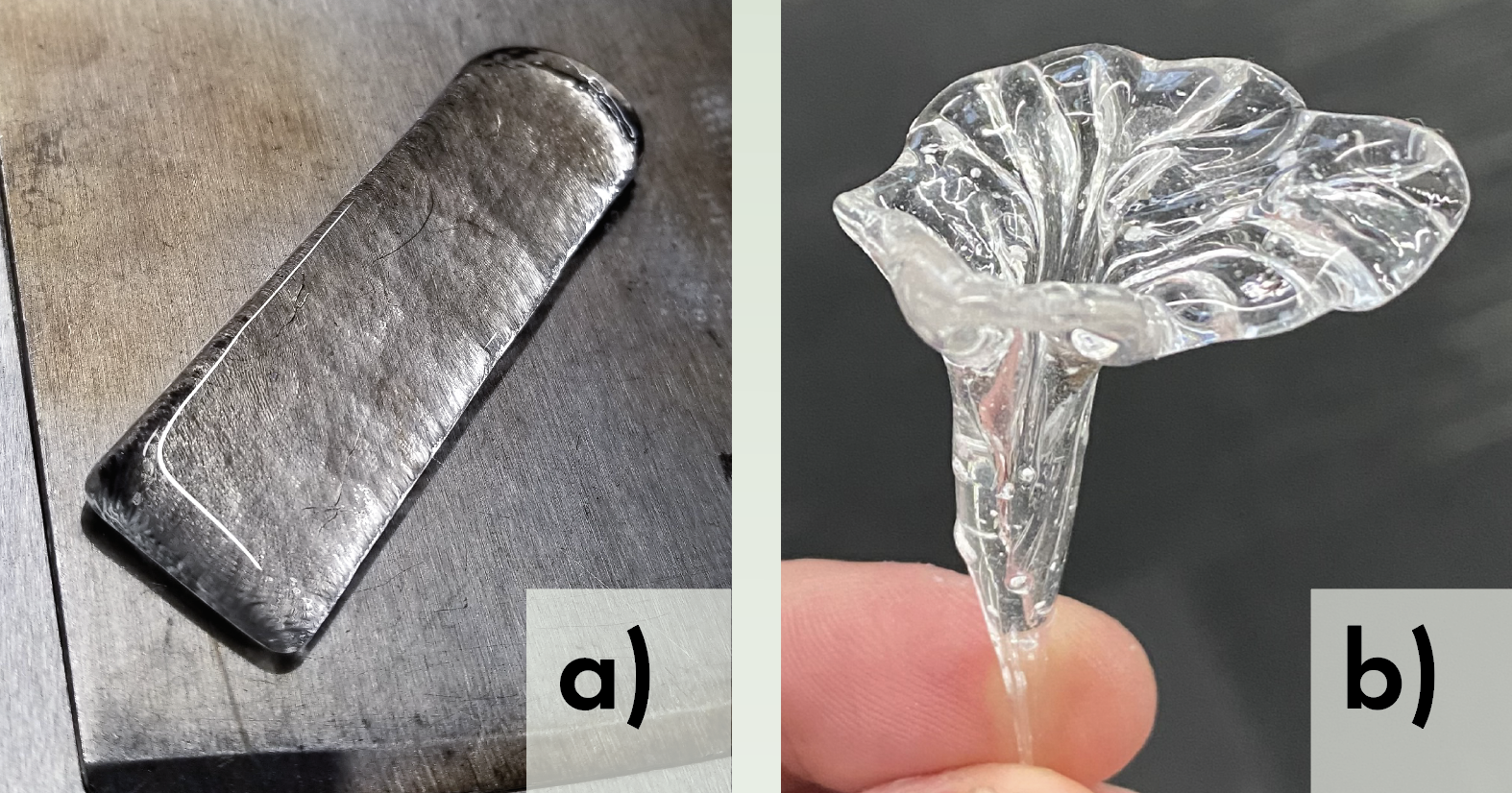
Figure 1. a) Bar of LionGlass made at The Pennsylvania State University for mechanical testing and b) handblown flower created from LionGlass. Credit: a) Shaylee Traugh; b) Nicholas Clark
Developing these solutions to the raw materials challenge can be a slow process due to the nearly infinite range of possible glass compositions. But in recent years, artificial intelligence (AI) and machine learning (ML) systems have enabled a new paradigm for materials design, one based on rapid data-driven discovery rather than lengthy trial-and-error experimentation. Past ACerS Bulletin Editor Eileen De Guire discussed the progress in computer-aided glass design with ACerS members John C. Mauro and Mathieu Bauchy in the May 2022 ACerS Bulletin.10
Furnace strategies: Reduce energy-related emissions
The combustion of fossil fuels to heat glass furnaces accounts for roughly 75–85% of process-related carbon emissions. Using alternative fuels or energy sources to power the high-temperature process can help cut emissions from this source.
Oxy-fuel glass furnaces are one of the most established alternatives to traditional glass furnaces. Conventionally, gas and air are injected into a furnace and ignited to produce a high-temperature flame. The oxygen within the air serves as the oxidizing agent during combustion, but the nitrogen component lowers combustion efficiency by absorbing heat (as well as forms toxic nitrogen oxides).
In oxy-fuel furnaces, pure oxygen is used as the oxidant rather than air. As a result, the furnace avoids heating atmospheric nitrogen, which results in higher temperatures, higher thermal efficiency, lower exhaust gas volumes, and lower fuel consumption. Oxy-fuel glass furnaces started gaining traction in the early 1990s, and more than 300 commercial glass furnaces worldwide have since converted to oxy-fuel.11
Although oxy-fuel furnaces lower emissions, they still largely rely on the combustion of natural gas derived from fossil deposits. There are several feasible substitutions for natural gas that are low in fossil carbon or are derived from sources with no net increase in atmospheric CO2. For example,
- Biofuels are produced from organic materials such as plants, agricultural waste, and algae. They are considered carbon neutral because the CO2 emitted to the atmosphere during combustion is the same as was taken in by the source material through photosynthesis.
- Synthesis gas, or syngas, is a combustible mixture of hydrogen and carbon monoxide generated by heating a solid fuel in a low-oxygen environment. It provides a way to convert municipal solid waste, plastics, and organic waste into valuable energy, reducing the environmental impact of landfills.
- Hydrogen is a highly combustible gas that emits no CO2 when burned. Currently, most hydrogen is produced from natural gas through steam methane reformation (“grey” hydrogen), which perpetuates the reliance on fossil fuels. But it can also be produced through water electrolysis (“green” hydrogen), which is a much more environmentally friendly, albeit expensive, option.
Among these alternatives, green hydrogen is considered the superior long-term, scalable alternative, and many glass manufacturers are conducting trials on its potential. Ceramic Tech Today first reported on some small-scale pilot projects in 2023,12 and as of 2025, the European Union-funded H2GLASS project is conducting full-scale trials at various sites across Europe.13
In contrast to physical fuels, glass manufacturers are also exploring electric heating, which offers higher energy efficiency and removes combustion-related emissions compared to traditional glass furnaces. In 2024, the Glass Manufacturing Industry Council was awarded a three-year, $3-million U.S. Department of Energy grant to advance electric melting technology, and it is working with partners at CelSian Glass USA, TECO, RoMan Manufacturing, and Pacific Northwest National Laboratory on the project.14
Additional information on these various novel furnace strategies can be found in the May 2023 ACerS Bulletin cover story “Deep decarbonization of glassmaking.”15
Data-optimized manufacturing: Address wasteful processing steps
From material preparation to firing parameters to maintenance schedules, there are dozens of distinct, highly controlled steps within each stage of the glass manufacturing process. Each of these steps feature numerous interrelated variables, and ideally all must be accounted for to reduce waste and improve production efficiency.
The advancement of AI and ML technologies in recent years has not only supported the design of new glasses, as noted earlier, but it has also aided in optimizing each stage of glass production. The “Journal Highlights” column in the September 2025 ACerS Bulletin demonstrated several ways in which researchers have harnessed data-driven modeling for this purpose.16 An April 2025 ACerS Bulletin feature story by CelSian Glass researchers provided a detailed case study of leveraging computational fluid dynamics to optimize bubbling and fining (Figure 2).17
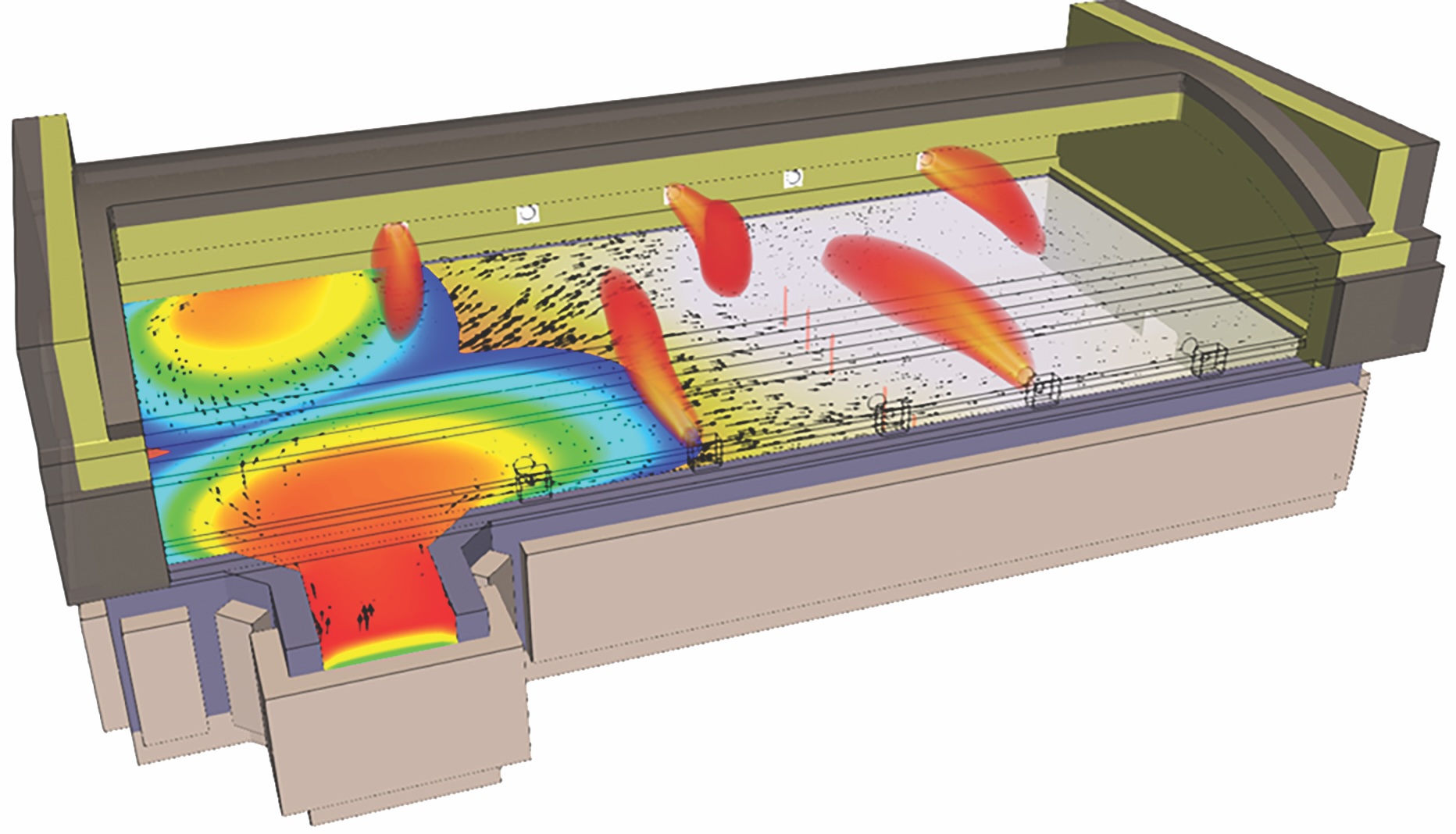
Figure 2. Oxy-fuel combustion furnace modeled in GTM-X, CelSian’s advanced computational fluid dynamics software. Raw materials enter through the chargers on the left, flow under the burners, and exit on the right. Credit: CelSian
The Federal Institute for Materials Research and Testing (BAM) in Berlin, Germany, is playing a crucial role in the development of data-optimized manufacturing solutions for glass production. BAM has a one-of-a-kind robotic facility for melting oxide glasses, which was designed and constructed by researchers at Fraunhofer Institute for Silicate Research.
In 2021, BAM launched a collaborative academic–industry research project called GlasDigital to implement an automated infrastructure for the facility.18 The project also involved developing and implementing a glass ontology and ML tools to facilitate property-driven compositional optimization of glasses, as described in detail in a 2025 open-access paper.19
BAM launched a follow-up project called GlasAgent in 2025.20 The goal of this project is to expand the glass ontology developed during the original GlasDigital project and use it to develop a software program that will control the integration of all the various glass manufacturing stages. Test melts will be carried out to determine the effectiveness of the software-controlled workflow.
Over in the United States, the Northwest Ohio Innovation Consortium established the Northwest Ohio Glass Innovation Hub in 2024 to accelerate innovation and job growth in both the glass sector and solar industry.21 In December 2025, partners in the Hub announced a new three-year, academic–industry research project that aims to integrate AI and ML into the glass-melting process by developing a multiobjective optimization tool that balances energy efficiency, nitrous oxide emissions, control input constraints, and boundary-condition robustness.22
Sustainability standards: Establish a framework for responsible glass production
As the various approaches to green glass manufacturing mature, the next step will be to develop industry standards, which help ensure that companies around the world can successfully understand and adopt green manufacturing methods.
Currently, few sustainability standards exist for the glass industry, and the ones that do tend to vary greatly by region. The establishment of a new multistakeholder organization called ResponsibleGlass in December 2025 marks an attempt to take global standardization from theory to practice, and this issue’s resource roundup explores how this initiative may spark increased interest in strengthening sustainability performance.
The future of glass manufacturing
As countries around the world strive to accomplish their climate goals, carbon-intensive industries have a role to play as well in limiting their emissions. By investing in green manufacturing practices, the glass industry is doing its part to achieve these objectives, and it sets the stage for glass to remain a relevant and transformative material choice for years to come.
The growing carbon footprint of construction materials
The construction industry has a significant carbon footprint, accounting for 33% of global greenhouse gas emissions in 2022 (Figure 1a,b). Previously, the emissions from nonmaterial sources, such as transport and on-site activities, were roughly comparable with emissions from materials-related sources. However, over the past 30 years, emissions from materials-related sources grew rapidly, and they have now surpassed the emissions from nonmaterial sources (Figure 1c).
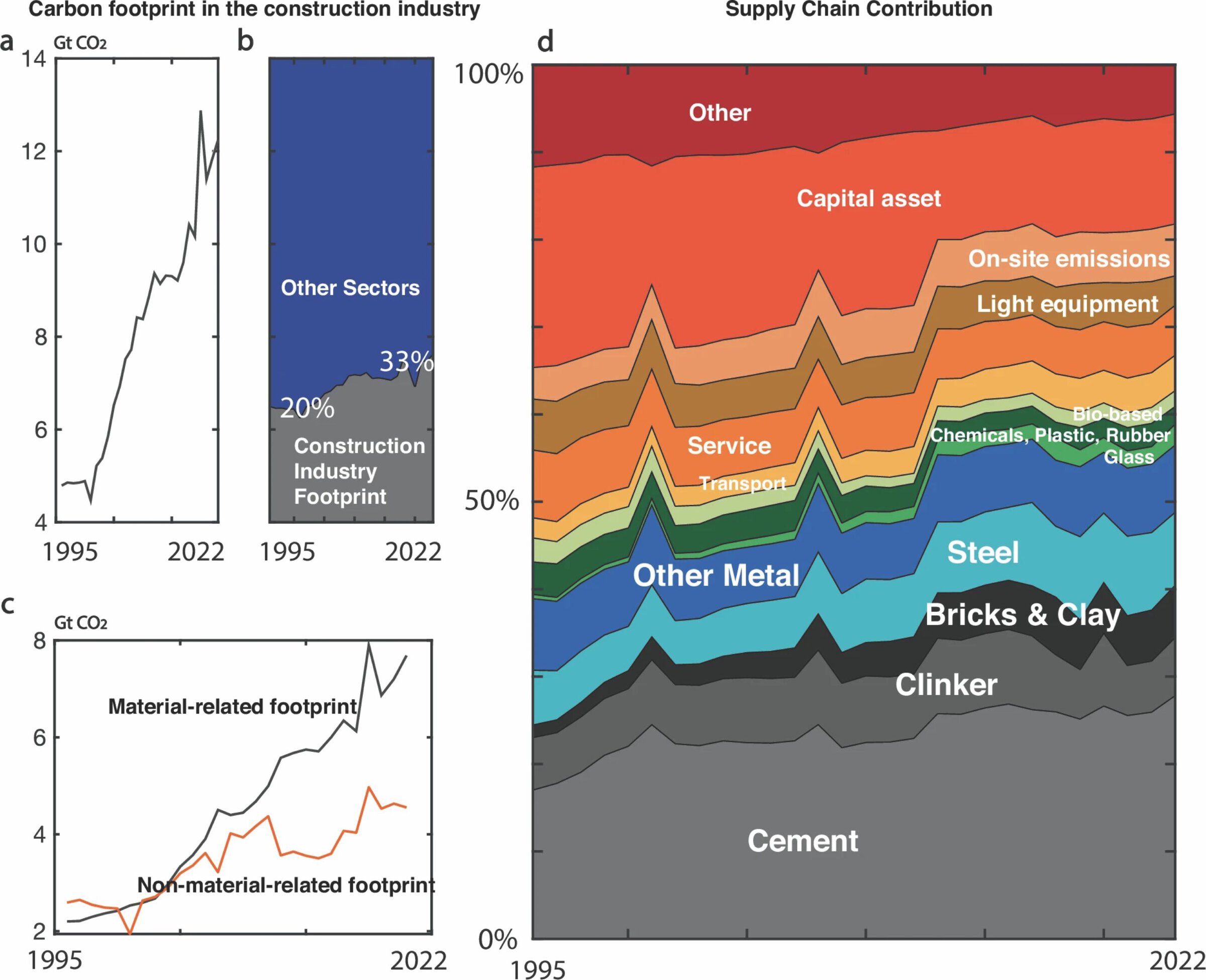
Figure 1. a) Total carbon footprint growth from the construction industry from 1995 to 2022. b) Share of the construction industry’s carbon footprint in total global carbon emissions. c) Materials- and nonmaterial-related footprints in the construction industry. d) Evolution of different factors contributing to the construction industry’s carbon footprint from 1995 to 2022. Carbon emissions from glass, chemicals, plastic, rubber, and bio-based materials comprise approximately 6% of the industry’s total carbon footprint. Credit: Li et al., Communications Earth & Environment (CC BY 4.0)
The rapid growth of materials-related emissions indicates that the industry has grown more dependent on materials over the years, particularly cement and steel (Figure 1d). Reducing emissions in this sector will thus require a paradigm shift in how materials are produced and used in this industry, and stakeholders all along the industry’s value chain will have a role to play in this shift.
NOTE: All information and figures in this sidebar come from Li et al.’s paper “Carbon footprint of the construction sector is projected to double by 2050 globally” (Communications Earth & Environment 2025, 6: 831).

Related Articles

Market Insights
Digging into the development of uniform global mining standards
Mining standards and regulations have historically varied by region, nation, or locale, making for a patchwork of guidelines and laws for environmental protection, water and emissions management, proper waste disposal, worker rights, and engagement with Indigenous communities. Multinational mining companies, manufacturers, downstream customers, and socially conscious investors have for years…

Market Insights
Rethinking Arctic research: CIFAR report proposes pathways for the Arctic’s future
Although organized, multinational scientific research in the Arctic has taken place since the late 19th century,1 the past two decades have seen a surge in activity alongside the rapid ecosystem changes (Figure 1).2 Yet these scientific studies are increasingly mired in geopolitical tensions and economic interests,3 which means that scientists…

Market Insights
Global markets for lithium and green mining
The electrification and digitization of modern life drive increased demand for certain minerals, but they also drive the need for more environmentally conscious mining practices. Two recent BCC Research reports investigate the global markets for lithium mining and green mining, respectively. This Bulletin content is for ACerS members and registered…