
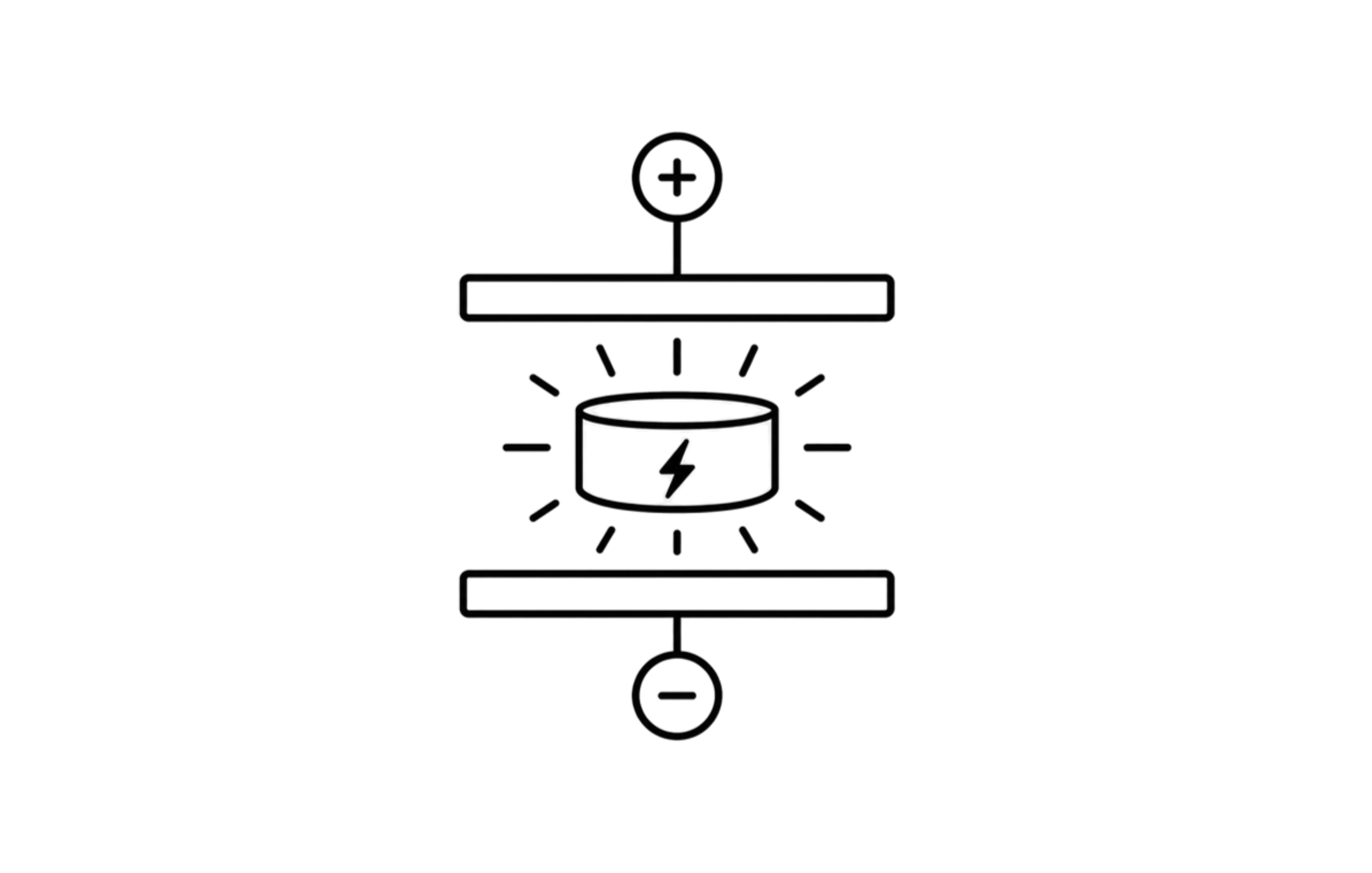
Leveraging electric fields for enhanced properties: A case study on TiO2
How do we control the properties of a material? It is one of the oldest questions in materials engineering, and titanium dioxide (TiO2) is one of the best systems in which to watch the answer unfold.
This simple compound serves in a multitude of applications, including as a white pigment, a sunscreen, a photocatalyst that breaks down pollutants, and as an electrode in various types of metal-ion batteries. The key factor that changes from one role to the next is not necessarily the TiO2’s composition but rather its electronic structure, which depends on how the material is synthesized and processed. Learning to tune the structure on demand, rather than accepting what the equilibrium process provides, enables this cheap and abundant oxide to exhibit a wide range of properties, which are well suited for each of its many applications.