
New paradigm prophecy
Researchers investigating advanced sintering techniques have made giant strides in recent years. In particular, the introduction of spark plasma and microwave-assisted sintering has already shown that there can be significant time and cost-saving benefits compared with traditional sintering approaches. SPS and microwave sintering are examples of what has been termed FAST, or field-assisted sintering.
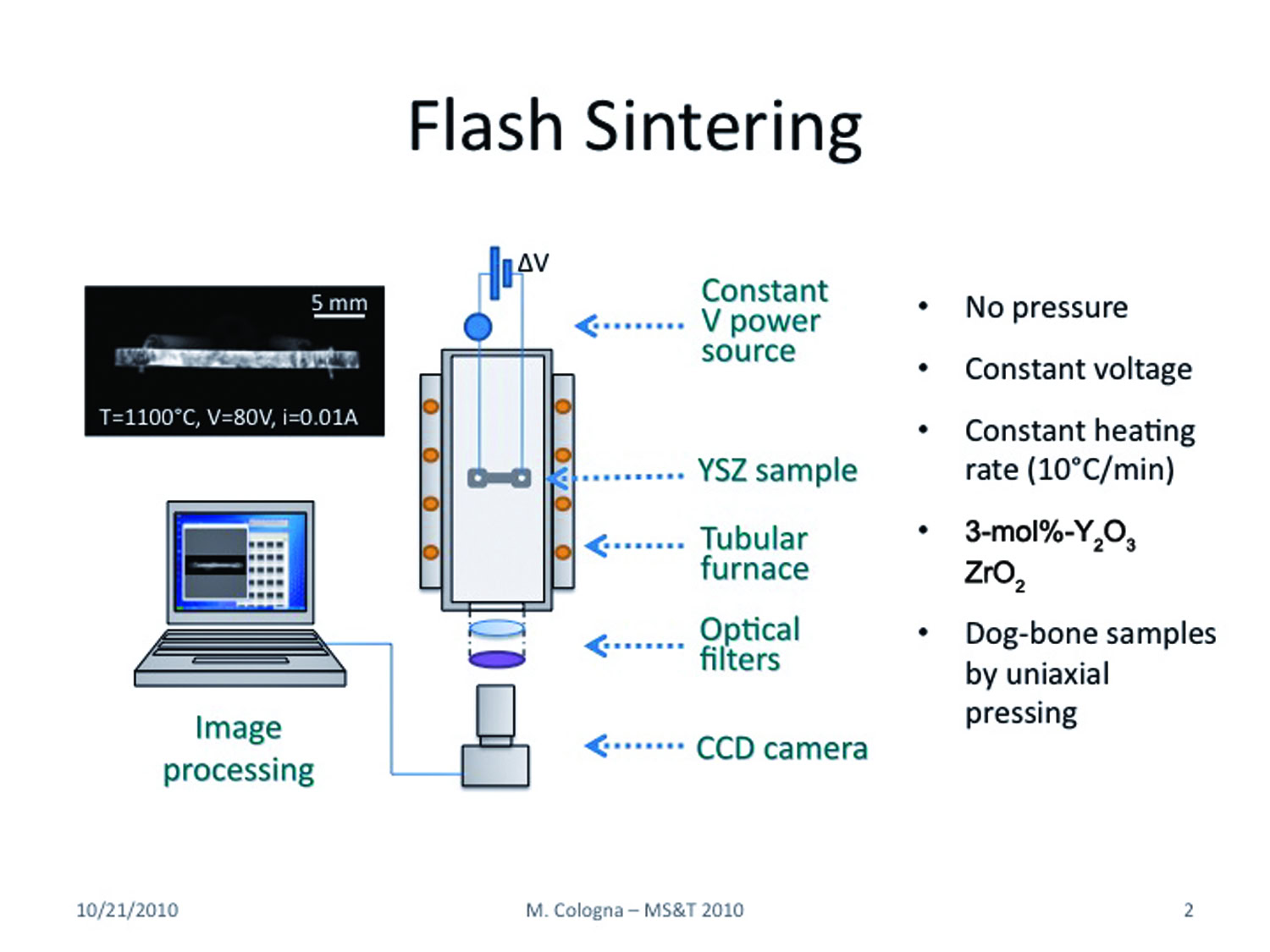
While revolutionary in its own way, FAST sintering research may have been only the leading edge of an even greater wave of knowledge and changes to sintering and ceramic manufacturing. Building on insights from FAST and intuition—and aided in at least one case by some well-timed luck—researchers led by Hans Conrad at North Carolina State University and Rishi Raj at Colorado State University began to explore whether forming, grain size, sintering and other stress-related phenomena could be affected by relatively simple ac and dc electrical fields. While the two have worked together since the mid-1990s, Conrad generally has focused on how electrical fields can dramatically affect plasticity and grain size, and Raj, a ceramist, has focused on sintering.