
Although many people associate diamonds with expensive gemstones, the vast majority of diamonds serve as industrial materials instead.
Diamond is the hardest natural material available in abundance. It also has the highest thermal conductivity of any known bulk material, and it provides broad transparency from deep ultraviolet to infrared. These properties have led humans to use diamonds as tools for more than four millennia,1 particularly in applications involving abrasive machining.
Most modern industrial diamonds are grown in the lab, as synthetic manufacturing offers reliable performance and consistent supply to meet the enormous market demand. Market reports cite volumes of about 15 billion carats for manufactured industrial diamond powder in 2025 and 2026, and projected compound annual growth rates ranging from 6.4–8.2% to 2033.2,3 Learn more about the global industrial diamond market in the sidebar “Global markets for industrial diamonds.”
To create synthetic diamonds, high-pressure, high-temperature (HPHT) processes are typically used, although chemical vapor deposition (CVD) processes are increasingly used as well. While diamond materials synthesized through these methods offer exceptional material properties—and their costs have reduced considerably since their introduction—they remain prohibitively expensive or unable to meet challenging demands for larger and complex parts in thermal management and wear applications.
In recent years, our team and other groups have developed a new class of synthetic diamond materials called silicon carbide-bonded diamond composites that can be produced using cost-effective, established ceramic manufacturing techniques with virtually no geometric restrictions.4–7 This development was accelerated by the falling prices of diamond grit and the increasing demand for components with both high wear resistance and high thermal conductivity for a variety of applications. The fundamentals of this innovative diamond–SiC production method and the unique properties of these materials are described in the following sections.
Current synthetic diamond production practices
Besides grinding wheels and loose diamond abrasive grains, which will not be discussed here, bulk polycrystalline diamond (PCD) materials and CVD diamond coatings are the main types of industrial diamond materials.
PCD materials are commonly used for compact cutting inserts, which were originally developed by General Electric in the early 1970s to support drilling technologies in the oil and gas industry.8 These materials are now also used for rock drilling and machining of stone, wood, fiber composites, and nonferrous metals alike.
PCD materials are produced through HPHT processes (4–6 GPa, 1,300–1,600°C), which limits the materials’ possible lateral dimensions. They often are sintered directly onto tungsten carbide substrates, which contain cobalt binders that catalytically sinter diamond grains in a more industrially tractable pressure and temperature regime of the carbon phase diagram.
Modifying the composition and diamond grain size of PCD materials can result in a wide variation in properties. In particular, different toughness levels can be achieved with only a moderate reduction in hardness. For example, cobalt binders increase toughness, but they lead to degradation of the cutting edge during high-temperature applications due to reverse catalytic reactions with the diamond phase. On the other hand, chemical leaching of the catalytic cobalt can enhance thermal stability during the cutting processes.9,10 Achieving binder-free bulk PCD materials is possible, but it requires high pressures and temperatures (16 GPa and 2,300°C in one study11).
CVD diamond coatings have been developed in recent years for wear-resistant applications, such as coated cutting tools and mechanical seals.12 Thicker detached coatings are used as windows for sensors and lasers, beam splitters for space applications, and other thermal management devices. Also, broken CVD layers are increasingly being used to produce synthetic gem-quality and industrial diamonds.
Both planar components and curved surfaces, such as high-precision spheres, can be produced using this method.13 However, deposition rates range from less than 1 µm/h to about 100 µm/h depending on the specific CVD method used. That means CVD technology can only be used to effectively produce components with limited thickness. Once the thickness reaches about 2 mm, residual stresses can cause microcracks, which can lead to a deterioration in the material’s properties.
Manufacturing of diamond–SiC composites
The pressureless reactive infiltration process used to create the novel diamond–SiC composites is analogous to the established manufacturing method for producing reaction-bonded SiC materials (RB-SiC) (Figure 1). First, porous diamond preforms are produced from diamond powder and an organic binder. Virtually all ceramic forming methods can be used to produce these preforms, including pressing, casting, extrusion, injection molding, and even additive manufacturing methods (such as fused filament forming and lithography). To achieve a high diamond and low free silicon content, it is necessary to achieve a high packing density of the diamonds in the preform. Therefore, powder-bed-based methods such as ink jetting are less suitable for such materials.
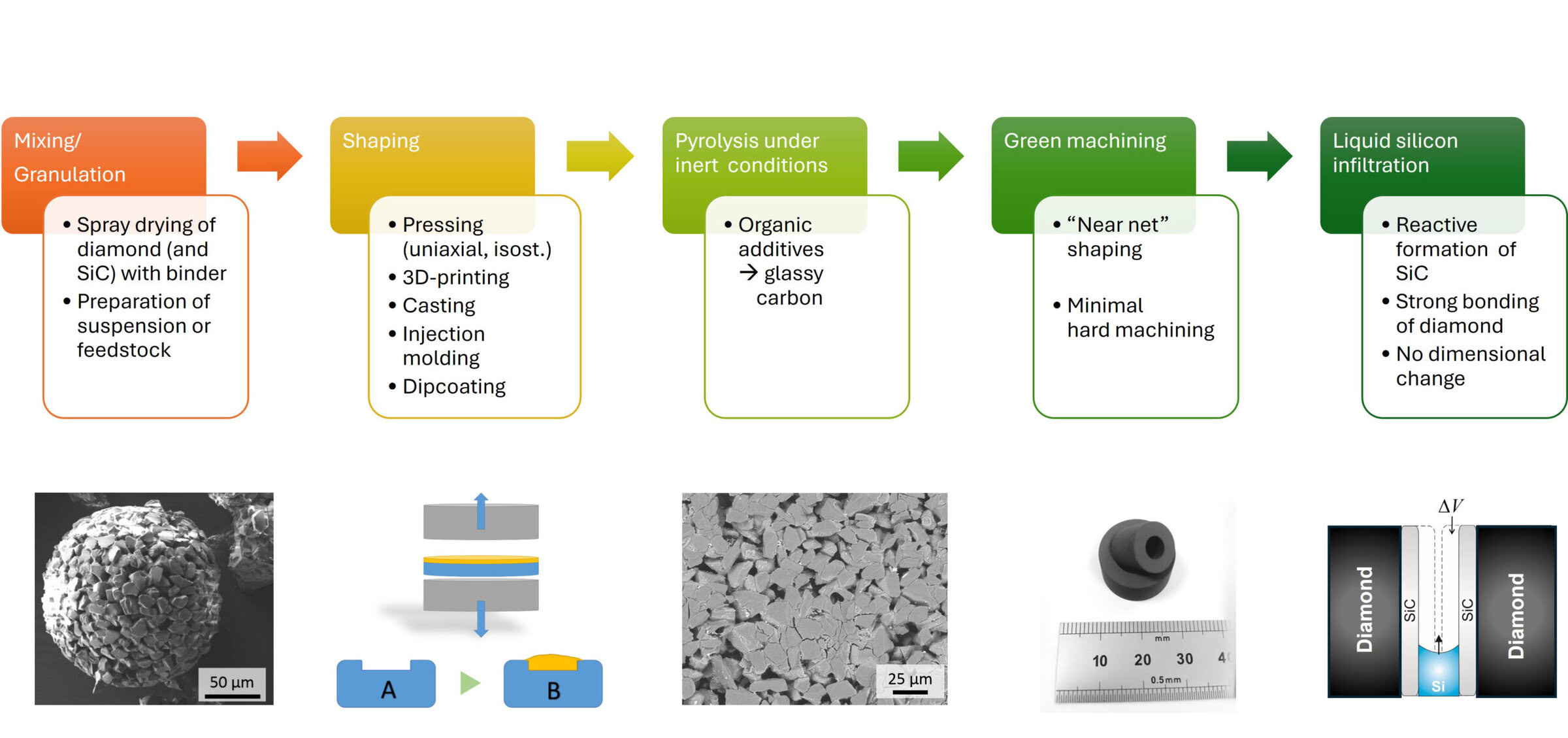
Figure 1. Schematic of the production process for the novel diamond–SiC composites. Credit: Fraunhofer IKTS
After pyrolysis under inert conditions, the diamond preform is infiltrated with liquid silicon in a vacuum at temperatures between 1,450–1,600°C. During liquid silicon infiltration, commonly known as LSI, silicon reacts with the carbon from the organic binder and, to some extent, with the diamond grains. During siliconization, cubic ß-SiC is formed on the diamond surface. This formation is accompanied by a 266 vol.% increase of the solid phases, while the component dimensions remain constant. For this reason, there are limitations regarding the minimum pore channel diameter in the diamond preform, just like the restrictions in the production of RB-SiC.
Infiltration works effectively with diamond particle sizes greater than 10 μm, as the pore size in the preform is determined by the diamond particle size. If the diamond particle sizes are too large, a high proportion of unreacted silicon remains in the pores of the material because the SiC forming on the diamond surface passivates the diamond (Figure 2). To achieve high diamond content and a low content of free silicon, optimized polymodal diamond mixtures are necessary. With optimized mixtures and process parameters, much lower silicon contents (1–5 vol.%) are possible than in conventional RB-SiC materials (typically greater than 10 vol.%).
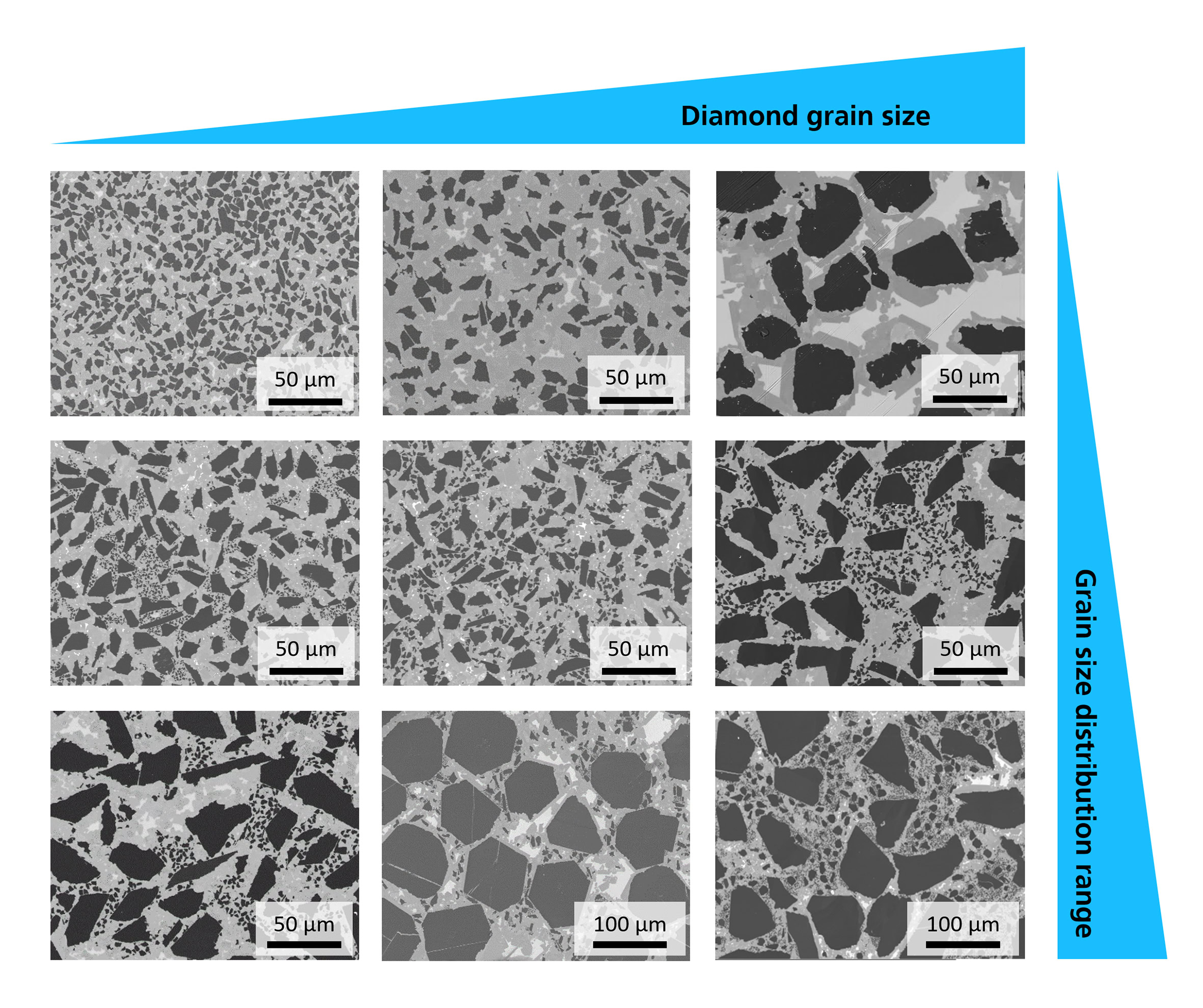
Figure 2. Microstructure variations in the diamond–SiC composites. Black: diamond; gray: silicon carbide; white: unreacted silicon. Credit: Fraunhofer IKTS
The maximum infiltration temperature is determined by the onset of graphitization of the diamond grains, especially at the grain boundaries. Above an infiltration temperature of about 1,600–1,650°C, thin graphite layers will form at the SiC–diamond interface. Fortunately, these thin graphite layers (less than 50–100 nm) do not appear to cause any significant reduction in strength, wear resistance, or thermal properties.14–16 This fact makes the manufacturing process tolerant to minor variations in the temperature distribution within the furnace during siliconization.
Infiltration of the diamond preforms occurs without significant changes in the component’s dimensions. Therefore, the material can be manufactured close to the final contour with tight tolerances (on the same order of magnitude as the grain size of the diamonds used, 50–200 µm). As long as these tolerances are sufficient for the application, the component is cost effective. The manufacturing costs are also roughly equivalent to those of RB-SiC components.
Notably, because the infiltration of the diamond preform takes place under the same conditions as in the production of RB-SiC materials, there is the potential to combine diamond–SiC and RB-SiC materials in graded components. Such a capability would make it possible to manufacture components in which the SiC-bonded diamond is present only in the areas where it is needed for the application, thus simplifying the finishing process and reducing manufacturing costs. We recently demonstrated this potential by introducing SiC-bonded diamond regions into sintered SiC materials.17
If surface finishing is required, the material’s high wear resistance hinders mechanical machining. This obstacle can be circumvented using laser machining and electrical discharge machining (no surface stresses are induced with modern ultrashort pulse lasers). Surface polishing is also possible using methods established for diamond layers.
The resulting microstructure consists of diamond grains embedded in a 3D framework of cubic ß-SiC. The majority of the SiC grains grow heteroepitaxially onto the diamond grains, resulting in strong integration of the diamond grains into the SiC matrix. Micromechanical measurements have shown that the strength of the SiC–diamond interface corresponds to the strength of the diamond–diamond interface in PCD materials.
In addition to the micrometer-sized crystals formed epitaxially on the diamond grains, there are also regions of nanocrystalline SiC, some of which still contain nanocrystalline residual silicon. The extent of these regions can be influenced in part by mixing SiC powders into the original diamond preform. This addition leads to a change in microstructure formation due to the epitaxial growth of secondary SiC on the added SiC particles, which competes with the formation of SiC layers on the diamond surfaces.18 Furthermore, the diamond content in the material can be adjusted over a wide range by mixing diamond and SiC powders in the preform. Low diamond contents (10–20 vol.%) can be used primarily to reduce the free silicon content in RB-SiC materials. More details of the structural formation are summarized in References 19, 20, and 21.
Because the diamond–SiC composites can be produced without pressure, they offer significant cost advantages over PCD materials, which require HPHT processes for their manufacture. Furthermore, due to the wide range of shaping methods available, they allow for much greater geometric diversity and dimensions, which is a decisive advantage over CVD diamond materials. The dimensions are limited only by the size of conventional high-temperature vacuum furnaces.
Properties of diamond–SiC composites
An overview of the properties achievable with the diamond–SiC composites, as compared to other superhard materials, is provided in Table 1.13,22–26 Even though the maximum diamond content achieved to date in the composite (~70–75 vol.%) is slightly below that of PCD materials, it still achieves properties that are excellent for both extreme wear applications and thermal management solutions.
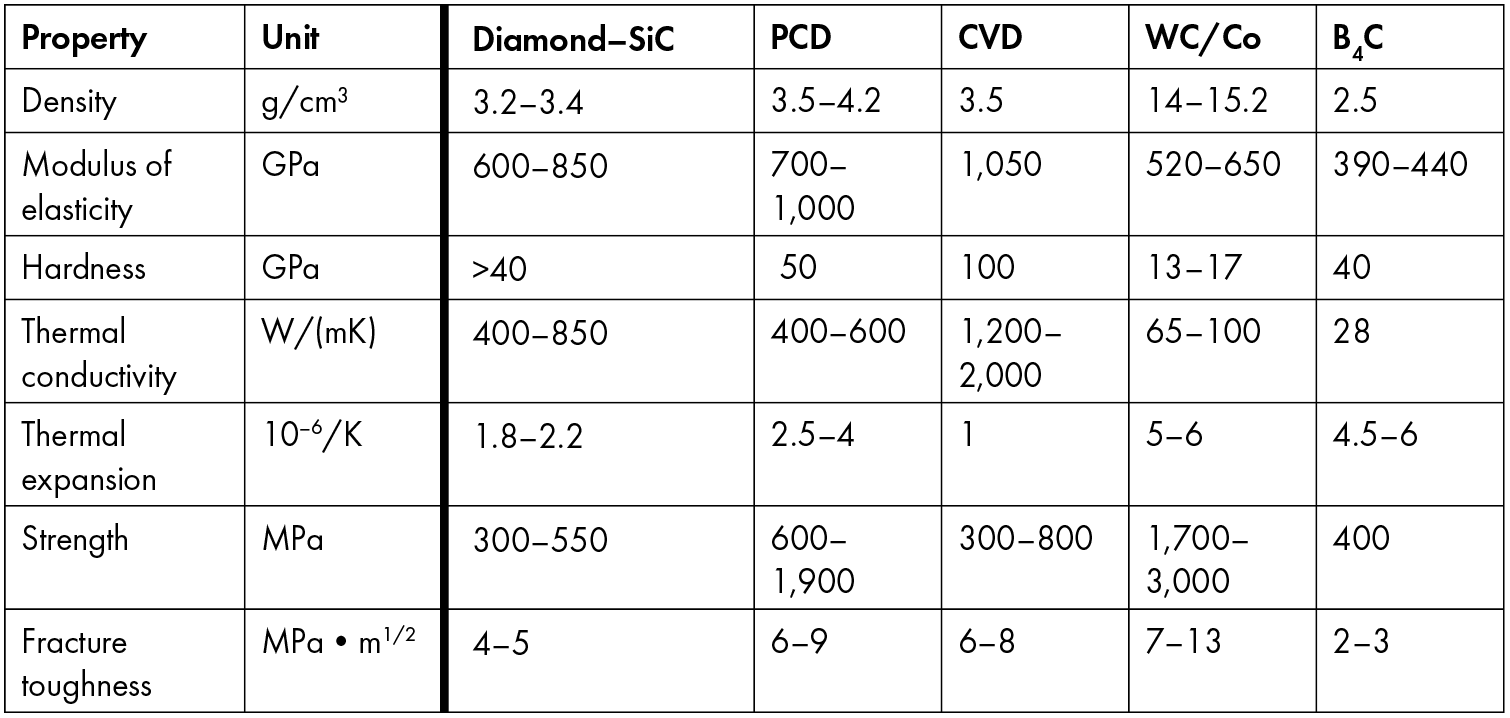
Table 1. Typical properties of the diamond–SiC composites compared to other superhard materials. Data from References 13, 22–26.
The properties of the diamond–SiC composites depend heavily on the material’s diamond content, grain size, and residual silicon content. As the diamond content increases, the Young’s modulus, hardness, and thermal conductivity rise, while thermal expansion decreases slightly. At the same diamond content, a lower residual silicon content leads to a higher Young’s modulus and higher thermal conductivity.
The Young’s modulus is highly dependent on the diamond content, as the Young’s modulus of SiC (about 400 GPa) and diamond (1,050–1,150 GPa) differ significantly. This relationship can be estimated using the Hashin–Shtrikman model, as shown in Figure 3.27–29 In this model, the matrix is considered to be RB-SiC. This value may vary slightly depending on the residual silicon content.
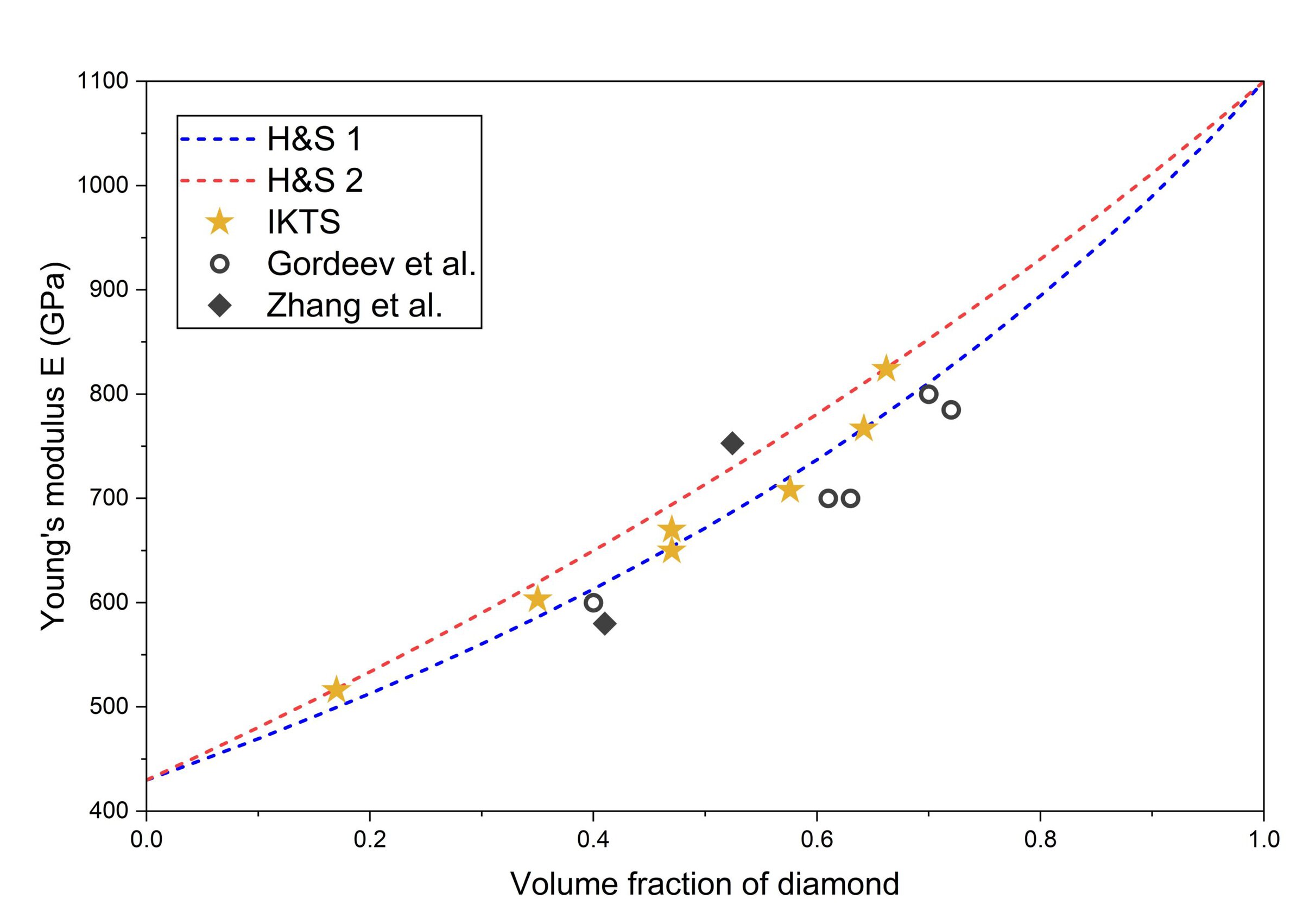
Figure 3. Dependence of the Young’s modulus on the volume fraction of diamond in the diamond–SiC composites. The lines represent the lower (H&S-1) and upper (H&S-2) limits of the Hashin–Shtrikman model.27 The matrix was considered to be RB-SiC. The variation in the silicon content within the composites can partially explain the scatter in the experimental data. Additionally, the variation in diamond content is on the order of up to 5 vol.% for materials with high diamond content. IKTS data provided by the authors; data for Gordeev and Zhang from references 28 and 29. Credit: Fraunhofer IKTS
The diamond–SiC composites with diamond contents greater than 40 vol.% are a superhard material with hardnesses of more than 40–45 GPa. However, measuring the exact hardness of the composites is difficult, as the size of the indentations is often smaller than the diamond grain sizes used, which range from 20 to 100 µm.
The high hardness also results in high wear resistance under both sliding wear and abrasive wear. In both cases, the strong bonding of the diamond to the SiC matrix plays a decisive role. In the initial stage of wear, there is minimal wear of the SiC matrix. As a result, the diamond grains protrude and therefore determine the extent of subsequent wear. One of our studies demonstrated an approximately 10 times better wear resistance under sandblasting conditions for the diamond–SiC composites compared to boron carbide materials.16
In sliding wear applications, very low coefficients of friction have been demonstrated in addition to low wear, making the material attractive for highly stressed bearings and seals.17 Due to the low residual silicon content (< 1 vol.%), the corrosion resistance is very high in not only acidic but also alkaline media. This behavior is completely different to standard RB-SiC, which has low corrosion resistance in alkaline media.
In recent years, significant attention has been focused on investigating the relationships between microstructure and thermal properties in various material classes. Figure 4a shows the diamond–SiC composites in comparison to other commonly used materials for thermal management.30 Like other diamond-based materials, the diamond–SiC composites far exceed the thermal conductivity values of metals and other ceramics. The thermal conductivity values of the diamond–SiC composites produced without pressure exceed those of typical PCD materials. However, due to their lower diamond content, they are slightly lower than those of CVD diamond.
Thermal conductivities of up to 700 W/mK have been consistently achieved for typical polymodal diamond grain size distributions up to 200 µm. For grain sizes up to 50 µm and diamond contents around 50 vol.%, values of 400–600 W/mK can be achieved.14 Using specialized manufacturing technologies and 400 µm diamond grain sizes, one study obtained a value of 840 W/mK for its diamond-based material.31 Such values also appear feasible for materials with smaller diamond grain sizes (up to 200 µm) with appropriate optimization of the composition and technology.
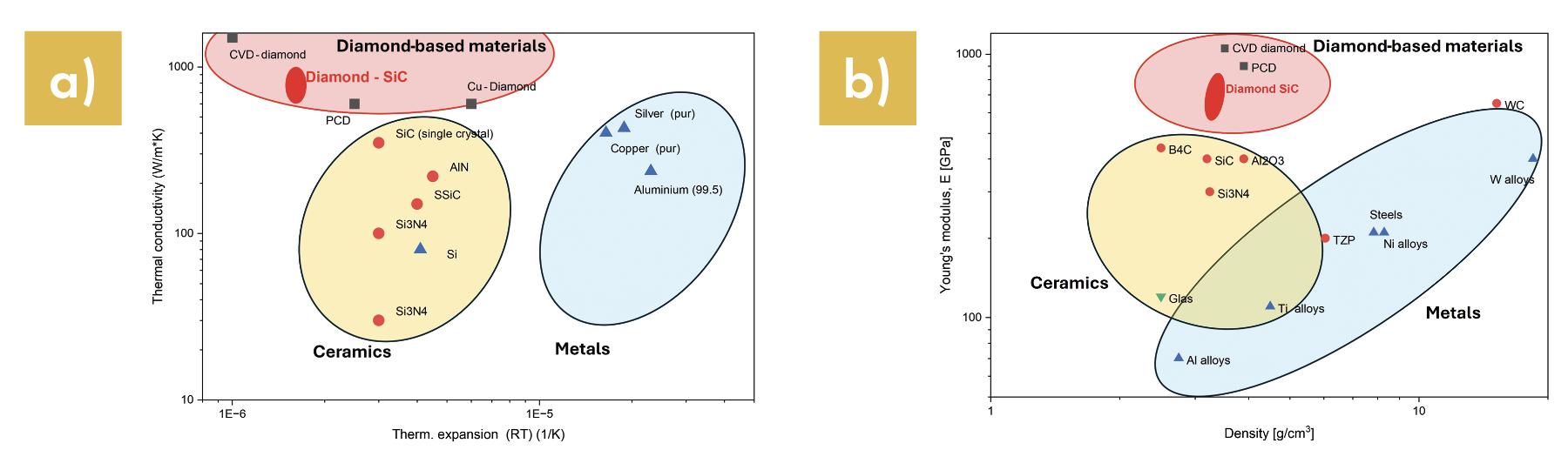
Figure 4. Ashby plot of a) thermal conductivity and b) Young’s modulus for the diamond–SiC composites compared with other material classes. Credit: Fraunhofer IKTS
Also noteworthy are the high values of volumetric heat capacity and flexural vibration (Youngs modulus1/2/density) that, according to Ashby,30 are essential for minimizing thermal distortion. On this basis, in addition to components for thermal management, very stiff, wear-resistant components for precision measuring instruments or mounts for optical systems can be manufactured using the diamond–SiC composites.
A disadvantage of the diamond–SiC composites is the low oxidation resistance of the diamond, which limits the maximum operating temperature under oxidizing conditions to 600–800°C. The reason for this low resistance is that the diamond grains in materials with a high diamond content form a 3D skeleton, which allows the diamond grains to oxidize at greater depths.32
Some studies have shown that doping with boron can provide diamonds with slightly higher oxidation stability.33 In addition, the percolation of diamond grains can be prevented in materials with a lower diamond content (30–50 vol.%), thus containing oxidation to the material’s surface. Furthermore, depending on the application environment, grading the diamond content and modifying the ceramic matrix offers paths for enhancing oxidation resistance while maintaining other physical and mechanical properties.
Properties of the diamond–SiC composites can also be modified by adjusting the packing density of the diamond grains and adding other components. For example, the addition of pyrolytic carbon21 or fine SiC powder18 modify the structure of the SiC matrix and the SiC–diamond interface while also reducing the content of free silicon in the matrix. Similarly, the infiltration of titanium silicide melts results in materials with a matrix of in-situ formed SiC and the MAX phase Ti3SiC2, as well as a minimized free silicon content.34 These modifications are expected to improve the toughness and strength of the materials, and similar effects can be achieved by adding transition metal carbide powders (e.g., TiC, ZrC, TaC, HfC).
Doping not only influences the structure and mechanical properties of the diamond–SiC composites but also the electrical properties. Because diamond, SiC, and silicon are all semiconductors, the electrical conductivity can be controlled over a wide range by adjusting the purity or doping of the components. Research on this topic is still in its early stages, as high-purity starting materials have not typically been used to date.
Figure 4 shows the thermal and elastic properties of the diamond–SiC composites in relation to other wear and structural materials and typical materials for thermal management.30 The properties shown indicate that these composites offer significant advantages for both demanding wear applications and thermal management components. Application studies to leverage these advantages are currently underway in various directions. For instance, studies by Chinese researchers primarily look at components with high thermal conductivity for usage in applications such as power electronics and high-powered lasers,7,29 while a study by Russian researchers revealed the potential of the diamond–SiC composites for ballistic applications.35
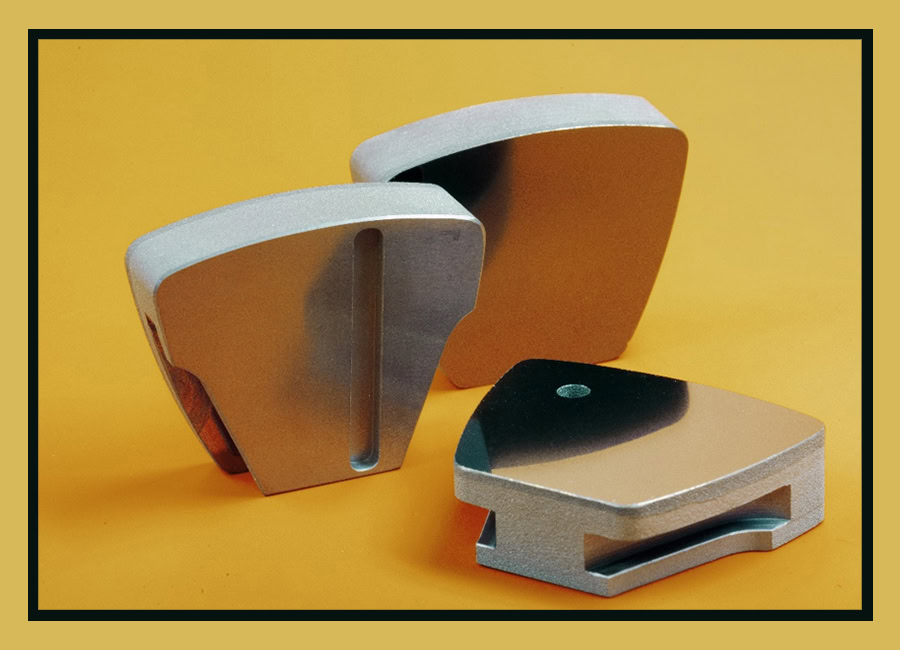
Components made from the diamond–SiC composites have been successfully tested as bearing materials and mechanical seals for extreme loads and long-lasting, low-wear components (Figure 5). However, the costs of machining to achieve the necessary tight tolerances have presented a barrier to widespread use in bearings and seals up to now. To achieve broader use in such applications, further improvements in effective machining are necessary. In particular, laser-based machining of these materials offers prospects for overcoming this barrier.
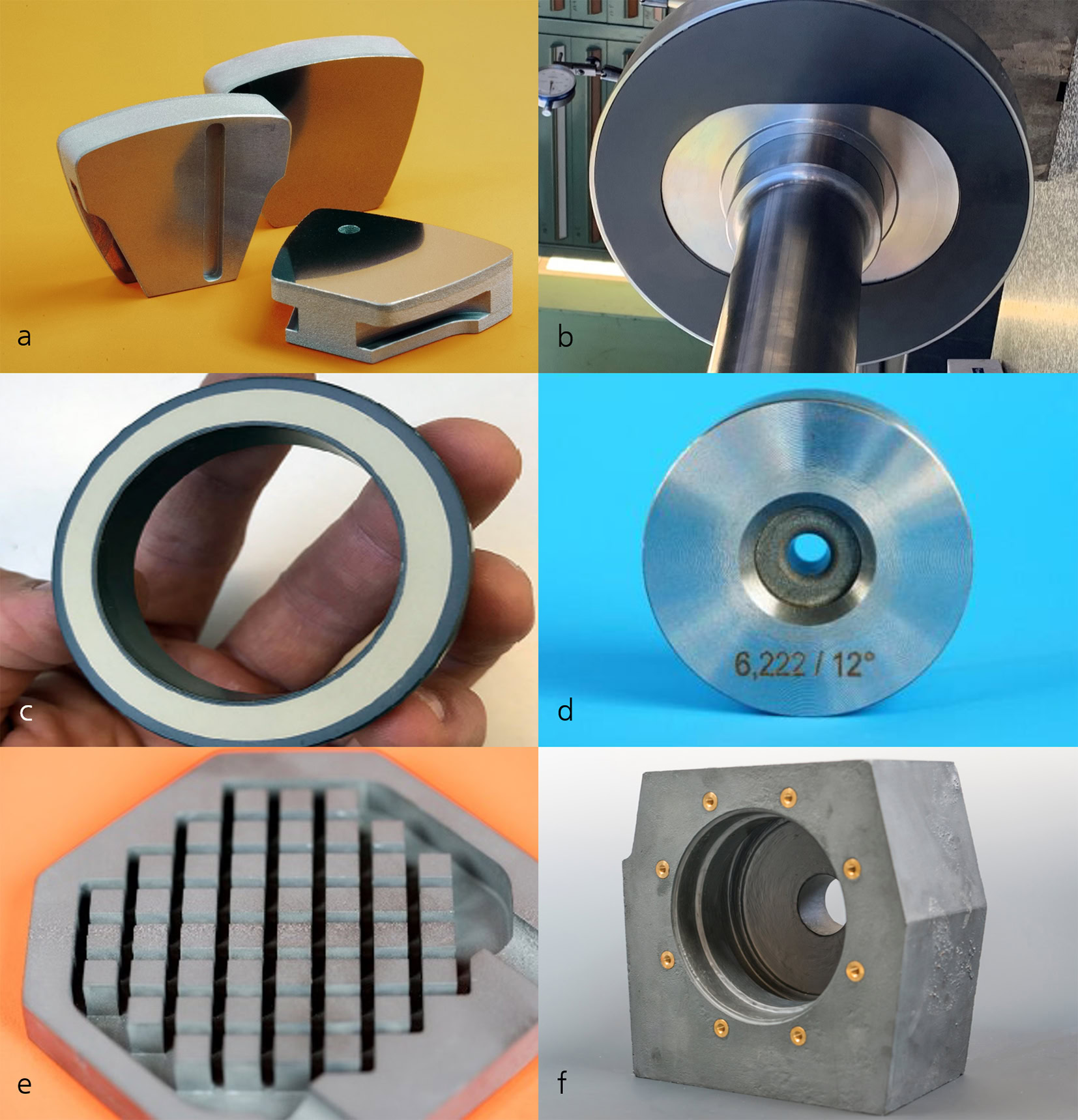
Figure 5. Components made of the diamond–SiC composites: (a) tilting pads and (b) thrust collar of a tilting pad thrust bearing; (c) seal made of silicon-infiltrated SiC with diamond–SiC inlays in green condition17; (d) drawing die; (e) cooling element; and (f) pump housing with diamond–SiC lining. Credit: a,b,d,e,f) Fraunhofer IKTS; c) Kailer et al., Int. J. Appl. Ceram. Technol. (CC BY 4.0)
The future of cost-effective diamond composites
As demand grows for cost-effective, wear-resistant materials with a long service life and thermal management systems with extremely high thermal conductivity, so too grows the need for cost-effective diamond materials. The diamond–SiC composites described in this article can be a solution to this need.
The findings obtained so far form a solid basis for producing components as prototypes or in small batches with the potential to further improve the existing exceptional properties or tailor them to special needs. For applications with low tolerance requirements, such as sandblasting nozzles and mill components, these materials are already a cost-effective alternative to existing materials. However, to improve the market potential of these materials for applications with strict tolerance requirements, such as bearings and seals, processes based on laser and spark erosion are currently being developed.
Acknowledgments
The authors’ work on the novel diamond–SiC composites took place through several projects.
- “Development of extremely wear-resistant, energy-efficient, and reliable sliding components for subsea applications—SubseaSlide” (Grant #03SX508). Project supported by the German Federal Ministry for Economic Affairs and Climate Action.
- “Pressureless prepared dense silicon carbide bonded diamond composites with high diamond content.” Project supported by the U.S. Army Research Office under Cooperative Agreement Number W911NF-20-2-0115.
- Internal Fraunhofer IKTS projects.
The views and conclusions in this article are those of the authors and should not be interpreted as representing the official policies of the Army Research Office or U.S. government.
Global markets for industrial diamonds
Industrial diamond usage is concentrated in a few key application areas.a In the traditional grinding, machining, and polishing sector, diamond powder is used in diamond suspensions, grinding wheels (with metal, ceramic, and plastic bonds), wire saws, and as a raw material for polycrystalline diamond materials. Diamond-based thermal management solutions, which exploit the high thermal conductivity of diamond, are developing particularly rapidly due to the emergence and growth of modern electronic chip designs and power electronics.
Industrial diamond powder prices range from $250 to $2,000 per kilogram, depending on quality and particle size. Due to their low density, the price per unit volume is up to seven times lower than tungsten carbide powder, which is the raw material for many wear-resistant materials.
Synthetic industrial diamonds can be produced from a wide variety of carbon sources available worldwide. Yet China dominates industrial diamond production (~70–90 vol.%),b followed by the United States and Russia as distant second and third sources. Together, these three countries account for about 99 vol.% of global production.c
References
a“Industrial diamond market report 2030,” Strategic Market Research. Published February 2026.
bW. Powell, “Dazzle, dazzle. The rise of China’s lab-grown diamond sector,” Warwick Powell’s Substack. Published 19 Feb. 2026.
cMineral Commodity Summaries 2026, U.S. Geological Survey, Reston, Va., 2026.
*All references verified as of June 12, 2026.

Related Articles

Market Insights
Next-gen superconducting ceramics could change how we travel and much more
Forty years ago, two physicists from IBM’s research laboratory in Zürich, Switzerland, reported a groundbreaking discovery: Superconductivity, or the quantum mechanical phenomenon in which certain materials exhibit zero electrical resistance when cooled, could be achieved at higher temperatures using ceramics. Superconductivity had been discovered decades before, but its applications had…

Market Insights
Why most AI manufacturing projects fail and how to fix it
Artificial intelligence is reshaping advanced manufacturing, especially processes involving ceramics, glasses, and other hard or brittle materials. But adopting AI is far more difficult than simply buying software and connecting machines. Manufacturers must understand the advantages and limitations of different models, so they can determine where AI fits best within…

Bulletin Features
Radiation effects on rare earth chemistry in molten salts for nuclear applications
Across the nuclear energy sector, molten salts are shaping the next generation of nuclear technologies, from advanced power reactors to used nuclear fuel recycling. In molten salt reactors (MSRs), molten salts uniquely serve as both the primary coolant and fuel medium, a dual role that sets MSRs apart from conventional…