
Introducing the new class of National Science Foundation Faculty Early Career Development Program (CAREER) awards provides an opportunity to shine light on the CAREER program and its role in developing young faculty to become excellent teachers, scholars, and leaders in their fields of research.1 This annual article introduces these emerging leaders and presents the relevance of their research to the ceramic and glass community.
Articles in the ACerS Bulletin Ceramics CAREER series have highlighted the latest awardees in the NSF Ceramics Program and their projects. The 2014 article2 also provided advice on writing a competitive CAREER proposal. The 2013 article examined supplements to grants,3 and the 2011 article introduced the Career–Life Balance initiative.4 Since that time, NSF has announced a graduate research supplement for veterans (MPS-GRSV).5 Other articles focused on various aspects of the CAREER program: A historical perspective (2009),6 statistical and geographic details for the Ceramics Program (2012),7 and an introduction to the mentoring workshops (2010).8
2015 awardees
The NSF Ceramics Program made two CAREER awards in 2015—to principal investigators Hui (Claire) Xiong at Boise State University and William Chueh at Stanford University.
Hui (Claire) Xiong, Boise State University
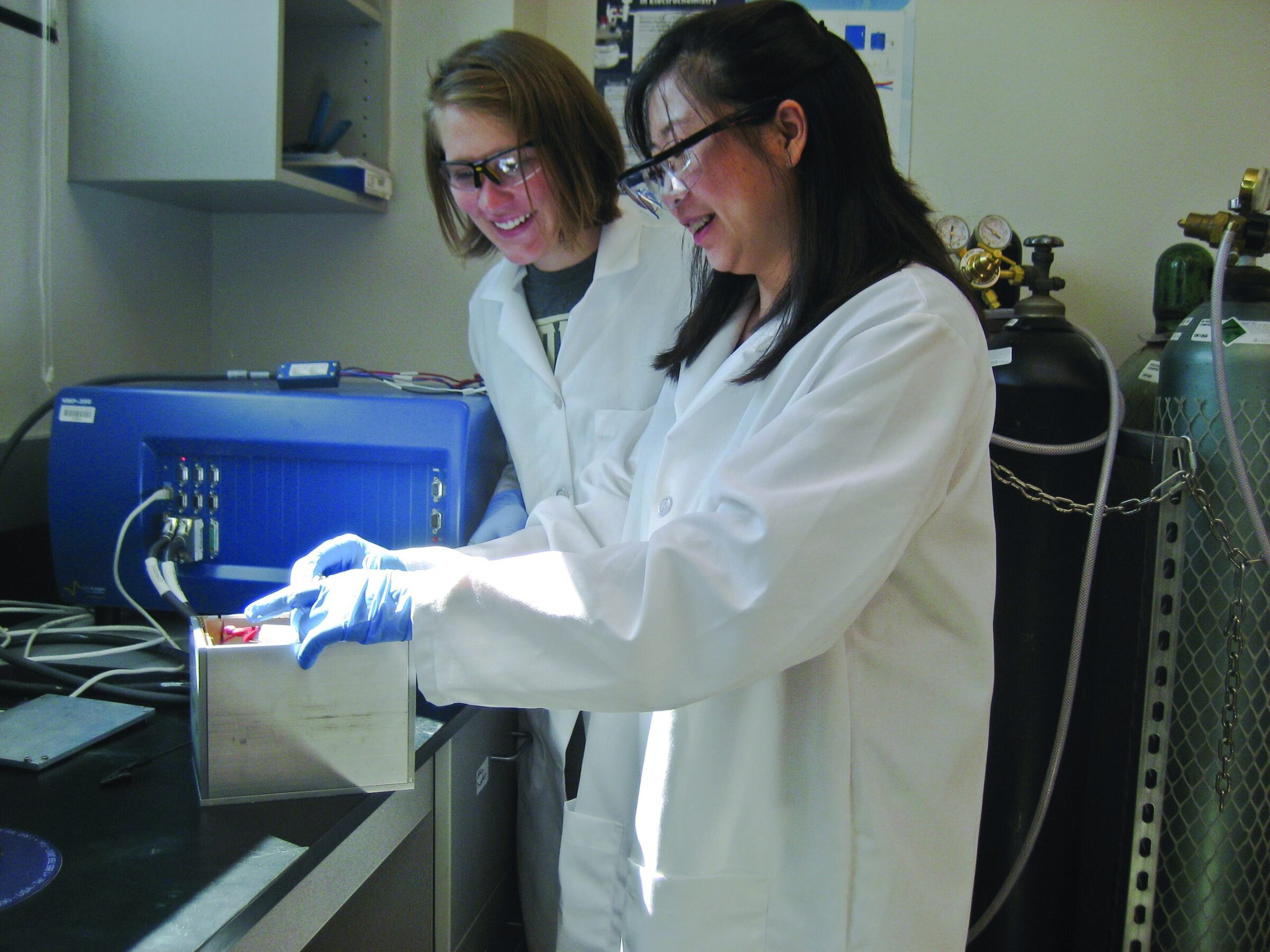
Hui (Claire) Xiong (right) teaches her graduate student how to set up a three-electrode cell for electrochemical testing of battery materials at Boise State University. Credit: Boise State University
Defect-driven metal oxides for enhanced energy storage systems9
This research seeks to advance the understanding of defect-driven oxide materials for developing new battery technologies to meet global energy needs. Energy is used in a plethora of applications—to power buildings, cars, portable devices, manufacturing, and communication systems. Global energy demands are growing exponentially, making improved energy storage technologies increasingly urgent. This project explores a new electrochemical paradigm to create oxide materials with disorder for high energy, power, and stability battery systems.
Recent studies have indicated that metal oxides with structural defects and local disorder may offer superior capacity and stability over the widely explored well-ordered oxides for advanced battery systems. Confirmation of the hypothesis of enhancing battery functionality in this project using defect-driven oxide materials could profoundly transform battery research, manufacturing, and applications, and open pathways for defect-driven electrode materials research. This project tests the hypothesis that nanoscale disordered metal oxides can serve as a host with a fairly open framework that can be electrochemically altered to form optimal structures for enhanced electrochemical charge storage. Recent studies have indicated that cation-disordered ceramic materials may offer higher capacity and better stability compared to well-ordered oxides. However, the underlying electrochemical charge storage mechanism remains largely unknown.
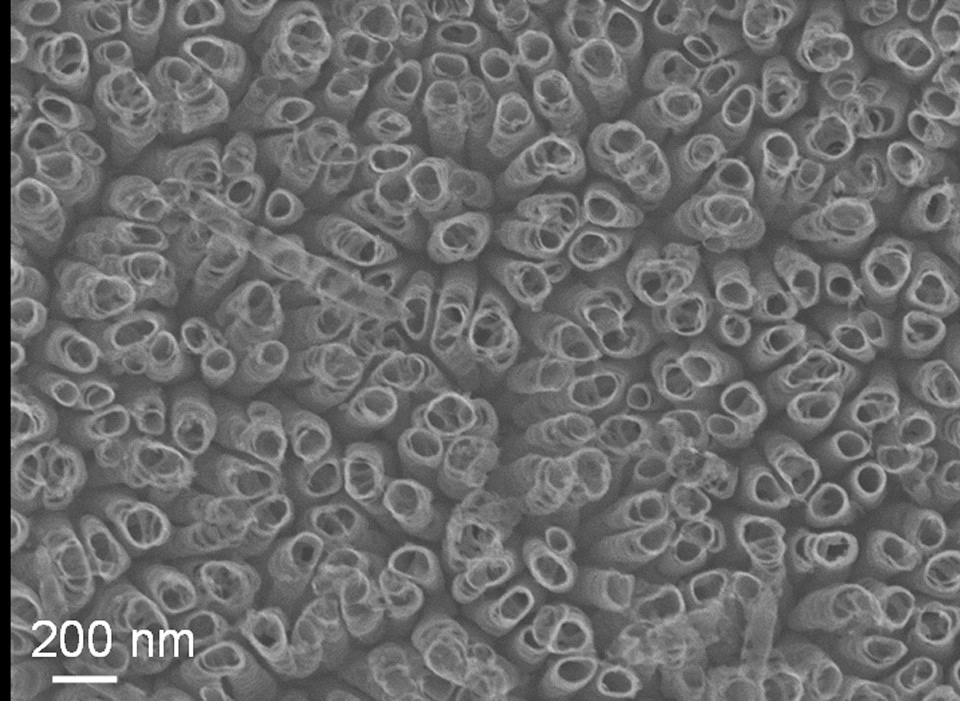
One metal oxide that Xiong studies is titanium dioxide. This scanning electron microscopy image shows a top view of titanium dioxide nanotubes made by electrochemical anodization. Credit: Hui Xiong
This study aims to advance knowledge of defect-driven oxide materials, thermodynamics, and intercalation kinetics, and how to leverage them for energy storage. The study also seeks evidence that tailoring defect chemistry will result in spontaneous phase transformation during electrochemical cycling from nanoscale amorphous oxides to optimal structures. Under study are simple model oxide systems (titanium dioxide and niobium pentoxide) and lithium- (sodium-) ion battery systems. The research could offer a universal method to create new high-performance electrode materials.
In addition, Xiong is adapting nanoscience, electrochemistry, and energy materials research concepts to curricula from K–12 to the graduate level. Through a new partnership with local Boys and Girls Clubs, Xiong is developing educational modules for Idaho youth in nonschool settings to boost students’ interest in science and engineering. Research outcomes are demonstrated through hands-on educational modules in the annual science, technology, engineering, and mathematics (STEM) Exploration Day and other on-campus outreach activities. Graduate student researchers are collaborating with national laboratories to expand the capabilities in this project. Through these collaborations, students also are gaining technical experience with cutting-edge research equipment and techniques.
William Chueh, Stanford University
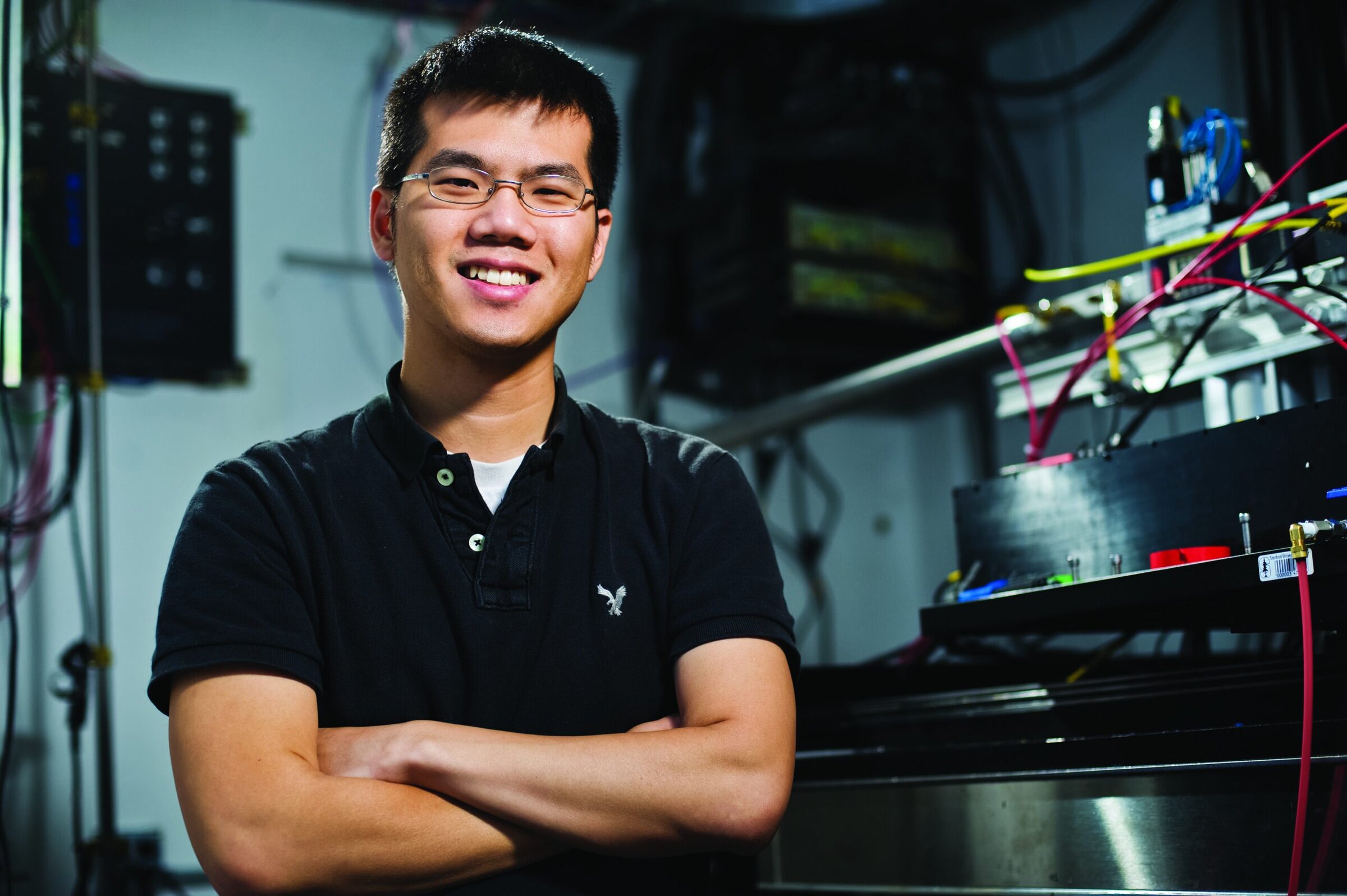
William Chueh in his laboratory at Stanford University. Credit: M. Beardsley; SLAC
Understanding surface redox activity of atomically flat electroceramics10
Oxide electroceramics are crucial in energy and conversion technologies, e.g., as electrodes for lithium-ion batteries and electrocatalysts for solid-oxide fuel cells. Performance of these electroceramics, however, is limited by their surface characteristics. This project aims to identify the relationship between surface atomic structure and processes involved in electrochemistry with the ultimate goal of attaining a more energy sufficient economy.
Transition-metal and rare-earth electroceramics based on perovskite and fluorite crystal structures exhibit significant reactivity with molecules, such as oxygen, carbon dioxide, and water, and are used extensively as electrocatalysts at room and elevated temperatures. This project addresses the complex relationships between redox activity and surface structure using atomically flat electroceramic surfaces primarily with controlled crystal termination, step density, and extended defects. Ultrathin overlayers deposited via physical vapor deposition further enable precise composition and structure control. Crystallographic and electronic structure of these atomically controlled surfaces are being characterized using synchrotron surface X-ray diffraction and surface-sensitive X-ray spectroscopy under a wide range of temperatures and pressures.
Chueh’s integrated educational plan provides research opportunities to underrepresented high school and undergraduate students as well as community outreach to grade 7–12 students. Chueh will curate three-dimensional slideshows featuring images of everyday objects at the nanoscale, highlighting the functionality of ceramic materials and research to take students on “A journey to the inside of materials.” These slideshows will be projected via a unique visualization facility.
Q&A
Assuming your research is wildly successful across the five years of your CAREER award, what could be its single biggest impact in terms of science or engineering?
Xiong: The key transformative breakthrough anticipated for this project is to elucidate fundamental properties of defect-driven metal oxide electrodes and to understand underlying mechanisms involved in their utility as an open framework electrode material for energy storage applications. Insights obtained through this research program can provide foundational knowledge of defect-driven metal oxide electrodes and provide guidance to aid with rational design and discovery of new cation-disordered metal oxides for high-performance energy storage systems. The single biggest impact from this project may be a new avenue to create high-capacity, high-power, and high-stability electrode materials through disordered starting materials with a fairly open framework that can be electrochemically altered to achieve optimal properties.
Chueh: Electroceramics—ceramics conducting ions and/or electrons—are crucial materials for energy storage and conversion. For example, they are used as catalysts for oxygen-reduction reactions in fuel cells. These ceramics are dominated by interfaces, yet many interfaces, such as that between ceramic and gas, are not well understood. Point defects, such as cation and anion vacancies, and extended defects, such as dislocations, control surface functionality of electroceramics. My CAREER award focuses on using atomically defined surfaces to understand the roles of various point and extended defects in redox reactions. If successful, this work will clarify how defects participate in catalytic reactions and guide tailoring of surface defects to improve the efficiency of fuel cells, electrolyzers, and other electrochemical technologies.
What do you see as the impact of your work for industry?
Xiong: My students will gain experience with state-of-the-art research facilities through existing collaborations and partnerships with national laboratories and user facilities. They will obtain expertise in electrochemical and nanomaterial synthesis, electrode processing and characterization, and in-situ and operando characterization, which will enable them to prepare for careers in R&D laboratories in energy storage, aerospace, and automotive industries.
Chueh: Students in my research group will get first-hand experience in the materials development cycle, from synthesis to characterizations and finally to comparison with theoretical predictions. In this CAREER award, for example, students will collaborate with scientists at synchrotron facilities and use state-of-the-art X-ray scattering and spectroscopy techniques to characterize surfaces of electroceramics. These skill sets will position students to become successful materials scientists and engineers and to interact efficiently with other professionals.
Apart from the science or engineering, what aspect of your CAREER award do you envision having the largest broader effect and why?
Xiong: Engaging K–12 students in STEM research and education through a nonschool setting at the local Moseley Center Boys & Girls Club of Ada County (Garden City, Id.) on their STEM program will have an enormous impact on the community’s most at-risk youth. By implementing a series of science and engineering modules, such as “Building your own galvanic cell,” from our research to the existing STEM program to engage Ada County youth, the outreach program will boost youth interest in STEM fields and build energy literacy through hands-on activities.
Chueh: My CAREER award includes an outreach program modeled after the Magic School Bus, where grade 7–12 students will go on a virtual, three-dimensional tour called “A journey to the inside of materials.” Graduate students will contribute by curating and designing unique movies to be visualized at the Kavli Institute for Particle Astrophysics and Cosmology at the SLAC National Accelerator Laboratory. This outreach effort will benefit middle and high school students by piquing their interests in STEM as well as graduate students interested in becoming educators in science and engineering.
How do you expect this award to affect your career?
Xiong: This award is a tremendous step that enables me to build a firm academic foundation to pursue my long-term career goal—to discover a new electrochemical synthesis paradigm by creating cation-disordered metal oxides electrodes for enhanced energy systems. The five-year duration enables me to focus on important fundamental questions regarding defect-driven electrode materials in their electrochemical charge storage properties with in-depth and thorough studies. This award will have a profound impact on my career development by allowing me to develop new research directions and to identify and solve scientific problems that will have long-lasting value to the community.
Chueh: The CAREER award will seed several core activities in my group necessary to tackle challenging problems in electroceramics, including preparation of atomically controlled surfaces and in-situ X-ray characterizations. These seed activities are complex in their own right and cannot be accomplished within the three-year time frame of a typical research grant. This CAREER award will allow me to lay a solid foundation, in terms of research capabilities and fundamental understandings, to make meaningful contributions to the ceramics community.
Do you plan on any requesting supplemental support?
Xiong: I have applied for and received a Career–Life Balance supplement. This supplement is a unique opportunity to support early career scientists to sustain research and productivity while they are on family leave. It has provided support for an additional lab technician, who has managed my group during my leave and ensured a successful start of my CAREER project.
Chueh: I plan to apply to the Alliances for Graduate Education and the Professoriate-Graduate Research Supplements (AGEP-GRS) program.11 Having participated in AGEP activities at Stanford, I see a pressing need to increase representation of minorities in academia.
What crosscutting programs at NSF interest you? (see sidebar below)
Xiong: I am enthusiastic about the SusChEM program. Rising energy demands have pressed R&D for inexpensive and sustainable energy materials. Environmentally benign, earth-abundant, inexpensive choices of chemicals and materials by design will be a main focus of future battery research.
Chueh: I am very interested in broader sustainability issues, particularly with regard to local manufacturability of green energy technologies in developing countries—I plan to apply to two excellent programs: Innovations at the Nexus of Food, Energy, and Water Systems (INFEWS);12 and SusChEM. I also believe that materials breakthroughs are enabled by new tools in synthesis, characterizations, and theory. The Materials Innovation Platforms (MIP) program13 offers significant funding to create tools that could change the ways we develop materials.
Disclaimer
Any opinion, finding, recommendations, or conclusions expressed in this material are those of the author and do not necessarily reflect the views of NSF.
Acknowledgements
I am grateful to H. Xiong and W. Chueh for their input.
Additional crosscutting programs at NSF
In addition to programs that extend across the entire organization, such as CAREER, the National Science Foundation (NSF) has several programs that foster interdisciplinary research and extend across organizational and programmatic boundaries. Three rather new opportunities of possible interest to the ceramics research community are Sustainable Chemistry, Engineering, and Materials (SusChEM);14 Clean Energy Technologies; and Understanding the Brain (UtB).15
SusChEM has been active since 2013 and 11 awards (totalling more than $4.4 million) have been made in the Ceramics Program through this effort.16 The fiscal year (FY) 2016 NSF budget request to Congress includes $6 million in the Division of Materials Research (DMR) for SusChEM.17 Proposals may be submitted in conjunction with a solicitation (such as CAREER) or in DMR’s open window during September–October. DMR also will continue to identify grants (according to the 2016 budget request, to the tune of $70 million) relevant to clean energy technologies, which is an NSF priority area.17 The portfolio of awards could include hydrogen production and storage, fuel cells, biomass, solar energy, hydrocarbon conversion, capture and use of carbon dioxide, and energy storage.17
UtB has many avenues for funding—a key for the Ceramics Program is ensuring that the project title and summary (whether submitted to the CAREER solicitation or within an open window) clearly identifies the proposed work as relevant to the BRAIN initiative. One Early-Concept Grants for Exploratory Research (EAGER) award—Biocompatibility of nanocrystalline yttria-stabilized zirconia (YSZ) transparent cranial implant18—has been made in the Ceramics Program. DMR’s budget request for UtB in FY 2016 is $3.8 million.17
Related Articles

Market Insights
Next-gen superconducting ceramics could change how we travel and much more
Forty years ago, two physicists from IBM’s research laboratory in Zürich, Switzerland, reported a groundbreaking discovery: Superconductivity, or the quantum mechanical phenomenon in which certain materials exhibit zero electrical resistance when cooled, could be achieved at higher temperatures using ceramics. Superconductivity had been discovered decades before, but its applications had…

Market Insights
Why most AI manufacturing projects fail and how to fix it
Artificial intelligence is reshaping advanced manufacturing, especially processes involving ceramics, glasses, and other hard or brittle materials. But adopting AI is far more difficult than simply buying software and connecting machines. Manufacturers must understand the advantages and limitations of different models, so they can determine where AI fits best within…

Bulletin Features
Radiation effects on rare earth chemistry in molten salts for nuclear applications
Across the nuclear energy sector, molten salts are shaping the next generation of nuclear technologies, from advanced power reactors to used nuclear fuel recycling. In molten salt reactors (MSRs), molten salts uniquely serve as both the primary coolant and fuel medium, a dual role that sets MSRs apart from conventional…