
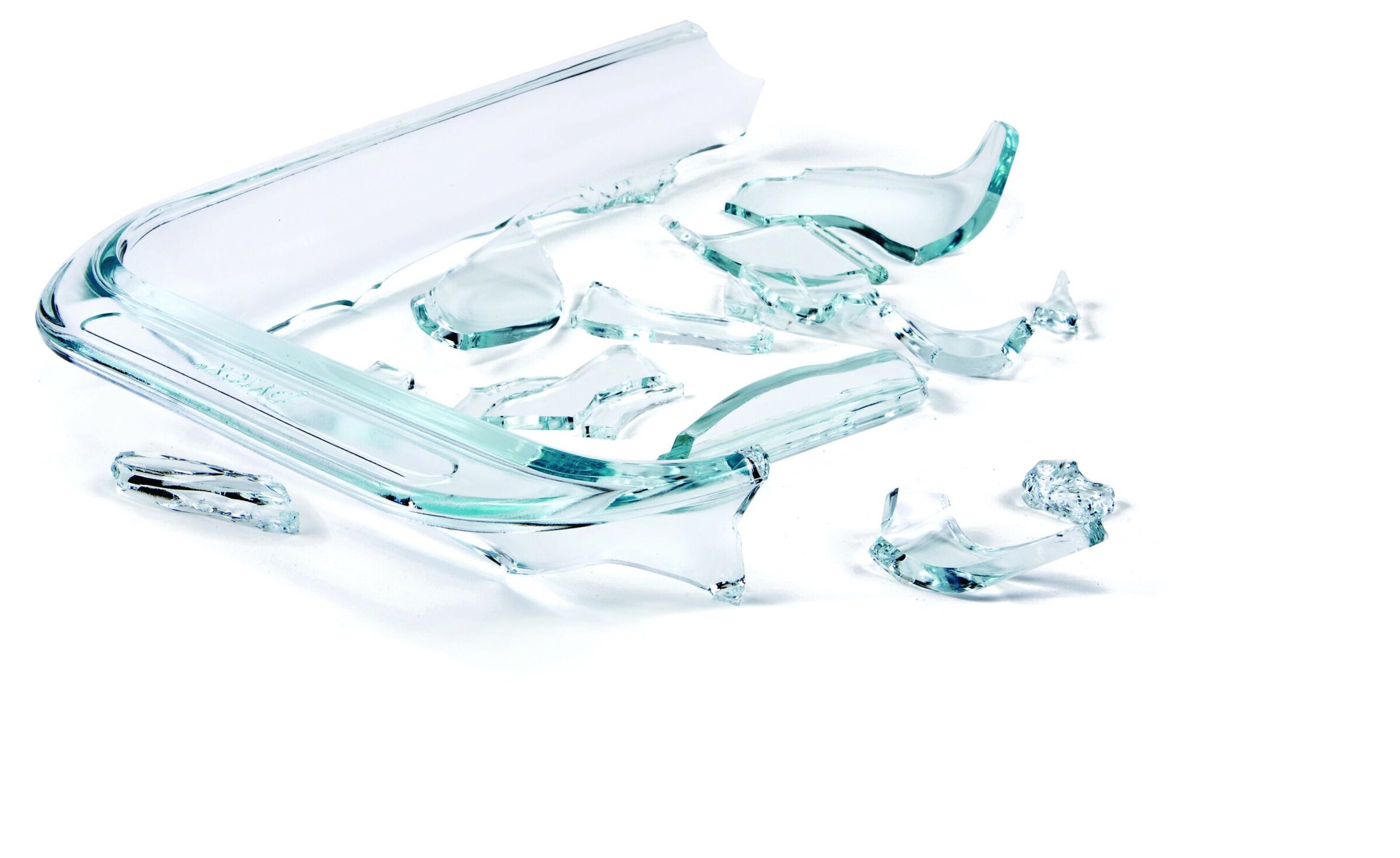
Shattering glass cookware
The shattering of glass cookware in household kitchens has been reported in Consumer Reports articles,1,2 television documentaries, complaints to the United States Consumer Products Safety Commission3 and Internet postings.4 This article examines the issue from a three fold technical perspective: (i) reviewing the reported scenarios of the incidents, which are suggestive of thermal stress fracture; (ii) comparing the thermal shock resistance of borosilicate glass with soda lime silicate glass; and (iii) examining new and broken glass cookware. Together, these related perspectives suggest the thermal stresses that develop during temperature changes are the primary cause of the explosion-like breakages. The substitution of higher thermal expansion soda lime silicate glass for borosilicate glass in the manufacturing is a contributing factor.