

I and many of the other students selected participate in research at our home universities and have done other summer fellowships in industry and national laboratories alike. But when I first began the program, I had no idea what we were about to experience. When my SURF experience ended 11 weeks later, I was astonished. Not knowing if this was just my perspective, I asked other participants what they valued most about the program and what made it unique. Their responses touched on some common themes—elements that are essential for any educational research experience.
The first element was the workplace. All SURF students were paired with staff researchers who offered guidance to their projects. Students got to experience firsthand the life of a research scientist, which involves much more than frequent trips to the coffee pot. The program offered daily interaction with other scientists, ongoing seminar series, group and team meetings, and plenty of lab time. This was a welcome change for students who get overloaded by the school year’s coursework, which tends to blur their vision of a postdegree world. Many students commented toward the end of our stay about how much they would miss the day-to-day rhythm of research. That has proved true for me—since beginning my junior year, I find myself missing my NIST experiences. I know I will remember them through the rest of my career.
The second common theme was the methodological focus. NIST has a scientific culture that is clearly focused on precision and accuracy. There is no such thing as “good enough.” Other students often commented that, at previous internships, the focus of their work was results for application, whereas at NIST everything is done with the highest level of precision and accuracy. At the end of the program, everyone gave presentations of their work from the summer, during which this emphasis could be seen in almost every project. The lesson learned from this heightened standard is one that I will always remember when designing experiments, collecting data, and analyzing results in my career—professionally and academically.
The relevance of our work was the third element noted by my fellow SURFers. The NIST mission is “To promote US innovation and industrial competitiveness by advancing measurement science, standards, and technology in ways that enhance economic security and improve our quality of life.” Every project had a clearly defined purpose that aligned with that mission statement. The sense of real-world impact in each of our projects only served to highlight our growing skill sets and their applicability to real-world problems for which we could work to create real-world solutions. This is very empowering and can encourage students as young scientists to engage with and contribute to the scientific community.
I and many of my colleagues consider the NIST SURF program an invaluable experience for many reasons, and those who qualify to reapply will undoubtedly do so. If the successful elements of this program are transferred to other research institutions, many more students will find themselves motivated, focused, and empowered as they enter their scientific careers.
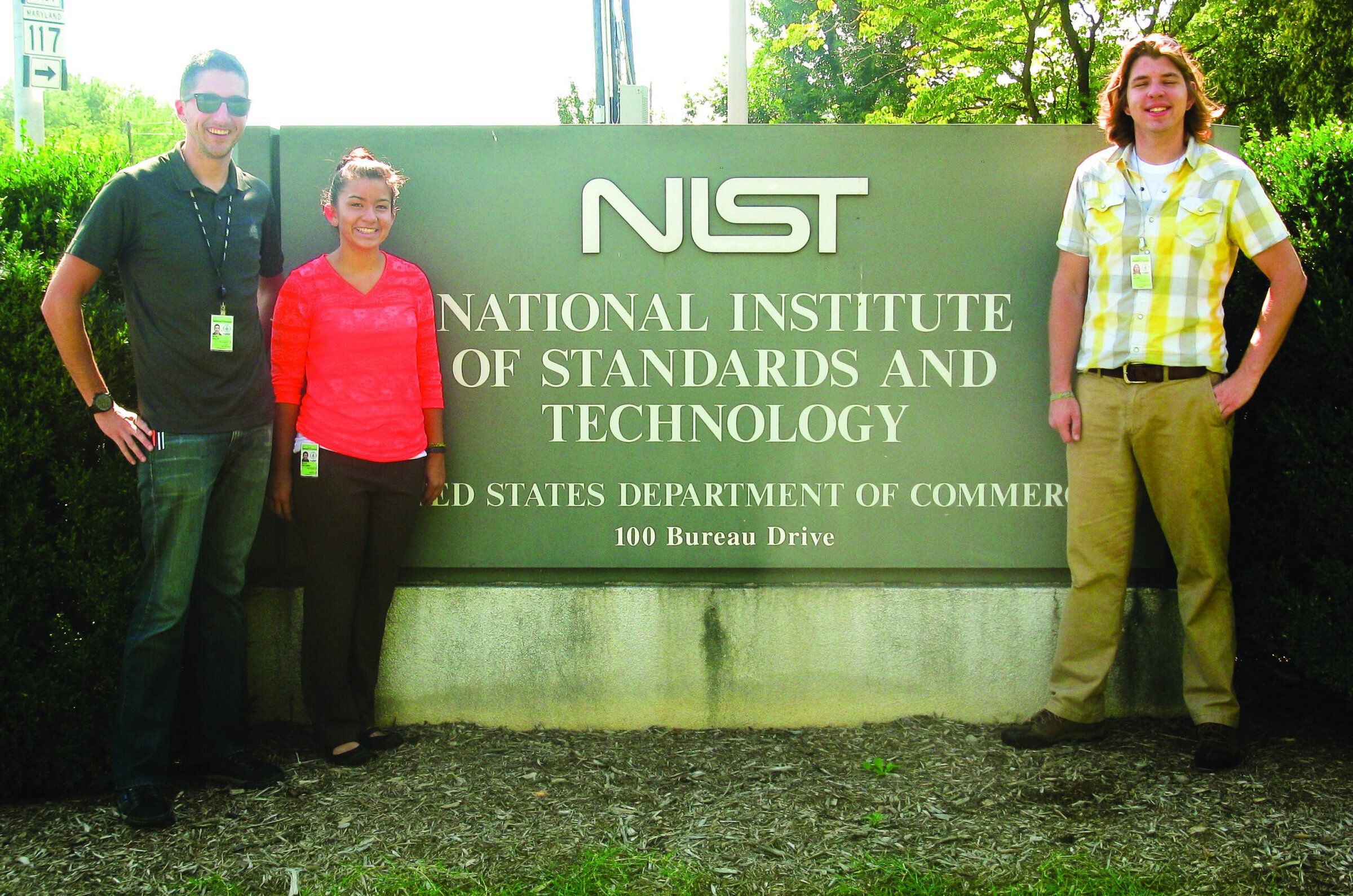
The author (left) with fellow SURFers and Boise State students Koyuki Fritchman and Eric Nelson. Credit: K. Talley
Deciphering the Discipline is a regular column showcasing the expertise of emerging professionals, organized by the ACerS President’s Council of Student Advisors.

Related Articles

Market Insights
Next-gen superconducting ceramics could change how we travel and much more
Forty years ago, two physicists from IBM’s research laboratory in Zürich, Switzerland, reported a groundbreaking discovery: Superconductivity, or the quantum mechanical phenomenon in which certain materials exhibit zero electrical resistance when cooled, could be achieved at higher temperatures using ceramics. Superconductivity had been discovered decades before, but its applications had…

Market Insights
Why most AI manufacturing projects fail and how to fix it
Artificial intelligence is reshaping advanced manufacturing, especially processes involving ceramics, glasses, and other hard or brittle materials. But adopting AI is far more difficult than simply buying software and connecting machines. Manufacturers must understand the advantages and limitations of different models, so they can determine where AI fits best within…

Bulletin Features
Radiation effects on rare earth chemistry in molten salts for nuclear applications
Across the nuclear energy sector, molten salts are shaping the next generation of nuclear technologies, from advanced power reactors to used nuclear fuel recycling. In molten salt reactors (MSRs), molten salts uniquely serve as both the primary coolant and fuel medium, a dual role that sets MSRs apart from conventional…