
According to the latest report from the Nuclear Energy Agency,a in 2023, total recoverable uranium resources of economic interest exceeded 7.9 million metric tons (Table I).
Australia, Kazakhstan, Canada, Russia, and Namibia are the top five countries, accounting for a combined 61.3%, while the U.S. is ranked #13 at 1.5% of the total.
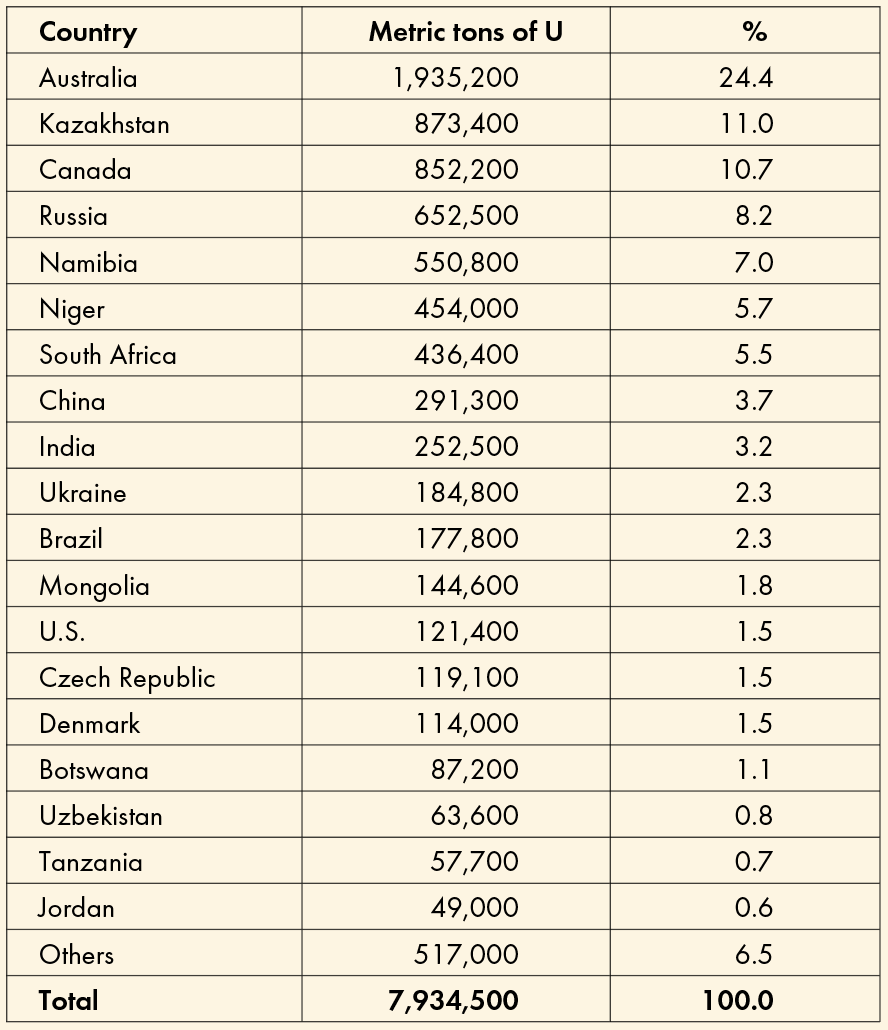
Table I. Uranium recoverable resources, 2023. Credit: Nuclear Energy Agency
In 2023, Kazakhstan, Canada, and Namibia were the three top producers of uranium (intended as uranium before enrichment), accounting for 71.9% of the total (Table II). Globally, 54,345 metric tons of uranium (tU) were mined and leached, corresponding to a 9.8% increase year-over-year. In recent years, the gap between production and demand was filled up by existing stockpiles and spent fuel reprocessing.
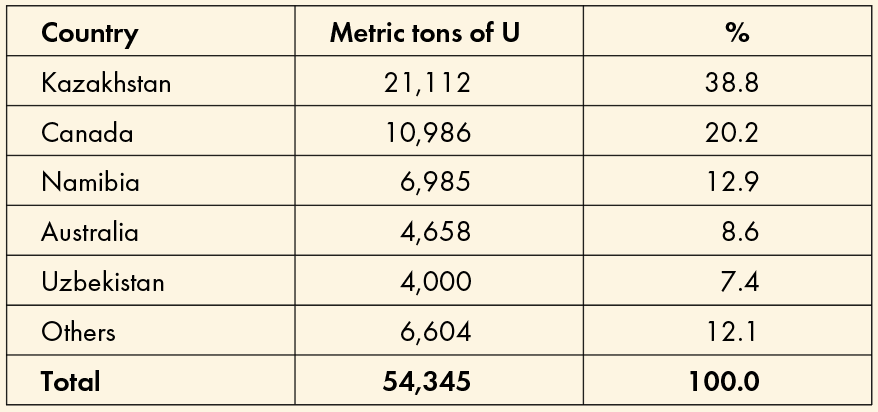
Table II. Uranium production, 2023. Credit: Nuclear Energy Agency
The Nuclear Energy Agency states that there are currently 438 commercial nuclear reactors operating worldwide and 58 under construction.a In 2025, these reactors will consume 59,779 tU at a minimum. At this rate, existing resources will last 132 years (Table III).
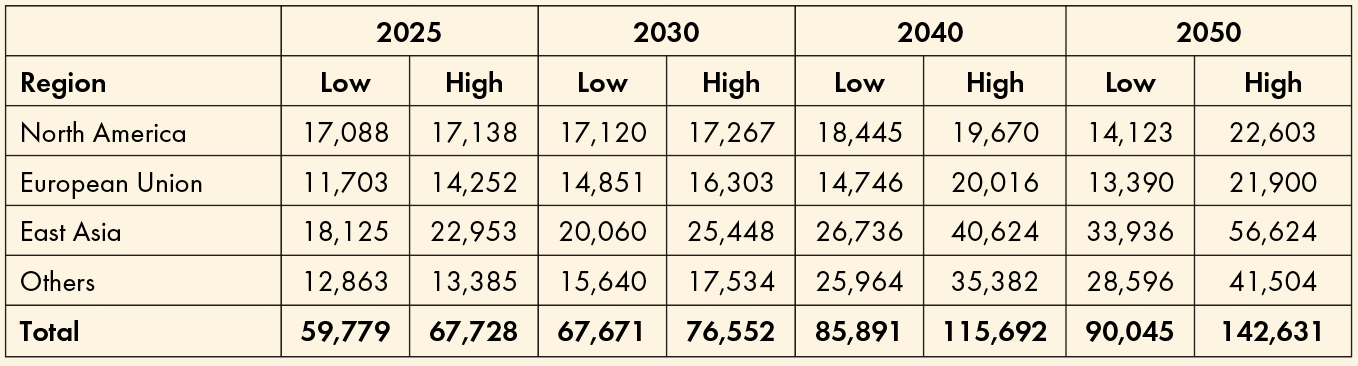
Table III. Uranium demand, 2025–2050 (metric tons). Credit: Nuclear Energy Agency
Considering that consumption of uranium for power plants is projected to grow significantly through 2050, and that uranium finds application in other fields besides nuclear power stations, such as medicine, space exploration, naval propulsion, and defense, analysts expect that uranium reserves will be more likely depleted within the next 90 years. However, this projection may be extended if nuclear energy becomes more reliant on alternative materials (e.g., thorium), recycling, and new generations of advanced reactors that make a more efficient use of nuclear fuels.
Return to main article: “Nuclear fuel market: Current trends and research opportunities“

Related Articles

Market Insights
Digging into the development of uniform global mining standards
Mining standards and regulations have historically varied by region, nation, or locale, making for a patchwork of guidelines and laws for environmental protection, water and emissions management, proper waste disposal, worker rights, and engagement with Indigenous communities. Multinational mining companies, manufacturers, downstream customers, and socially conscious investors have for years…

Market Insights
Rethinking Arctic research: CIFAR report proposes pathways for the Arctic’s future
Although organized, multinational scientific research in the Arctic has taken place since the late 19th century,1 the past two decades have seen a surge in activity alongside the rapid ecosystem changes (Figure 1).2 Yet these scientific studies are increasingly mired in geopolitical tensions and economic interests,3 which means that scientists…

Market Insights
Global markets for lithium and green mining
The electrification and digitization of modern life drive increased demand for certain minerals, but they also drive the need for more environmentally conscious mining practices. Two recent BCC Research reports investigate the global markets for lithium mining and green mining, respectively. This Bulletin content is for ACerS members and registered…