
The challenges that students faced throughout the past few years are immense; yet, hope remained ever-present in the face of these challenges.
The hope of returning to in-person gatherings and meetings. The hope of reconnecting with friends, colleagues, and loved ones separated by travel restrictions and quarantines.
This year’s student issue of the Bulletin aims to provide perspectives from students on their hopes. As students, we are often told we are the future, and thus we embody society’s hopes for the future. Yet as materials scientists and engineers, we carry hopes of our own as well—hopes that our research will be meaningful, hopes for how we can learn from the past, and hopes for the future to come. We have used this hope to overcome obstacles, break down barriers, and better the world in ways both large and small.
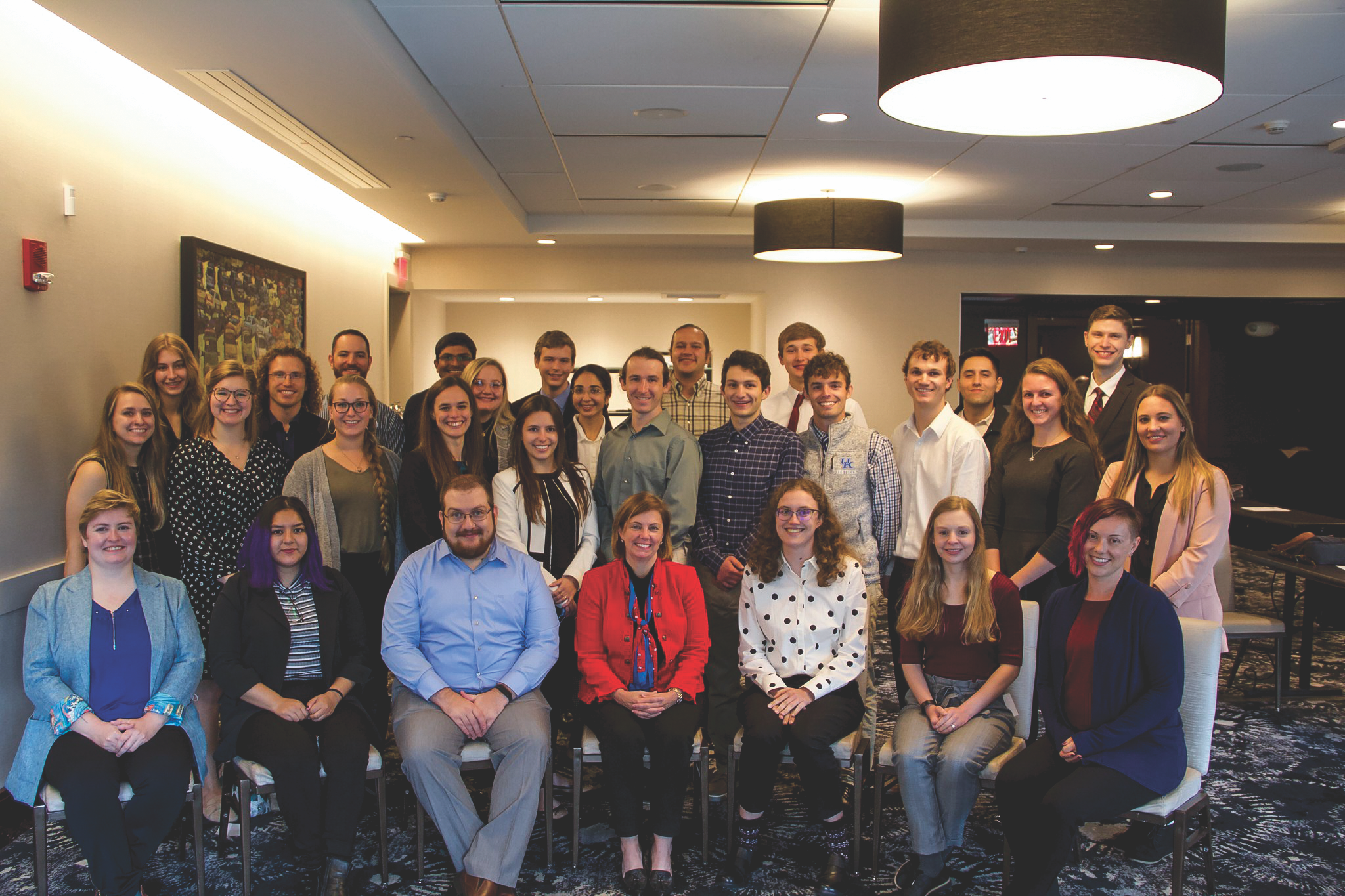
For me, as chair of the ACerS President’s Council of Student Advisors (PCSA), my hopes lie in leading the next generation of student leaders to reach their fullest potentials. The PCSA currently comprises 44 delegates, representing 29 universities and eight countries.
When the PCSA began its term last October during ACerS Annual Meeting at MS&T21, hopes were high—delegates met face to face at what was for many their first in-person conference in more than a year and half, and for some their first conference ever. With this hope, the PCSA delegates produced a vision for the 2021–2022 term centered on cultivating an internal environment that encourages leadership and creativity, plus strengthening and expanding external partnerships and connections. Our committees are hard at work bringing this vision of the PCSA to life.
- The Outreach Committee is working to improve upon previous classroom outreach efforts, which includes wider distribution of both the mini and full-size Materials Science Classroom Kits as well as increasing collaboration with local community organization starting STEM outreach.
- The External Partnerships Committee is working toward increasing international connections. The biggest
initiative underway is the student mentoring program (https://ceramics.org/mentorship), which has more than 50 mentor–mentee pairs. Additionally, this committee hosted an activity that promotes connection between ACerS and ECerS students at the Winter Workshop, which is held between ICACC and EMA every year. - The Communications Committee is continuing to expand connections through engaging social media content that focuses on interesting aspects of ceramics and glass science, such as the science behind glassware.
- The Programing Committee is finding new ways of engaging with students through virtual competitions and virtual career panels at conferences such as EMA and ICACC.
- The Recruitment Committee is looking toward the future as they select the next PCSA delegates, who they hope will continue improving diversity and inclusion within the PCSA, which, in turn, helps to diversify ACerS.
There are so many things to be hopeful for—from the hope that a research hypothesis is met; to the hope that knowledge gained in a classroom STEM activity opens the eyes of younger students; to the hope for a safer, more tolerant world. Hope is something that is constant, but it is not something that should be taken for granted. We must never forget to celebrate hope.
Return to main article: “Student Perspectives 2022: Community articles“


Related Articles

Bulletin Features
The nonferrous metals market: Supply and regulatory pressures inspire strategies for a resilient future
Nonferrous metals serve foundational roles in the electrification, renewable energy, and digital transformation. Nonferrous metals are metals that do not contain iron in significant amounts. These metals typically are nonmagnetic, corrosion resistant, electrically and thermally conductive, and lightweight, making them ideal for applications in the emerging markets mentioned above. Even…

Market Insights
Industrial digitalization: ‘Smart’ operations can improve worker safety and well-being in high-temperature environments
Heavy industry is the backbone of economies around the world, critical to automotive production, construction, the energy sector, and everything in between. But many heavy industries are facing worker shortages. There are more than 400,000 open manufacturing jobs in the United States, according to the Bureau of Labor Statistics.1 With…

Market Insights
‘Fail fast’ manufacturing: How disciplined experimentation strengthens, not threatens, quality
In manufacturing, few phrases raise eyebrows faster than “fail fast.” In the startup world, this business strategy is celebrated as a sign of agility. On a ceramic manufacturing floor, it can sound careless or even dangerous. In manufacturing, few phrases raise eyebrows faster than “fail fast.” In the startup world,…