

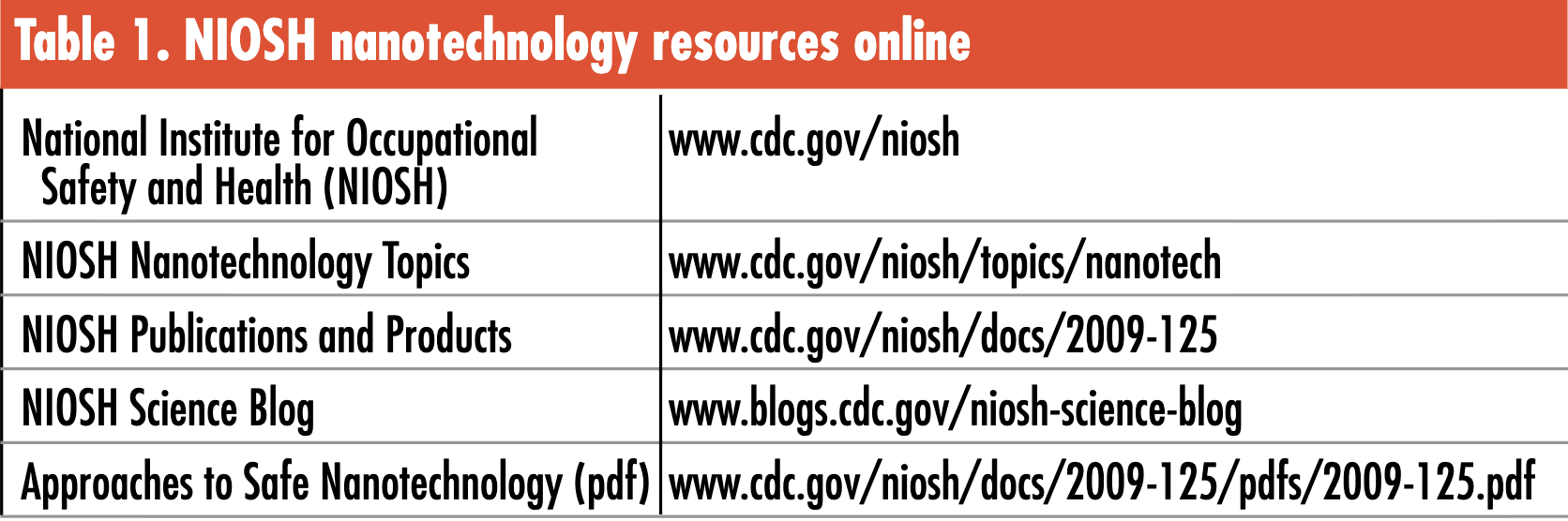
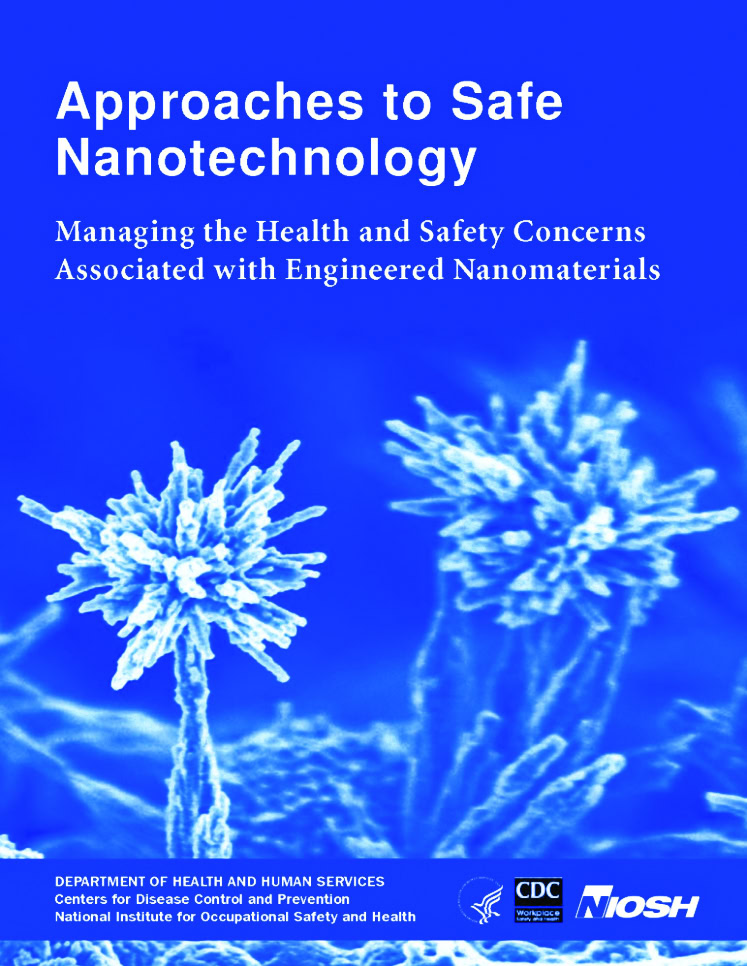
The mission of the National Institute for Occupational Safety and Health (NIOSH), a nonregulatory federal agency, is to conduct research and make recommendations for preventing work-related injuries, illnesses, and deaths. Within NIOSH, the Nanotechnology Research Center coordinates a program of laboratory and field investigations to develop and disseminate information on tools, practices, and recommendations for safe handling of nanomaterials in the workplace. Publications such as “Approaches to Safe Nanotechnology,” and others are available on the NIOSH website (see online resources in Table 1).
The possible health risks associated with exposure to these types of materials are not clearly understood. Research shows that traditional engineering control methods adequately decrease the potential for employee exposure to engineered nanoparticles. Until more is known, using nanoscale ceramics to create exciting new properties and opportunities for new products should be done in a way that limits worker exposure.
A look at metrics collected by organizations that follow nanotechnology industries provides some perspective. In 2013 the Nanowerk (Honolulu, Hawaii) nanomaterials database listed more than 3,000 commercially available pure nanomaterials. Another group, the Project on Emerging Nanotechnologies (Washington, D.C.) estimates that new nanotechnology-based consumer products are coming on the market at a rate of more than four per week, according to the latest update to its nanotechnology consumer product inventory list. Finally, the market forecasting company BCC Research (Wellesley, Mass.) projects use of nanoscale ceramic powder in the United States will increase by a compound annual growth rate of 9.9 percent between 2011 and 2016.This type of market information validates the growing use of nanomaterials, including ceramic nanoparticles, in manufacturing processes and in a wide variety of consumer, industrial, and commercial products.
Workers in nanotechnology-related industries who are handling free, unbound nanoparticles risk potential exposure to these uniquely engineered materials at levels that far exceed the potential exposure of consumers, who may come into contact only with the bound materials.
Any inhaled free, unbound nanoparticles can lodge in the smallest, deepest areas of the lungs. Research with laboratory animals showed that some types of nanoparticles may cause inflammation and fibrosis in the lung, while some can penetrate the lung and move to other body organs. The significance of the translocation of these nanoparticles is not yet known and is the subject of further research.
For example, a March 11, 2013, post in the NIOSH Science Blog reports that preliminary studies of animals show that certain types of multiwalled carbon nanotubes can act in concert with other known carcinogens to increase significantly the potential for tumor formation.
A NIOSH field studies team conducts onsite assessments of potential occupational exposure to a variety of nanomaterials and evaluates methods for mitigating exposure. The team partners with volunteer companies that produce or use engineered nanomaterials to expand and share knowledge specific to the health and safety practices needed for nanomaterials.
Partnering with NIOSH benefits the company by providing a comprehensive occupational exposure characterization and control technology assessment, at no cost to the facility. Current federal laws provide protection for the proprietary and trade secret information of the participating companies.
Visit the NIOSH Nanotechnology website listed in the table for information and guidance on handling engineered nanomaterials and partnering with the NIOSH nanotechnology field team.
Disclaimer
The findings and conclusions in this report are those of the author and do not necessarily represent the views of the National Institute for Occupational Safety and Health.

Related Articles

Market Insights
Digging into the development of uniform global mining standards
Mining standards and regulations have historically varied by region, nation, or locale, making for a patchwork of guidelines and laws for environmental protection, water and emissions management, proper waste disposal, worker rights, and engagement with Indigenous communities. Multinational mining companies, manufacturers, downstream customers, and socially conscious investors have for years…

Market Insights
Rethinking Arctic research: CIFAR report proposes pathways for the Arctic’s future
Although organized, multinational scientific research in the Arctic has taken place since the late 19th century,1 the past two decades have seen a surge in activity alongside the rapid ecosystem changes (Figure 1).2 Yet these scientific studies are increasingly mired in geopolitical tensions and economic interests,3 which means that scientists…

Market Insights
Global markets for lithium and green mining
The electrification and digitization of modern life drive increased demand for certain minerals, but they also drive the need for more environmentally conscious mining practices. Two recent BCC Research reports investigate the global markets for lithium mining and green mining, respectively. This Bulletin content is for ACerS members and registered…