
Ceramics occupy a uniquely demanding and versatile space within the materials landscape.
These inorganic, nonmetallic substances bridge the extremes of structure and performance—from ultrahigh-temperature stability in hypersonic environments to precise optical transmission in infrared systems, from bioactive implants to chemically durable waste forms.
Unlike metals or polymers, ceramic behavior is governed by complex bonding, defect chemistry, and processing–structure–property relationships that are highly sensitive to composition and thermal history. As a result, advancing ceramic materials requires more than general materials knowledge; it depends on scientists and engineers specifically trained to understand and control these nuances across synthesis, processing, and characterization.
The discipline of ceramic engineering has long provided this specialized expertise, enabling innovations that underpin critical technologies in energy, defense, healthcare, and infrastructure. Yet despite their continued importance, formal ceramic engineering degree programs are now far less common than they once were.
In the early to mid-20th century, such programs were widely established across the United States to meet industrial and technological demands. Over time, many were consolidated into broader materials science departments or phased out altogether, leading to a narrowing pipeline of engineers with deep, ceramics-focused training. This shift makes it even more important to recognize and sustain the institutions that continue to educate specialists in this field.
In 1926, the Missouri School of Mines and Metallurgy (MSM), now Missouri University of Science and Technology (Missouri S&T), located in Rolla, Mo., officially established its Department of Ceramic Engineering. As we approach the centennial of this milestone, we reflect on the university’s century of contributions to the field, contributions that have maintained a focus on solving complex engineering problems through the fundamental study of ceramics and glass.
Founding a department of ceramic engineering
The path to establishing a ceramic engineering program in Rolla was marked by significant institutional and political challenges. Although the discipline was gaining traction at institutions such as The Ohio State University and Alfred University, the initial effort in Missouri was met with resistance.
The push for a dedicated curriculum began as early as 1907, led by then MSM Director Lewis Young, who recognized the untapped potential of Missouri’s extensive clay and shale deposits. However, these early efforts were delayed by a prolonged period of institutional friction within the University of Missouri system, where the very scope of engineering education at the Rolla campus was a subject of intense debate.
A. Ross Hill, then president of the University of Missouri, along with his predecessor Richard Jesse, viewed the very existence of the Rolla campus as an “educational mistake” and a historical error that split the university’s resources. For years, Hill blocked the expansion of engineering at MSM, arguing that ceramics was a “vocational matter” unfit for a college curriculum. The conflict grew so heated that by 1915, Hill even proposed moving MSM to Columbia entirely, a move that would have effectively ended Rolla’s engineering legacy.
The survival of the campus and the eventual birth of the ceramics department were secured through legislative and legal battles. The passage of the Buford Act in 1915 explicitly granted MSM the right to offer degrees in chemical, civil, electrical, and mechanical engineering. When the Board of Curators refused to comply, a lawsuit led by student Harry Heimberger reached the Missouri Supreme Court, which ruled in favor of MSM, permanently securing its right to expand its curriculum.
The final catalyst for the department’s founding was the arrival of MSM Director Charles Fulton in 1920. Fulton recognized that the only way to overcome institutional resistance was to form an unbreakable alliance with industry. At the time, Missouri’s clay industries ranked third in the state’s mineral production, and the state led the nation in tonnage. Yet Missouri companies were forced to recruit out-of-state engineers because there was no local training program.
In 1925, the Missouri Clay Association and the Missouri Refractories Association met with Fulton and made a compelling case: The industry would finance the department’s immediate needs and lobby the legislature for funding if MSM would commit to the program. Allen Percival Green, founder of the A.P. Green Fire Brick Company and an MSM alumnus, was the most influential figure in this movement, recognizing that scientific research into high alumina-content minerals such as diaspore, of which Missouri was the world’s leading producer at the time, was essential for high-heat industrial furnaces.
In 1926, the Board of Curators finally relented. Major Edward Holmes was named the founding head of the department, which opened on the second floor of the U.S. Bureau of Mines Mississippi Valley Experiment Station (later named Fulton Hall). The initial cohort had 15 students (Figure 1), many of whom were employees of A.P. Green sent to MSM at company expense.
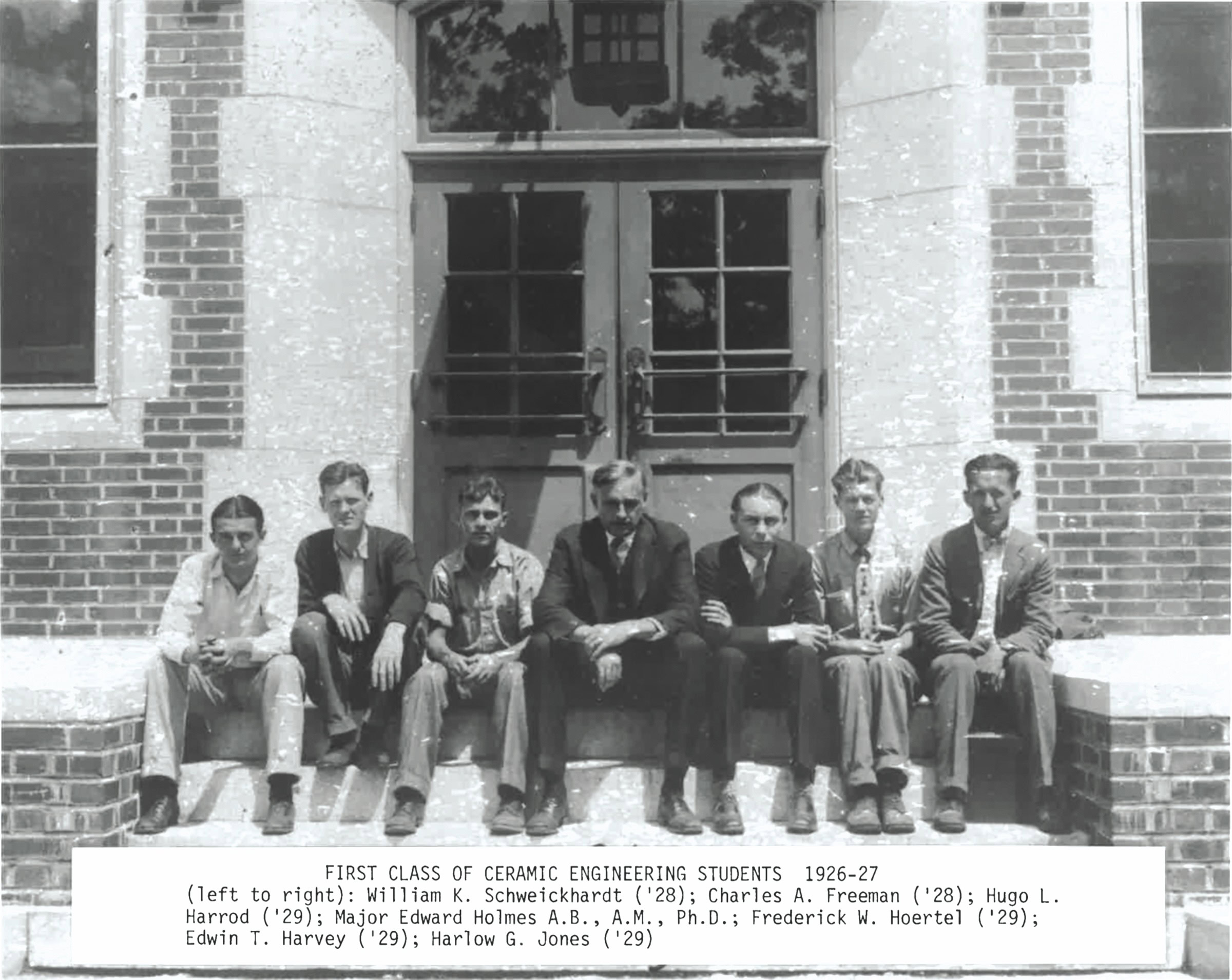
Figure 1. First class of ceramic engineering students (1926–1927). Credit: Missouri S&T University Archives
The foundational ties between the Rolla program and the refractories industry have been sustained for decades through a unique professional bridge: the annual Refractories Symposium. Hosted by the Greater Missouri Section (formerly the St. Louis Section) of The American Ceramic Society, in partnership with the ACerS Refractory Ceramics Division, this symposium has served for more than 60 years as a premier global forum for the exchange of technical knowledge between academia and the refractories industry. This enduring partnership reflects the department’s original mandate to provide scientific rigor to the study of heat-resistant materials.
The synergy between the campus and the Section is perhaps most visible through the Theodore J. Planje St. Louis Refractories Award. Presented annually at the Refractories Symposium, this prestigious honor commemorates Theodore J. Planje, an MSM alumnus and dean who was a titan of the refractories field, ensuring that the spirit of industrial collaboration that founded the department remains a cornerstone of its second century.
Evolution of the institution and department
MSM operated under its original name until 1964, when it became the University of Missouri at Rolla (and shortly thereafter, the University of Missouri–Rolla, or UMR). In 2008, the institution adopted its current name, Missouri University of Science and Technology (Missouri S&T), to more clearly communicate its mission as a leading technological research university.
Today, Missouri S&T is classified as a Carnegie R1 institution, a designation reserved for universities with the highest level of research activity. This status, achieved in 2025, places Missouri S&T among the top tier of research universities in the U.S. Missouri S&T graduates approximately 1,000 engineers annually from its more than 15 ABET-accredited programs, consistently ranking in the top 30 to 50 of institutions nationwide. Figure 2 highlights some of the university’s many graduates since the founding of the ceramics program.
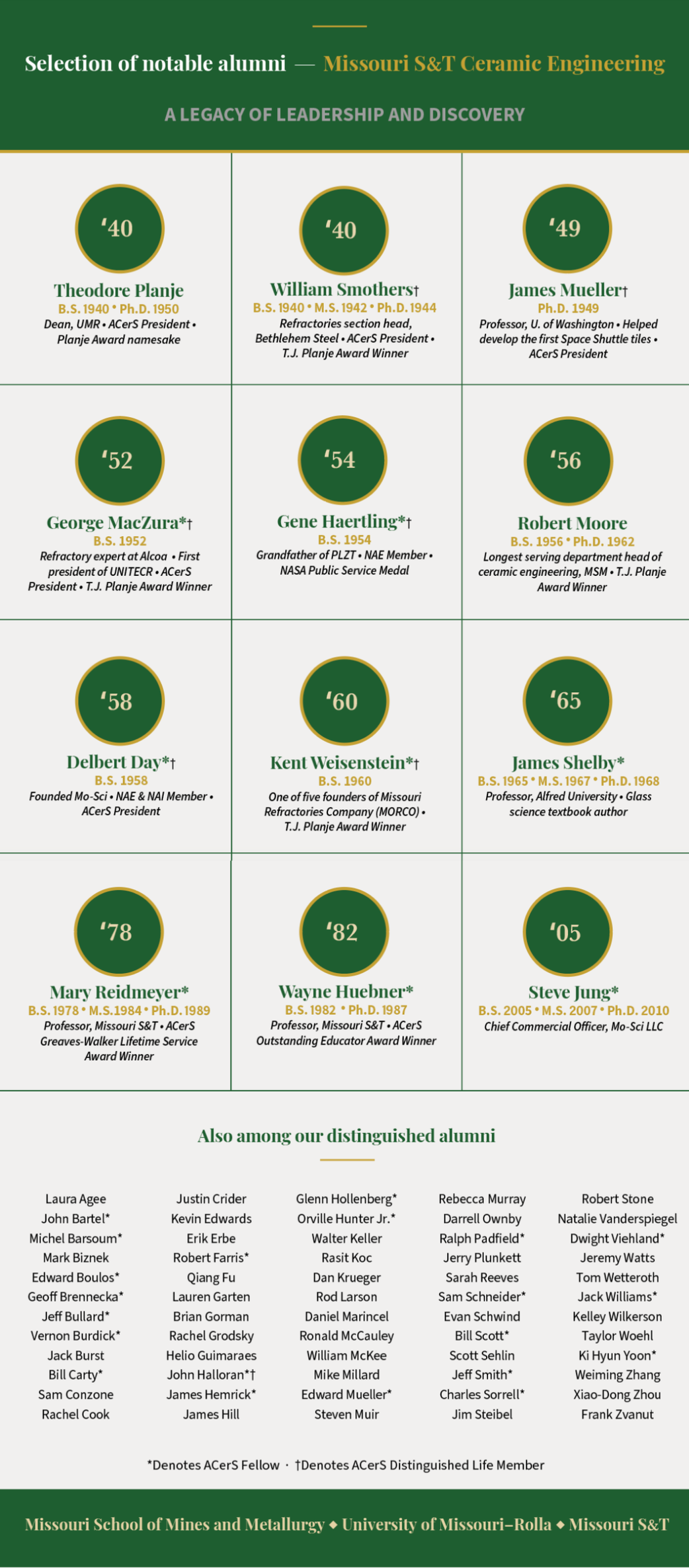
Figure 2. The Missouri S&T ceramic engineering program has been defined by faculty and alumni who have made enduring contributions to the field. The individuals mentioned in this figure represent a selection of the leaders who have shaped the program’s legacy. Credit: Information provided by Charmayne Lonergan; layout done by ACerS
In the United States, ceramic engineering as a specialized academic discipline peaked around the 1980s, when there were as many as 14 ABET-accredited ceramic engineering programs. However, the late 20th century saw a massive wave of consolidation, as many universities merged their ceramic and metallurgical departments into broader materials science and engineering programs.
Missouri S&T was not immune from these pressures, as the Departments of Metallurgical Engineering (founded 1870) and Ceramic Engineering (founded 1926) were merged into a Department of Materials Science and Engineering in 2004. However, the identities of each degree program have been maintained in distinct curricula featuring hands-on laboratory sequences and specialized coursework each semester from sophomore year through graduation.
By 2025, the number of accredited ceramic engineering programs in the U.S. had dwindled to just two: Missouri S&T and the New York State College of Ceramics at Alfred University. A third accredited program at Colorado School of Mines is forthcoming, reflecting a renewed interest in the field.
Notably, there are now fewer ceramic engineers produced in the U.S. as of 2025 (about 50) than in 1925 (about 125). This rarity makes the graduates of accredited ceramic engineering programs highly sought after by industries that require practical, hands-on expertise in the design and manufacture of inorganic, nonmetallic materials.
Ceramic engineering at Missouri S&T: Present and future
As the ceramic engineering program at Missouri S&T begins its second century, the faculty has developed a strategic vision that ensures the program remains relevant to the evolving needs of industry, government, and society.
The program maintains extensive hands-on laboratories in traditional clay-based ceramics; powder processing; sintering and microstructure development; and mechanical, thermal, and electrical properties of ceramics. Starting in the 2026–2027 academic year, the Bachelor of Science in Ceramic Engineering will offer six new emphasis areas to better define the relevance of the degree to prospective students and hiring managers.
These areas reflect strategic research priorities and provide students with specialized expertise in high-impact fields.
- Materials for Extreme Environments: This emphasis explores the physics and chemistry of materials subjected to extreme heat, radiation, and corrosive environments. This focus area builds on long-standing department strengths in refractories and high-temperature materials. Research into ultrahigh-temperature ceramics grew significantly over the last 20 years as the U.S. government invested in structural materials and thermal protection systems for reusable hypersonic aerospace vehicles. Recent years have seen further growth to include research for materials for concentrated solar power, nuclear fission/fusion energy systems, and in-situ sensors for steelmaking.
- Biomaterials: This emphasis prepares students to develop materials that interact with biological systems. Research in this field includes resorbable implants, drug delivery vehicles, and ceramic scaffolds for tissue engineering. Researchers at Missouri S&T are internationally recognized for pioneering bioactive glass and ceramic materials, including radioactive glass microspheres used clinically to deliver localized radiation therapy for liver cancer. Current efforts focus on ion‑doped and borate‑based bioactive glasses that release therapeutic ions (such as copper and zinc) to combat infection, disrupt biofilms, and accelerate healing in chronic and traumatic wounds.
- Energy Materials: This emphasis focuses on materials used in energy conversion and storage, including solid-state batteries, fuel cells, capacitors, and photovoltaics. Development of solid oxide fuel cells, a technology that holds promise as a high-efficiency electrochemical energy conversion and power generation technology for use in aircraft and electrical power, has been one of the key research areas.
- Functional Materials: This emphasis examines ceramics and glasses engineered to perform active physical functions rather than structural roles. Focus is placed on materials exhibiting controlled electrical and ionic transport, dielectric and ferroelectric responses, magnetic ordering, and optical functionality, with attention given to processing–structure–property relationships relevant to electronic, sensing, and information technologies. These efforts align closely with and benefit from the university’s new semiconductor engineering degree program, which provides strong synergy through shared interests in electronic materials, thin‑film processing, and next‑generation micro‑ and nanoscale technologies.
- Computational Materials Science and Engineering: This emphasis addresses the modeling and simulation of materials using physics-based and data-driven approaches. Core themes include multiscale modeling, high-performance computing, and machine learning methods for predicting materials properties and informing materials design. These efforts are further strengthened by Missouri S&T’s new AI+X Master of Science degree program, which integrates artificial intelligence with disciplinary research.
- Materials Characterization and Analysis: This emphasis focuses on advanced microscopy, spectroscopy, diffraction, and other techniques used to analyze materials from the atomic to the macroscopic level. A strong priority is placed on hands‑on training, with students gaining direct experience in state‑of‑the‑art instrumentation through research and coursework. Planned developments include an expanded undergraduate materials characterization laboratory designed to integrate modern analytical tools into the curriculum and strengthen
experimental competencies for both research and industry pathways.
Centennial celebration and invitation
The upcoming centennial of ceramic engineering at Missouri S&T is more than a departmental milestone; it is a celebration of a century of industrial partnership and scientific progress. From the early 20th century advocacy of A.P. Green to the modern collaborations with federal funding agencies, national labs, and industry, the program’s success has always been rooted in its ability to address real-world engineering challenges.
We invite all alumni, industry partners, and members of the broader materials community to participate in our centennial activities throughout the 2026–2027 academic year. Planned events include technical seminars, laboratory showcases, and community gatherings that honor our history while looking forward to the next century of innovation. Furthermore, we are pleased to announce that a hardcover history of the department is currently under preparation and will be available for purchase in 2027.
For updates on the centennial schedule and information on the forthcoming historical volume, please contact matlsci@mst.edu.
Acknowledgments
The authors gratefully acknowledge the ceramic engineering faculty at Missouri University of Science and Technology for their support and encouragement during the writing of this perspective article. Special thanks are extended to campus historian Larry Gragg for contributing historical context featured in this article, which will be further elaborated in his forthcoming book.

Related Articles

Market Insights
Next-gen superconducting ceramics could change how we travel and much more
Forty years ago, two physicists from IBM’s research laboratory in Zürich, Switzerland, reported a groundbreaking discovery: Superconductivity, or the quantum mechanical phenomenon in which certain materials exhibit zero electrical resistance when cooled, could be achieved at higher temperatures using ceramics. Superconductivity had been discovered decades before, but its applications had…

Market Insights
Why most AI manufacturing projects fail and how to fix it
Artificial intelligence is reshaping advanced manufacturing, especially processes involving ceramics, glasses, and other hard or brittle materials. But adopting AI is far more difficult than simply buying software and connecting machines. Manufacturers must understand the advantages and limitations of different models, so they can determine where AI fits best within…

Bulletin Features
Radiation effects on rare earth chemistry in molten salts for nuclear applications
Across the nuclear energy sector, molten salts are shaping the next generation of nuclear technologies, from advanced power reactors to used nuclear fuel recycling. In molten salt reactors (MSRs), molten salts uniquely serve as both the primary coolant and fuel medium, a dual role that sets MSRs apart from conventional…