

Vast amounts of food waste around the world cause significant health and environmental problems that ultimately lead to direct economic costs.
However, most food wastes contain valuable minerals that could serve as raw materials for the production of glass, ceramics, and glass-ceramics.
Food waste as a problem
A recent report by the Food and Agriculture Organization of the United Nations estimates that the worldwide direct economic cost of food waste is $750 billion.1 Although this figure includes upstream costs, such as the energy to make food that is not consumed, there are also significant costs incurred once the waste is created.
The United States produces ~250 million tons of municipal solid waste (MSW) each year, of which 28 wt% (70 million tons) is organic, not including paper and cardboard.2 Food waste accounts for ~14.5 wt% (35 million tons) of the total MSW. Similarly, food waste in the European Union is ~89 million tons per year,3 and, in China, it is >40 million tons per year.4 Preconsumer waste can make up a large part of this waste—one-third of all fruits and vegetables produced worldwide are estimated to be lost before they reach consumers.5
Organic waste (Figure 1) typically has value in terms of energy, water content, and mineral content, but current methods of waste disposal do not utilize these resources. Instead, communities incur costs to store it in landfills,6 where it emits uncontrolled greenhouse gasses7 and poses risks to groundwater through contamination.8 Recent government regulations regarding landfills, for example, those in Europe,9 lead to a direct economic stimulus to create value out of waste. Solutions to reduce the mass of landfills could be coupled with extraction of the resources they contain.
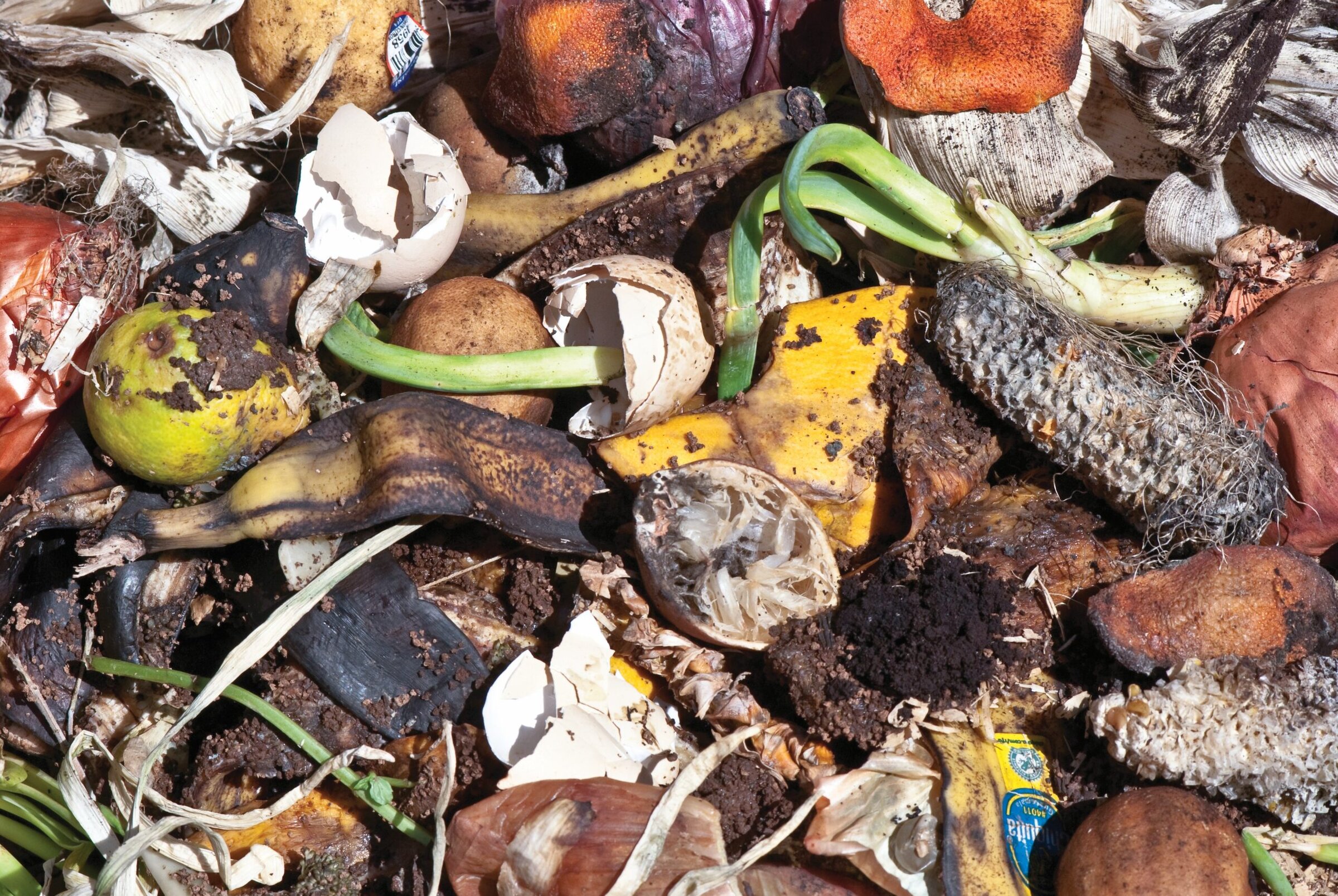
Figure 1. Typical mixed household organic waste. Credit: Reimanis; CSM
Organic food waste as a raw material
Reduction of landfills offers a motivation to utilize organic food waste as a source of raw materials. Another motivation could be its potential independence from geography and, hence, geopolitical influences. Although rare-earth elements have not yet been found in plants, there may be other strategic minerals present.
Minerals in organic waste have been used for a long time to make various materials, including reinforcements for thermoplastics,10 carbides, nitrides, and concrete;11–17 fluxing agents for ceramics;18 formation of activated carbon;19 and others.9,20 Yet, their use is not widespread for two major reasons. First, relatively little information exists about mineral content in plants in a way that is useful to a materials-processing engineer. Second, most food wastes contain a significant amount of water and organic matter that must be removed before the mineral content can be utilized. The energy costs for their removal can be balanced if the mineral extraction is performed in parallel with an operation that recovers water and converts the organic matter to a useful fuel, such as syngas. However, current raw-materials companies and waste management facilities probably are not positioned to do this.
The mineral content of organic waste varies widely depending on the type of plant, thereby providing the ability to batch a variety of glass and glass-ceramic compositions. This diversity allows significant flexibility in producing these engineered materials. Table 1 shows the minerals needed for some common glasses.
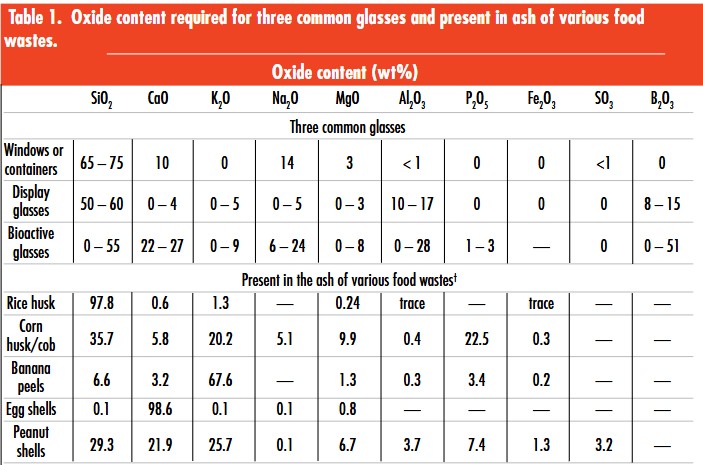
†Does not include relative amounts of water and organics. Determined by XRF. Credit: Data from Cornejo et al.; layout by ACerS
Table 1 also shows minerals present in common food wastes as measured using X-ray fluorescence (XRF), a measurement that assumes the most stable oxide of the element is present. However, some of the minerals may not be present as oxides. For example, the calcium in eggshells exists at CaCO3, a raw material more desirable than CaO for glass manufacturing. The amounts of certain minerals that are undesirable in glass, for example, Fe2O3, have very low quantities in plants. There are certain minerals present in some plants, for example, S and Cl, that are desirable as fining agents for glass fabrication. In these ways, the mineral sources from plants may differ from those obtained in traditional mining. There also may be elements present in some plants that are difficult to detect by XRF, for example, lithium. The authors are working to find other methods for their detection.
It is possible to batch a wide variety of glass compositions from a small number of food wastes. However, two challenging aspects emerge from an evaluation of this data. First, an important element for display glasses, boron, has not been detected by XRF or energy-dispersive X-ray spectroscopy (EDS). Therefore, it likely is not present in significant quantifies in any of these wastes. To date, boron has not been detected in analyses of about 40 food waste sources. Thus, boron mined from the earth may be needed as a supplement to make borosilicate glasses from organic food wastes.
Second, although the variety of minerals implies a flexibility in choice of glass composition, it poses a problem in terms of uniformity of mixed wastes. Namely, similar to mines in various locales, every landfill is likely unique in its mineral footprint. One solution to this problem of uniformity is to obtain waste prior to its arrival at the landfill. There are many opportunities to utilize single-source streams of food waste, particularly in the food industry. For example, wastes associated with the three most used grains in the world—rice, wheat, and corn—are excellent single-source candidates. A second solution to the problem of uniformity is to utilize mineral extraction techniques similar to those used in the mining industry.
A natural question to ask is whether there is sufficient food waste to supply the needs of the glass industry. In 2011, of the 100 million tons of glass produced worldwide, ~50% was container glass. Container glass is ~70 wt% silica, and, thus, consumed ~36.4 million tons of silica raw material. Also in 2011, 2,173 million tons of grain was produced worldwide. The waste generated from this grain was ~20%, or 435 million tons. Because grain waste is ~15 wt% silica (on average), ~65 million tons of silica could have been collected from waste—more than enough to supply all the silica needed for the glass container industry in 2011.
Other common ingredients for glass are found in abundance in organic food waste around the world. For example, annual waste from China’s largest oil crop, peanuts, is ~5 million tons.21 Because peanut shells are ~93 wt% organic material and water,22 Table 1 shows that peanut shell waste from China alone can produce 110 thousand tons of CaO, 130 thousand tons of K2O, and 20 thousand tons of Al2O3. More than 50 thousand tons of eggshell waste are produced in the U.S. each year. This amounts to almost 50 thousand tons of CaO or CaCO3 from one source in the U.S. that may be used by the glass and glass-ceramics industries.
Making glass and glass-ceramics from trash
To make glass, food wastes are typically dried in an oven and then heated to a temperature at which undesired components, such as carbon, are removed through the formation of gaseous species. Thermal analysis during this heat treatment reveals the temperatures at which H2O, COx, and NOx may be removed. Typically, a second heat treatment produces the mineral desired for glass batching. Certain food wastes, such as egg shells, which are primarily CaCO3, do not need this heat treatment and may be used directly as a raw material. Figure 2 illustrates the process for five food waste sources investigated by the authors.
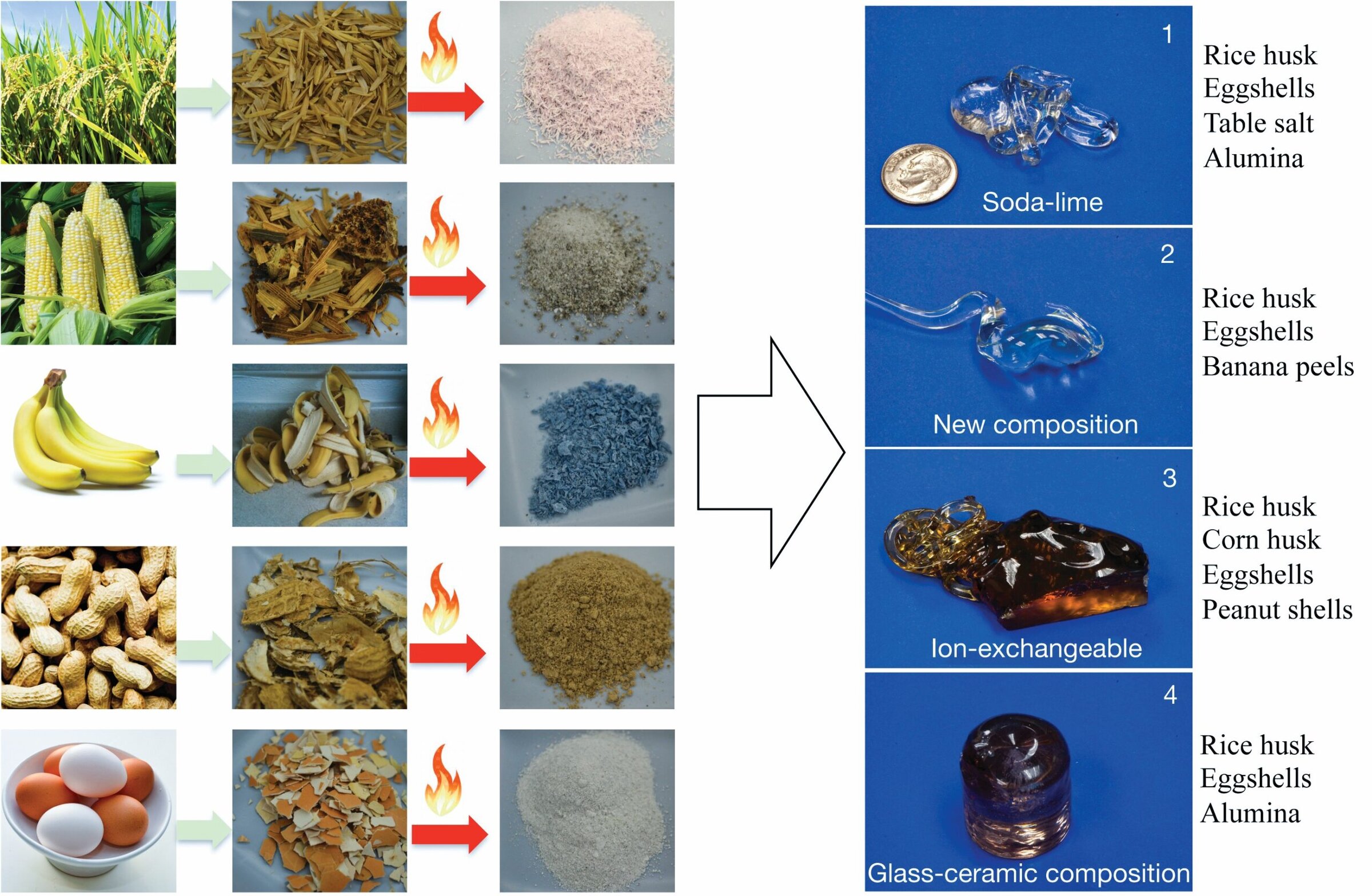
Figure 2. Raw materials are produced by grinding and heating food wastes. Four glasses made from these wastes are shown at the right with a U.S. dime shown for scale. Credit: Reimanis; CSM
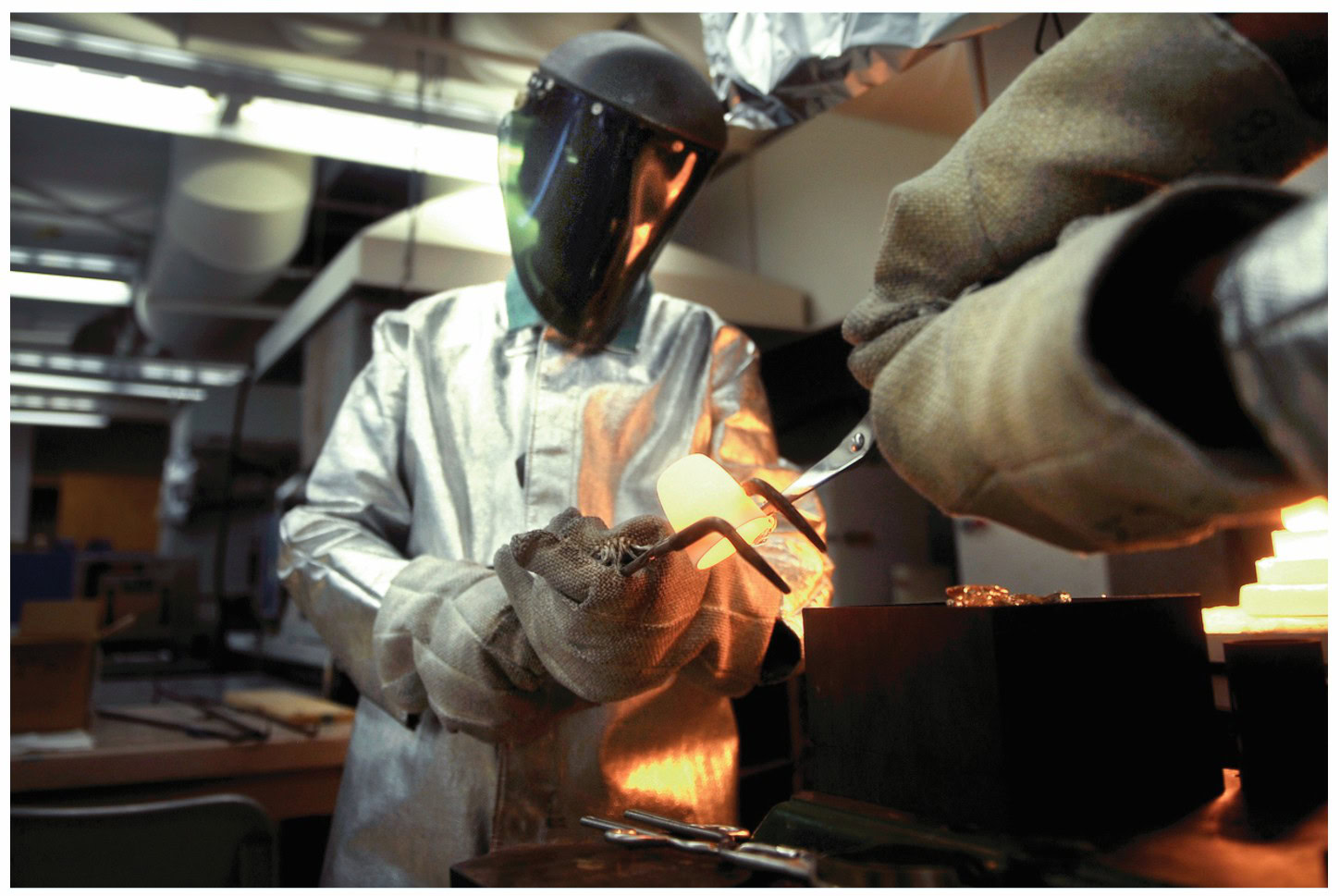
Figure 3. Author Ivan Cornejo pouring glass made of organic waste. Credit: Denver Post
With knowledge of the mineral content in each waste (Table 1), one is able to develop the appropriate batch for a particular glass composition. The authors made four glasses by heating the raw materials shown in Figure 2 to temperatures between 1,400°C and 1,550°C (Figure 3). Good optical transparency usually indicates amorphicity, and X-ray diffraction and dilatometry confirmed that the materials produced are indeed glasses.22 Figure 4 shows dilatometric data for three glasses made from organic waste. Glass 1 is a typical window glass composition (soda-lime) that was made from rice husk and egg shells with a small amount of table salt and alumina from non-waste sources. The table salt and alumina were added in relatively small amounts (7.5 wt% table salt to reduce viscosity and 0.5 wt% alumina to enhance durability). Glass 2 is a calcium potassium silicate glass with composition not available in the literature, made with rice husk, egg shells, and banana peels. Glass 3 is a multicomponent, ion-exchangeable glass made from rice husk, corn husk, egg shells, and peanut shells. Glass 4 is a wollastonite-like, glass-ceramic composition made from rice husk, egg shells, and alumina. Each glass has distinct thermal properties (Figure 4).
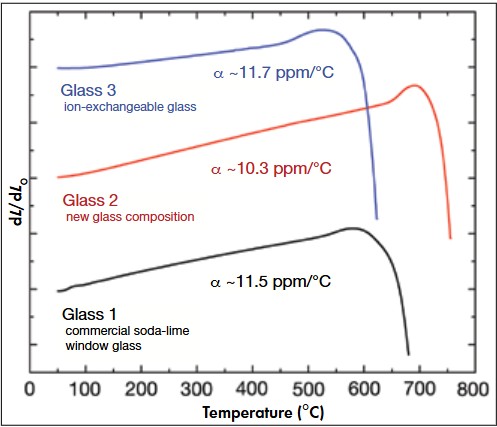
Figure 4. Thermal expansion as a function of temperature for three glasses made from organic waste. The glass transition temperature, softening point, and coefficient of thermal expansion (α) are different for all three glasses. Credit: Reimanis; CSM
It is not known at this time whether the properties of glasses and glass-ceramics made from food waste are different from those made with raw materials mined from the earth. One would expect differences depending on the presence or absence of certain trace elements or if their valence state is different, similar to glasses made from minerals mined from the earth.
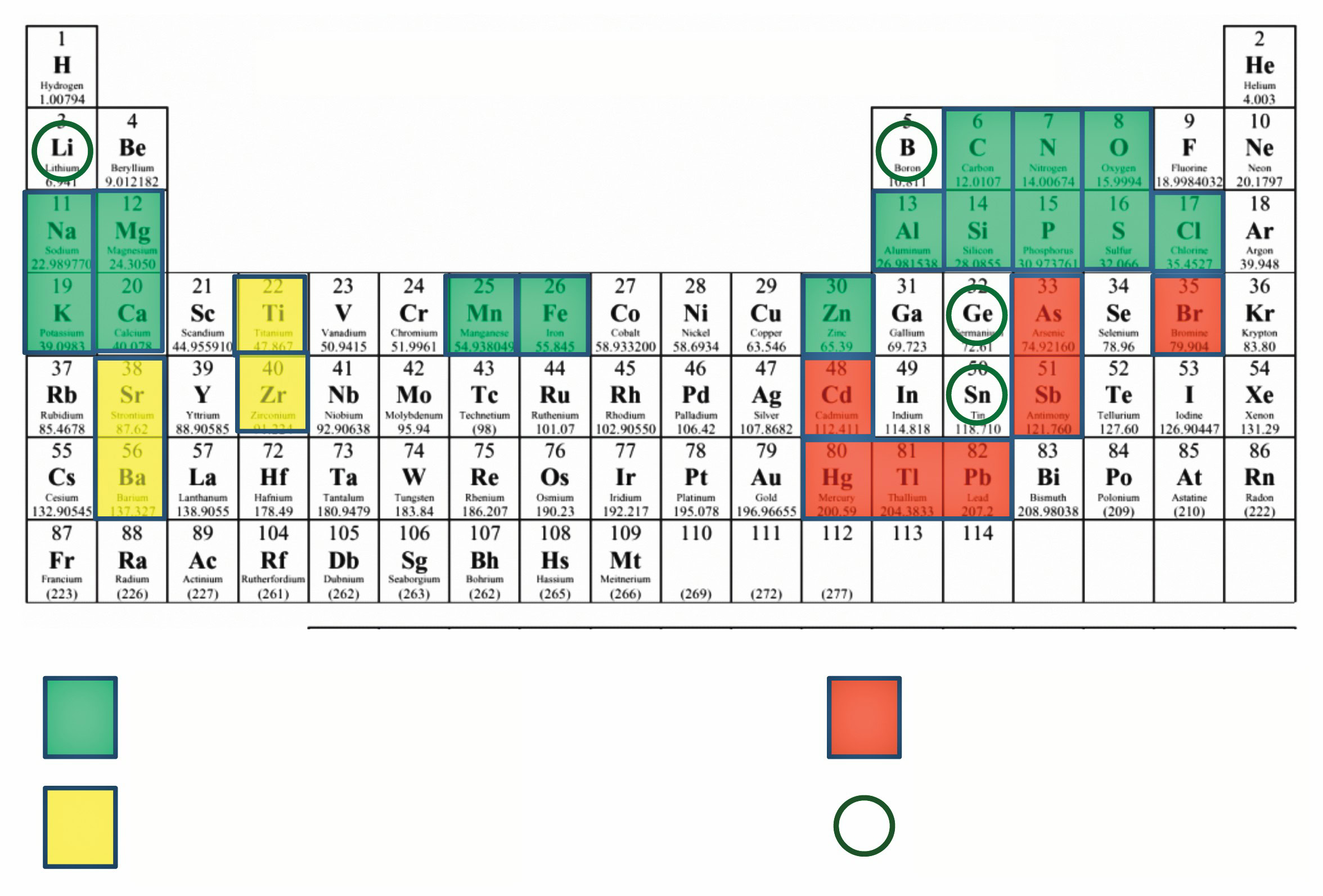
Figure 5. Periodic table of elements showing elements present in organic wastes. Red highlights the elements that are highly undesirable in raw materials for glass, but may sometimes be present in minerals mined from the earth. Credit: Reimanis; CSM
Figure 5 provides a version of the periodic table of elements highlighting the presence or absence of elements that are important in glass manufacturing. It is based on EDS analysis of waste from about 40 foods. This serves mainly as a prompt to think about food waste as a valuable resource. In the meantime, the authors are in the process of cataloging the elements present in various organic food wastes in a quantitative manner and exploring methods to use those wastes to make glass and glass-ceramics.
Food wastes as a resource
Food waste serves as a valuable and sustainable resource for the raw materials to make glass. Its use also alleviates the environmental and health problems associated with organics in landfills. There is a sufficient quantity to provide enough raw materials for several common glasses. It remains to be seen how this may be employed in a manner that is energetically most efficient and economical for industry.
Acknowledgment
Two of the authors, IAC and JS, acknowledge funding from the National Science Foundation Ceramics program under DMR-1360565.

Related Articles

Market Insights
Next-gen superconducting ceramics could change how we travel and much more
Forty years ago, two physicists from IBM’s research laboratory in Zürich, Switzerland, reported a groundbreaking discovery: Superconductivity, or the quantum mechanical phenomenon in which certain materials exhibit zero electrical resistance when cooled, could be achieved at higher temperatures using ceramics. Superconductivity had been discovered decades before, but its applications had…

Market Insights
Why most AI manufacturing projects fail and how to fix it
Artificial intelligence is reshaping advanced manufacturing, especially processes involving ceramics, glasses, and other hard or brittle materials. But adopting AI is far more difficult than simply buying software and connecting machines. Manufacturers must understand the advantages and limitations of different models, so they can determine where AI fits best within…
Bulletin Features
Radiation effects on rare earth chemistry in molten salts for nuclear applications
Across the nuclear energy sector, molten salts are shaping the next generation of nuclear technologies, from advanced power reactors to used nuclear fuel recycling. In molten salt reactors (MSRs), molten salts uniquely serve as both the primary coolant and fuel medium, a dual role that sets MSRs apart from conventional…