

The Korean people can trace their history back 700,000 years, as evidenced by Paleolithic implements discovered at such sites as Geomeunmoru Cave in Sangwon and Durubong Cave in Cheongwon. The people of that distant era had at least this much in common with their descendants in contemporary Korea: a talent for using materials at their disposal to create innovative solutions. Those artifacts are the prehistoric precursors to sophisticated ceramic tools and technologies being developed and marketed by Korea today—advances that play a significant role in the country’s economic growth and prominence in the global economy.
To get a sense of the size, scope, and potential of ceramic export opportunity in Korea, consider that in 2014, ceramic application exports to the United States alone generated $790.4 million, and they are expected to rise 21% to $953.7 million in 2015. The biggest contributors to the 2014 figure were cutting and digging tools ($152.5 million); precision machine control ($107.5 million); glass ($80.6 million); cement, lime, and plaster ($60.9 million); and semiconductors and display products ($56.4 million). These exports are expected to see a continued gradual rise, aided by supports provided by the U.S.–Korea Free Trade Agreement.
Growth rates are significant enough that the Korean government has promoted projects designed to support the sector’s ability to ensure that its manufacturing capacity keeps pace with market demand. For example, the Ministry of Trade, Industry and Energy has sponsored a project devoted to “development of product application technology linked to demand of nanomaterials,” and the Small and Medium Business Administration is promoting “development of new products for conditional purchase.” Market demand also creates pressure to increase the number of skilled professionals in the industry, and the Ministry of Education has responded by launching a Leaders in Industry–University Cooperation program, whose aim is to increase employment rate by placing students in internships and providing them with classroom training that is customized to industry demands.
On the research front, activity generally follows one of two directions. “First mover R&D” is intended “to lead future market through developing world-class core materials and promoting early commercialization,” while “fast follower R&D” facilitates accelerate follow-up on world market opportunities by analyzing products to identify demand for materials.
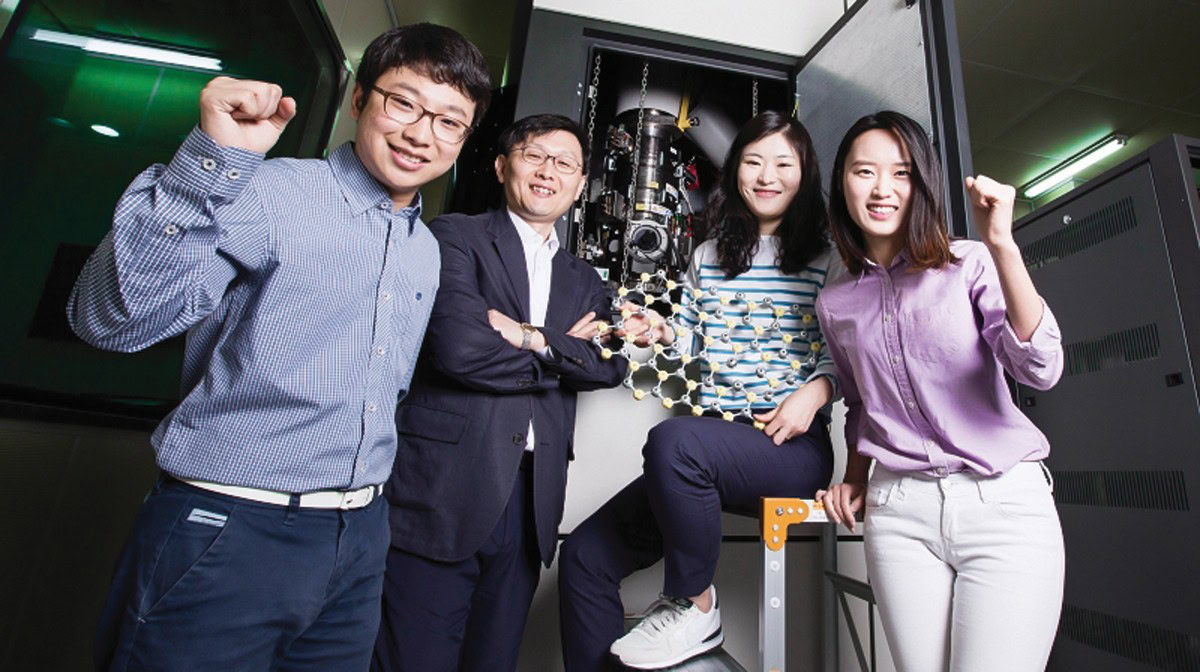
Zonghoon Lee’s UNIST research team poses in front of an advanced transmission electron microscope. From left are Jongyeong Lee, Zonghoon Lee, GyeongHee Ryu, and HyoJu Park. Credit: UNIST
Nanotechnology
Look to see increased activity in Korean research and development with regard to nanotechnology, which the government believes will contribute to jobs growth. To that end, it supports collaboration among universities, industry, and research institutes to encourage creation of new industry and strengthen support to small and medium enterprises. At the same time, government policy has committed to “enhancing global competitiveness of major industries, such as nanoelectronics, nanomaterials, nanobio, nanoenergy, and other nano-related industries,” our panel said.
“The Ministry of Trade, Industry and Energy has also intensified investment for R&D of 13 future growth engine areas, such as nano-based biomimetic devices, wearable smart devices, unmanned aerial vehicles, advanced materials machining systems, and carbon materials, to create items leading to economic improvement in the future.” The government has identified 30 future core technologies in five industries for the industrialization of nanotechnology to meet demand of future society. Among them are nanosensors for the internet of things (IoT), MEMS nanotechnology for bio, and flexible high-energy harvesting and saving nanomaterials. “It should be noted that about 50% of the nanotechnology companies in Korea are related to materials. The convergence between nanomaterials and various new technologies will be the key for future advances in nanotechnology.”
Semiconductors
Korea produces 60–70% of semiconductor supplies, and that trend is expected to continue at least “for a while,” our panel said, owing to limited competition and rising demand in the memory semiconductor space, particularly with the emergence of IoT. “As you know, the semiconductor companies in Korea, Samsung and SK Hynix, are so competitive and have a world market share of more than 60% in memory semiconductors like DRAM and NAND flash. But in system application semiconductors like logic devices and application processors, Korea’s world market share is less than 10%. However, it is hard to predict the long-term trend since the present shrinkage technology in semiconductor processing almost reaches its limit.”
Our panel drew attention to two areas of particular interest the semiconductor sector. “First, semiconductor industry demand is shifting to ceramic parts with less particulate contamination, because two semiconductor giants of Korea, Samsung Electronics and SK Hynix, are focusing on advanced nanotechnology below 20 nm, and thus they need suitable ceramic materials that at this time can be provided only by Korean ceramic companies. Second is the development of highly functional ceramic parts such as electrostatic chucks, ceramic heaters, and ceramic cathodes. Those parts are so important for the development of new semiconductor processing technology that there is a strong need for domestic development and production, which provides the semiconductor industry more freedom in development of new nanotechnology. But intellectual property can be a major barrier.”
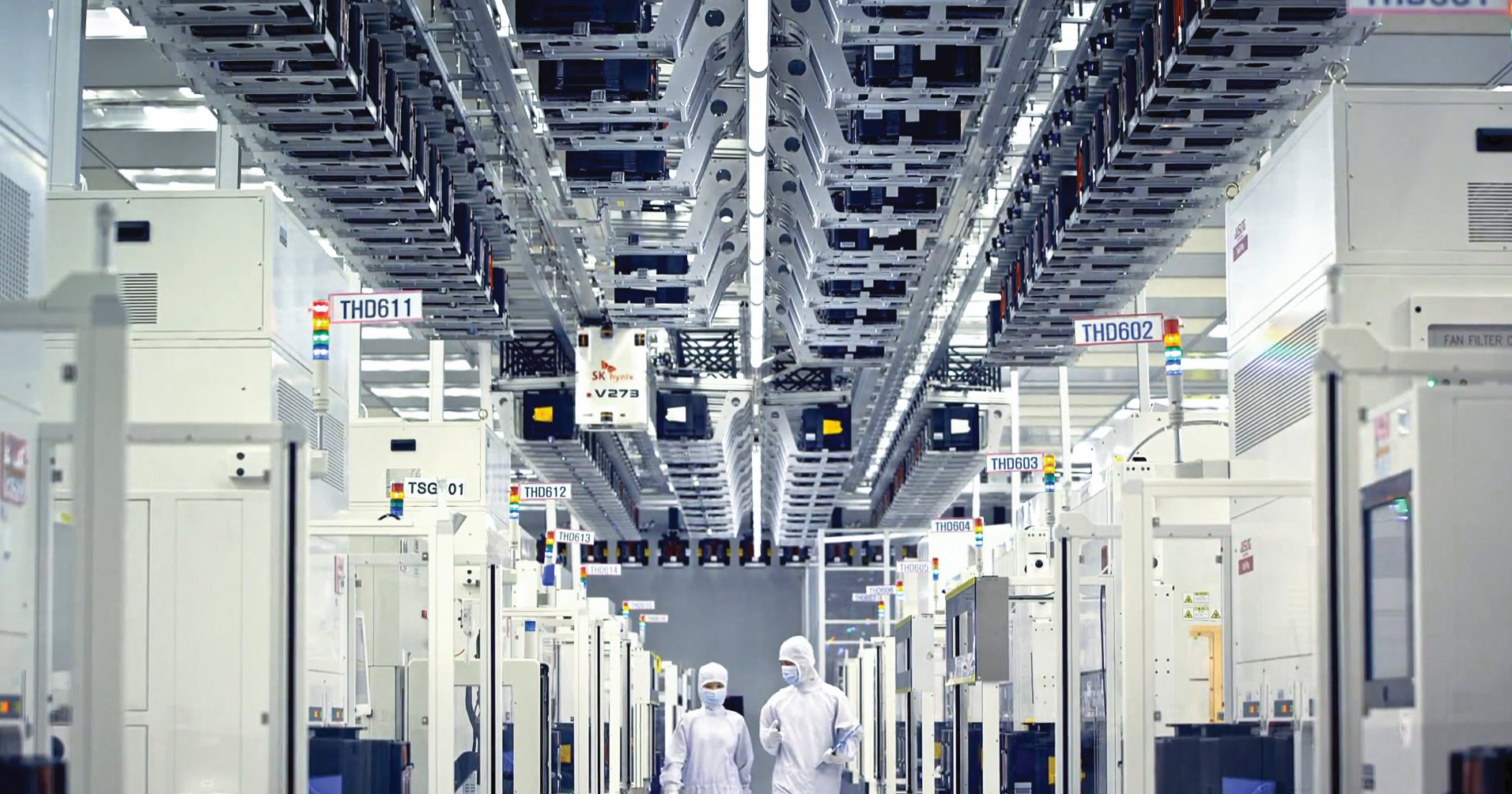
SK Hynix is the second largest manufacturer of memory semiconductor. Credit: SK Hynix; Youtube
Despite these developments, the panel reported that to date, “Korean universities and students do not have much interest in ceramics for semiconductor suppliers.” Industry itself has stepped in to address the shortfall between its requirements and activity on campus. For example, Samsung founded Sungkyunkwan University’s Department of Semiconductor Engineering “to educate students who can work at Samsung immediately after graduation.” Initiatives of this kind, which create a direct link between areas of academic concentration and opportunities for employment, are expected to influence student interest in specific areas of ceramic research and development.
Automotive
Korea’s automotive industry is experiencing growth in the Asian and Latin American markets. Are Korean ceramic and carbon fiber manufacturers under pressure to reduce the cost of their automotive components to meet price demands in those markets?
“Korean automotive companies themselves are under pressure to improve performance with reasonable prices rather than to reduce the cost,” our panel said. “For fuel efficiency improvement, for example, they are interested in utilizing lightweight bodies using carbon fiber, hybridized systems of combustion engines and electrical motors, and green engines using hydrogen gas. In contrast, Korean companies, such as Hyosung and Taekwang, have already developed and been producing carbon fibers. They are also trying to reduce production cost of the carbon fiber to $10~13/kg, which is required by automotive manufacturers, one of the largest sources of demand. For example, they are focused on applying low cost precursors and developing innovative carbonization processes as well as producing large tow carbon fibers.”
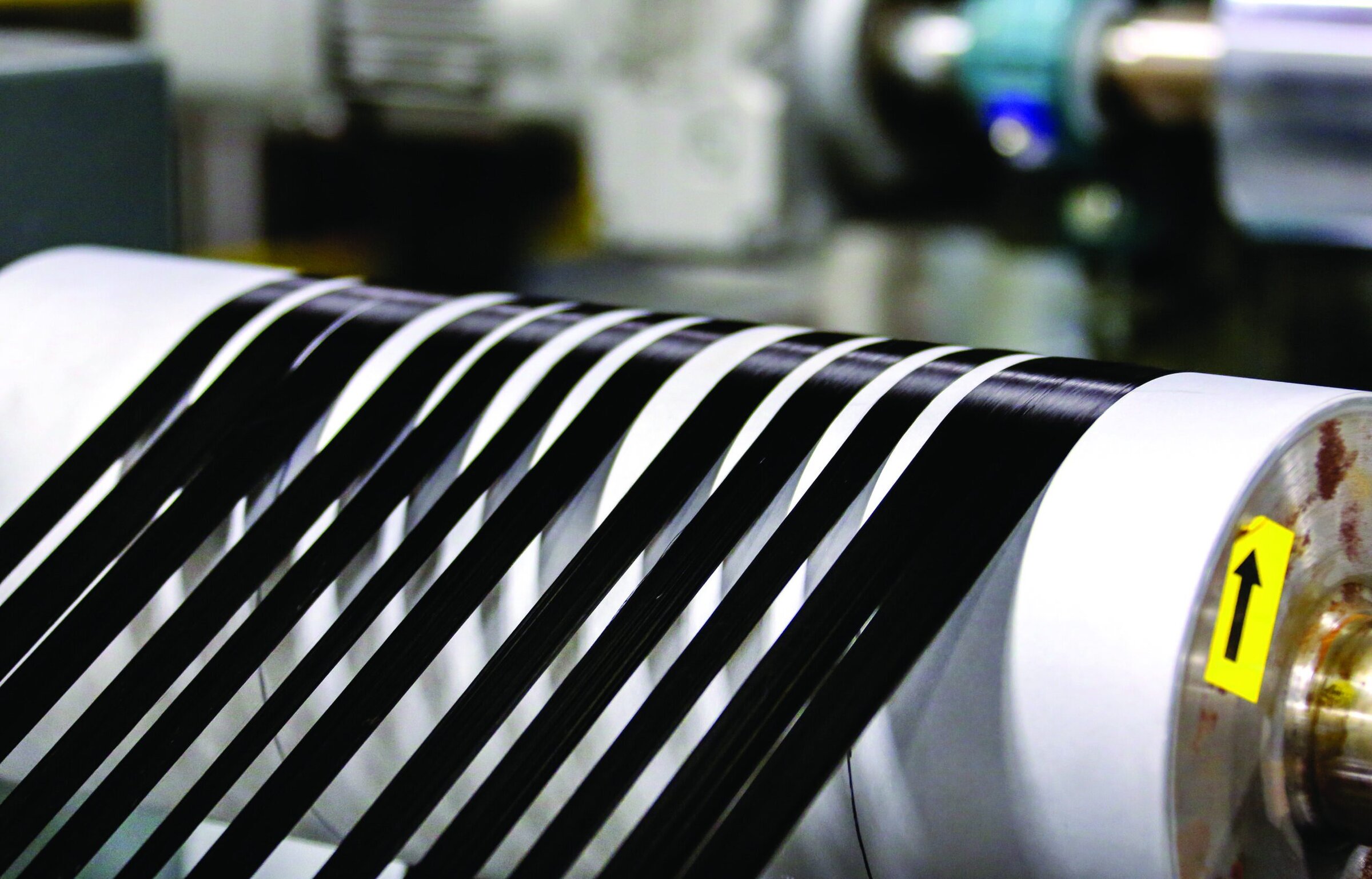
Korean companies, such as Hyosung and Taekwang, produce carbon fibers. Credit: Oak Ridge National Laboratory; Flickr CC BY-NC-ND 2.0
These demands have also sparked research and development activities through a consortium that includes material suppliers, part manufacturers, research institutes, universities, and finished-product manufacturers in Korea.
“They have developed portfolio technologies for carbon fiber reinforced composite parts, including low cost carbon fiber, new resin with fast cure and high heat resistance, fast liquid molding process, and new design technology for composite automotive bodies. It is, of course, that improvement of performance and durability as well as a cost-down of ceramic components are urgent issues to all manufacturers. The ceramic components made and applied in Korea are knock sensors, temperature sensors, gas sensors, spark plugs, heaters, ultrasonic sensors, pressure sensors, anti-friction-coatings, wear-resistant coatings, emission after-treatment systems, etc. It seems that all the manufacturers’ R&D priority is to reduce cost. Further, carbon fibers and ceramic fibers for automotive applications in Korea are faced with both cost balance and performance improvement. Therefore, manufacturers are developing optimal processing technology for ensuring both high performance and competitive price. For example, there is ongoing R&D for improvement of product capacity of composite components through developing rapid-hardening technology of fiber and resin and for fuel efficiency improvement and competitive price through hybridizing carbon fibers and basalt fibers.”
What are the next steps or emerging trends that are most important to watch in Korean ceramic advances for the automotive industry? The panel pointed to application of ceramic fiber composites, such as SiC fiber composites. These are expected to deliver engine and breaker parts that feature long-term durability, ultra-light weight, and the ability to work in high-temperature and high-friction conditions. In addition, “environmentally friendly basalt fiber with low-cost benefits could be applied to automotive components.”
Energy
What impact have new developments in fuel cell technology had on improved fuel efficiency and environmental performance?
“A fuel cell is a device that converts the chemical energy from a fuel into electricity through a electrochemical reaction. In general, as the energy conversion efficiency of fuel cell is much higher than that of Carnot engine, the fuel consumption and emission of pollutants and greenhouse gases can be reduced. Among fuel cells, solid oxide fuel cells (SOFCs) are getting attention as a next generation environmental-friendly electric power generation system, because SOFCs have 45%–65% thermal conversion efficiency and >85% of system efficiency through cogeneration system using waste heat. Recently, materials and processing technology have been developed to reduce operation temperature and improve durability and performance, so the application area of SOFC is expected to expand to not only households, buildings, and power plants, but also portable and transport auxiliary power supply,” our panel said.
“In these circumstances, fuel cells are already competitive with regard to operating expenditure and greenhouse gas emission. This is why the Korean government always considers fuel cell technology as a main candidate for highly efficient and environmentally clean energy sources. Fuel cell systems, such as molten carbonate fuel cell (MCFC) and SOFC power plants, led by Posco Energy in Korea, are expected to hold a dominant position not only in fuel efficiency but also with regard to emission rates of CO2, NOx, SOx gases, and noise levels in comparison with traditional gas-turbine based power generation systems. In addition, the Korean government has focused on proton and anion based membrane fuel cells, which require corrosion resistive catalyst structure.”
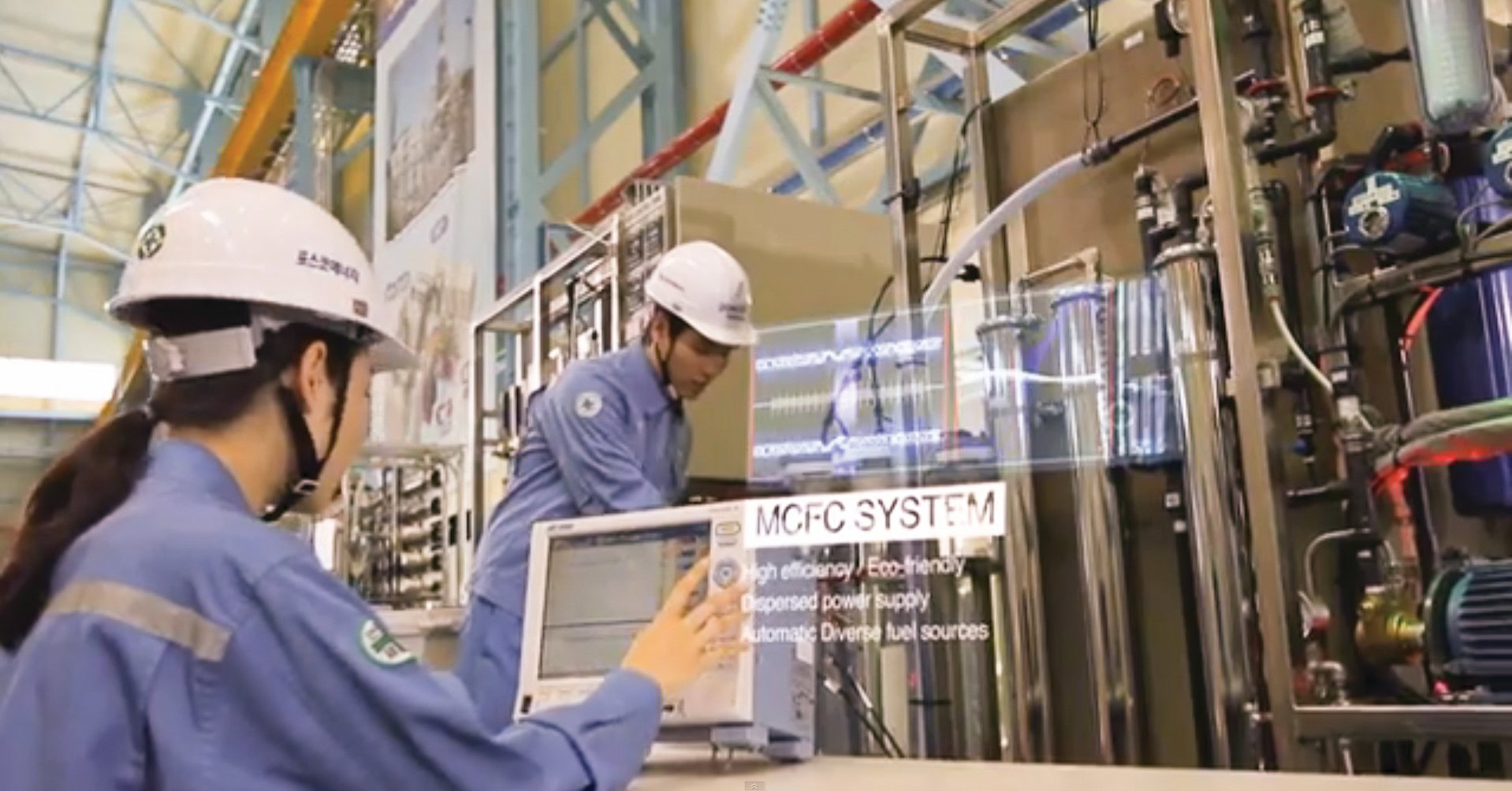
Posco Energy is the world’s largest fuel cell producer, offering molten carbonate and solid oxide power systems. Credit: Posco Energy; YouTube
Defense
Two trends are most prominent in ceramic research and development for the defense sector. The first relates to advances in ceramic applications that can function in extreme environments, and areas of focus include aerospace, rockets, and bulletproof materials. The second is precision sensor materials, with applications encompassing such areas as ultrasonic sensors, precision missile sensors, and infrared sensors. These materials are being developed primarily for the domestic market but are seen as having export potential over the long term.
Finally, our panel offered this guidance and advice to U.S. companies that are interested in exploring trade, joint venture, or shared research opportunities with partners in Korea.
“Currently, Korea-U.S. joint research is activated at the government level, and the energy sector is especially active.” The U.S. Department of Energy and Korea’s Ministry of Science, ICT and Future Planning recently launched a joint venture, the International Nuclear Energy Research Initiative, “to develop nuclear power technology through a consortium with industry, university, and institute collaboration.” The Department is also collaborating with Korea’s Ministry of Trade, Industry and Energy on “international joint research for energy, so U.S. companies can participate in the joint research program and initiate shared research opportunities with partners in Korea. To participate in the I-NERI program, both sides must support equal research funds and the research proposal must be submitted to both countries.”
See our market snapshot for information about additional resources available to U.S. companies interested in joint ventures with Korean counterparts.
Our panel of experts
For this year’s international report on Korea, Hai-Doo Kim—president of the Korea Institute of Materials Science, chairman of PacRim 11, Academician at the World Academy of Ceramics, and a Fellow of the American Ceramic Society—assembled a panel of distinguished experts to provide information about the Korean ceramic industry and its role in the semiconductor, automotive, energy, and defense sectors. Their aggregated comments and insights are reflected in this article. Included on the panel were:
- Professor Hyeong Joon Kim, Seoul National University, president of the Korean Ceramic Society
- Professor Jong-Heun Lee, Korea University
- Professor Young Soo Yoon, Gachon University
- Professor Wook Jo, Ulsan National Institute of Science and Technology
- Professor Soo Wohn Lee, Sun Moon University
- Professors Sang-Im Yoo and Seong-Hyeon Hong, Seoul National University
- Jo-Woong Ha, president of InnoCera.com, Korea
- Byung Ik Kim, vice president, and Sung-Min Lee, principal researcher, Korean Institute of Ceramic Engineering and Technology
- Hae-Weon Lee and Jong-Ho Lee, principal researchers at Korea Institute of Science and Technology
- Young-Jo Park, Chul-Jin Choi, Sang-Kwan Lee, and Jong-Jin Choi, principal researchers at Korea Institute of Materials Science
Read more: “On Jeju Island, Korea, PACRIM 11 participants exchange ideas on ceramic industry megatrends“
Read more: “Export expert“
Related Articles

Market Insights
Next-gen superconducting ceramics could change how we travel and much more
Forty years ago, two physicists from IBM’s research laboratory in Zürich, Switzerland, reported a groundbreaking discovery: Superconductivity, or the quantum mechanical phenomenon in which certain materials exhibit zero electrical resistance when cooled, could be achieved at higher temperatures using ceramics. Superconductivity had been discovered decades before, but its applications had…

Market Insights
Why most AI manufacturing projects fail and how to fix it
Artificial intelligence is reshaping advanced manufacturing, especially processes involving ceramics, glasses, and other hard or brittle materials. But adopting AI is far more difficult than simply buying software and connecting machines. Manufacturers must understand the advantages and limitations of different models, so they can determine where AI fits best within…

Bulletin Features
Radiation effects on rare earth chemistry in molten salts for nuclear applications
Across the nuclear energy sector, molten salts are shaping the next generation of nuclear technologies, from advanced power reactors to used nuclear fuel recycling. In molten salt reactors (MSRs), molten salts uniquely serve as both the primary coolant and fuel medium, a dual role that sets MSRs apart from conventional…