

Raw materials are arguably the most important commodities produced around the world, because their availability dictates production of all other downstream products. According to the “Mineral Commodity Summaries 2014,” published by the United States Geological Survey, major industries that consume processed minerals injected an estimated value of $2.44 trillion into the U.S. gross domestic product in 2013.
The report—a snapshot of the 2013 state of raw materials in the U.S.—reminds us that “minerals remained fundamental to the U.S. economy, contributing to the real gross domestic product at several levels, including mining, processing, and manufacturing finished products.”
The USGS report estimates total mineral raw materials produced at U.S. mines in 2013 are worth $74.2 billion, a slight decrease from 2012’s numbers. The decrease, attributed to lower metal prices, reverses a trend after three consecutive years of increased values. Production of most industrial mineral commodities nonetheless increased, with prices remaining stable.
Of the mineral commodities presented in the full report, 19 are completely import reliant. The remaining 44 raw materials equally split between those that are more than 50% import reliant and minerals that are less than 50% import reliant. Fourteen commodities surpassed $1 billion each in total value in the U.S.—(in order of decreasing value) crushed stone, gold, copper, cement, construction sand and gravel, iron ore (shipped), molybdenum concentrates, phosphate rock, industrial sand and gravel, lime, soda ash, salt, zinc, and clays.
The estimated 2013 value of domestically recycled metals and mineral products, such as aluminum, glass, and steel, reached $32.8 billion, a $2 billion increase over 2012 estimates. Perhaps this a reflection of increased U.S. sustainability and environmental efforts.
Ceramics for materials production
Although ceramic components are end products of many manufacturing processes, many engineered ceramics also are key participants in the production of non-ceramic products.
For example, one widespread use of ceramics for materials processing is as catalyst components. Ceramic catalyst supports are well-known as catalytic converter substrates that provide mechanical stability and surface area for expensive platinum-group catalysts.
However, ceramics themselves, such as complex metal oxides, can replace expensive catalyst materials. Aluminosilicate zeolites, for example, are used for petroleum cracking. Recent research from ExxonMobil shows the viability of yttria-stabilized zirconia catalysts in reverse-flow pyrolysis reactors for ethylene production—the key raw material for making plastic.
Nanoscale engineering may open new possibilities for familiar materials, such as titanium dioxide. For example, a University of Waterloo, Canada, group packed core-shell composite titania–iron oxide nanoparticles on graphene oxide mesh to purify water. The nanoscale assemblies are recoverable with magnetic fields and reusable. Perovskite oxides are another useful ceramic catalyst in oxidative reactions and electrocatalysis processes.
Microporous aluminosilicate zeolites are efficient molecular sieves for separation for many industrial processes, including petroleum refining, water purification, gas separation, dehydration, ethanol separation, odor control, and radioactive material reprocessing.
Ceramics for energy
Energy, too, is a critical production resource, and ceramic components are vital to renewable energy generation and storage. Solid oxide fuel cells—which contain solid electrolyte YSZ or cerium oxide cores and ceramic cathodes—have experienced renewed interest because of their ability to provide energy using only hydrogen without adding greenhouse gas emissions.
The most obvious source of hydrogen for the “hydrogen” economy is water—the trick is peeling out the hydrogen. Cerium oxide and ferrite solid solutions can do that with a “two-step temperature-swing” reaction. Other new research shows that thin-film iron oxide (hematite) can split water by photoelectrolysis. Commercial products are now available, too. For example, Ceramatec Inc. (Salt Lake City, Utah) offers porous ceramic membrane devices loaded with catalyst to reform methane, methanol, and diesel fuel into hydrogen.
New research into solar energy materials and technologies to boost cell efficiencies has led to unprecedented growth and expanded installations. Perovskite solar cells, despite their relative novelty, are gaining ground on the efficiencies of crystalline silicon solar cells. Creative thinkers also offer innovative ideas for capturing and storing solar energy by dissociating zinc oxide in solar reactors and later reacting zinc metal with water to form zinc oxide and hydrogen.
Ceramic refractories long have been used in metal-processing industries, although a new use is emerging. Technology startup Infinium (Natick, Mass.) pioneered an environmentally friendly technique to process metals using zirconium oxide electrodes in place of traditional carbon electrodes in electrolysis processes—a switch that is cheaper and greener.
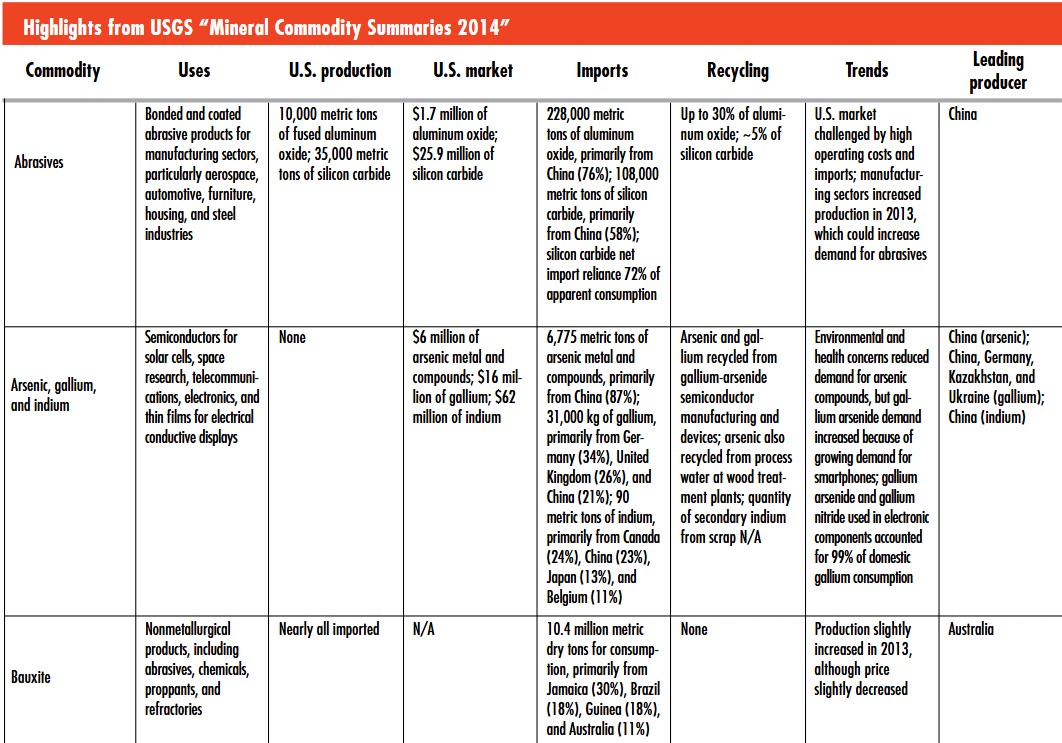
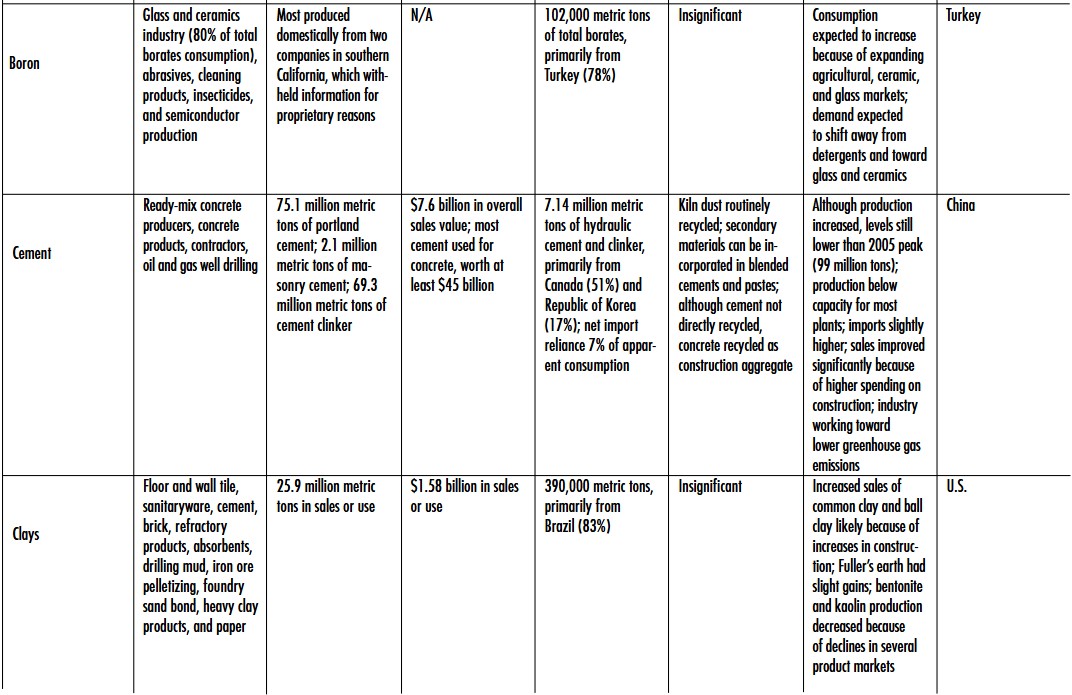
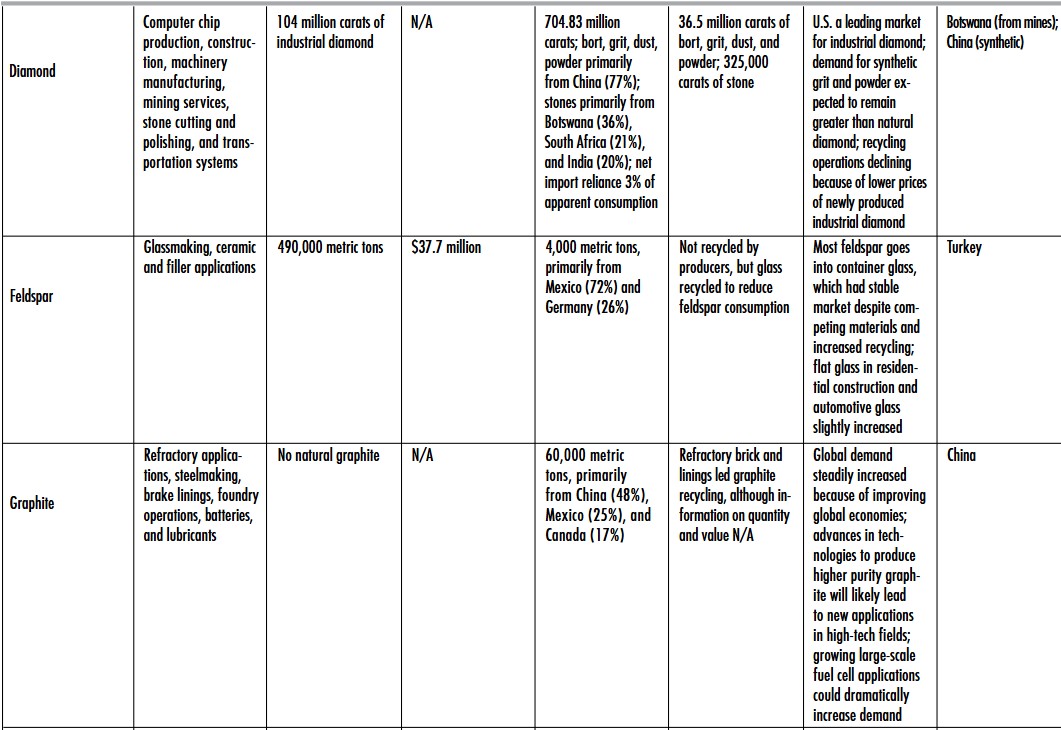
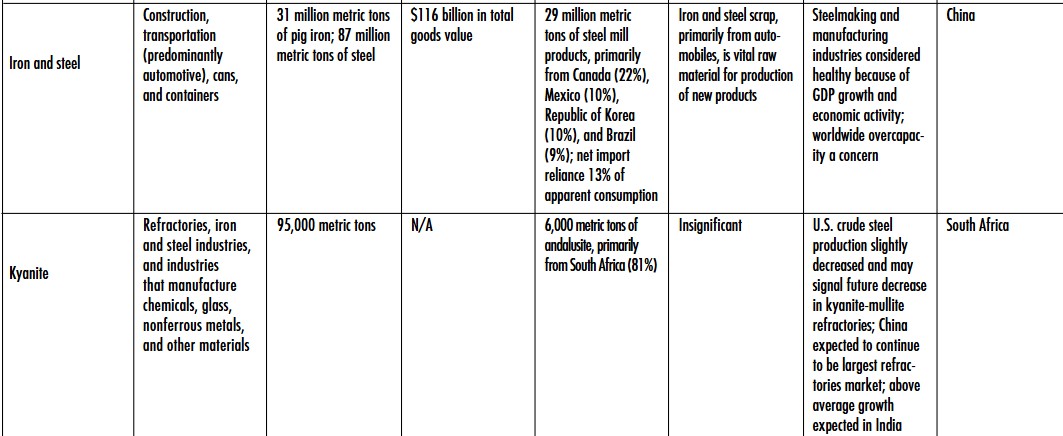
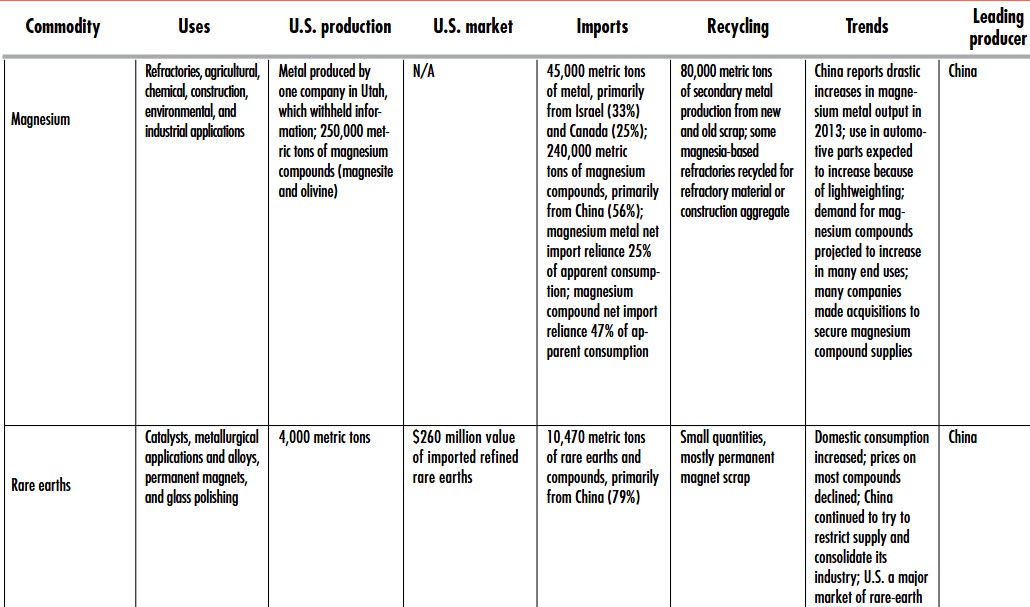
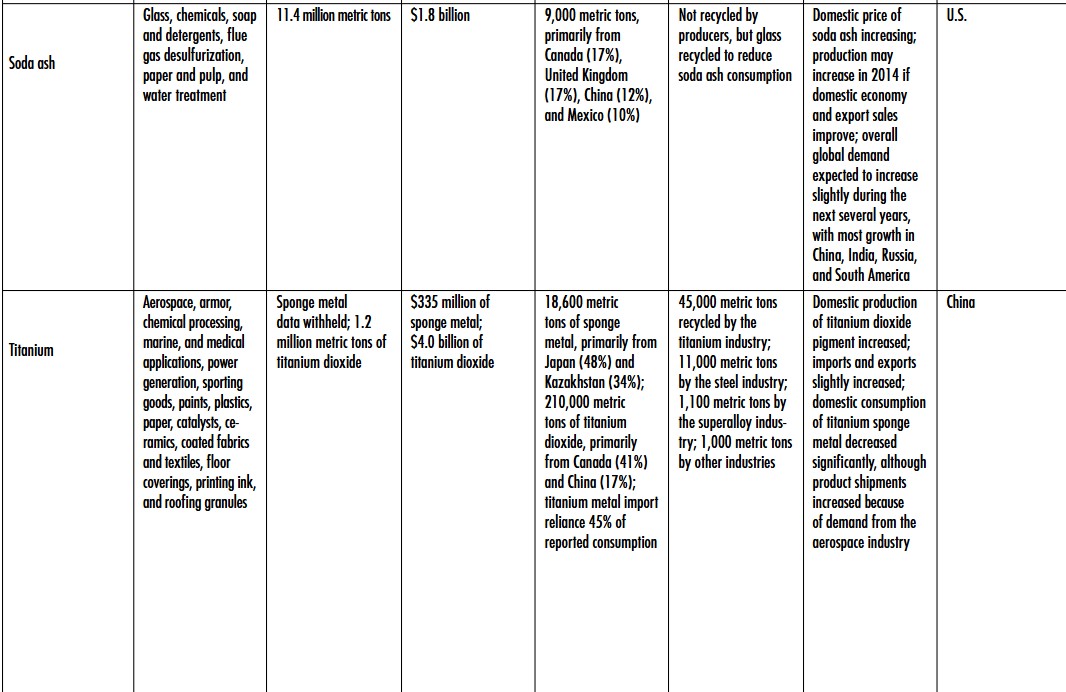
The next pages summarize key points from the USGS report for important raw materials for the ceramics industry.
The full report is available at minerals.usgs.gov.

Related Articles

Market Insights
Next-gen superconducting ceramics could change how we travel and much more
Forty years ago, two physicists from IBM’s research laboratory in Zürich, Switzerland, reported a groundbreaking discovery: Superconductivity, or the quantum mechanical phenomenon in which certain materials exhibit zero electrical resistance when cooled, could be achieved at higher temperatures using ceramics. Superconductivity had been discovered decades before, but its applications had…

Market Insights
Why most AI manufacturing projects fail and how to fix it
Artificial intelligence is reshaping advanced manufacturing, especially processes involving ceramics, glasses, and other hard or brittle materials. But adopting AI is far more difficult than simply buying software and connecting machines. Manufacturers must understand the advantages and limitations of different models, so they can determine where AI fits best within…

Bulletin Features
Radiation effects on rare earth chemistry in molten salts for nuclear applications
Across the nuclear energy sector, molten salts are shaping the next generation of nuclear technologies, from advanced power reactors to used nuclear fuel recycling. In molten salt reactors (MSRs), molten salts uniquely serve as both the primary coolant and fuel medium, a dual role that sets MSRs apart from conventional…