
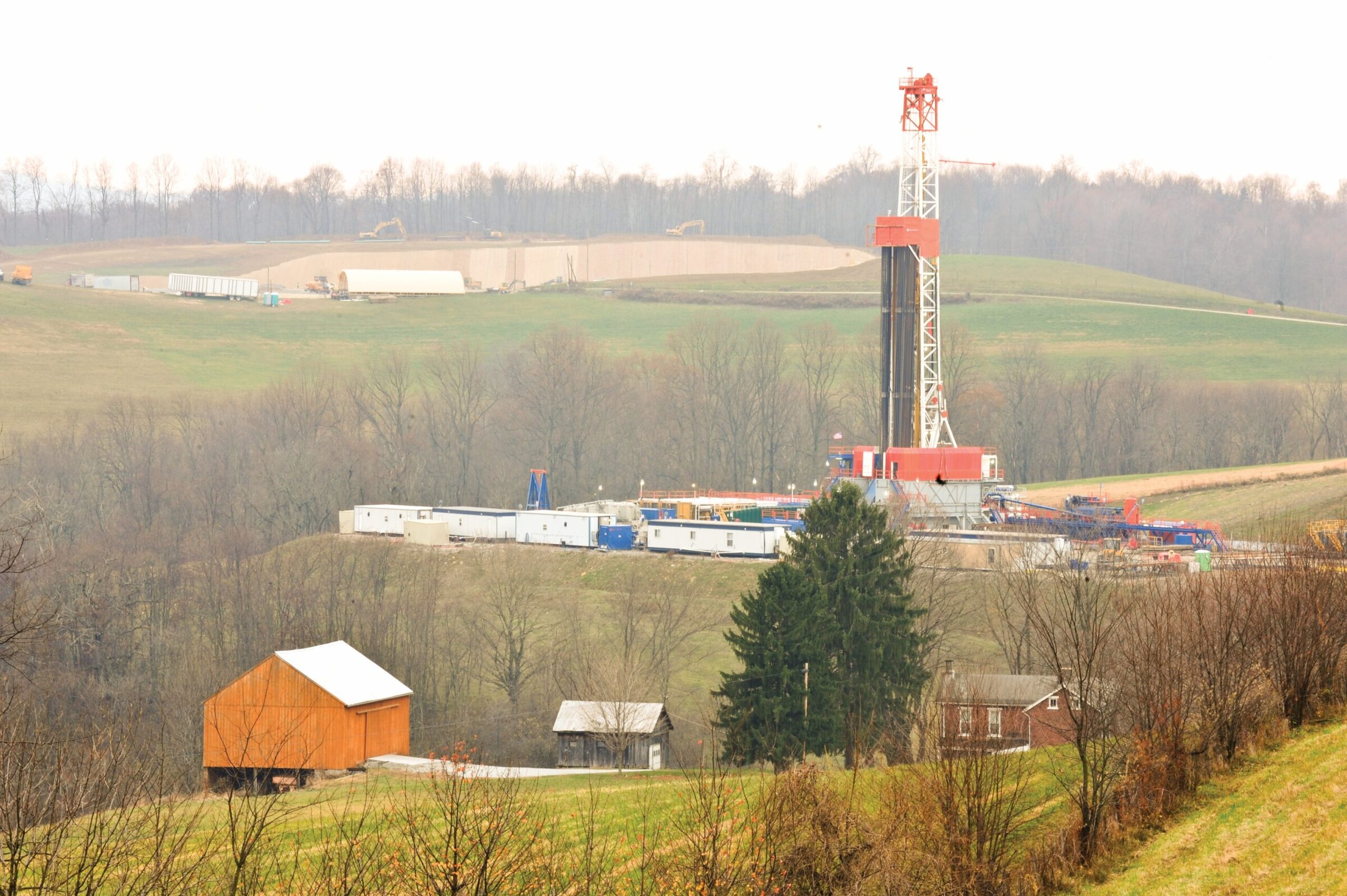
The cost of natural gas, especially in the United States, has plummeted in recent years, thanks largely to recovery of natural gas from shale gas reserves, or “plays.” Gas-rich shale deposits reside 5,000 to 20,000 feet below the Earth’s surface. Vertical wellbores are drilled down to the shale, and a number of horizontal drillings radiate off the vertical bore. A slurry of water, chemicals, and particles is pumped into the well under pressure to induce fractures in the rock to release the gas. The particles—known as proppants—hold the cracks open to allow the gas to escape, where it is recovered at the surface.
According to Industrial Minerals, 80% of proppants are so-called frac sand—cheap and abundant silica sand. The remaining 20% is approximately equal parts resin-coated sand or ceramic, and ceramic proppants. The cover story of this issue—“Proppants for shale gas and oil recovery”—reports on innovative approaches to engineering ceramic proppants from some surprising sources.
Shale gas recovery, also called hydraulic fracturing or “fracking,” is politically controversial, especially in regions of the country where the plays are located. Regardless of views pro or con, this is a big business, and materials science and engineering has a role to play to ensure that the technology addresses issues of natural resources, waste streams, and environment as well as manufacturing issues, in a way that is responsible to residents and shareholders.
Shale gas by the numbers:
- 40% of US natural gas dry production comes from shale gas.1
- Top-producing countries are China, Argentina, Algeria, and the US.1
- Projected US recoverable shale gas is 665 trillion cubic feet.1
- Projected reserves in China, Argentina, and Algeria are 1,115; 802; and 707 trillion cubic feet, respectively.1
- Hydraulic fracturing consumes about 30 million tons of proppants per year.2
- Proppant demand is expected to reach 45 million tons per year by 2017.2
- The proppant market is projected to be worth $10 billion by 2017.2
Read more: “Letter to the Editor“

Related Articles

Market Insights
Next-gen superconducting ceramics could change how we travel and much more
Forty years ago, two physicists from IBM’s research laboratory in Zürich, Switzerland, reported a groundbreaking discovery: Superconductivity, or the quantum mechanical phenomenon in which certain materials exhibit zero electrical resistance when cooled, could be achieved at higher temperatures using ceramics. Superconductivity had been discovered decades before, but its applications had…

Market Insights
Why most AI manufacturing projects fail and how to fix it
Artificial intelligence is reshaping advanced manufacturing, especially processes involving ceramics, glasses, and other hard or brittle materials. But adopting AI is far more difficult than simply buying software and connecting machines. Manufacturers must understand the advantages and limitations of different models, so they can determine where AI fits best within…

Bulletin Features
Radiation effects on rare earth chemistry in molten salts for nuclear applications
Across the nuclear energy sector, molten salts are shaping the next generation of nuclear technologies, from advanced power reactors to used nuclear fuel recycling. In molten salt reactors (MSRs), molten salts uniquely serve as both the primary coolant and fuel medium, a dual role that sets MSRs apart from conventional…